Global Electric Vehicles Enter the '23 Million Unit Era': China Maintains Edge, Emerging Markets as New Growth Pole
 07/01 2026
 468
468
23 million units and 27% penetration—these are the key figures for the global passenger electric vehicle market in 2026 as predicted by Bloomberg New Energy Finance (BloombergNEF). In its latest annual Electric Vehicle Outlook, global electric vehicle sales continue to rise, but the 'baton' of growth is passing from mature markets to emerging ones.
▍Global Sales Expected to Exceed 23 Million Units
The report forecasts global passenger electric vehicle sales to surpass 23 million units in 2026, up 11% from 2025, with electric vehicles accounting for over 27% of total global passenger vehicle sales. By 2035, electric vehicles could represent 52% of global sales.
Meanwhile, BNEF has lowered both short-term and long-term sales forecasts for electric vehicles for the second consecutive year. The primary driver behind this downgrade is the simultaneous growth slowdown in China and the U.S., the world's two largest electric vehicle markets. While the long-term direction of electrification remains unchanged, the global market's growth pace is slowing, and its drivers are shifting.
▍China Maintains Leadership
China remains the dominant force in the global electric vehicle market. In 2025, China's electric vehicle sales accounted for 63% of the global total, with domestic market penetration nearing two-thirds at 64%. BNEF predicts that by 2030, China will still contribute over 52% of global electric vehicle sales, maintaining its 'half of the market' status.
However, signs of slowing growth are evident. BNEF attributes this to tightening incentive policies, intensifying market competition, and the market's transition into maturity. With electric vehicles already accounting for two-thirds of domestic auto sales, the room for natural growth is narrowing.
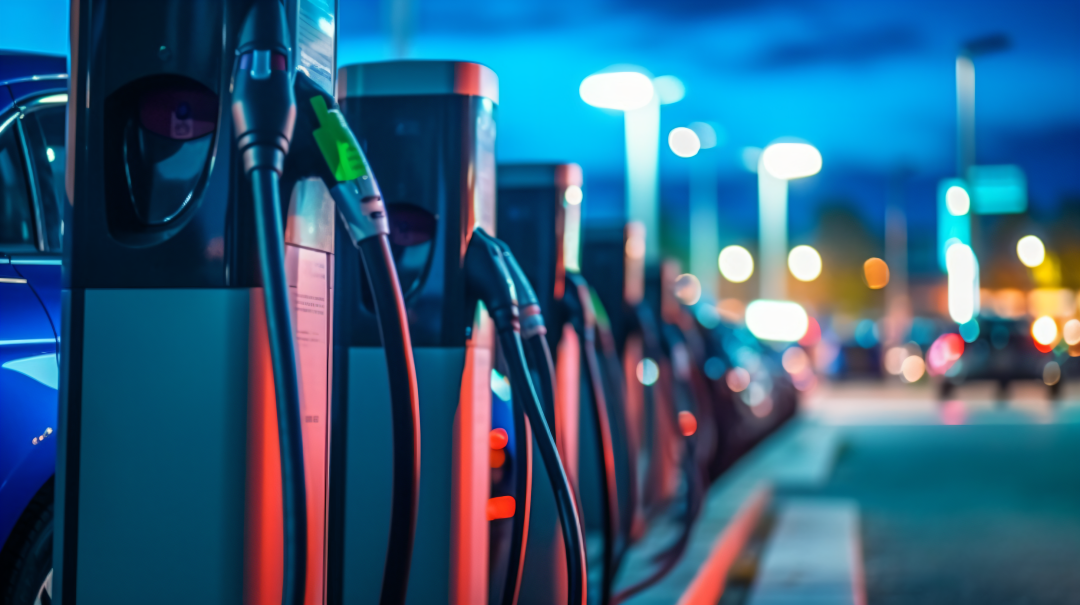
For Chinese automakers, the era of ' Stock game ' (competition for market share) has arrived domestically, while overseas expansion has shifted from a 'bonus' to a 'must' for long-term development.
▍U.S. and European Markets: One Retreats, One Stuck on Pricing
BNEF predicts a temporary setback for the U.S. electric vehicle market in 2026, with sales expected to decline by 19% due to reduced federal regulatory support, including rolled-back fuel economy targets and diminished Inflation Reduction Act incentives. The slowdown will persist, with electric vehicles accounting for just 24% of U.S. sales by 2040, lagging behind the global average and signaling a deliberate slowdown in electrification.
In Europe, pricing remains the core challenge. In major markets like Germany, Italy, and the U.K., pure electric vehicles still cost 17% more than comparable internal combustion engine vehicles, though this premium has narrowed from 34% in 2024. The trend is favorable, however, as falling battery costs and the launch of more affordable models gradually erode price barriers.
▍The Real Game-Changer: Emerging Markets Rise Collectively
Unlike the 'growth gear shifts' and 'short-term pressures' in China, Europe, and the U.S., emerging markets in Southeast Asia and Latin America are experiencing a collective electrification boom, becoming a pivotal variable in the global landscape. Data shows that nearly half of new vehicles sold in Singapore in 2025 were electric, with Vietnam at 39% and Thailand at 27%. Turkey's passenger electric vehicle sales doubled in a year, lifting penetration to 22%.
Three key drivers fuel this surge: energy security concerns to reduce oil import dependence, relatively open attitudes toward Chinese automakers and supply chains, and national industrial policies prioritizing electrification.
Chinese brands shine particularly brightly in emerging markets. In Thailand's 2025 electric vehicle market, Chinese brands accounted for 88% of sales, underscoring their strong competitiveness in price-sensitive markets. However, emerging markets are not a one-brand show: Vietnam's electric vehicle sales nearly doubled to 179,000 units in 2025, with local manufacturer VinFast capturing 98% market share. In Turkey, local brand Togg ranked second after BYD, highlighting the growth potential of indigenous automakers.
The report argues that emerging markets are shifting from the periphery to the center of global electrification, driving growth and altering the past reliance on the China-Europe-U.S. 'Iron Triangle.' Yet, uncertainties loom, including rising protectionism, volatile policy environments, and regional cultural and consumption differences.
▍Battery Costs: China's Deepest Moat
In the global electric vehicle supply chain, China's most unshakable advantage remains batteries.
Despite accelerated localization of global battery supply chains, competing with China's battery manufacturing costs remains a daunting challenge. China continues to benefit from a mature manufacturing supply chain, low input costs, favorable financing conditions, and intense market competition, resulting in the world's lowest electric vehicle battery prices. The gap in manufacturing scale and supply chain integration between North America and Europe suggests that high battery prices in these regions may persist.
For Chinese supply chain firms, this is a solid moat and their greatest asset in global competition. However, assets are not trumps—global supply chain localization is inevitable, and converting cost advantages into technological barriers and global capacity layout (deployment) will be the next critical challenge.
▍Peak Oil Nears, but ICE Vehicle Phase-Out Will Be Protracted
The report projects global road transport fuel demand to peak by 2029. Under the Economic Transition Scenario (ETS), fleet electrification and improved fuel efficiency will reduce global road fuel demand by 25.8 million barrels per day by 2040—four times the combined oil substitution in aviation, shipping, and petrochemicals.
Yet, a sobering reality remains: the electrification of road transport is a marathon, not a sprint. Electric passenger vehicles will not surpass internal combustion engine vehicles in global stock until 2047. By 2040, over 1 billion internal combustion engine passenger vehicles will still be in operation, making their full phase-out far more prolonged than imagined.
Aleksandra O'Donovan, head of BNEF's electric vehicle practice, concluded that while electrification continues to advance globally, the pace of transition is increasingly uneven across markets. Encouragingly, improved vehicle economics, falling battery costs, and rapid adoption in emerging markets provide solid support for electrification's long-term trajectory.
Typesetting 丨 Zheng Li
Source 丨 BNEF
Image Source 丨 Qianku.com
-
【In-depth】Current Market Status and Key Enterprise Analysis of Confocal Fluorescence Microscopes in 2026
-
![]()
Avita Releases Updated Prospectus: Projecting Over 120,000 Vehicle Sales and Over 60% YoY Revenue Growth by 2025
-
![]()
Navigating the Electric Wave: Mercedes-Benz Embraces the Three-Pointed Star, Audi Sheds the Four Rings
-
![]()
BYD Delegates Power, Geely Centralizes It: Which Transformation is Better Suited for the Future?
-
![]()
National Standard for Agent Interconnection Released: Why Might the Physical World Still Be Unreachable Despite Unified Interfaces?
-
![]()
Mobile Imaging: As Capabilities Grow, So Do the 'Add-Ons'—Why?
-
![]()
The imaging capabilities of smartphones are continuously improving, but why are there more and more 'add-ons' for shooting?
-
![]()
Alibaba's AI 'Crucible': Navigating Overseas Blockades, Organizational Upheaval, and the Lag in Commercialization