After the Demise of the Big Factory Bot, I Leveraged AI to Craft an Interactive 'Haaland'
 07/14 2026
 367
367
The world model is poised to become the next focal point of competition.
While I lack the patience for pet-keeping, I thoroughly enjoy tinkering with AI characters.
For a spell, Xiao Lei frequently explored other people's Bots on Doubao and Qianwen. Some brought Zhuge Liang into the modern era, others featured domineering CEOs teaching advanced mathematics, and some even conjured up an anime-style wife who constantly nagged them to go to work. The utility of these Bots was secondary; each time I delved in, I was greeted with the thrill of the unknown—what new digital entity awaited discovery?
However, upon revisiting them recently, Xiao Lei discovered that these Bots were on the verge of a collective farewell, with Doubao and Qianwen successively announcing the discontinuation of related features. As I watched my electronic companions vanish from the chatbox one by one, I had braced myself to accept reality when I stumbled upon something even more intriguing.
Vidu S1.

(Image source: Vidu)
Vidu S1 is a model dedicated to real-time video interaction. Unlike conventional AI Bots, users merely need to upload a single image, and the model swiftly comprehends the character's identity, appearance, and style. During interaction, it generates a variety of expressions and movements for the character in real-time, striving to maintain harmony between the character's visage and voice.
With the big factories' Bots out of the picture, Xiao Lei (ID: leitech) resolved to create one himself.
In my view, a Haaland capable of speaking Chinese, comprehending commands, and, ideally, even meditating on the spot would be quite captivating.
The process of utilizing Vidu S1 is not overly complex.
The model itself is entirely open. Simply search for Vidu AI Pro in your mobile app store, download the latest version, and launch the app to experience Vidu S1.
Be cautious not to mistakenly download Vidu AI—they are two distinct apps. I fell prey to this oversight once.

(Image source: Leikeji)
To enhance the experience, Vidu S1 comes preloaded with a batch of preset characters.
The majority of these are various types of girls, spanning from ancient costumes to modern styles, and from fantasy to reality. Additionally, there are animated characters and mischievous dogs to choose from, ensuring diversity is not an issue.
I didn't rush to upload an image immediately; instead, I casually selected one to chat with.
In this manner, users can simply pick a character and issue voice commands directly through the microphone. The character responds in real-time on the screen, generating expressions and lip movements based on the conversation content, accompanied by natural side-to-side body swaying. It truly evokes the sensation of a video call.

(Image source: Leikeji)
However, the picture quality itself is somewhat blurry. Checking the official specifications, it's 540P at 25 frames per second—akin to the effect of a poor network connection.
Of course, this technology is capable of more than just lip-syncing; users can also employ voice commands to make the character perform various actions.
When I issued the command "Raise your left hand," the character in the image duly responded, executing the hand-raising movement smoothly without any noticeable glitches.

(Image source: Leikeji)
Slightly more intricate actions, such as pushing glasses or flipping hair, were also executed reasonably well.
I even issued a compound command akin to "Use your left hand to fix your hair, your right hand to adjust your collar, and then place both hands on your chest to form a heart shape." The character managed to comply, albeit not flawlessly.

(Image source: Leikeji)
As for the drawbacks... the latency is quite pronounced.
Its "real-time" aspect is from the perspective of AI video generation. After you finish speaking, the character often pauses before commencing to answer. This speed is acceptable for video generation but is quite noticeable in a video call, especially since the character maintains eye contact, which can be slightly unsettling.
The same applies to actions.
To prevent inconsistencies, Vidu S1 appears to have a system-level restriction that prevents characters from turning around. No matter how you try, the character will refuse, and continuous actions like dancing or squatting are simply simulated.

(Image source: Leikeji)
It's as if they respond enthusiastically verbally but only sway symbolically with their body, akin to how I behave when I'm slacking off.
Of course, since the preset characters have been officially selected, Vidu S1 also permits users to upload images to create their own characters. Next, it was time to experiment with a character I uploaded myself.
I initially chose a Q-version character to assess how it handles unconventional body types.
After uploading an image of Phoebe Juebi, I filled in the character description, selected a preset voice tone provided by the system, or recorded my own voice. Then, after waiting for approximately a minute, a custom character was ready.

(Image source: Leikeji)
The result was quite alarming—the character's movements and body type were completely mismatched.
After I issued the command "Jump," the character's body in the image was suddenly elongated, and other commands produced similar rubber-like effects.

(Image source: Leikeji)
Not to mention that the character description I set seemed entirely ineffective, as the character would persist in talking to itself regardless.
Finally, I uploaded an image of Norwegian striker Erling Haaland.
Presumably due to the training dataset, real-life images were simpler to handle than anime-style ones. When stationary, Vidu S1 could maintain Haaland's facial features and hairstyle quite well; when he commenced speaking, his lip movements could also keep pace. However, when his expressions became more intense, his teeth, cheeks, and gaze occasionally became slightly uncoordinated.
What was more perplexing was the voice. The voice I recorded didn't take effect at all; instead, it randomly switched between several different male/female voices, rendering the scene exceptionally eerie.
I requested him to replicate his signature meditation celebration. He initially lowered his head, then raised his hands slightly, and finally stood steadily in front of the camera.
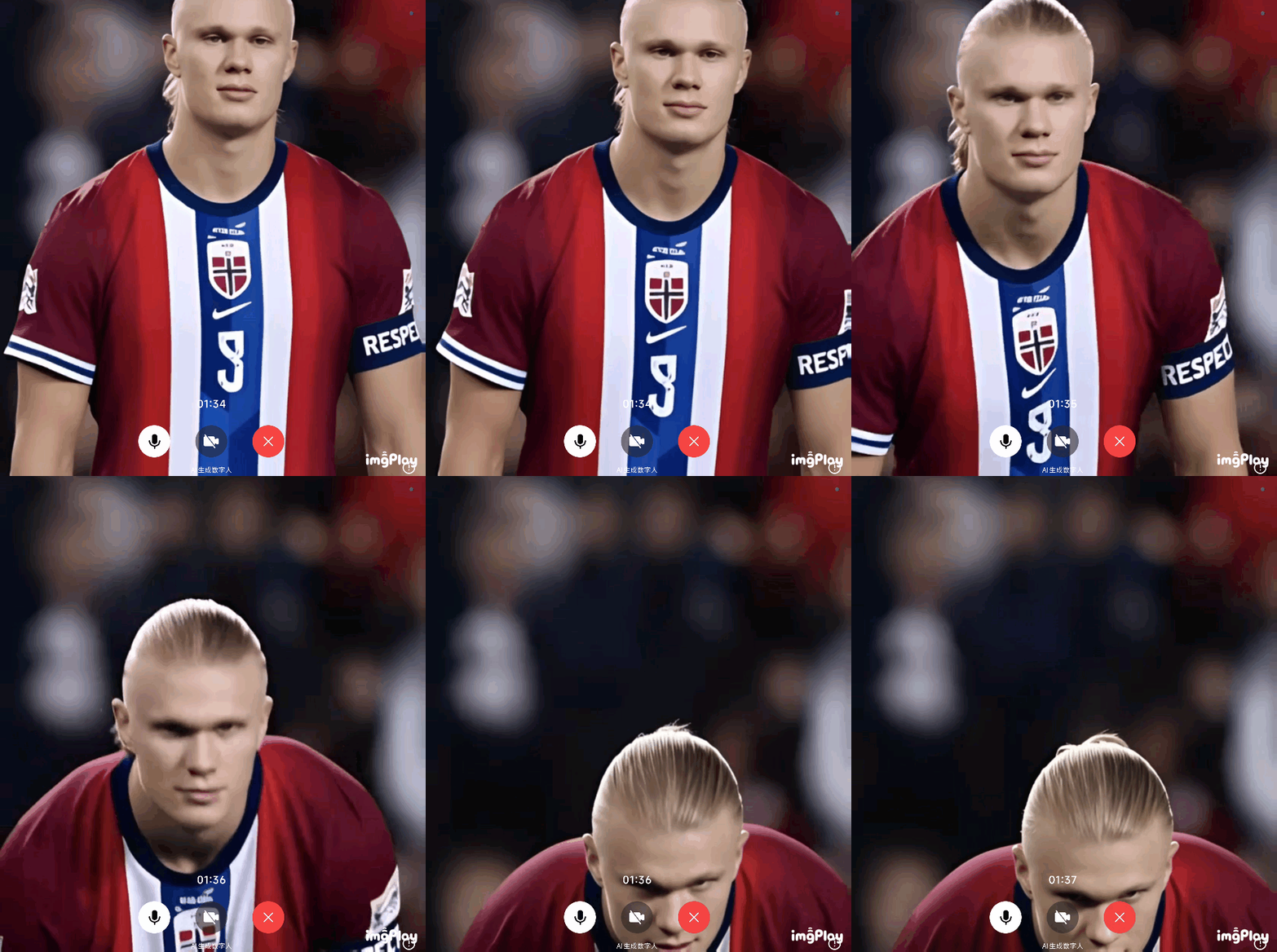
(Image source: Leikeji)
It appears that Vidu S1 can only create a Haaland capable of chatting but not the one who can dominate on the field. There's still ample room for improvement.
Coincidentally, earlier this year, Google introduced Genie, and recently, the LingGuang App also upgraded its world model experience.
The selling points of these products are quite consistent: users merely need to upload an image, and the AI will parse the visual elements, comprehend the terrain, obstacles, and how the character should move, transforming a static image into an interactive video application. It sounds akin to the childhood fantasy of "turning any drawing into a game."
Especially the LingGuang App—its public demonstrations showcased attacks, archery, and spellcasting, looking quite impressive without any membership restrictions, making it hard to resist the temptation to try it out.
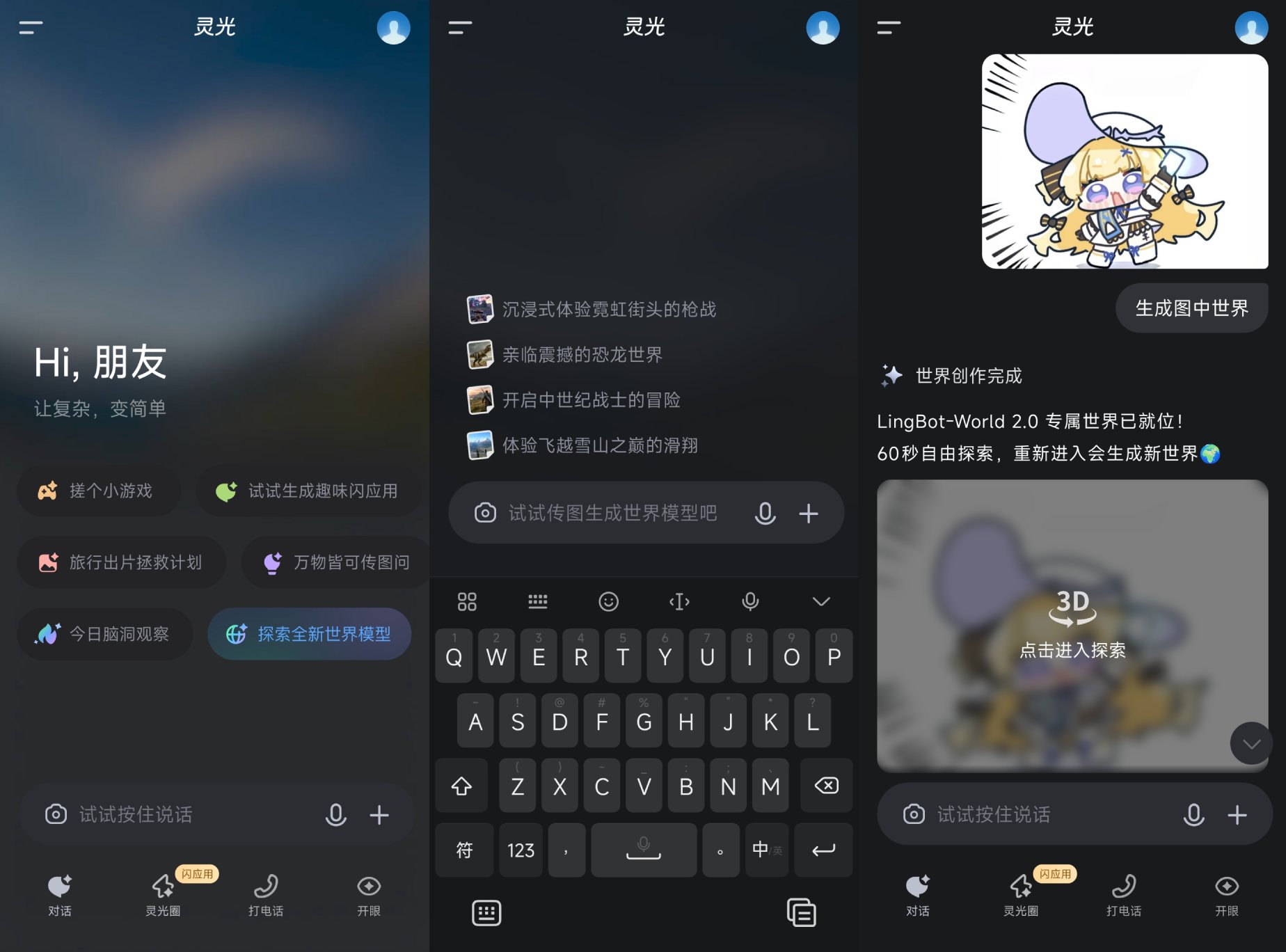
(Image source: Leikeji)
Since I was intrigued, I decided to give it a shot, commencing directly with the images recommended by the system.
I selected "Unlock the Cold High-Tech Metropolis," and LingGuang automatically uploaded a screenshot highly reminiscent of a scene from Cyberpunk 2077. After waiting less than half a minute, the system alerted me that my exclusive world was ready.
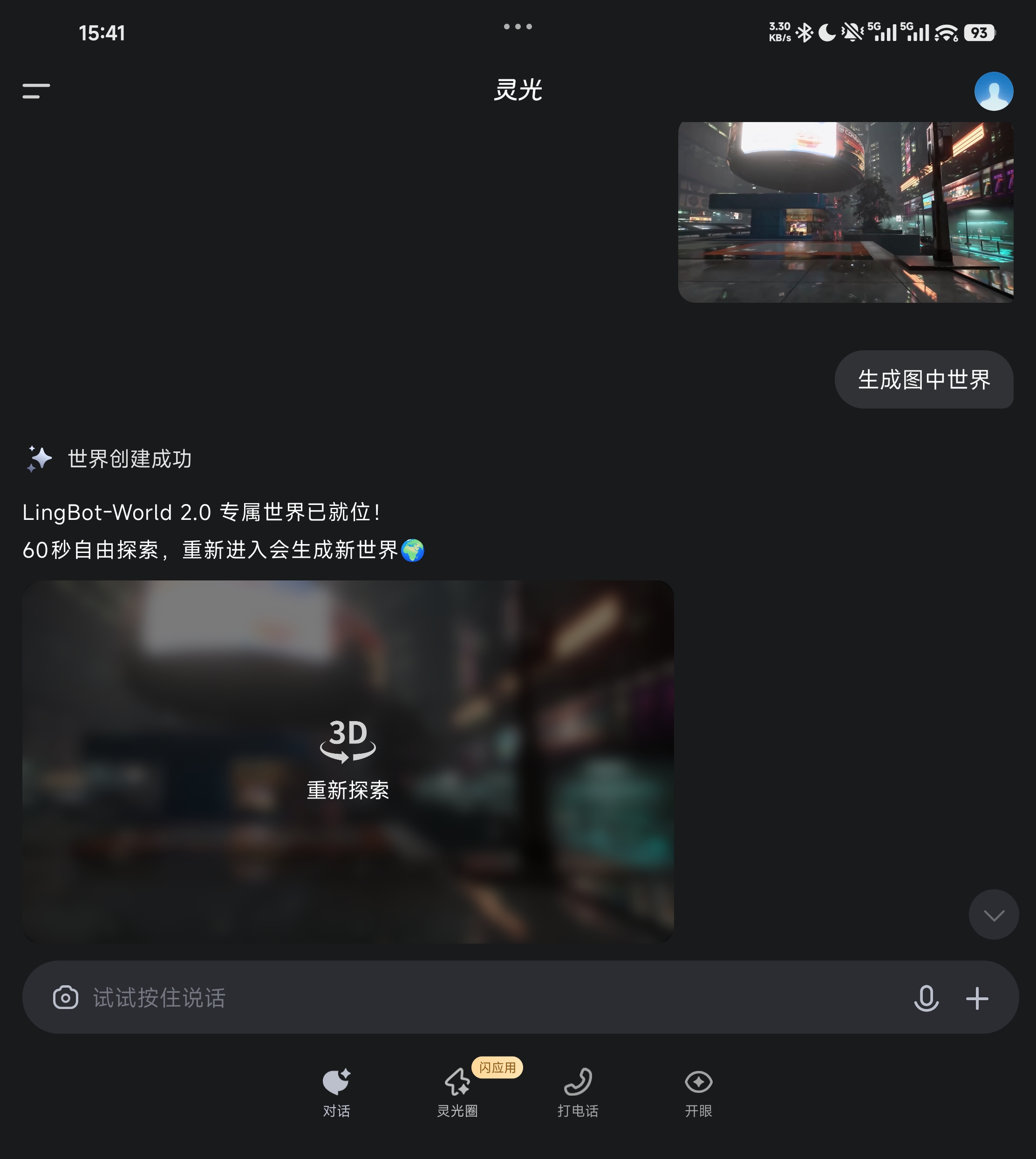
(Image source: Leikeji)
This speed... really?
Believe it or not, the LingGuang App actually generated a reasonably decent cyberpunk world in a short span. As you advance forward, the path ahead is generated in real-time; as you shift your perspective, the camera adjusts synchronously. The entire process feels more like exploring a continuously unfolding space.
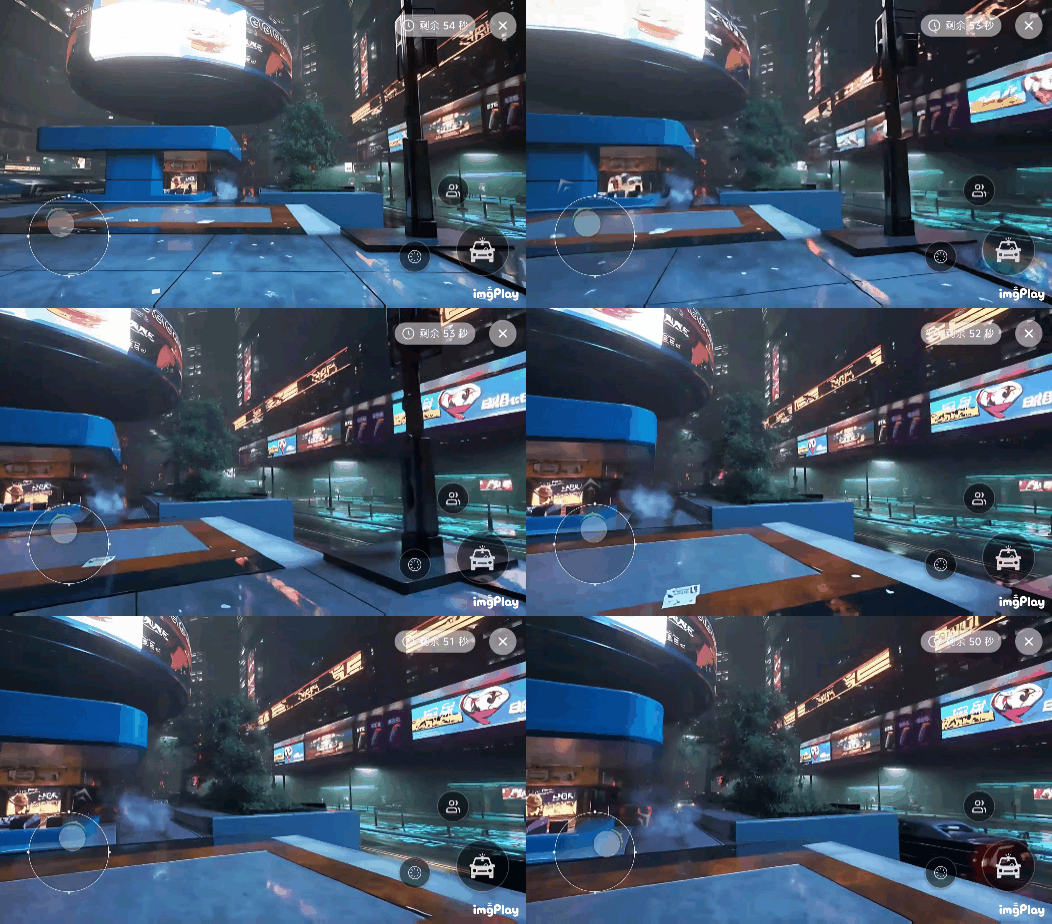
(Image source: Leikeji)
After generation, besides the basic directional buttons, some personalized interaction buttons appear below the screen. At first glance, it does seem richer than before, as if the model has comprehended the image content and designed a set of gameplay specifically for it.
However, when you actually press them, you'll discover that these buttons mostly just make the world play different effects.
Even if there are other characters in the scene, you can't approach them to converse, attack, or even make any meaningful contact. The so-called interaction is basically just the user controlling a character wandering around in an AI-generated video.
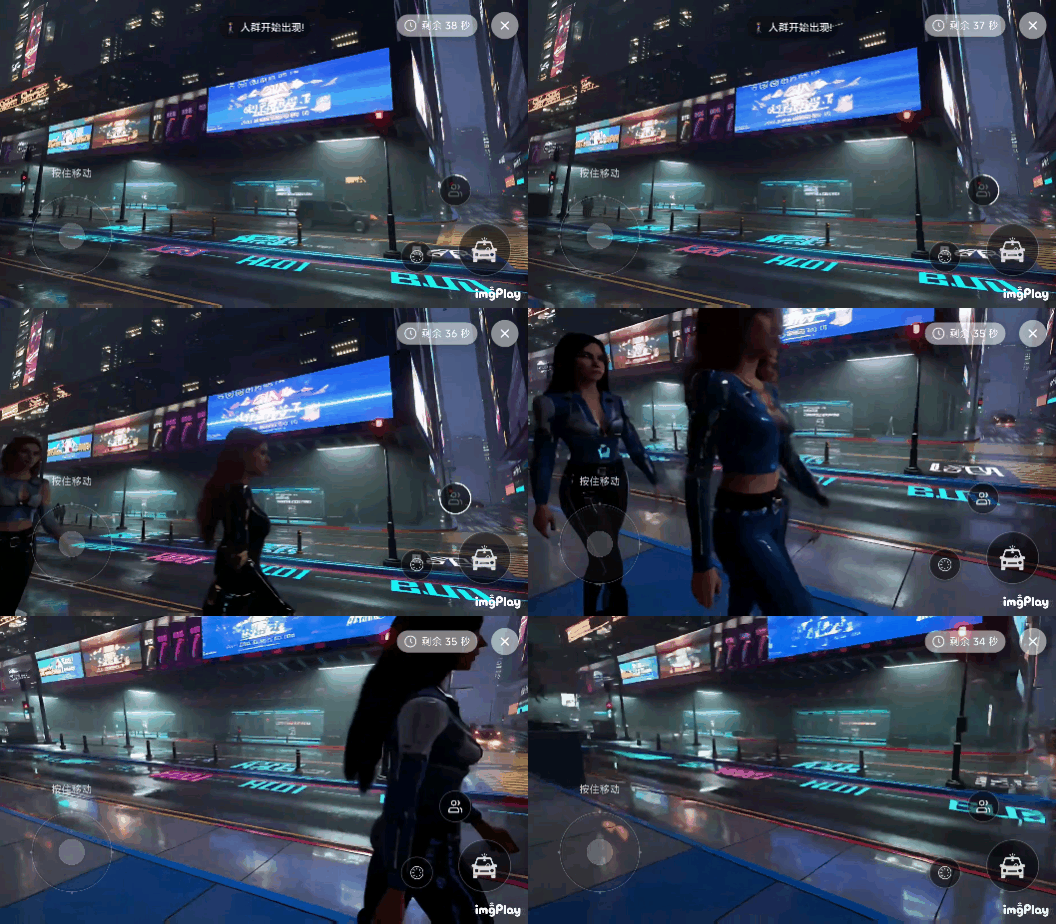
(Image source: Leikeji)
And the operational latency... moving the character has about a 1-2 second delay, and switching perspectives is even more choppy.
To assess whether it could truly comprehend the image, I uploaded a screenshot from Monster Hunter.
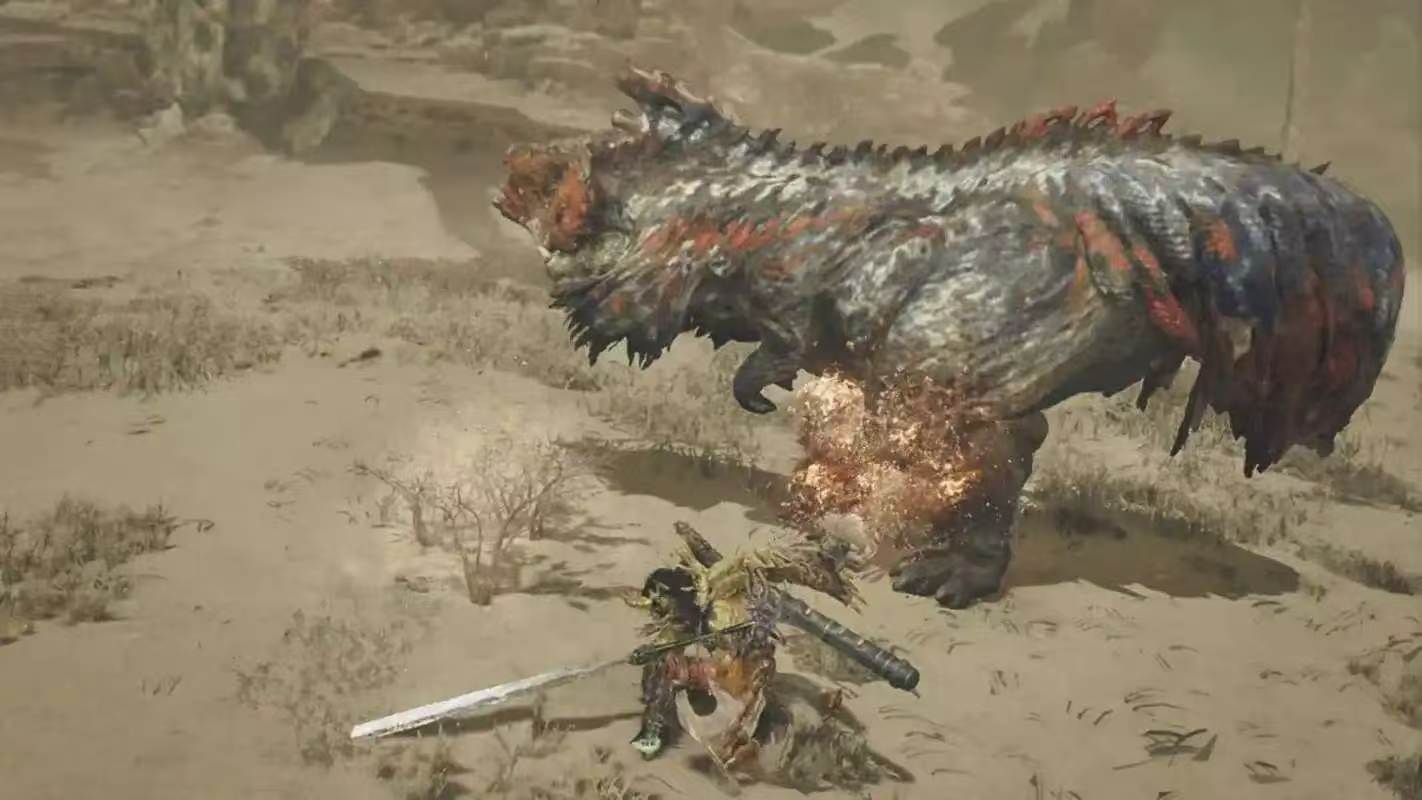
(Image source: Leikeji)
Logically speaking, the image contains characters, monsters, and a very clear battle scene. Even if the model can't reproduce the complete gameplay, it should at least generate buttons related to attacking, dodging, or hunting based on the content.
But it didn't.
The interaction methods provided by the system were very generic and had little to do with Monster Hunter in the image. More abstractly, shortly after the character commenced walking, the original hunter gradually transformed into Wukong.
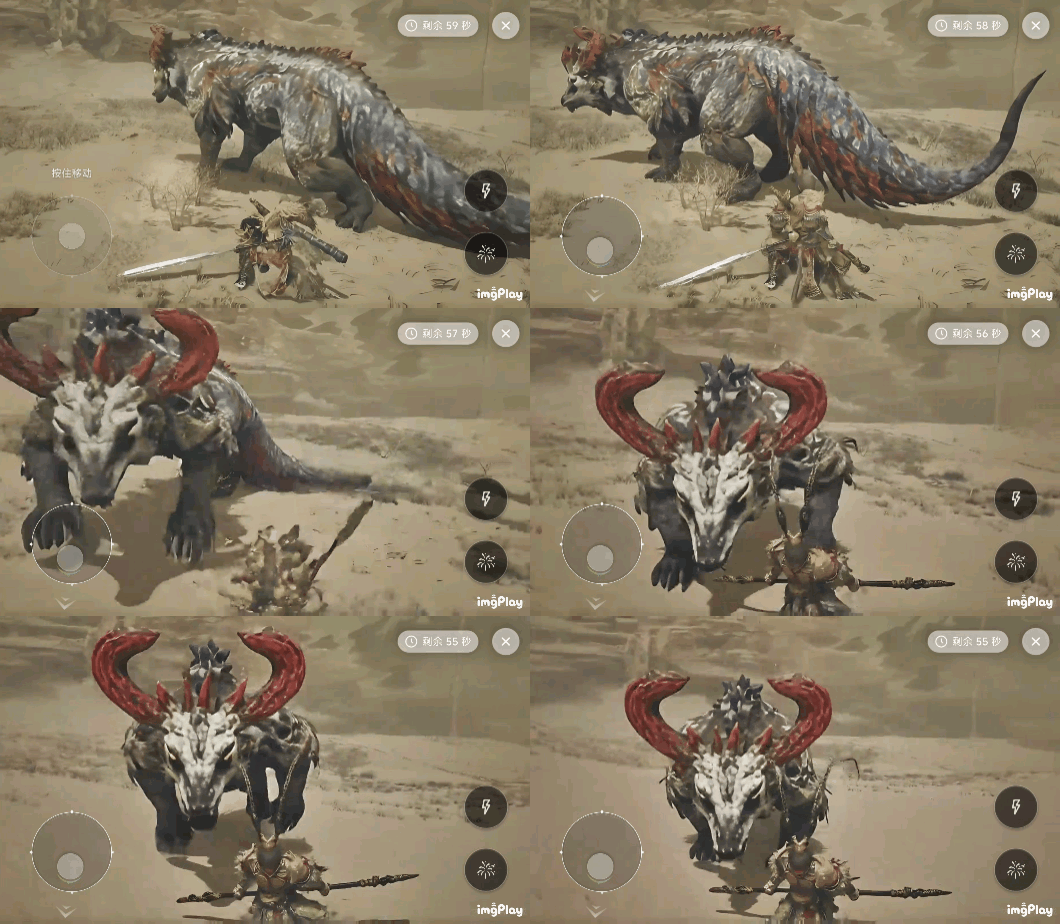
(Image source: Leikeji)
It seems that the model does recognize this as a game screenshot, but as for which game it is, it probably considers them all the same—as long as you're wielding something to combat monsters, it's acceptable.
Next, I uploaded a screenshot of Haaland playing in a football match.
This time, the issue was more direct. After entering the scene, the most critical football quickly vanished, and the system didn't permit me to control Haaland; instead, it selected an opposing player in a white jersey.
This character couldn't kick the ball or effectively interact with Haaland or other players. The goalposts, grass, and spectators in the scene were more like background stickers—they appeared to be there, but in reality, you couldn't touch or utilize them.
What's more troublesome is that once the character starts moving, the entire scene changes accordingly.
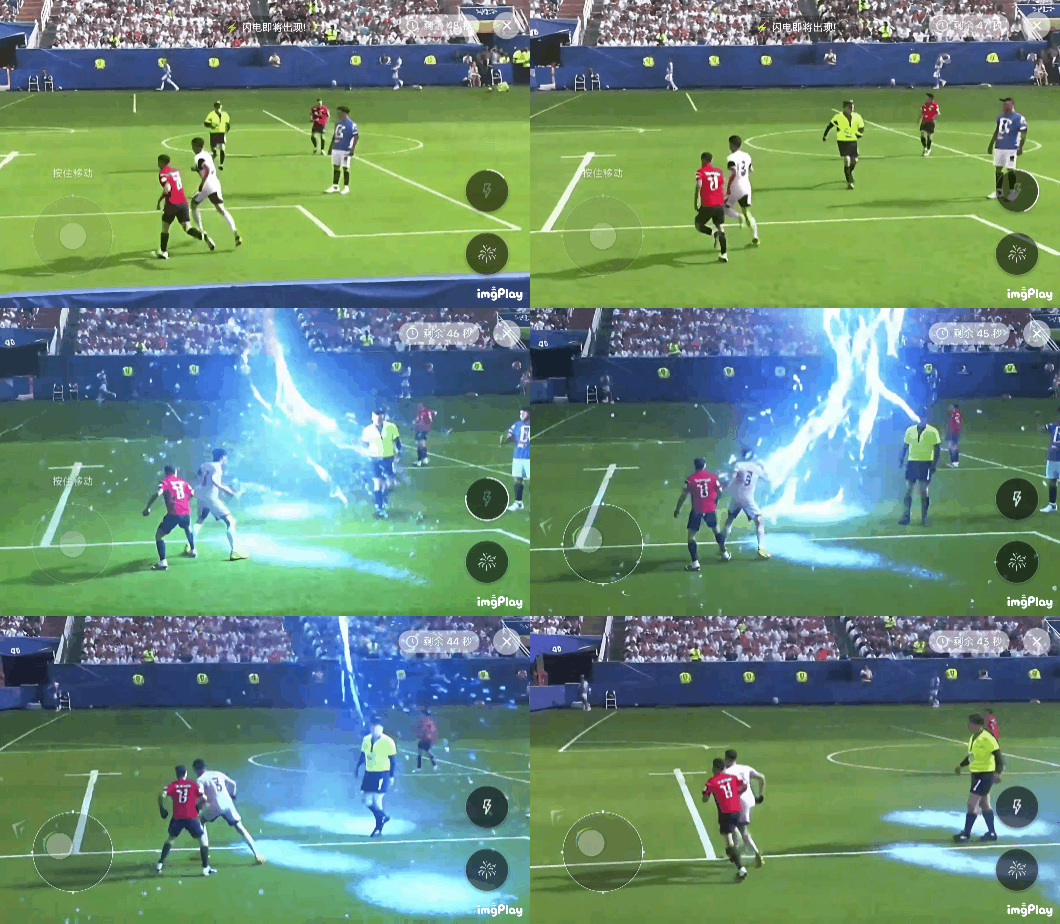
(Image source: Leikeji)
Since there weren't many elements in the original image, and the model couldn't stably remember the characters and scene, after the character ran a few steps, the football field, player positions, and even clothing details would be regenerated. The person who was beside you one second might have a different face the next, and even the controlled character themselves seemed to be undergoing plastic surgery while running, with their jersey changing repeatedly.
If there's anything that provides a slightly superior experience... I think it's POV-style landscape images.
Give this technology a landscape image, and you can indeed relish the sensation of traveling in a non-existent world, as long as you can tolerate occasional stutters.

(Image source: Leikeji)
As a novel toy, it might be amusing to play with for a few minutes, but it certainly can't sustain long-term engagement.
At this juncture, some might wonder: since the image quality is so poor and there are so many bugs, aren't these companies squandering their resources on developing these interactive world models? Have they taken a wrong turn in technology?
In my opinion, quite the contrary.
The emergence of such models and applications signifies far more than just creating games. It represents a crucial stride for artificial intelligence to transition from "understanding the static world" to "simulating the real world."
The video generation models we're familiar with today, like Seedance and Kling, can create visually stunning blockbuster-like footage, but they're passive displays. Viewers can only watch, not interact.
adv
-
![]()
Every AITO Sold Contributes 136,000 Yuan to Huawei: Seres Faces Its Compaq Moment
-
![]()
Huang Renxun's Gambling
-
![]()
Is Seres Truly Being 'Bled Dry' by Huawei?
-
![]()
Robot Brain: A Lucrative Business or a Challenging Pursuit?
-
It's Official! Shanghai's July AI Extravaganza: A Gateway to Future Industry Trends and Global Consensus
-
![]()
After the Demise of the Big Factory Bot, I Leveraged AI to Craft an Interactive 'Haaland'
-
Anticipated Losses Reach Nearly 2.3 Billion Yuan! How Long Can Seres Sustain Its 'Contract Manufacturing' Predicament?
-
Wu Jianjun Steps In: Konka’s Fight for Efficiency and Revival