ByteDance’s ‘Most Loyal’ U.S. Investor Exits, Notching 15,000-Fold Returns
 07/15 2026
 483
483
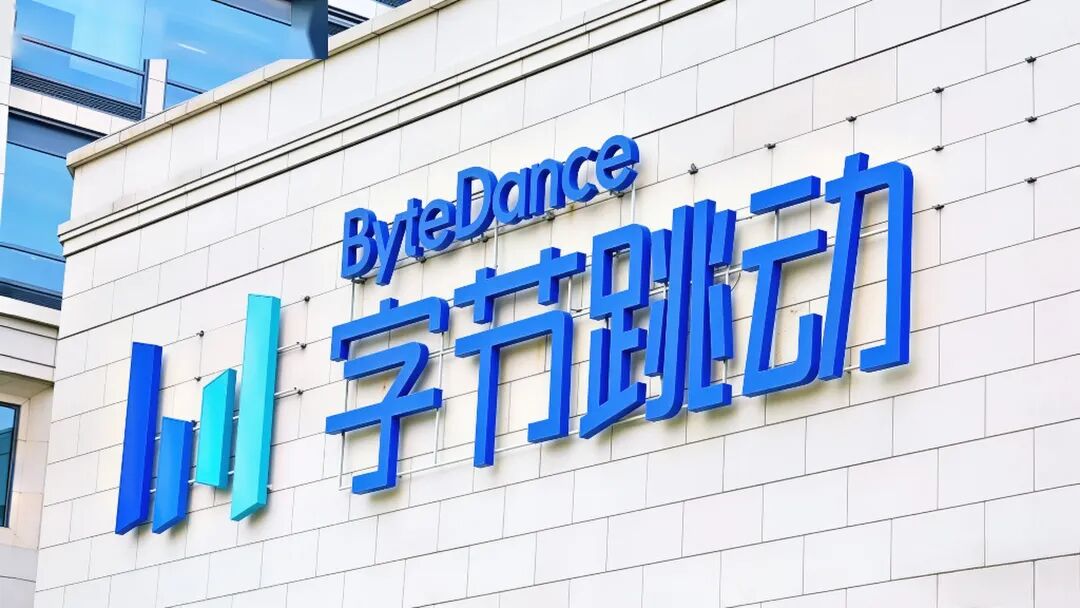
In the annals of global venture capital, few overnight success stories are easily replicated, but ByteDance’s 15,000-fold return remains unparalleled to this day.
Recently, foreign media outlet The Information confirmed a major industry development: SIG Asia Investments, ByteDance’s earliest and most steadfast angel investor, has fully exited the Chinese venture capital market. This veteran foreign investor, which has been deeply engaged in China for two decades and supported hundreds of high-quality projects, has completely shuttered its local venture capital operations and bid farewell to the Chinese market.
 Source: Weibo
Ironically, SIG—the firm choosing to exit—holds the most extraordinary wealth creation myth in China’s venture capital history. In 2012, SIG invested just $6 million in ByteDance during its startup phase, peaking at over $90 billion in paper gains and achieving a staggering 15,000-fold return on investment.
While a 100-fold return is considered legendary in venture capital, SIG directly shattered the global VC earnings ceiling. This unprecedented investment marked not only SIG’s 20-year peak in China but also the most legendary and poignant finale of U.S. dollar funds’ deep involvement in the Chinese market.
From a Napkin Sketch to a $600 Billion Giant: The Dream No One Believed, He Did
Today, ByteDance is a super unicorn valued at over $600 billion, but in 2012, it was merely a vague concept sketched on a napkin, dismissed by the entire venture capital community. Back then, China’s internet landscape was solidifying, with Sohu, Netease, and Tencent dominating the news sector, while BAT (Baidu, Alibaba, Tencent) had firmly locked down industry ceilings. The consensus was clear: the news market was saturated, leaving no room for new players.
At 29, Zhang Yiming had nothing: no industry reputation, no finished product, no operational data, and no business plan. In a quiet café shortly after the Chinese New Year, with the lights off, he faced SIG investor Wang Qiong, unable to present any hard evidence of the project’s potential—the company wasn’t even registered yet.
 Source: Early entrepreneurial materials of Zhang Yiming
His only confidence lay in a napkin and a set of industry-disrupting algorithmic logic. Zhang sketched the product’s prototype on the napkin, proposing a radical departure from tradition: abandoning manual editorial curation and relying on algorithms to achieve personalized "information-to-person" distribution. This foundational logic of today’s internet industry was seen as heretical in 2012, with all investors questioning: How could algorithms disrupt established portals? How could a newcomer reshape a mature sector?
Amid universal skepticism, only Wang Qiong recognized the trend and acted decisively. In just ten minutes, she finalized both angel and Series A investments. What seemed like an impulsive gamble to outsiders was, in reality, a precise prediction based on five years of observing people—not a fleeting decision.
The two first connected in 2007. At 24, Zhang Yiming served as technical chair at Kuxun, a reserved individual with an extreme dedication to recommendation algorithms. As a designated investor, Wang Qiong observed him closely for the first time, noting his technical acumen and composure far beyond his peers.
Over the next five years, Wang quietly observed and verified. She witnessed Zhang lead Jiujiufang from scratch, growing steadily without hype—relying solely on technology and execution to deliver results, perfectly demonstrating exceptional entrepreneurial qualities.
The venture capital circle lacks not geniuses but entrepreneurs who are consistent, steady, pragmatic, and uninterested in quick wins. After long-term observation, Wang was certain: Zhang Yiming was destined for greatness.
In March 2012, ByteDance was officially registered. SIG invested $80,000 in the angel round, becoming ByteDance’s sole institutional angel investor. The first institutional capital for this trillion-dollar tech giant had landed.
Universal Ridicule, Capital Winter: It Was the Only Investor That Didn’t Flee
Top-tier investments always go against the grain. After SIG entered, the entire venture capital community continued to mock and uniformly dismiss ByteDance. Prominent investors openly doubted Zhang Yiming’s charisma and ability to succeed, while the industry uniformly declared the news sector’s landscape settled, leaving no room for newcomers. One well-known investor advised against him directly: "This kid looks listless; he won’t amount to anything." The industry’s verdict was clear: the news sector was already saturated, leaving no opportunity for new players.
By late 2012, a capital winter struck, tightening the primary market. ByteDance found itself in dire straits—no one would step in, no one would empower it, and its cash flow neared collapse, threatening to die in its infancy.
While the entire industry retreated for safety, only SIG stepped in to cushion the fall and stayed committed throughout.
To save ByteDance, SIG acted decisively: adding $1 million in Series A+ investment while providing a $1 million bridge loan. Combined with angel and Series A investments, SIG had poured $6 million into ByteDance, becoming its sole capital backer during its darkest hours. Beyond financial support, SIG’s unwavering companionship and empowerment through two years of lows were core to ByteDance’s turnaround.
During those tough times, Wang Qiong became Zhang Yiming’s sole industry confidant. She actively connected him with over 20 industry leaders, where Zhang repeatedly explained his product logic and demonstrated technical advantages, often until his voice grew hoarse—only to face repeated rejections.
Each time Zhang doubted himself, Wang patiently reviewed, encouraged, and refined his communication strategies. Capital’s pursuit at peaks is worthless; loyalty during entrepreneurial lows is priceless. With this unwavering commitment, Wang successfully introduced ByteDance to top-tier overseas capital DST, securing a multi-million-dollar Series B funding round. This helped ByteDance emerge from the winter and begin its legendary valuation surge.
15,000-Fold Return! Shattering Global VC’s 100-Year History
In 2012, ByteDance’s Series A valuation stood at just $9 million—a niche project scorned by the entire industry. No one predicted it would grow into a $600 billion global giant thirteen years later.
Over thirteen years, ByteDance’s valuation skyrocketed, creating a venture capital miracle unmatched globally:
2014: $500 million valuation
2016: $11 billion
2018: $75 billion
2020: Over $100 billion
Late 2025: Surging past $600 billion
At its peak, SIG held roughly 15% of ByteDance, with paper value exceeding $90 billion. Turning a $6 million principal into a 15,000-fold return, these explosive figures catapulted SIG to the pinnacle of global VC history—unprecedented and unlikely to be repeated.
This legendary investment propelled SIG’s core circle to new heights, maximizing wealth effects. Co-founder Arthur Dantchik’s net worth surged by $6.5 billion, while key figure Jeff Yass, through indirect holdings, saw his fortune exceed $59 billion, crowning him Pennsylvania’s richest person.
Beyond ByteDance, SIG’s investment acumen proved razor-sharp. Its early bet on overseas short-video platform Musical.ly, later acquired by ByteDance for $1 billion, served as the foundation for TikTok—allowing SIG to reap massive rewards again by precisely timing the global short-video boom.
Top-Tier Capital Floods In, Building ByteDance’s Trillion-Dollar Empire
SIG’s early contrarian bet opened global capital gates for ByteDance. Subsequently, top-tier foreign investors swarmed in, scrambling to back this super unicorn.
Sequoia China led ByteDance’s $100 million Series C in 2014 and continued adding stakes, with holdings now worth over $22 billion. In 2017, General Atlantic’s $2 billion investment doubled ByteDance’s valuation, propelling it into the top tier of unicorns. SoftBank, KKR, Carlyle, Tiger Global, and other elite dollar funds all joined, using real money to fuel ByteDance’s global expansion.
Reviewing China’s internet gold rush of two decades, dollar funds were the invisible core drivers of industry explosions. SIG stood as the oldest, broadest, and most committed veteran foreign VC in China. Over 20+ years in China, SIG invested over 350 times, totaling $3.5+ billion, backing 260+ local firms across internet, new consumption, entertainment, and hard tech. It incubated benchmark projects like Ximalaya, Bona Film Group, and Country Style Cooking—a true foreign venture capital "old hand."
The Tide Turns! U.S. VCs Exit China En Masse
Here lies the industry’s most surreal contrast: SIG, holder of the world’s greatest venture capital myth, now leads the exodus from China. According to The Information’s exclusive report, SIG China’s core leader Gong Ting will depart to start his own venture, with SIG formally retrenching and shutting down its China VC operations—completely exiting local venture investment.
Gong Ting, who built SIG’s investment framework in China over two decades, witnessed the industry’s full cycle from wild growth to compliant iteration. His exit signals the definitive end of the veteran foreign venture capital era. This is no isolated case but an industry-wide trend: U.S. VCs are collectively cutting ties with China.
Shifting geopolitical landscapes, tighter overseas investment policies, and restrictions on AI, semiconductor, and other core tech sectors have heightened foreign capital’s risk aversion. Dollar funds that once flooded in are now retrenching and accelerating exits to cash out. Meanwhile, China’s tech industry has abandoned wild growth and profit-chasing models, entering a compliant, steady high-quality development phase. Foreign investors’ "short, flat, fast, high-burst, quick-exit" logic has completely failed, with original return expectations utterly upended.
Today, dollar funds’ fundraising scales keep shrinking, overseas LPs’ risk appetite has plummeted, and massive inventory foreign capital is rapidly cashing out via old share transfers, corporate buybacks, and secondary market reductions. The old landscape where foreign funds dominated China’s venture capital for two decades has completely ended.
Subverting Venture Capital: SIG and Wang Qiong’s Counterintuitive Playbook
The internet keeps asking: How did SIG, while the entire industry missed ByteDance, precisely bet on it and reap massive returns? The core answer lies in a top-tier investment philosophy that defies industry norms. While the mainstream focuses on sectors, data, hype, and barriers, Wang Qiong’s logic remains simple and transparent: Look at the person first, then the project. Sectors evolve, models age, but reliable talents always transcend cycles.
Five years of people-watching, ten minutes of decisive action, two years of lows support, and a decade of long-term commitment. In a venture capital circle chasing trends, data, and quick exits, this extreme patience and long-termism is itself a dimensional reduction strike.
Wang Qiong has always kept a low profile, rarely seeking exposure, building no personal IP, and avoiding industry hype—yet she’s backed a string of listed firms and super unicorns. Her track record proves a truth: Top investors earn through cognition and vision, never through viral outreach.
SIG’s ability to uphold long-termism and achieve legendary status ultimately rests on its self-funded operations. Without external LP performance pressure or the need to chase short-term gains or follow sector hype, absolute decision-making freedom forged this unprecedented 10,000-fold return myth.
Epilogue: A Napkin Ends a Capital Era
The legendary napkin is long lost, but its story encapsulates two decades of Chinese venture capital’s theatricality.
With $6 million principal, 15,000-fold returns, and $90 billion paper gains, SIG’s investment stands as the most glorious feat of dollar funds’ deep involvement in China. Yet the tidal wave has completely turned, ending the golden era of unrestricted foreign capital inflows and rapid harvests. SIG’s exit marks not just a firm’s movement but the end of an entire dollar capital-dominated era.
Venture capital’s core has never been about chasing trends but foreseeing the future. Most chase waves; few create them. SIG and Wang Qiong, betting contrarian in an unpopular entrepreneurial winter, ultimately secured the era’s top capital dividends.
Capital cycles and trends shift, but the precision in identifying talent and long-termism transcending cycles remain venture capital’s ultimate hard currency.
Disclaimer: This article is solely financial commentary on major firms and does not constitute investment advice. All corporate data and regulatory events mentioned derive from public information and are for reference only; official releases prevail. Image sources noted online; contact for copyright removal if needed.
-
![]()
A Trillion Dollars Poured into AI: Only These Three Types of Companies Are Truly Profiting
-
![]()
Differentiation and Acceleration in Banking AI Implementation
-
![]()
Year’s First Half Sees Nearly 1.81 Million Vehicles Sold, with Exports Contributing Over 40%: How Will BYD Steer Through the Second Half Amidst a Price War?
-
![]()
Chuenergy’s Maiden ET Vehicle Rolls Off Line at SAIC-GM Wuhan South Plant, Poised to Rival AITO M5
-
![]()
StepOn’s AI Terminal: A Tale of Unveiled Potential
-
![]()
StepOn’s AI Terminal: Only Part of the Picture Unveiled
-
![]()
The Tale of Rapid Iteration: Even Elite Students in the Auto Industry Struggle to Keep Pace
-
![]()
Seventy Years On: From China’s First Car to a Pivotal Moment in Automotive Excellence