StepOn’s AI Terminal: A Tale of Unveiled Potential
 07/15 2026
 443
443
StepOn Takes the Early Lead
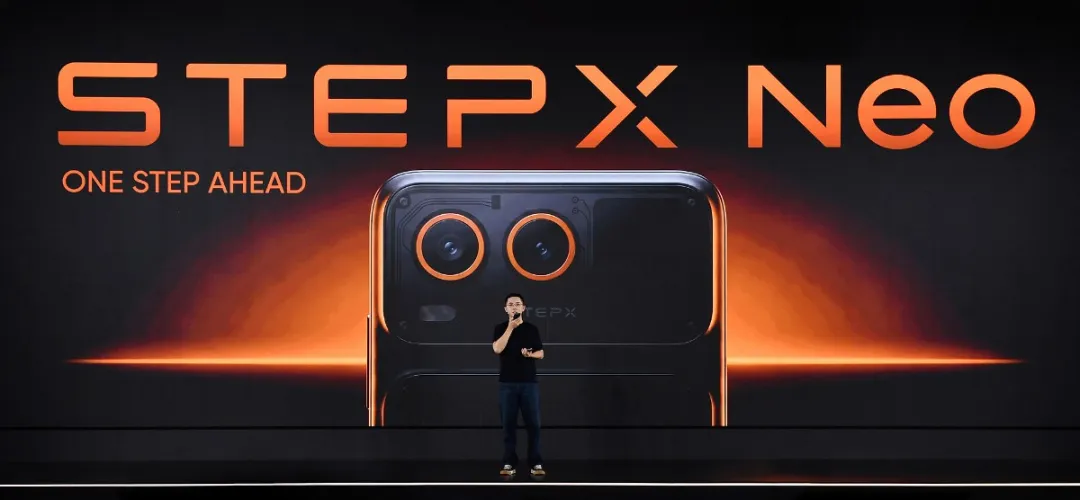
On the evening of July 13, StepOn (hereafter referred to as 'StepOn') unveiled its inaugural agent-powered smartphone, the STEP X Neo. The event showcased the AI terminal brand STEP X, centered around the official concept of 'AI Native'—hardware designed with AI at its core. Alongside, the native operating system Step AOS (Step Agentic-native OS) and the primary agent, Amoo, were introduced.
StepOn has theoretically forged a 'Model-Software-Hardware' trinity closed loop, spanning from models and systems to terminals.
In the words of its Chairman, Yin Qi, StepOn's foray into hardware was a challenging decision. He noted that many within the terminal industry cautioned against 'delving into hardware,' yet the company chose to forge ahead, aiming to create AI terminals that are purely AI Native, harnessing the power of large models.
They believe that hardware without AI is rendered obsolete. This path, though arduous, is what StepOn has chosen. Through an integrated soft-hardware approach, end-cloud collaboration, and ecosystem partnerships, StepOn endeavors to bridge the gap from agents that 'can think and speak' to those that 'can truly accomplish tasks.'
StepOn’s AI Launch Event: The Prelude
Yin Qi’s strategy is both tactical and forward-thinking. He announced on-site that this launch event was merely the prelude, with StepOn set to co-create an agent ecosystem with users over the next 100 days, introducing various agents, skills, and more. At the follow-up event 100 days later, additional agents will be revealed.
Comparing with the current timeline, the STEP X Neo hardware is ready, and the overall architecture, core capabilities, and security system of Step AOS have been unveiled. However, the product is still undergoing experience refinement and early co-creation.
According to Yin Qi, the current product is approximately 70% complete, with the remaining 30% to be finalized through real user engagement, focusing on trust, authorization, end-cloud task allocation, and scenario-specific adaptation.
It is evident that this launch event, which seemingly completed a full-stack AI-native terminal layout, has merely rushed ahead to deliver concepts, frameworks, and narratives. It is far from the second act of truly deliverable, experienceable, and scalable 'products,' with at least two generations of 'Doubao AI smartphones' still in the pipeline.
In December 2025, the Nubia M153 Doubao smartphone assistant technology preview version quietly made its debut.
This phone, a result of deep collaboration between ZTE and ByteDance, was an engineering prototype with non-top-tier configurations and a limited stock of 30,000 units. Despite the lack of large-scale promotion, its release stirred the industry and consumers alike.
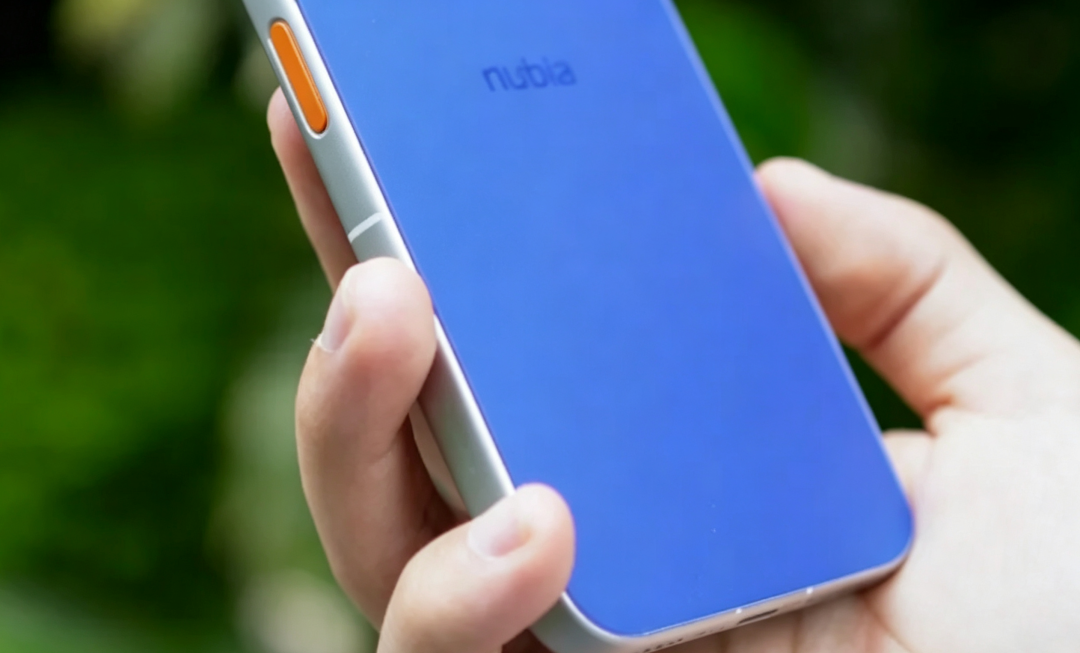 Leaked image of the upcoming Nubia AI agent-enabled smartphone. Source: Online screenshot
The key reason for the Doubao AI smartphone's popularity is that it offers a feasible path for AI smartphones to achieve true 'deep intelligence.'
Recently, ZTE has strategically released information regarding the 'first AI agent-enabled smartphone.' Ni Fei, President of ZTE's Terminal Business Division, confirmed that the 'world's first AI agent-enabled smartphone' will indeed come from Nubia. It will make its first public appearance at WAIC 2026 (World Artificial Intelligence Conference), positioned as a mass-produced flagship model available to ordinary consumers.
Clearly, StepOn has seized a timing advantage to claim the title of 'the first AI agent-enabled smartphone.' It hopes to use a first-mover narrative to offset the mass-production advantages of traditional manufacturers, buying time for product refinement and ecosystem development.
Interestingly, Yin Qi’s proposed '100-day ecosystem co-construction period' essentially initiates a futures-style launch model—'announce concepts first, deliver products later.'
This approach of 'staking a claim first, then filling in the gaps' and pushing semi-finished products to the public may become the new norm for large model vendors entering the AI terminal hardware space. This trend, though not necessarily positive, reflects the collective anxiety within the AI terminal industry.
Over the past two years, the iteration speed of foundational models has far exceeded expectations, with inference costs plummeting. Large model vendors can no longer rely solely on model parameters to establish commercial barriers. The focus of industry competition has shifted toward AI task execution capabilities and even physical AI.
Hardware represents a critical entry point in this competitive landscape. Whoever controls the hardware entry point gains the optimal solution for accumulating user data and building an ecosystem closed loop. For instance, Yin Qi believes that large models need to reach consumers through suitable terminals to form experience, data, and commercial closed loops on the consumer side.
OpenAI faced legal action from Apple primarily because Altman sought to 'learn from' Apple by establishing a next-generation hardware business, aiming to redefine human-computer interaction logic in the AI era.
From this perspective, StepOn is replicating OpenAI’s strategy, leveraging China’s rich application scenarios and complete supply chain to complete the foundational architecture layout of 'Model-System-Hardware' first. Public information indicates that StepOn has previously positioned 'foundational models' and 'AI+terminals' as key strategies, collaborating with multiple smartphone and automotive manufacturers.
Of course, Yin Qi denied this analogy. When asked in a media interview whether making smartphones was inspired by OpenAI’s hardware plans, he said, 'No. We are also unfamiliar with OpenAI’s unreleased hardware products.' StepOn pays attention to the thinking of companies like Google and Apple but ultimately needs to forge its own technical and product path.
However, it is certain that this self-developed, integrated soft-hardware path represents the best window of opportunity for domestic model vendors to seize global AI terminal discourse. Once missed, when Apple and Samsung regain their footing, domestic latecomers will only be able to play by rules defined by others.
Thus, 'StepOn' and others are eager to seize track discourse and mindshare. Even if foundational technologies, application ecosystems, and hardware are immature, they resort to 'concept' positioning first, then use time to 'fill in the gaps.'
This anxiety-driven paradigm innovation is pragmatic but risky. When 'launch' no longer equates to 'delivery,' it becomes a 'letter of intent.' So-called user co-creation becomes a buffer zone to compensate for product immaturity, deviating from the original intent of open collaboration.
I do not deny the strategic value of StepOn’s proactive efforts to break through and redefine interaction paradigms. However, if StepOn fails to deliver compelling products after 100 days, user and market patience will be exhausted.
Is this not also a form of compromise?
Yin Qi’s Challenge
As one of the 'Six Little Dragons' in AI, StepOn holds no clear advantage over competitors like Zhipu, MiniMax, and Moonshot AI in terms of AI commercialization or financing (IPO) prospects. However, being in a critical period of valuation growth and preparing for an IPO, it urgently needs a new commercial narrative to validate that its models can become a viable business.
In other words, StepOn is not merely aiming to sell more AI hardware; it seeks to prove its ability to provide AI solutions to smartphone manufacturers. Yin Qi’s self-imposed logic of not defining success solely by sales volume makes sense. However, this strategy of 'not selling smartphones for the sake of selling them' while still seeking real user feedback at scale to refine products remains particularly aggressive in today’s consumer electronics winter.
In contrast, ZTE’s commercial logic is much clearer: AI is a selling point but not a profit center. The phone itself still earns money through hardware margins, with AI features enhancing product premium and user stickiness to ultimately serve shipment targets. This is a mature model repeatedly validated in the traditional consumer electronics industry.
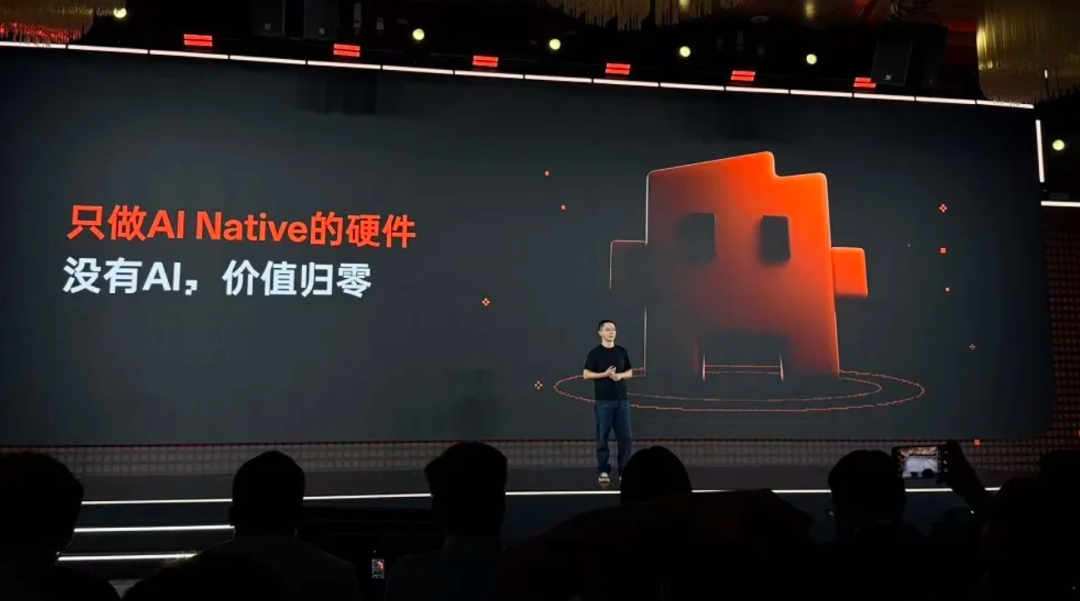 Yin Qi explains why StepOn is pursuing AI-native hardware. Source: Zhidx
StepOn hopes to control hardware entry points to sell more model services. This is why it still places foundational models at the strategic core.
However, transitioning from selling APIs to selling services involves a significant cognitive gap. Users are willing to pay for ChatGPT’s conversational abilities because it provides immediate informational value. However, for agents to handle tasks like booking tickets, the payment logic is entirely different.
Such operations do not generate new informational value; they merely replace manual user actions that could originally be done for free and independently. This inherently lacks strong payment demand unless agents can offer lower prices, faster speeds, or better options than manual operations. Otherwise, payment motivation remains extremely weak.
Looking at other players, Apple’s strategy is to embed AI capabilities into hardware premiums, with users already paying for Apple Intelligence when purchasing an iPhone. Huawei, through its HarmonyOS ecosystem, binds AI capabilities with cloud services and app stores, forming cross-subsidies.
The commonality of these models is that AI commercialization is embedded within existing, mature fee structures rather than existing independently.
StepOn’s problem is that it lacks both hardware profit margins and an established ecosystem to rely on. When hardware is unprofitable and the ecosystem is still in the 'wishing well' stage, this experiment resembles an expensive 'user co-creation' test.
The capital market may tolerate strategic losses but will not wait indefinitely.
At the second-half launch event 100 days later, if Yin Qi fails to present a clear commercialization path, external doubts will only grow. Not relying on hardware for profit is an attitude, but how to make money is a survival issue—and the latter remains unanswered.
Undeniably, this launch event holds significant industry value. StepOn clearly differentiates traditional AI smartphones from native agent-enabled smartphones, fills the foundational narrative gap for integrated AI soft-hardware in China, and outlines possible forms of agent terminals for the industry.
However, industry competition has never been about ideas, narratives, or PPT parameter comparisons. The ultimate showdown for AI terminals will be decided by real-world experience, user value, a complete ecosystem, and commercial closed loops.
For StepOn, the half-launch is just the beginning; the real test lies in the next 100 days.
This 100-day window is critical for StepOn to address product shortcomings and validate route feasibility. I also hope to see at the second-half launch event not just more agents and better benchmark scores but real answers that bridge the hardware, ecosystem, and commercial divides.
Additionally, Yin Qi will face an increasingly crowded AI terminal landscape. Recent news indicates that Honor and Alibaba are set to announce a major collaboration at WAIC 2026, likely focusing on the practical implementation of the next-generation terminal operating system, Agentic OS.
Prior to this, Honor has been the most advanced among domestic leading smartphone manufacturers in implementing AI strategies. Its latest flagship product, the Honor Robot Phone, subverts traditional smartphone forms by incorporating a 'hidden mechanical arm gimbal system.'
Meanwhile, in terms of interaction, combined with the on-device large model YOYO’s emotional recognition, the camera can intuitively respond to users through physical nods and shakes, giving AI a physical presence.
This also means that StepOn’s sole 100-day window will face far greater competitive pressure than expected.
References:
Tencent Technology, 'Yin Qi’s 200 Days at StepOn: Aiming for More Than Just a 'Doubao Phone''
Tang Chen’s Classmate, 'ZTE to Launch First AI Agent-Enabled Smartphone, This Time Without Doubao?'
-
Why Can''t AutoNavi Maps Excel in Local Services?
-
![]()
Cameras: A New Frontier in Smart Hardware at More Affordable Prices
-
Raising Nearly US$400 Million in Intensive Financing Over Six Months: Can This New Heavy Truck Player Pioneer a New Model for Autonomous Heavy Trucks?
-
![]()
Memory Chip Price Surge Imposes Heavy Burden on Smartphone Market, with Q2 Global Shipments Slumping to 13-Year Low
-
![]()
Tencent’s Acquisition of Manus: No Less Anxious Than Meta
-
![]()
Collective Failure of BBA, Only '56E' Holding On
-
![]()
Step's Apple Dream
-
![]()
The value of AI Coding is quietly shifting from 'whose model is stronger' to 'whose toolchain is denser'.