Tencent’s Acquisition of Manus: No Less Anxious Than Meta
 07/15 2026
 492
492
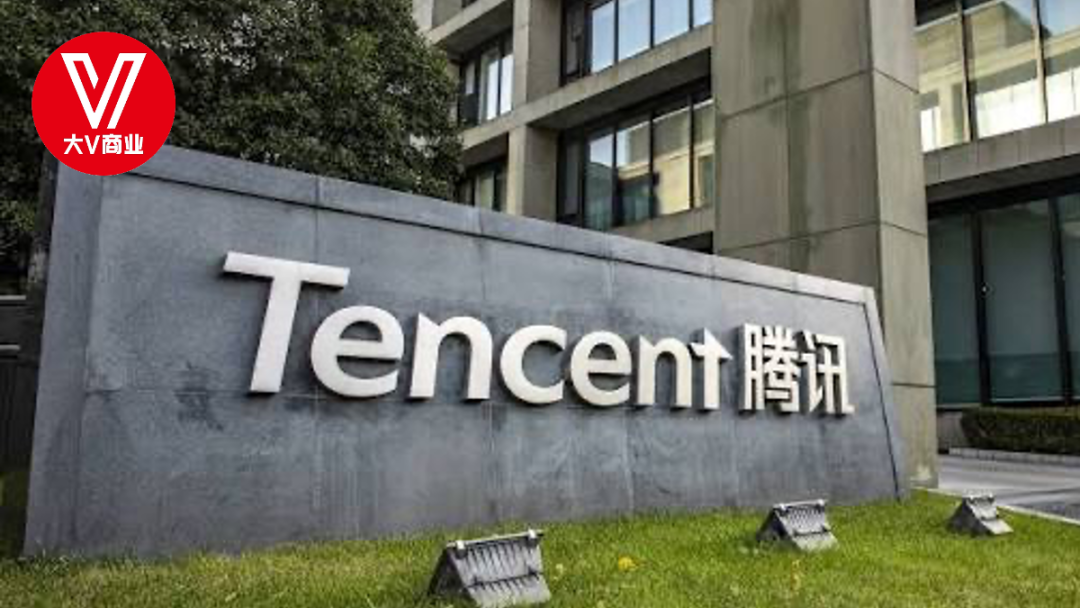
Offering high salaries to poach talent, investing extensively, and increasing expenditures—are Tencent and Meta following the same playbook?
Behind Tencent's acquisition of Manus lies a shared anxiety over AI transformation.
Recently, it was reported that Tencent is leading the formation of a Chinese capital consortium with plans to repurchase all equity of the AI Agent company Manus from Meta, at an estimated valuation of approximately $2 billion (around RMB 13.6 billion).
Additionally, Tencent will acquire the largest stake but will not hold a controlling position, allowing Manus to continue operating independently in Singapore.
This marks the latest capital development following the hindered Meta acquisition of Manus.
The most intriguing aspect of Tencent's planned acquisition of Manus is Tencent itself. With the same target company, Manus, and the same price tag of $2 billion, why is Tencent making a second purchase?
First, let's discuss the price—it's not that higher is better, but lower is preferable.
According to reports, Tencent and the Chinese consortium's offer remains at $2 billion, equivalent to RMB 13.6 billion (at an exchange rate of 6.8), the same price as Meta's original acquisition offer.
Manus' parent company, Butterfly Effect, was founded in 2022 and primarily developed the AI browser plugin Monica before Manus. Prior to its acquisition, Butterfly Effect completed two rounds of financing totaling over $10 million. The first-round investor was ZhenFund, while the second round included Sequoia China, Tencent, ZhenFund, and Wang Huiwen. After these two rounds, Butterfly Effect reached a valuation of $100 million.
It should be clarified that whether the price is high or low is viewed from Meta's perspective.
First, Meta did not increase the price.
Meta originally acquired Manus for $2 billion when its annualized revenue (ARR) was around $100 million. However, within six months, with the support of Meta's advertising channels, this figure surged to $400-500 million.
In other words, after Meta's acquisition, Manus received significant resources, and its revenue multiplied several times over, yet the price offered to Tencent and other consortia remains $2 billion.
Second, Meta did not incur losses. Without changing the amount, Meta has already incubated its own products using Manus' capabilities.
This feels like A selling a new car after a year, and B buying it at the original price, with both A and B, as well as the dealership, feeling like they've made a profit. But someone must have lost out—who was it?
Now, let's discuss equity.
According to information disclosed in public reports, Tencent has acquired the largest stake but does not hold a controlling position. From the perspective of the participants in this acquisition, Tencent, Sequoia, and ZhenFund were essentially early investors in Manus and also benefited when Manus was sold to Meta.
Logically, when Manus was sold to Meta, ZhenFund, Sequoia, and others had already exited with substantial returns.
This repurchase will inevitably lead to a "regurgitation" of gains.
Tencent's role is also noteworthy. After Manus' sale was hindered, there were reports that it intended to list independently on the Hong Kong Stock Exchange, with Tencent retaining only a financial investment role, leaving room for Manus' future listing.
Additionally, Tencent's own AI business already has significant overlap and similarities with Manus. Tencent's strategic layout in "lobster" this year and the recently popular Work Buddy are quite similar.
If Tencent were to directly acquire Manus and integrate it into its system, the impact would be limited.
Furthermore, Manus primarily targets overseas markets, and its independent development could complement Tencent.
Finally, let's talk about Tencent and Meta. Over the years, their AI strategies have been remarkably similar, and both have opted for similar acquisition strategies.
Placing this in a broader context, Tencent and Meta find themselves in similar situations.
Both Tencent and Meta are giants that rose to prominence through social media, holding billions of user access points, yet both have seemed to lag in the current wave of large language models.
Judging by Tencent's recent actions, it has also chosen to follow Meta's path by poaching talent to address shortcomings.
The most notable incident was Meta offering top AI scientists four-year compensation packages worth $200-300 million. Apple's head of foundational models, Pang Ruoming, was poached with a package worth around $200 million, and OpenAI CEO Sam Altman publicly complained about Meta offering some employees signing bonuses as high as $100 million.
Tencent's recent strategy closely resembles Meta's.
In December 2025, Tencent poached former OpenAI researcher Yao Shunyu to serve as Chief AI Scientist, reporting directly to President Martin Lau, while also heading the AI Infra and Large Language Model departments.
This implies that Tencent's previous AI Lab-led large model efforts had failed.
By March 20, Tencent issued an internal notice disbanding the AI Lab, with relevant personnel reassigned to the Large Language Model Department and Industry-Academia-Research Collaboration Center. Tencent Vice President Jiang Jie no longer heads the AI Lab.
AI is currently Tencent's most anxiety-inducing business area. Previously, Tencent had tried products like Yuanbao and "shrimp farming" (likely a codename for an AI project), and is about to launch an AI assistant for the WeChat ecosystem, Xiaowei. Despite multiple rounds of investment in Yuanbao, the results have been minimal.
In February 2025, DeepSeek emerged, and Yuanbao quickly integrated DeepSeek-R1, promoting it across Tencent's platforms. Within a month, its daily active users (DAUs) surged 20-fold, and by March, its monthly active users (MAUs) peaked at 41.64 million, ranking third in the industry and even surpassing Doubao to top Apple's free app chart at its peak.
However, Yuanbao's trajectory was not ideal. Starting in April of that year, its MAUs declined sharply for two consecutive months, dropping 44.8% month-over-month in May, and by October, its DAUs had fallen to just 5.6 million, nearly ten times less than Doubao's 54.1 million.
During the 2026 Spring Festival, Tencent launched another heavy investment, and Yuanbao saw a temporary rebound due to the holiday effect, but it still failed to shake the dominance of the two leading C-end products.
Meta has also faced setbacks in the AI field.
Meta once aimed to develop the open-source large model Llama, but the 2025 release of Llama 4 fell short of expectations, widening the gap with leading models and prompting Zuckerberg to initiate subsequent team restructuring.
Beyond large models themselves, Meta also tried consumer-end subscription-based Meta AI chatbots and agent products for advertisers.
Meta's overall AI strategy has been a failure. By early July this year, Meta was reported to plan to lease its idle AI computing power externally.
Zuckerberg admitted at an internal employee meeting that the development of AI agents had not accelerated as expected over the past four months.
Interestingly, Tencent's acquisition of Manus this time, to some extent, confirms a previous market speculation: Manus' value largely depended on the "window period" it created within the ecosystems of major companies. After being rejected by Meta, many discussed whether it had simply caught a timing opportunity—once that moment passed, the same assets might not be worth as much.
Now, Tencent's acquisition at a valuation roughly the same as Meta's original purchase price is, in a sense, a validation of that judgment.
Meta spent two years, invested tens of billions of dollars, and poached dozens of top scientists. Now, Tencent is using the same approach—offering high salaries to poach talent, doubling down on investment, and placing bets everywhere—trying to fill the final gap in its application layer.
Whether this path will ultimately lead to a similar outcome as Meta's remains unanswered, even for Tencent itself.
- The End -
-
Why Can''t AutoNavi Maps Excel in Local Services?
-
![]()
Cameras: A New Frontier in Smart Hardware at More Affordable Prices
-
Raising Nearly US$400 Million in Intensive Financing Over Six Months: Can This New Heavy Truck Player Pioneer a New Model for Autonomous Heavy Trucks?
-
![]()
Memory Chip Price Surge Imposes Heavy Burden on Smartphone Market, with Q2 Global Shipments Slumping to 13-Year Low
-
![]()
Tencent’s Acquisition of Manus: No Less Anxious Than Meta
-
![]()
Collective Failure of BBA, Only '56E' Holding On
-
![]()
Step's Apple Dream
-
![]()
The value of AI Coding is quietly shifting from 'whose model is stronger' to 'whose toolchain is denser'.