Cameras: A New Frontier in Smart Hardware at More Affordable Prices
 07/15 2026
 486
486
Author|Peng Kunfang
Editor|Lv Xinyi
Produced by|AI Things Are Getting Exciting
Recently, a marketing campaign launched by a food company has sent shockwaves through the hardware industry.
Leisure food giant Weilong has rolled out a comprehensive gift promotion, where customers purchasing 100 yuan worth of spicy strips stand a chance to win drones and CCD cameras.
It may seem ludicrous for a company selling spicy strips to include imaging devices in its promotional giveaways. However, this move inadvertently highlights the declining price point of camera hardware. Drones and digital cameras, once considered high-tech gadgets, are now being used as promotional giveaways in the fast-moving consumer goods sector to lure young consumers.
The retail price of promotional giveaways does not necessarily reflect their true cost. Factors such as low-specification customization, bulk procurement, clearance of outdated stock, and limited-quantity raffles can all significantly reduce campaign costs. Nevertheless, the underlying industry trend is unmistakable: the cost of a basic photography setup, comprising lenses, sensors, main controls, and storage systems, is plummeting.
Interestingly, as the hardware value of cameras continues to decline, there has been a notable surge in entrepreneurial ventures in the smart hardware space centered around photography.
In July 2026, Insta360 unveiled an ambitious long-term product vision—to create the Cameraman photography robot. According to Insta360, these devices will automatically frame shots, capture moments, and produce polished pieces for users. The product lineup is not confined to a single robot type; panoramic cameras, gimbals, drones, and future mobile robots could all be part of this vision.
Meanwhile, Miaodong Technology, founded by Yang Shuo, a former member of the DJI and Tesla Optimus teams, launched Beni, a mobile photography robot. Beni boasts a wheel-legged design, enabling autonomous following, jumping, obstacle navigation, and multi-angle shooting. Positioned as the "world's portable all-terrain autonomous photography robot," Beni's crowdfunding campaign on Kickstarter surpassed $1 million within just 12 hours of its launch. For a photography robot still in the exploratory phase of a new product category, this achievement at least demonstrates that consumers are willing to pay for hardware that can "autonomously move, continuously follow, and complete shooting tasks for them."
Similar transformations are occurring across various categories. Many quadruped robots can now be equipped with gimbals, camera poles, and professional cameras on their backs, undertaking tasks such as event live streaming, outdoor tracking, patrol shooting, and short video production. Drones are continuously enhancing their person-following and automatic camera movement capabilities. AI glasses and chest-mounted accessories emphasize first-person recording. Thumb cameras and magnetic cameras strive to minimize the operational feel during the shooting process.
These products span different categories, including cameras, robots, drones, and wearable devices. However, they all point towards a clear direction: photography is evolving into an independent smart hardware business.

Over the past two decades, the primary focus in the consumer imaging industry has been to provide users with superior cameras. Manufacturers have relentlessly pursued higher pixels, larger sensors, stronger image stabilization, longer focal lengths, and better low-light performance. Cameras have transitioned from professional equipment to smartphones and have since spread to cars, glasses, door locks, home robots, and various IoT terminals.
Today, capturing a clear photo is no longer a challenge. What remains inadequately addressed is the shooting process itself.
Users must decide when to start recording, find optimal camera positions, adjust angles, maintain composition, and then sift through a vast amount of footage after shooting. While image quality has improved rapidly, the labor involved in shooting has not diminished accordingly.
Smartphones have democratized photography, turning everyone into a photographer. However, during travel, someone always needs to stay behind the lens. When parents record their children's growth, they are often absent from the frame themselves. In activities like cycling, skiing, running, and ball games, users find it difficult to simultaneously perform actions and shoot. The splendid moments of pets and children often occur before the phone is raised.
The supply of camera hardware is already excessive, yet suitable camera positions, timely judgments, and complete recordings remain scarce.
This gap is now being filled by various types of hardware. Drones provide aerial positions, quadruped robots offer ground-mobile positions, AI glasses record from a first-person perspective, chest-mounted accessories reduce the need to pull out a phone, panoramic cameras allow users to shoot first and compose later, and mobile photography robots attempt to actively find angles in space.
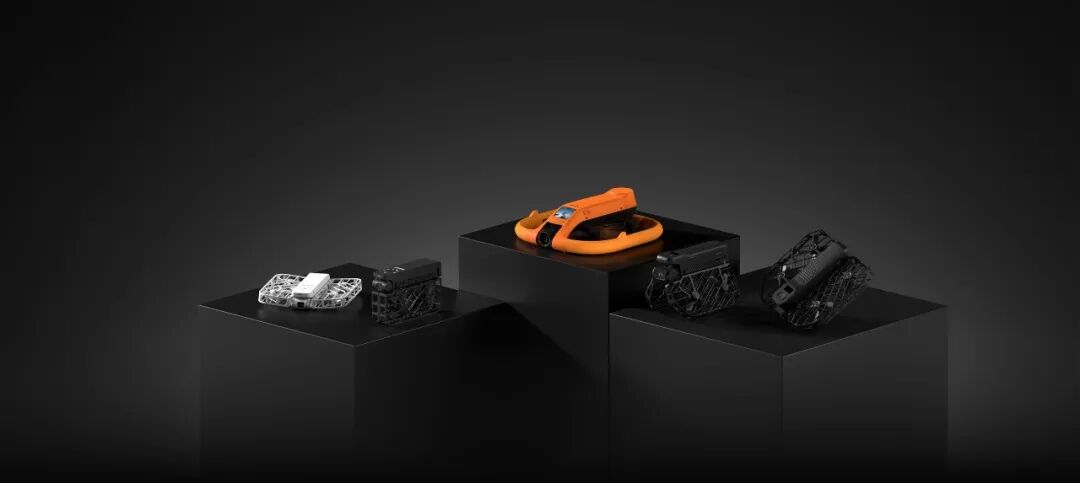
HoverAir, a brand under Zero Zero Robotics, which has received investment from Anker, focuses on a series of pocket-sized "flying cameras" with no operation threshold and no remote control. These cameras offer a fully hands-free flying and following shooting experience, allowing users to "turn on and shoot immediately." With its shooting capabilities in various sports scenarios, the brand's total revenue reached approximately 1 billion yuan in 2025, confirming the authenticity of such demand.
In essence, different products are taking different routes, but the common goal is to gradually remove the shooter from the shooting process.

Smart hardware entrepreneurship has always grappled with a fundamental question: What tasks should the device accomplish for the user?
Household chores require complex mechanical operations, health management involves sensing accuracy, medical interpretation, and compliance thresholds, emotional companionship is difficult to value stably, and pure AI Q&A can easily be replaced by smartphones. Photography occupies a unique position in this landscape.
It has relatively limited requirements for mechanical operation capabilities but can simultaneously leverage perception, positioning, motion control, environmental understanding, person recognition, content generation, and human-computer interaction capabilities. The resulting photos and videos are clearly visible, and the product value is easily perceived by users.
For robots, photography can even become a task that matures earlier than household chores. A home robot tasked with tidying up tables, folding clothes, and washing dishes needs to solve dexterous operations, object generalization, safe interaction, and extremely high reliability. A photography robot, on the other hand, mainly controls its own position and lens orientation, needing only to stably follow, avoid obstacles, maintain distance, and choose angles to deliver a relatively complete result.

The rationale behind equipping quadruped robots with camera poles can also be understood along these lines. Their legs not only enable robot movement but also form a photography chassis capable of traversing grass, stone steps, and complex terrain. The flight control of drones, the stability of gimbal cameras, the navigation of wheeled robots, and the lightweight design of wearable devices can all be transformed into capabilities for obtaining optimal camera positions.
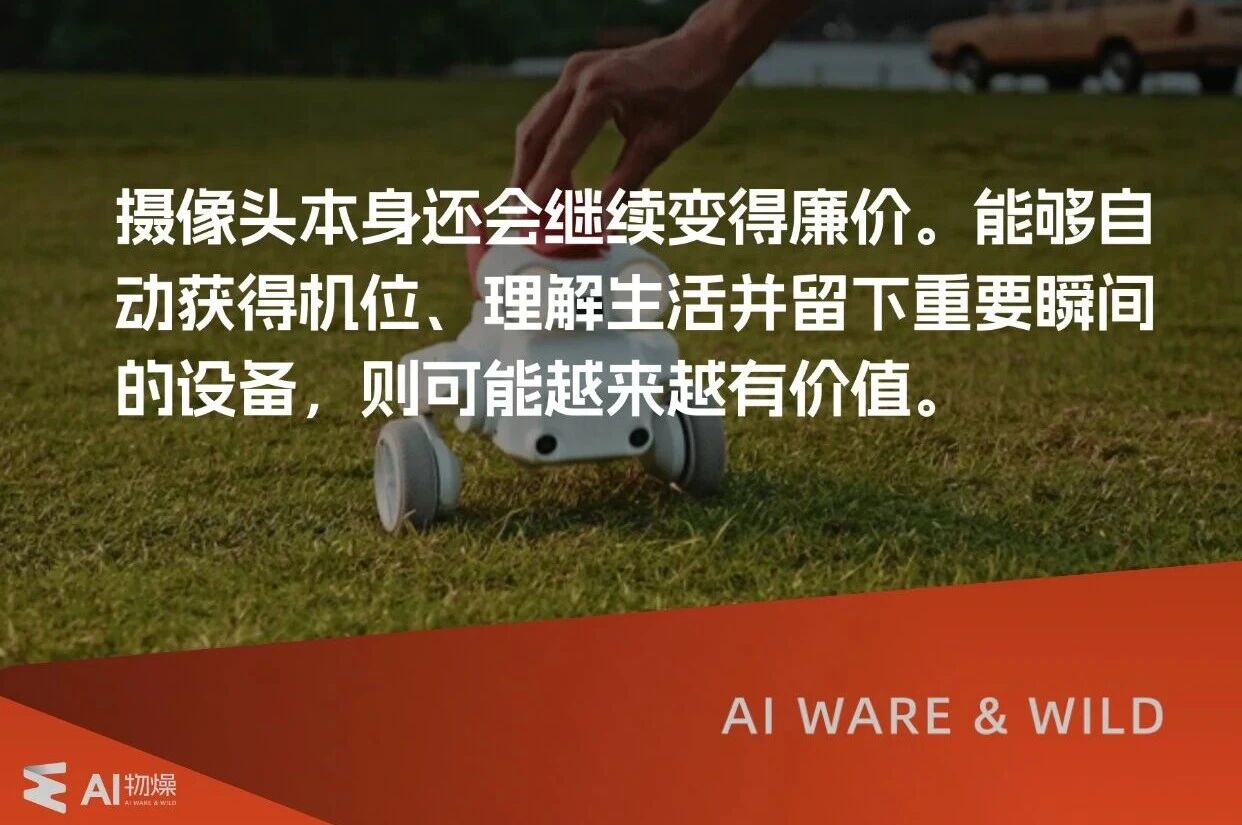
In the past, various types of smart hardware used cameras as sensors to perceive the environment. Robots relied on them to avoid obstacles, glasses used them to recognize objects, and cars depended on them to understand the road. Now, more and more products are starting to point their cameras at users. The visual capabilities of devices, in addition to serving their own decision-making, are also beginning to directly produce content that humans need.
Cameras were once the eyes of smart hardware; now, they are also becoming the work results of smart hardware.

The increasing affordability of basic camera modules does not imply that the photography business has lost its value. After hardware prices decline, value will continue to shift to higher levels.
The first level of value is the camera position. Photography is primarily a spatial task. For the same person and the same action, changes in lens distance, movement direction, pitch angle, and background relationship can result in completely different finished pieces. Traditional camera positions are determined by humans, while next-generation smart photography devices need to follow the subject, judge the path, avoid obstructions, maintain composition, and obtain stable footage while in motion. Drones, quadruped robots, and wheeled photography robots are all vying for this capability. In the future, motion control capabilities may directly become photography capabilities.
The second level of value is judgment. Automatic following does not equate to automatic photography. The device can always keep a person in the center of the frame but may not know which moment is worth preserving. True intelligent photography requires recognizing relationships between people, understanding changes in actions, perceiving expressions and emotions, and judging the climax of events. A child's first steps, a pet suddenly jumping into one's arms, a player scoring a goal, and friends raising their glasses at a gathering—these moments cannot be captured through simple face tracking.
The camera industry used to emphasize shutter speed; in the era of intelligent photography, the ability to decide when to press the shutter may be more crucial.
The third level of value is content processing. What users lack is no longer raw footage. Smartphone albums are filled with thousands of photos and videos, and action cameras, drones, and wearable devices will continue to amplify the amount of footage. Automatic selection, editing, music matching, subtitling, person categorization, and event summarization determine whether the shooting results can truly be viewed and shared.
The complete chain of intelligent photography thus emerges: cameras are responsible for seeing, hardware carriers are responsible for reaching, AI is responsible for understanding, and software is responsible for turning footage into polished works. Cloud storage, automatic editing, home video management, event live streaming, creator tools, and subscription services may also become ongoing sources of revenue.

The smart photography hardware that has emerged so far can be roughly divided into two routes.
One route brings the camera close to the body. AI glasses, chest-mounted accessories, magnetic cameras, and micro action cameras all reduce the presence of recording actions themselves. Users do not need to specifically take out the device or continuously adjust the lens; life can be continuously recorded from a first-person perspective.
The endpoint of this route may extend to personal memory. When devices accompany users for extended periods, photos and videos gradually transform into searchable life archives. Users can inquire about where they have been, who they have seen, where a particular item last appeared, or automatically organize important clips from a day, week, or year. Photography merges with AI memory here.
The other route moves the camera away from the body. Drones, quadruped robots, wheeled robots, and automatic gimbals place the lens outside the user, providing a third-person perspective. They record not only the world the user sees but also make the user themselves part of the frame.
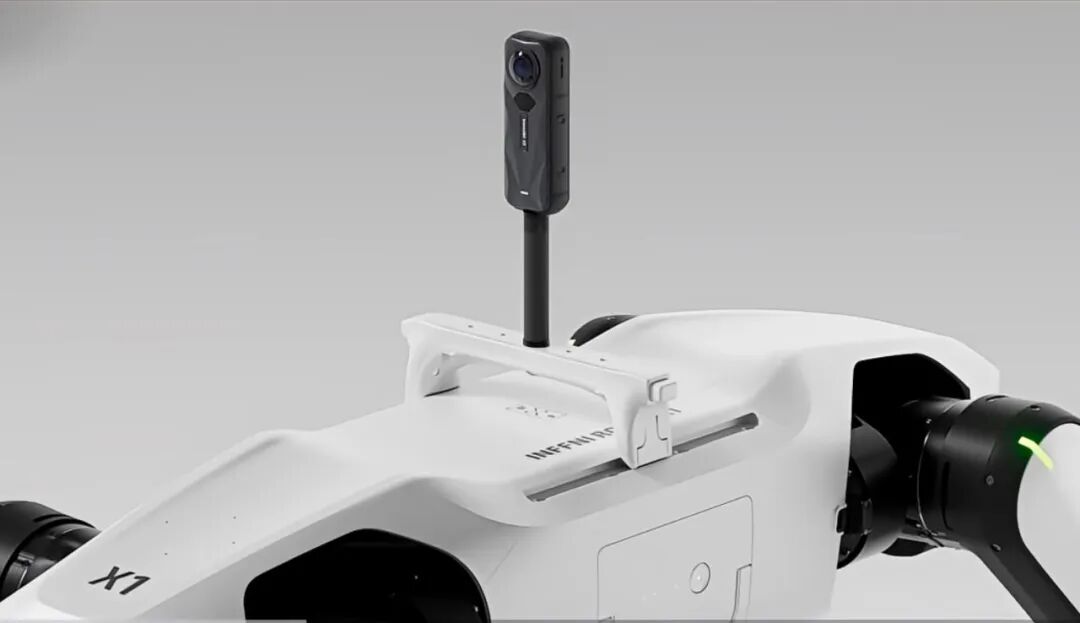
The capabilities sold by such products are akin to having a photographer constantly by your side. It will not miss activities because it is holding a phone, nor does it require another friend to leave the gathering. It can follow runners, keep its distance when children play, and continuously find angles during camping, cycling, and travel.
First-person devices are responsible for preserving "what I saw," while third-person devices are responsible for preserving "what I looked like at the time." The two routes correspond to different needs and may gradually merge in the future.

Photography has clear user value, but consumer imaging hardware has long faced an unavoidable problem: the purchase imagination of many products far exceeds their actual usage frequency.
When users buy drones, they imagine they will travel frequently; when they buy action cameras, they imagine they will continuously engage in sports and creation; when they buy panoramic cameras, they hope to capture a large amount of unique content. After the novelty wears off, the devices often remain in the cabinet for long periods. Photography robots and AI wearable cameras face the same test.
Beni's crowdfunding campaign surpassed $1 million within 12 hours of its launch, proving that this form factor has strong appeal as a new product category. The more crucial validation next lies in whether purchase impulse can translate into long-term usage: whether users are buying a robot toy that can shoot or a personal photographer who can repeatedly appear in travel, sports, and family life.
Products need to be lightweight, quiet, and safe enough, while also minimizing operation. After shooting, content must quickly enter the phone and automatically generate shareable results. Any complex connection, control, export, and editing processes will undermine the value of "automatic photography."
Privacy also poses a challenging boundary to navigate. Chest-mounted cameras and AI-powered glasses may continuously capture images of those around them, while mobile photography robots can actively turn and follow subjects. In home settings, this involves children, conversations, indoor layouts, and personal living habits. The more capable devices are in recording, the more sensitive the information they collect becomes.
Future intelligent photography products will need to incorporate clear recording indicators at the hardware level and provide local processing capabilities, permission controls, and data deletion mechanisms at the software level. Social acceptability may prove to be just as crucial as factors like image quality, battery life, and AI capabilities.
An even more formidable question persists: Can machines develop an aesthetic sense? While stable tracking, automatic composition, and subject centering can already be achieved through algorithms, exceptional photos often arise from capturing relationships, emotions, and spontaneous moments. Photography involves both rules and a blend of experience and expression. Whether intelligent hardware can transition from mechanical recording to true artistic photography will ultimately determine the premium this field can command.

From the CCD cameras and drones featured in Weilong's promotional activities to Insta360's Cameraman, Miaodong Technology's Beni, camera poles mounted on quadruped robots, AI cameras worn on the chest, and AI glasses placed on the face, photography is breaking free from the traditional confines of cameras and embracing a wider array of smart hardware forms.
The industrial logic driving this round of transformations is not overly complex. Camera modules have achieved widespread adoption, AI has begun to acquire the capability to understand images and generate content, robots and drones can autonomously navigate through space, and short video platforms offer a vast outlet for imaging content. When multiple technological and market trends converge simultaneously, photography seizes an opportunity to once again become a core product offering.
The camera industry once centered on "how to capture the world more clearly," but now, smart photography hardware aims to tackle "who will take photos for users, where to shoot, when to shoot, and how to process the images afterward." Competitors in this field are no longer confined to traditional camera manufacturers.
Drone companies excel in motion and flight control, robotics firms in mobility and environmental perception, wearable device makers in close user interaction, AI companies in understanding and organizing content, and imaging specialists in image capture, stabilization, and creator ecosystems. Various companies will enter the photography space from their respective areas of expertise, ultimately converging in the same market.
Cameras themselves will continue to become more affordable. Devices capable of automatically finding the best angle, understanding life's nuances, and capturing significant moments are likely to grow increasingly valuable.
For years, smart hardware has been in search of a "killer app." At a stage where mechanical operations are not yet fully mature and general-purpose robots still require extensive training, photography presents a realistic opportunity: machines don't need to learn to change the world first; they can begin by understanding it, following humans, and preserving memories for them.
Thus, photography is no longer merely an ancillary function of smart hardware. It is emerging as one of the first forms of intelligence that smart hardware can deliver to users.
-
Why Can''t AutoNavi Maps Excel in Local Services?
-
![]()
Cameras: A New Frontier in Smart Hardware at More Affordable Prices
-
Raising Nearly US$400 Million in Intensive Financing Over Six Months: Can This New Heavy Truck Player Pioneer a New Model for Autonomous Heavy Trucks?
-
![]()
Memory Chip Price Surge Imposes Heavy Burden on Smartphone Market, with Q2 Global Shipments Slumping to 13-Year Low
-
![]()
Tencent’s Acquisition of Manus: No Less Anxious Than Meta
-
![]()
Collective Failure of BBA, Only '56E' Holding On
-
![]()
Step's Apple Dream
-
![]()
The value of AI Coding is quietly shifting from 'whose model is stronger' to 'whose toolchain is denser'.