Physical AI Infrastructure Race: U.S. Firm General Intuition Trains Robots Using Game Footage, Reaches $2.3 Billion Valuation
 07/16 2026
 556
556
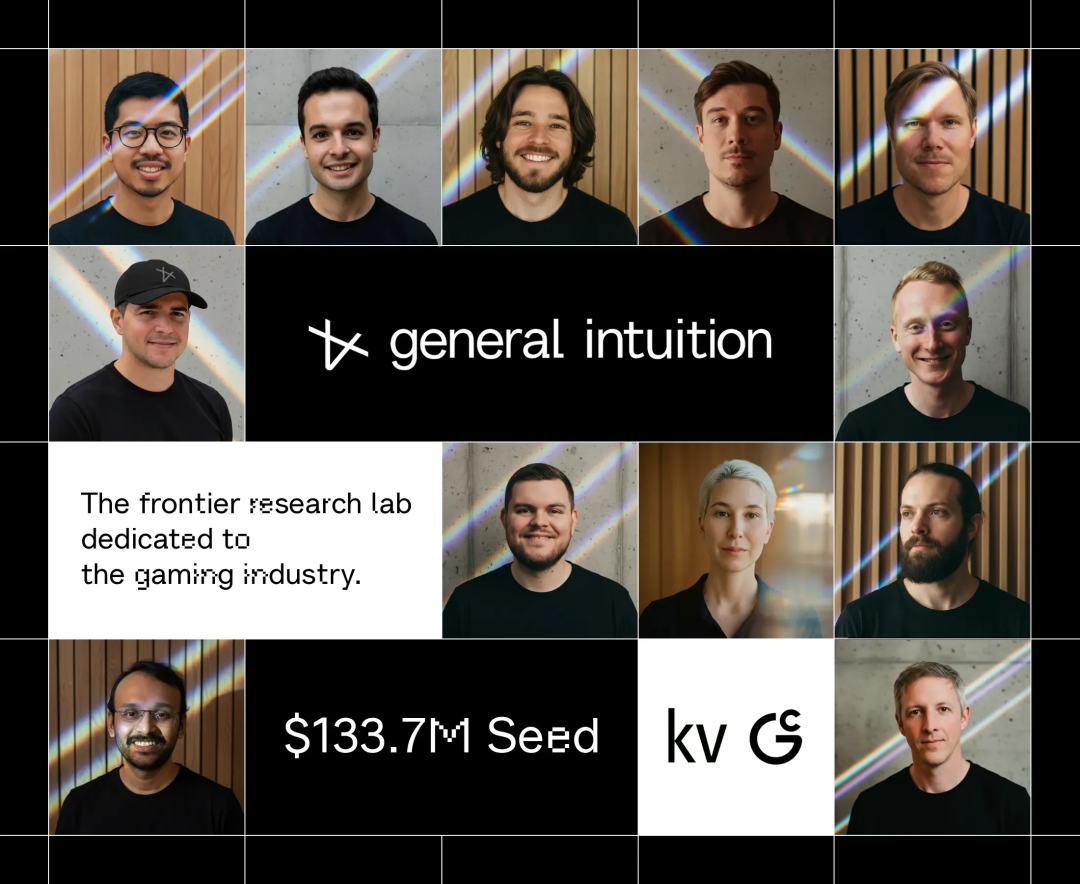 © Tide AI Editorial Team
In July 2026, New York City witnessed the emergence of another tech unicorn.
This company is not developing a ChatGPT rival or autonomous vehicles but is pioneering the creation of a 'robot brain.'
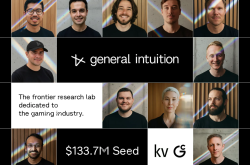
General Intuition, a New York-based startup established less than a year ago, recently secured $320 million in Series A funding in June, propelling its valuation to $2.3 billion. Leading the investment is Vinod Khosla, a Silicon Valley veteran who was an early backer of OpenAI and is now placing his bets on physical AI.
The funding round itself may not be surprising, but the company's core proposition certainly is:
Training robots no longer necessitates millions of hours of real-world data collection. A few million hours of gameplay footage will suffice.
From 'Data Collection' to 'Generating Intuition'
The traditional approach to robot training, exemplified by Tesla, typically involves:
Deploying vehicle fleets on roads, capturing data with cameras, manually labeling it, and retraining models.
According to electrek, Tesla's updated safety data page reveals that its supervised Full Self-Driving (FSD) fleet has accumulated over 10 billion miles driven. The exact cost remains undisclosed, but it is undoubtedly astronomical.
Boston Dynamics' Atlas and Figure's Figure 01 follow a similar path: developing hardware first, then amassing data, and refining models gradually.
Pim de Witte, CEO of General Intuition, argues that this approach is fundamentally flawed.
 General Intuition CEO Pim de Witte. Image Source: TechCrunch
'Many companies are currently engaged in highly specialized work, focusing on a single robotic form, a specific environment, or a particular task,'
he explained on the TechCrunch Equity podcast. 'This work will soon become obsolete.'
So, what is his alternative?
Leveraging AI to learn 'physical intuition' from millions of hours of human gameplay footage.
1. What Insights Can Be Gleaned from Gaming Data?
The answer lies in spatial awareness, temporal awareness, and causality.
Consider what happens in your brain when you play The Legend of Zelda: you judge distances, predict landing points, plan paths, and adjust force. These are not abstract mathematical calculations but 'physical intuition' honed by humans over millions of years.
General Intuition's approach is to 'distill' this intuition into a model.
Their training data encompasses gameplay footage, controller button inputs, and character movement trajectories. The model does not learn 'how to play this game' but rather 'how objects move in space.'
The result? This model can play games continuously for hours and also control real quadrupedal robots.
The company claims that only 8 minutes of real robot data are needed for fine-tuning.
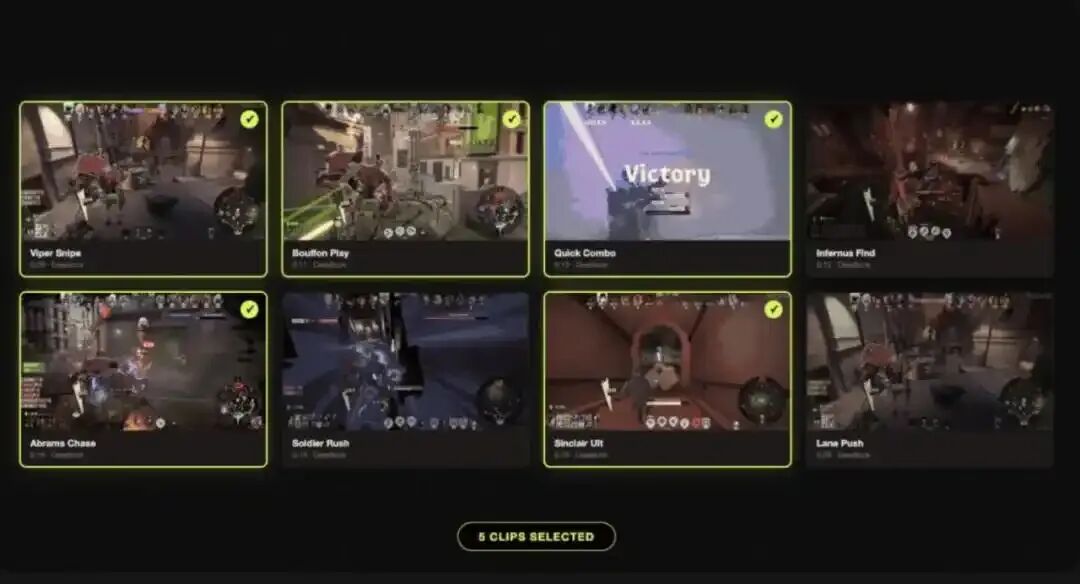
Gameplay footage used for training. Image Source: General Intuition
However, several questions linger regarding this claim:
Firstly, the 8-minute claim has only been validated in specific scenarios. Office environments are relatively structured—would the model perform equally well in construction sites, wilderness rescues, or home kitchens? The company has yet to release more comprehensive test data.
Secondly, 8 minutes refers to 'fine-tuning,' not 'training from scratch.' The base model itself was trained on millions of hours of gameplay data, and the associated costs have not been disclosed.
Thirdly, this claim lacks third-party independent verification. In the field of physical AI, where 'demonstrations are easy but mass production is hard,' skepticism towards all 'breakthrough' data is warranted.
2. What Are the Limitations of Gaming Data?
If this claim holds true, it implies two significant developments:
Firstly, robot training costs could plummet.
Secondly, the data moat as a competitive barrier might cease to exist.
De Witte demonstrated that with only 8 minutes of real robot data for fine-tuning, the model enabled a quadrupedal robot to navigate an office environment.
No LiDAR, no depth cameras—just a front-facing camera.
Zero-shot learning, dynamic obstacles, and people moving about.
'This surprised us greatly,' de Witte said. 'I think it's a sign of what's to come.'
Why Is Khosla Investing $2.3 Billion?
Vinod Khosla is no stranger to high-stakes bets.
He co-founded Sun Microsystems in 1982 and was the first institutional investor in OpenAI in 2019.
Now, he is betting big on physical AI.
Khosla Ventures has invested in at least five robotics and physical AI companies this year, with General Intuition representing the largest deal.
What does he see in this company?
General Intuition's ultimate goal is not to build robots but to create a 'robot brain'—a general foundation model for all robotics companies to utilize.
De Witte put it this way: 'We won't build self-driving car companies. We want to make it ten times easier for the next person to build a self-driving car company.'
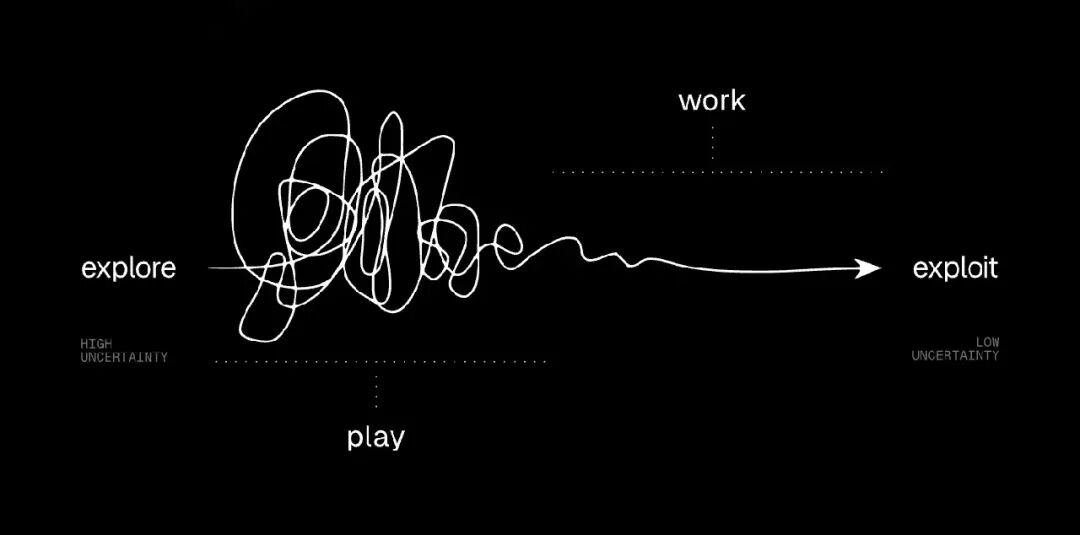
Image Source: General Intuition
This positioning is reminiscent of past successes.
In 2008, Android didn't manufacture phones—it created an operating system.
In 2023, OpenAI doesn't develop apps—it provides APIs.
The question remains: Does a general foundation model for physical AI truly exist?
Skepticism towards 'general physical models' persists in the industry.
A core objection is that the game world is deterministic, while the real world is stochastic.
In games, object motion follows fixed physics engines, whereas in reality, there's wind, friction, and unpredictable human behavior. The gap between virtual and real, known as the 'Sim-to-Real Gap,' has yet to be fully bridged by any company.
An even more pointed question arises: If gaming data is so effective, why haven't NVIDIA, Google, or Meta pursued this approach?
These companies possess the computational power, data, and gaming divisions (NVIDIA's Omniverse, Google's DeepMind, Meta's Reality Labs)—why are they still investing in simulation platforms and real-world data collection?
The likely answer is that gaming data serves as a starting point, not an endpoint.
From an investment perspective, General Intuition's valuation logic rests on two pillars:
Pillar One: If a general foundation model for physical AI truly exists, the first mover will enjoy network effects—similar to OpenAI's dominant position after GPT-3.
Pillar Two: If no such model exists, this company could be rendered worthless.
This represents a classic 'winner-take-all' bet.
Khosla Ventures' strategy is to bet on these high-risk, high-reward opportunities: either zero or tenfold returns.
Positive Market Signals:
- $320 million in funding, providing ample cash reserves
- Actual demonstrations (zero-shot navigation by a quadrupedal robot)
- Team background not fully disclosed, but Khosla typically invests only in top-tier tech teams
Risk Signals:
- Founded less than a year ago, with no public customers
- 8-minute fine-tuning only validated in office environments; generalization ability unknown
- No open-source models or APIs; ecosystem development at zero
- Competitors closing in: NVIDIA Halos for Robotics already has over 40 ecosystem partners; Figure, 1X, and others are also exploring general models

China's Position in the Physical AI Industry: Infrastructure Is Possible, but Realism Is Key
General Intuition's path reveals a crucial fact: The infrastructure layer for physical AI is taking shape, and this race has only just begun.
For China, the question isn't 'Can we build infrastructure?' but 'In what way, at what time, and with how much investment?'.
1. Three Paths, Three Choices
Three types of players are currently exploring opportunities in China's physical AI industry:
Type One: Scenario-Driven Players.
Momenta's self-driving technology, Haiqing Zhiyuan's power grid inspection, Ledong Robot's warehousing logistics, and Ubtech's humanoid robots—these companies first operate in closed loops within real scenarios, accumulate data and know-how, and then gradually extend upstream. The advantage is proximity to revenue and customers; the risk is disruption by general models.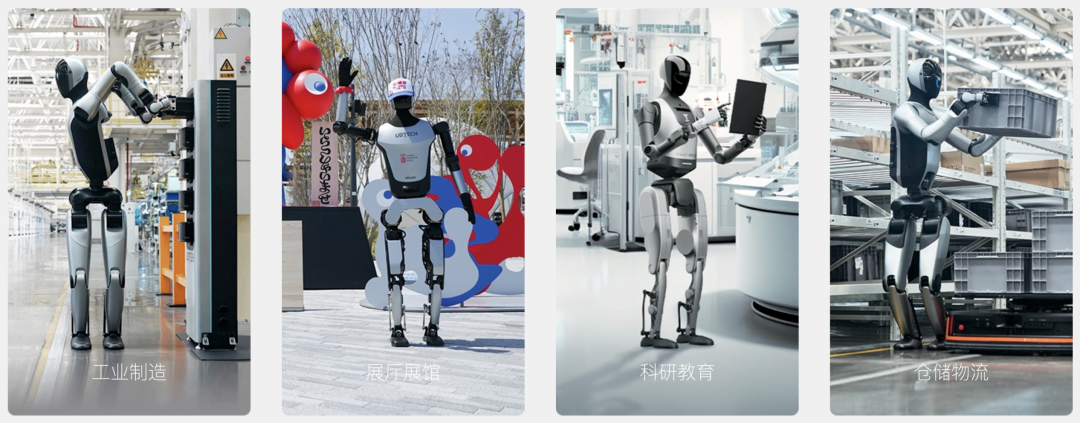
Ubtech's humanoid robot
Type Two: Simulation Platform Players.
51World (Real2Sim2Real), Qunhe Technology (home scenario modeling), and CloudMinds (cloud robot brain)—these companies have years of accumulation in 'digital twin' infrastructure. General Intuition has validated that 'virtual data works,' and China's engineering capabilities in gaming, simulation, and digital twins are strong. If general physical models require massive virtual training environments, Chinese companies could become key infrastructure providers.
Type Three: Foundation Model Players.
Startups like Zhiyuan Robot, Xingdong Era, and LimX Dynamics, along with giants like Baidu, Huawei, and ByteDance—these players are closest to General Intuition's approach: attempting to build general physical AI capabilities. However, the reality is that they face compute constraints, insufficient capital density, and existing technical gaps.
2. Realities of Building Infrastructure in China
Building physical AI infrastructure in China isn't impossible, but three realities must be acknowledged:
Firstly, compute power is a hard constraint.
Training a cross-scenario, generalized physical foundation model may require compute power approaching that of large language models. Domestic chips (H20 performance ~15% of H100) mean the same training tasks cost 5-10 times more in China. This gap won't be closed shortly, so Chinese companies need to train smarter—use less compute for more results or avoid 'training from scratch' and focus on 'fine-tuning + adaptation.'
Secondly, capital density is insufficient.
General Intuition raised $320 million in one round at a $2.3 billion valuation. Such large-scale funding is increasingly difficult in China's primary market. However, viewed differently, China doesn't need to replicate Silicon Valley's 'money-burning' approach. Huawei's Ascend and Cambricon's chips are already usable in some scenarios, and DeepSeek has proven the possibility of 'low-cost training.' China's path might be 'compensating for compute gaps with engineering efficiency.'
Thirdly, a technical gap exists but isn't insurmountable.
NVIDIA Halos already has over 40 ecosystem partners, Google Gemini Robotics is advancing, and OpenAI has a robotics team—the West does lead. However, physical AI only heated up in 2024-2025; everyone is near the starting line. NVIDIA's advantage lies in its GPU ecosystem, not physical models themselves. If China can first succeed in specific scenarios (e.g., industrial manufacturing, logistics warehousing) and form a flywheel of data-model-application, it can entirely establish infrastructure capabilities in vertical domains.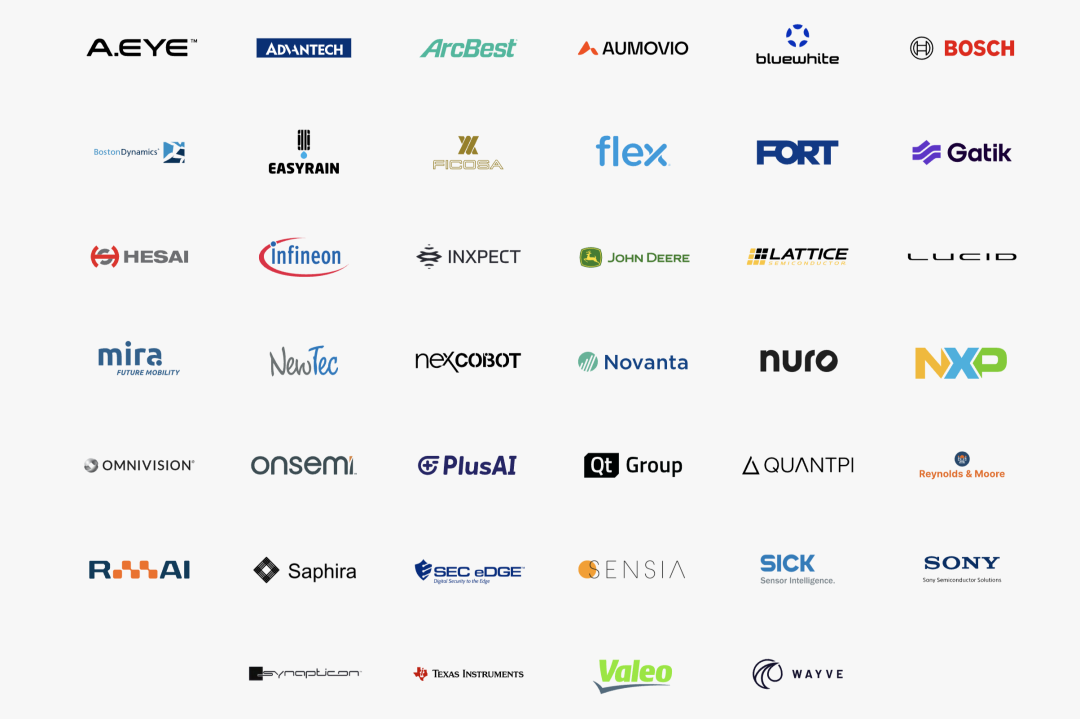
NVIDIA Halos partners
3. Scenarios as Infrastructure
The infrastructure for physical AI doesn't have to be 'one model to rule them all.' A more likely path is that in specific scenarios, data, models, and applications form closed loops, and these loops themselves become infrastructure.
Example: If Haiqing Zhiyuan accumulates 10 million kilometers of power grid inspection data, trains a perception model specifically for power equipment, and establishes a standardized deployment process—it becomes the 'infrastructure' in this vertical. Even if a general model enters, it must first adapt to Haiqing's data formats and scenario rules.
Thus, China's way forward in physical AI isn't a binary choice of 'to build infrastructure or not' but a strategic choice of 'where to build infrastructure':
- Build infrastructure in manufacturing scenarios: China's manufacturing accounts for 30% of the global total, with unmatched scenario density.
- Build infrastructure in simulation infrastructure: 51World and Qunhe Technology are already leading.
- Build infrastructure in specific hardware: Haiqing Zhiyuan's multispectral perception and Ledong Robot's sensor fusion are irreplaceable capabilities.
As for the general physical foundational model—that 'universal, cross-scenario, GPT-like unified model'—China is unlikely to be the first to achieve it in the short term.
But that doesn't matter.
The battle for foundational models is not a single fight but multiple battles. While overseas giants compete for the 'general foundation,' Chinese companies can establish irreplaceability in 'vertical foundations.'
The battle for foundational models rages overseas, while the battle for vertical foundations unfolds in China. This aligns with comparative advantage-based division
Secondly, is it inevitable that the integration of simulation platforms and general models will emerge as the 'standard setup' for embodied AI? Should the collaboration between 51WORLD and General Intuition prove successful, will Chinese firms be able to follow suit and replicate this strategy?
Finally, here's a forecast: The race for dominance in embodied AI is poised to escalate into a 'foundational model positioning war' in the latter half of 2026. General Intuition, NVIDIA, Google, Tesla, and even top-tier Chinese enterprises are expected to intensify their efforts in this domain. Whether the $2.3 billion valuation is merely a speculative bubble will become apparent within the next 12 months.
However, one fact remains unequivocal: The entity that first attains 'general physical intuition' will be the one to shape the next-generation robot operating system.
Moreover, this operating system has the potential to surpass the combined scale of Windows and Android.
This article is an adapted and rewritten version of TechCrunch's original piece titled 'General Intuition Claims Just 8 Minutes of Real-World Data Fine-Tuning Needed, But Does a 'General Foundational Model' for Embodied AI Really Exist?'. The perspectives presented herein reflect the stance of Chaoyong AI and should not be construed as investment advice.
-
![]()
Liu Qiangdong Gains Crucial Foothold as Tencent Forms Alliance to Counter ByteDance's Dominance
-
![]()
Physical AI Infrastructure Race: U.S. Firm General Intuition Trains Robots Using Game Footage, Reaches $2.3 Billion Valuation
-
![]()
DeepSeek May Launch IPO as Early as This Year Amid 'Insatiable Demand for Computing Power'
-
![]()
Huawei and Tesla Pioneer the Path! Modular Design Takes Center Stage, Electric Vehicles Bid Adieu to 'Instant Obsolescence'
-
![]()
Expected to Rake in a Staggering 24.4 Billion in the First Half of the Year: What Gives Foxconn Industrial Internet the Competitive Edge?
-
![]()
Tencent Invests 13.6 Billion to Become a 'Minority Shareholder': What Are Its Ambitions with Manus?
-
![]()
Computing Power Extends to Space: Aerospace AI Sparks a New Industrial Era
-
AI's Richest Person Revealed: A Native of Zhanjiang!