Zhipu AI Aims to 'Conquer the Summit' While Also 'Reaping Benefits Along the Journey'
 07/16 2026
 568
568
Editor: Liu Zhicheng
Reviewer: Xu Xu
"Conquer the summit and reap benefits along the journey."
This is a widely acknowledged strategic principle in Chinese business history.
From past to present, from Huawei's Ren Zhengfei to Baidu Apollo, and industry leaders across various sectors, all have firmly believed in and consistently adhered to this principle...
Recently, Tang Jie, the founder of Zhipu AI—a newcomer to the trillion-yuan market cap club—also released an internal letter.
The letter is expansive in scope, discussing historical context, the strategic goals of the current AI technology wave, and future plans to "achieve new milestones"...
In essence, it conveys one message: "This time, we aim to reach a pinnacle that belongs to all of humanity!"

From my perspective as an AI practitioner, given its current market position, Zhipu's ambitious aspirations to climb to new heights are incredibly inspiring and exciting.
However, more pragmatic investors have noted a key statement in the letter:
Regarding the plan to achieve new milestones, "Over the next two years, we intend to make strategic investments—not pursuing short-term application monetization but aiming directly for the next AGI pinnacle."
This immediately drew attention from the capital markets.
After all, from both a market cap management and strategic sustainability perspective, if Zhipu does not pursue short-term application monetization, won't this plan become a pure cost center in the near future?
While the future may be full of possibilities, how will the capital markets view this next?
So, on the journey to conquer the AGI technical summit, should Zhipu also not neglect to reap benefits along the way?
The Wave Has Arrived: Must We Look Down to Reach Higher?
Actually, the capital markets' sensitivity to this decision is understandable.
Primarily because Zhipu has become a flagbearer for Chinese AI, so any less-than-perfect decision could have far-reaching impacts.
Let's examine this from three perspectives: First, for external investors, what is the current situation?
On one hand, Zhipu just announced a placement of up to 19.78 million new H shares at HK$1,588 each on the Hong Kong Stock Exchange, raising a net amount of approximately HK$31.375 billion.
This comes at a time when investors have just supported Zhipu with real money, and expectations for the company's future are at their peak.
On the other hand, Zhipu is currently in a stock lock-up period. Although several institutional investors have explicitly stated their long-term confidence and intention to continue holding Zhipu shares, this has not entirely dispelled market concerns about potential shareholder reductions and profit-taking.
Primarily because other shareholders are already securing their gains.
For example, Luster Lighting recently announced its intention to reduce its Zhipu stake. Although the reduction is small, many see it as a noteworthy signal.
Amid this delicate mix of investor anticipation and concern, Zhipu's sudden announcement to invest heavily and voluntarily forgo short-term application monetization raises a practical question:
Even if Zhipu's plan succeeds in the future and opens up new imaginative spaces, won't it become a pure cost liability in the short term?
If the stock price fluctuates as a result, how will new investors feel? How will existing shareholders who did not plan to reduce their stakes react?
Moreover, there is a consensus in the investment market: AI is subject to bubbles. While market enthusiasm is high, bubbles are still bubbles and will eventually burst.
The recent retreat in Minimax's stock price and market cap may be just the beginning. Then, how long can large-market-cap, low-performance companies like Zhipu sustain themselves?
Therefore, beyond coding, it is crucial for Zhipu to establish a new valuation anchor point for its next milestone, but equally important is exploring AI commercialization and monetization...
Second, from the perspective of the company itself or strategic sustainability, Zhipu's plan to achieve new milestones should also continuously attempt to achieve commercial closure while pushing technical limits.
After all, mere technological leadership is not a sustainable competitive advantage.
Technology only becomes a sustainable competitive advantage when it translates into lower commercial costs, stronger brand momentum, and higher user switching costs. Otherwise, if you lead by six months today, competitors may catch up tomorrow, rendering your past R&D investments sunk costs.
This is evident from Zhipu's recent surpassing of Anthropic Opus 4.8's programming benchmark scores with GLM-5.2, and from the fact that few have managed to establish brand advantages amid intense competition from models like QianWen, YuanBao, and Wenxin.
Moreover, such explorations to "challenge the physical and algorithmic limits of current technology" are generally more suitable for established giants with deep pockets and high fault tolerance.
For example, Huawei's chip development was undoubtedly another climb up the summit.
Especially after being "choked," Huawei did not abandon its design and R&D of Kirin chips, leading to the eventual return of series like the Mate 60 and Kirin 9000.
What supported this? Huawei's other stable businesses in telecommunications, cloud, and automotive provided the necessary financial support.
Another example is Alibaba Cloud, which dared to set the ambitious goal of investing over 380 billion yuan in cloud and AI infrastructure over the next three years because it has cash-flow businesses like Alibaba's e-commerce to fall back on...
Of course, this is not to say that innovation can only come from large corporations. Rather, it emphasizes a validated reality:
To truly break through, latecomers must either find a new technological shortcut—like DeepSeek, which achieves better results at lower costs, carving out a niche amid giant shadows—
Or, they must maximize efficiency monetization—so that every yuan invested yields both technological breakthroughs and commercial revenue, climbing technical peaks while pocketing benefits along the way.
Especially for AI companies like Zhipu, which are still in the loss-making stage and primarily rely on public financing for development, this is not just a survival baseline for strategic sustainability but also a crucial litmus test to prove AI's value to the capital markets.
Just as when the world's richest man, Elon Musk, took SpaceX public, was it really because he lacked funds?
No. He understands better than anyone that commercialization and technological leaps are not sequential but two sides of the same coin, mutually reinforcing and accelerating each other.
Therefore, for Zhipu, conquering the AGI summit is fine, but it is best to produce something self-sustaining at every step. Ultimately, technological idealism must tread the path of commercial realism to become reality.
Otherwise, it may end up like self-driving startups Pony.ai and WeRide, which initially pursued aggressive L4 technology only to pivot to "reaping benefits along the way" and prioritizing survival after repeated setbacks...
Or OPPO's Zeku chip business, which initially aimed for technical peaks but ultimately disbanded due to cost and commercialization pressures...
Third, from the perspective of the nation and the AI industry, as a leading star in China's and even the global AI circle, Zhipu's market position actually transcends the company itself and has been imbued with symbolic significance—it is a vanguard in the new industrial revolution, a typical representative of the nation's technological competitiveness, and a flagbearer shaping future expectations for the AI industry.
This expectation is akin to the kind of 0-to-1 breakthrough accomplished by Zhang Xue's motorcycles. People yearn to see not just the success of a single product but the realization of an independent innovation pathway.
Therefore, what Zhipu needs now is steady innovation rather than reckless, all-or-nothing gambles. It cannot afford to fall easily or even shake violently; any fluctuation could ripple into industry-wide confidence shocks.
This is because, often, industry confidence hinges on the leading flagbearer.
Just as when DeepSeek broke through, Chinese large models briefly saw hope in overtaking ChatGPT;
Or after BYD and Aito rose, once-unbeatable BBA and Tesla became less daunting;
Or with the relentless pursuit by Unitree Technology and ZhiYuan, Optimus robots under Elon Musk are no longer far ahead...
Therefore, true technological leadership lies in grounding every technical leap into industrializable footholds, transforming individual commercial successes into certain assets for the entire ecosystem.
This is the most precious gift Zhipu can offer the Chinese AI industry on its future climb up the summit...
Can AGI's Technological Ideals Sustain the Next Trillion-Yuan Valuation?
Delving deeper, why does this internal letter leave such an obvious point of contention during the current market sensitivity?
Interestingly, this may be a deliberate move by Zhipu to maintain its high valuation premium.
Simply put, Zhipu's and Anthropic's core business models have taken initial shape, primarily focusing on AI-assisted programming and code automation, targeting global enterprises deploying AI as well as the vast engineer and developer communities.
From a commercial landing perspective, this is indeed positive, but in capital markets, the opposite holds true.
A transparent story often lacks room for higher premiums; instead, narratives shrouded in mystery and suspense command the highest pricing power in secondary markets.
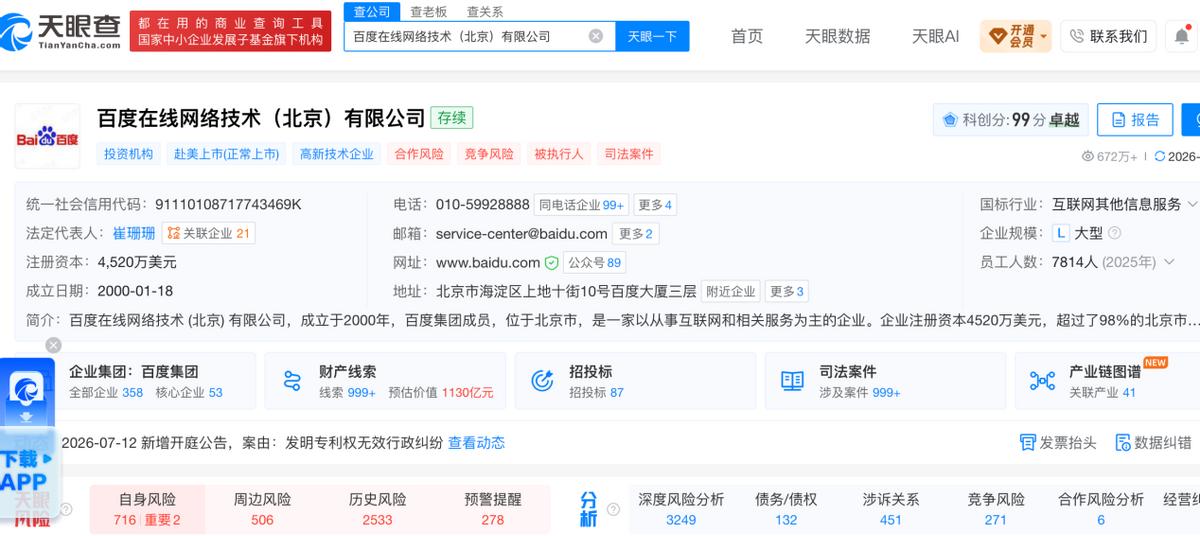
The most typical examples are right before us: For instance, Kunlun Core recently revealed a target valuation of approximately $50 billion for its IPO. According to Tianyancha APP, Baidu's total market cap is around $37.3 billion (as of the 14th, U.S. stock market close), making the subsidiary nearly 35% more valuable than the parent company;
For example, Kling AI was previously valued at $20 billion, while Kuaishou-W (HK:01024) currently has a total market cap of around 197 billion yuan;
Another example is Elon Musk's SpaceX surpassing Tesla, with the former now valued at approximately $1.79 trillion and the latter at $1.49 trillion.
Thus, truth is the adversary of market valuation, while suspense is the ticket to capital premiums.
Therefore, the more successful coding becomes, the closer Zhipu's imaginative narrative comes to its end, and once the story concludes, the market will weigh its performance metrics.
For example, how much ARR has been achieved, how fast revenue is growing, user retention rates, etc.
Against this backdrop, is the coding business truly worth a trillion yuan? Can Zhipu's annual revenue of 724.3 million yuan sustain its current market valuation exceeding 800 billion yuan?
This remains highly uncertain.
Therefore, as a precaution, Minimax and Zhipu have recently shifted to telling grander AGI stories from a technological perspective.
This approach is correct, but again, if it relies solely on chasing concepts without balancing short-term application monetization, this path may not be secure.
The reason is simple: AGI is not a new story. Even last June, the "first AGI stock on the Hong Kong Stock Exchange" (Unisound) was already born.
How has Unisound performed?
At its peak, its market cap once exceeded 62 billion Hong Kong dollars, but now (as of the 15th, lunch break), its total market cap is around 5 billion yuan, lagging far behind Zhipu and others.
The core issue is that while Unisound raised the AGI concept high, its technological narrative lacked sufficient commercial validation.
For example, last month, Unisound released its U2 large model, emphasizing continuous execution capabilities for real-world tasks. It achieved impressive results in domestic and international authoritative evaluations, with some media interpreting U2's launch as Unisound's DeepSeek moment.
However, because U2 demonstrated technological product capabilities while the market wanted to see how these capabilities translated into tangible performance, this mismatch failed to halt Unisound's continuous decline in the capital markets...
Of course, in the long run, Unisound does not represent the full imagination of AGI, and Zhipu is not incapable of creating new miracles.
Just as in the embodied AI field, "the first humanoid robot stock" Ubtech and Unitree Technology continue to gain attention from the Spring Festival Gala and the market despite Ubtech's 2023 IPO, which essentially made the robotics industry's development transparent.
Why?
The answer is the opposite of Unisound's situation. When facing a company that delivers high-growth performance while also telling compelling stories (e.g., releasing the world's first mass-produced manned transforming mecha GD01, collaborating with NVIDIA), investors are naturally willing to offer more growth expectations.
These contrasting cases point to one thing for Zhipu:
What truly sustains a high valuation is never the height of a single concept but the thickness of mutual reinforcement between technology and business.
When a company uses certain commercial footsteps to measure uncertain technological frontiers, the capital markets are willing to reserve ample imaginative space for its every leap.
On the journey to explore AGI, Zhipu must have the courage to gaze at the stars and the clarity to watch its step.
Climbing may disregard short-term gains or losses, but every step must resonate...
Disclaimer: All information cited in this article is sourced from company filings and publicly available materials. The author makes no guarantees regarding completeness or timeliness. Stock market investments carry risks; please exercise caution. The views expressed herein are commentary only and do not constitute investment advice. Whether to invest is your decision; please assess risks independently.
-
![]()
Personnel Shuffle: Independent Director Mi Xuming Steps Down from OFILM
-
![]()
Net Profit Anticipated to Skyrocket by 103%: What Gives This Optical Company a Competitive Edge?
-
In Just One Year, China Unveils Unicorns Valued at 10 Trillion Yuan!
-
![]()
6 Park Companies Shine at WAIC: How Hong Kong Science Park Bridges AI from Research to Industry
-
![]()
Wang Wenjing’s Third Act: Can Yonyou Reinvent Itself in the AI Era?
-
![]()
Performance Coupe Entry Threshold Reduced to 170,000 Yuan: Assessing the 2027 Exeed ES's Prospects
-
![]()
Battery "Crisis" for 4 Million New Energy Commercial Vehicles
-
【Focus】Fluorinated Photosensitive Polyimide (FPSPI): A High-End Subdivision of PSPI with Great Potential in High-Tech Industries