Battery "Crisis" for 4 Million New Energy Commercial Vehicles
 07/21 2026
 492
492
In July 2026, two mandatory national standards for the electric vehicle sector were officially implemented. Shortly before and after the standards took effect, a large-scale controversy over power battery quality continued to intensify. New energy commercial vehicles equipped with a certain brand's 177Ah lithium iron phosphate battery cells experienced concentrated issues such as cell swelling, leakage, and insulation failures.
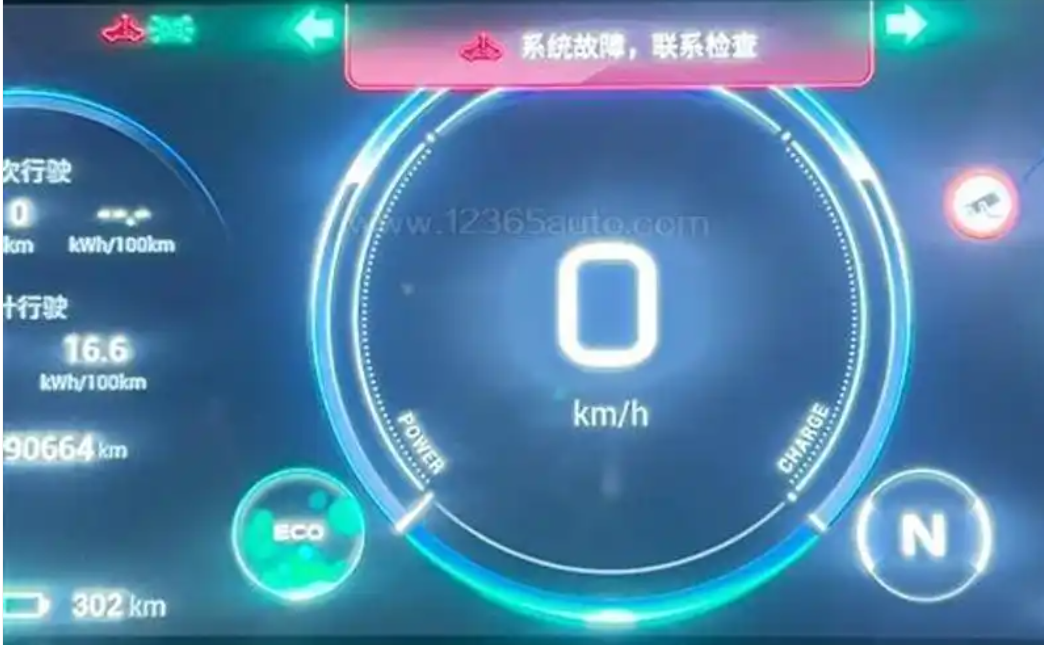
The affected vehicles were produced in batches between 2022 and 2023, with mileage almost entirely falling between 150,000 and 250,000 kilometers—a sensitive threshold where many commercial vehicles have just exceeded or are about to exceed the manufacturer's warranty period. Industry insiders stated that this is not an isolated issue for a single brand. Millions of new energy commercial vehicles across the country are gradually entering a period of high battery failure rates. This is an industry-wide challenge that was inevitable.

Private Car Warranties vs. Commercial Vehicle Intensity
The failures manifested in strikingly similar ways: a sudden and significant drop in range, followed by insulation failure alerts on the dashboard, power output restrictions by the Battery Management System (BMS), and ultimately, the vehicle losing power and shutting down while in operation. Post-disassembly technical analysis pointed to a common internal cause: uneven electrode coating, ineffective moisture control in the electrolyte, and continuous internal gas generation after long-term charge-discharge cycles. This pressure forced open the explosion-proof valves, causing electrolyte leakage and corrosion of copper busbars.
The core issue is straightforward: the usage intensity of commercial vehicles is on an entirely different scale from private cars.
As of 2026, China's new energy vehicle fleet has surpassed 43 million units, with the first large-scale deployment of commercial vehicles such as ride-hailing cars and taxis now entering a period of concentrated battery degradation. Under high-intensity operations, commercial vehicles accumulate 80,000 to 100,000 kilometers annually, with battery degradation reaching 30% to 40% within 3 to 4 years.
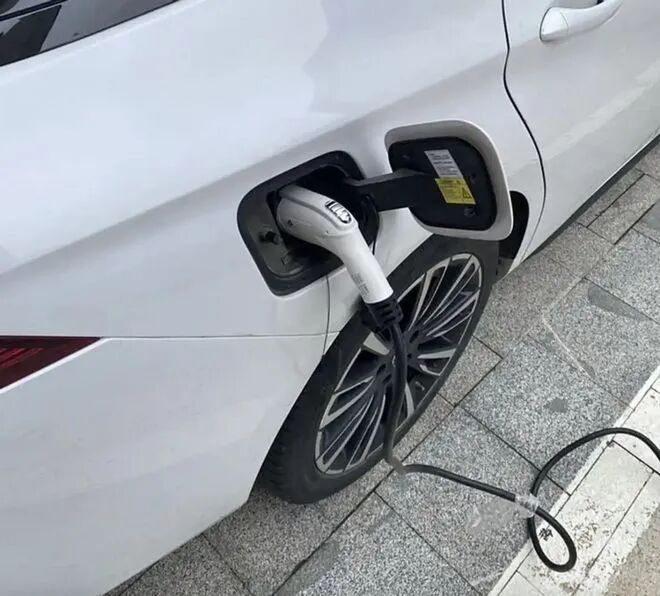
For ride-hailing vehicles traveling 300 to 400 kilometers daily, this means battery failure occurs after approximately 1,500 to 2,000 deep charge-discharge cycles. However, automotive-grade lithium iron phosphate battery cells are typically designed for a cycle life exceeding 3,000 cycles. This batch failure reflects that the cells' long-cycle performance under high-intensity conditions fell far short of design expectations.
Current national standards require power battery cells to maintain at least 80% of their original capacity after 1,000 cycles of 1C-rate testing. Theoretically, a vehicle with a 500-kilometer range should still have 400 kilometers of range after 500,000 kilometers. However, reality falls far short of this ideal.
A new energy vehicle industry analyst stated, "Many automakers use the same vehicle models and warranty standards for both private and commercial markets, but commercial vehicles endure three to five times the usage intensity of private cars. An 8-year, 150,000-kilometer warranty might last a private car until it's scrapped, but a ride-hailing vehicle would exhaust it in two to three years. Problems are inevitable."
Hidden Concerns for 4 Million Commercial Vehicles: Systemic Shortcomings Exposed
The broader context of this controversy is that the battery protection for millions of new energy commercial vehicles across the country is operating in a regulatory vacuum.
On March 1, 2025, the "Inspection Regulations for the Operational Safety Performance of New Energy Vehicles" was officially implemented, making safety charging inspections and electrical safety tests for power batteries mandatory. For commercial new energy vehicles, additional safety discharge inspections for power batteries are required.
On July 1, the "Safety Requirements for Power Batteries Used in Electric Vehicles" (GB38031-2025) took effect, establishing "no fire, no explosion" as a mandatory baseline for the first time. However, the issue is that these new standards primarily apply to vehicle models seeking new type approvals, leaving already-operational vehicles outside the scope of mandatory compliance.
This means that millions of commercial new energy vehicles already on the road are not protected under the new standards.
A legal expert noted that if a product exhibits batch or systemic manufacturing defects, the manufacturer's statutory recall obligation remains enforceable regardless of warranty expiration. Automakers are the primary parties responsible for compliance with the "Three Guarantees" (repair, replacement, refund), meaning that even if a vehicle exceeds its warranty mileage, automakers must still provide free repairs or battery replacements if regulatory authorities confirm inherent defects in the battery cells.
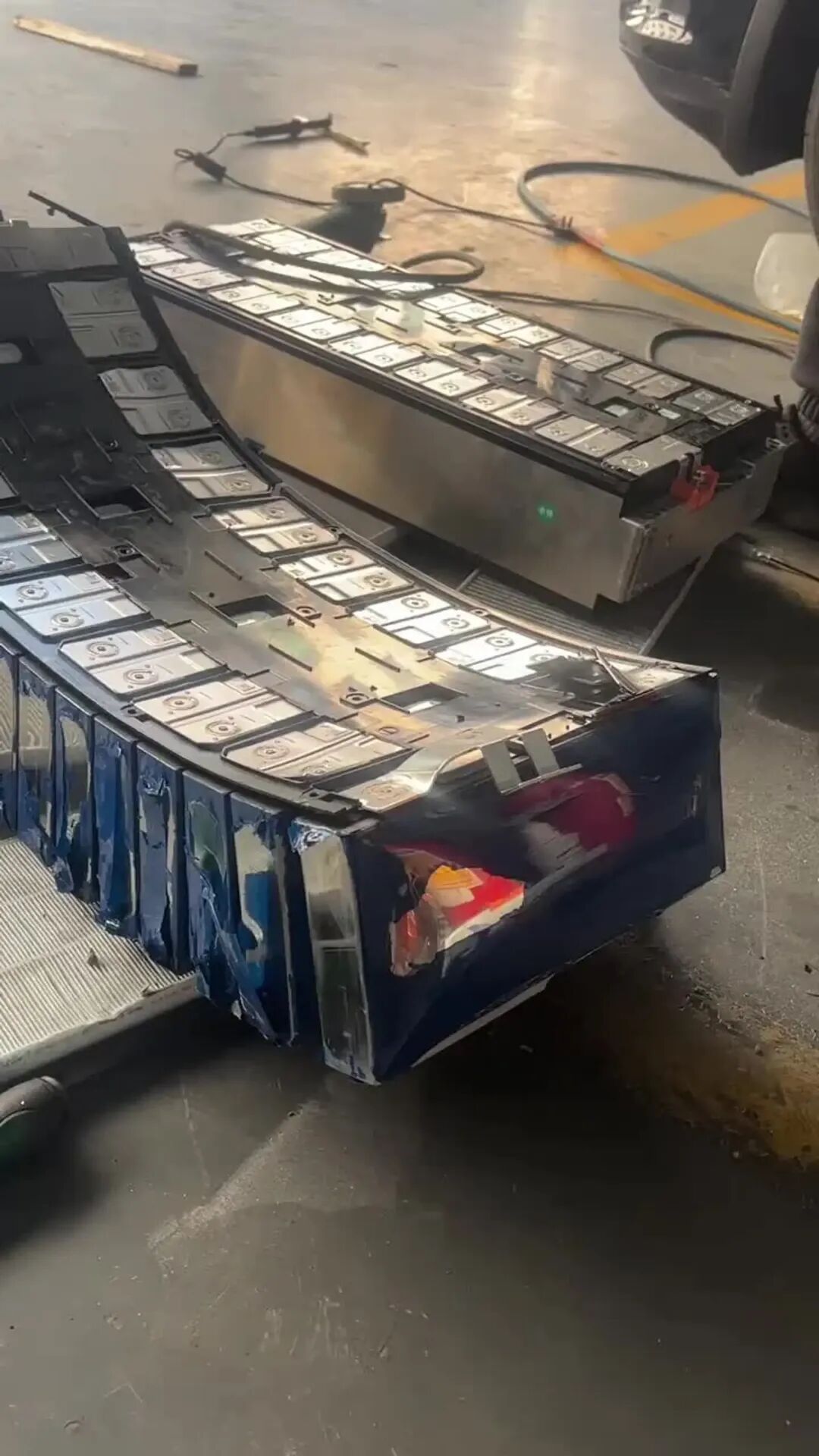
However, legal remedies provide after-the-fact redress, while systemic design offers proactive protection.
"The lack of unified, detailed standards for power battery annual inspections, retirement recycling, and lifespan definition creates discrepancies between automakers' warranty commitments and owners' actual usage expectations, leading to frequent disputes," an industry observer pointed out. The supporting rules for the entire industrial lifecycle still have shortcomings, and commercial vehicles are the first to bear the brunt of these gaps.
More concerningly, some commercial vehicle owners, seeking to extend vehicle lifespans, resort to illegal modifications, such as installing "external batteries" in trunks. These privately installed batteries often use non-standard components with no guarantees for heat dissipation or safety. The emergence of this gray-market supply chain, driven by battery degradation, itself underscores regulatory deficiencies.
How Should Battery Protection for Commercial Vehicles Be Ensured?
This controversy raises a deeper question: Given the vast difference in usage intensity between commercial and private vehicles, why not introduce dedicated warranty policies for commercial vehicles?
In fact, some automakers are already experimenting with this approach.
BYD has launched a "Ride-Hailing Edition" model tailored for the ride-hailing market. Commercial vehicles under this program enjoy a 6-year or 600,000-kilometer warranty for the battery, motor, and electronics, with a 1-year or 100,000-kilometer warranty for the entire vehicle. However, pricing is higher than standard models. BYD's warranty strategy is clear: the commercial edition covers the full lifecycle of ride-hailing vehicles with extended battery warranty mileage, while compressing the overall vehicle warranty period and raising prices to balance costs and risks.
A new energy vehicle industry analyst told reporters, "BYD's Ride-Hailing Edition model is worth studying. It completely separates commercial and private markets, with different warranty policies, pricing, and configurations. At least this way, commercial vehicle owners know exactly what they're buying and what's covered."
Beyond the warranty dilemmas of charging models, the battery swapping model offers another possibility for commercial vehicles.
The core competitive advantage of battery swapping is no longer "speed" but rather the battery health management enabled by "vehicle-battery separation" and the ability to address the fundamental industry challenge of "mismatched lifespans between vehicles and batteries."
For commercial vehicles, the advantages of the battery swapping model are structural:
First, centralized battery asset management and unified operation and maintenance. The battery swapping system establishes a comprehensive battery management framework spanning research and development, monitoring, diagnostics, and operations, with deep integration between swapping stations and cloud-based systems. Each battery is digitized from the manufacturing stage, with operational data on temperature, voltage, cycles, and load continuously fed back to the cloud. A swapping station essentially performs a "full health check" with every battery swap—a feat nearly impossible under the charging model.
Second, a quantum leap in energy replenishment efficiency. Swapping stations enable battery replacements in 3 to 5 minutes per session, over 10 times faster than traditional fast charging. For ride-hailing vehicles operating 400 kilometers daily, battery swapping saves approximately 2 hours of charging time per day, translating to an estimated 200 RMB increase in daily revenue.
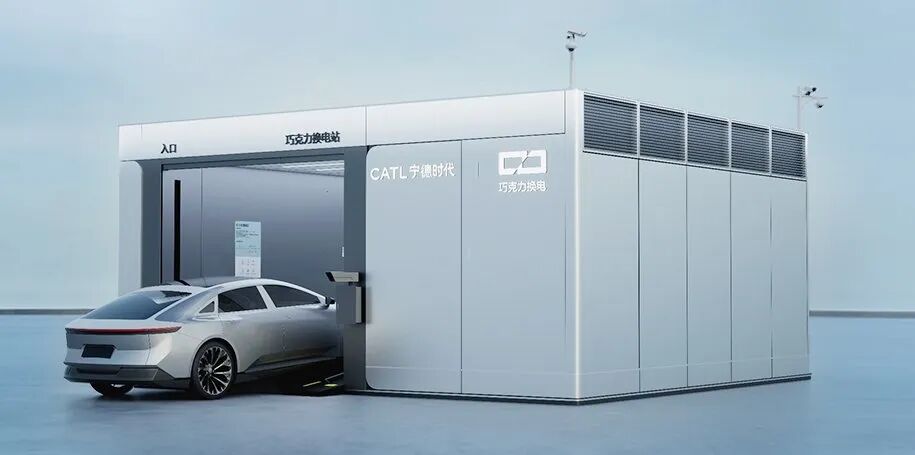
Third, extended battery lifespan and reduced degradation. Batteries in swapping stations are typically charged slowly, better controlling degradation rates compared to frequently fast-charged batteries. Swapping batteries achieve a 40% longer cycle life than traditional batteries, with degradation rates kept below 3%—over 60% lower than fast-charging modes.
Fourth, "vehicle-battery separation" lowers purchase barriers. Users can buy vehicles without paying for the power battery, reducing upfront costs by approximately 100,000 RMB.
Of course, the battery swapping model is not a panacea. Challenges such as high station construction costs, lack of unified battery standards, and the need to improve operational safety management persist. Industry pain points, including inconsistent battery specifications and difficulty in vehicle compatibility, continue to hinder large-scale adoption.
Conclusion: From "After-the-Fact Remedies" to "Systemic Protection"
The essence of the commercial vehicle battery controversy is a structural conflict between "private vehicle warranty standards" and "commercial vehicle usage intensity." When a vehicle travels hundreds of kilometers daily and undergoes hundreds of charge-discharge cycles annually, its battery lifespan inevitably operates on a different dimension from private cars.
Automakers' emergency warranty extensions and operational subsidies are remedial measures but should not become the norm.
The true path to resolution may lie in a dual-track approach: On one hand, promoting the establishment of dedicated warranty standards for commercial vehicles to align battery protection with their usage intensity; on the other, accelerating the large-scale adoption of battery swapping in commercial scenarios to fundamentally resolve safety and management challenges throughout the battery lifecycle through "vehicle-battery separation."
-
![]()
Personnel Shuffle: Independent Director Mi Xuming Steps Down from OFILM
-
![]()
Net Profit Anticipated to Skyrocket by 103%: What Gives This Optical Company a Competitive Edge?
-
In Just One Year, China Unveils Unicorns Valued at 10 Trillion Yuan!
-
![]()
6 Park Companies Shine at WAIC: How Hong Kong Science Park Bridges AI from Research to Industry
-
![]()
Wang Wenjing’s Third Act: Can Yonyou Reinvent Itself in the AI Era?
-
![]()
Performance Coupe Entry Threshold Reduced to 170,000 Yuan: Assessing the 2027 Exeed ES's Prospects
-
![]()
Battery "Crisis" for 4 Million New Energy Commercial Vehicles
-
【Focus】Fluorinated Photosensitive Polyimide (FPSPI): A High-End Subdivision of PSPI with Great Potential in High-Tech Industries