Wang Wenjing’s Third Act: Can Yonyou Reinvent Itself in the AI Era?
 07/21 2026
 402
402
Yonyou’s journey isn’t unique to China’s software sector—it mirrors the shared struggles of traditional tech firms navigating technological paradigm shifts.
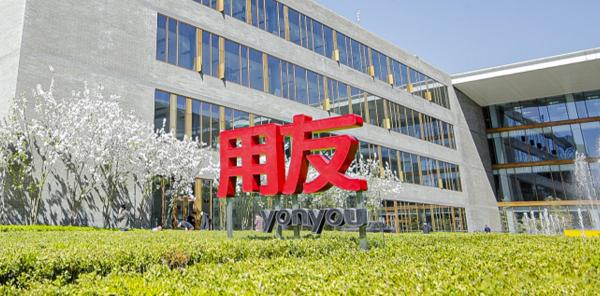
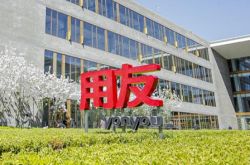
On July 14, 2026, Yonyou Network disclosed its first-half performance forecast: a net loss ranging from 800 million to 930 million yuan. This marked Yonyou’s third consecutive year of losses, with cumulative deficits exceeding 4.4 billion yuan over three years. On the same day, the company filed its third listing application with the Hong Kong Stock Exchange—the first two had lapsed.
Just three months prior to this financial disclosure, founder Wang Wenjing staged his third comeback, resuming the presidency. The 60-year-old former richest man in Jiangxi Province transformed Yonyou from a humble 9-square-meter neighborhood office into China’s ERP industry leader over 36 years. Today, he confronts a stark reality: the company’s market value has plummeted by over 80% from its peak of 171 billion yuan, leaving just over 30 billion yuan.
Yonyou’s plight isn’t isolated. Its longtime rival, Kingdee International, has also seen its market value shrink by over 80% from its historic high of HK$132.8 billion. These two Chinese software giants, locked in competition for three decades, now find themselves in the same predicament at the dawn of the AI era.
Yet the landscapes on either side of the valley are vastly different.
The 10-Billion-Yuan BIP: A High-Stakes Gamble
Yonyou’s current crisis stems from a product called BIP.
In 2017, Yonyou began developing BIP (Business Innovation Platform), with cumulative investments surpassing 10 billion yuan to date. This “strategic-level” product embodies Yonyou’s ambition to transition from a traditional software vendor to a platform-based enterprise, embracing cloud and AI technologies.
Ironically, this very product has become Yonyou’s largest source of losses.
In 2025, Yonyou’s BIP flagship edition saw staff reductions of approximately 20%, while the premium edition experienced cuts as high as 50%. The R&D department optimized its workforce by about 20%. A Yonyou employee revealed, “The Beijing branch (Yonyou’s Beijing division) no longer calls it layoffs but ‘optimization’ and ‘transitioning to partners,’ with 60% being transferred.”
Why has a strategic-level product with over 10 billion yuan in investment become a primary target for layoffs in the AI era?
The answer lies in the inherent contradictions of its business model. Yonyou’s BIP targets large central and state-owned enterprises, which share common traits: extremely high customization demands, lengthy implementation cycles, and soaring delivery costs. Traditional ERP projects take 3–6 months, while enterprise-level AI Agent deployments involve data cleansing, governance restructuring, model tuning, permission design, and multi-round validation, with full delivery cycles typically spanning 6–12 months—and exceeding 18 months in complex scenarios.
This means Yonyou faces a prolonged “time-lag tunnel” between signing an AI contract and recognizing revenue. In 2025, Yonyou’s AI contract signings reached 1.67 billion yuan, but revenue recognition for these deals is concentrated between 2026 and 2027. During this waiting period, R&D amortization, salaries, and severance payments continue to drain resources.
In the first half of 2026, Yonyou’s amortization of capitalized intangible assets from R&D investments alone reached 650 million yuan, up 80 million yuan year-on-year. Severance payments totaled approximately 170 million yuan, up 40 million yuan year-on-year. After excluding these non-recurring factors, actual operational losses decreased by 188 million to 318 million yuan year-on-year—indicating improvement in Yonyou’s core business, but the “historical burden” remains overwhelming.
Wang Wenjing’s ‘Three Comings and Three Goings’: A Founder’s Dilemma
Yonyou’s management turmoil exemplifies the governance challenges faced by Chinese tech firms.
Since 2021, the company’s presidency has changed hands four times, with an average tenure of less than 15 months. In 2019, Wang Wenjing stepped down as president for the first time, succeeded by Chen Qiangbing. In 2021, after Yonyou’s net profits declined, Wang made his first return. In January 2024, Wang resigned again, and Chen resumed the presidency. In January 2025, Chen left, and Huang Chenhong, former SAP Greater China president, took over. However, Huang resigned after just 85 days, prompting Wang’s third comeback.
“Iron-willed Wang Wenjing, fluid presidents.” This industry joke encapsulates Yonyou’s governance dilemma.
Each of Wang Wenjing’s returns has been accompanied by sweeping organizational reforms. In early 2023, he led Yonyou’s largest-ever business organizational model upgrade—shifting from “region-centric” to “industry-centric” and establishing 23 industry client and solution divisions to rival SAP and Huawei.
But the side effects of this reform were catastrophic. Subsidiaries began competing for high-quality clients, even undermining each other. For example, Yonyou Network’s Beijing branch engaged with Asia-Pacific Property & Casualty Insurance’s HR project but ceased involvement per regulations. The designated successor, Yonyou Finance, failed to secure the contract. Similarly, the Shanghai branch engaged with Tianjin Trust’s financial management system upgrade, but the project remains stalled despite follow-up efforts.
More critically, the “horizontal-to-vertical” organizational restructuring paved the way for subsidiary listings. Youche Tech debuted on the STAR Market, and Yonyou Finance pursued a listing on the Beijing Stock Exchange. While these capital maneuvers enriched Wang and the parent company, they stripped Yonyou Network of its core assets.
A deep dive by 36Kr bluntly stated: “Wang Wenjing returned, drove Yonyou into losses for three years, and then retreated—was this part of a grand strategy? Whatever the answer, we see: Yonyou Network’s core resources have been stripped away, its sales system is in chaos, and major clients are leaving.”
Kingdee’s ‘Lightness’ vs. Yonyou’s ‘Heaviness’
If Yonyou’s story is a tragedy of a “heavy tank sinking into a swamp,” Kingdee’s narrative resembles a fable of “light cavalry finding a path.”
In 2025, Kingdee International reported revenue of 7.006 billion yuan, up 12% year-on-year, with net profit attributable to shareholders of 93 million yuan and adjusted net profit of 232 million yuan, achieving a turnaround. Cloud services accounted for 82.5% of revenue, with subscription ARR (Annual Recurring Revenue) reaching 4.09 billion yuan, up 19.2% year-on-year.
Behind these figures lies a fundamental divergence in business models between Kingdee and Yonyou.
Kingdee’s subscription revenue now exceeds 50%, meaning it has built a “toll highway”—this year’s renewals and upsells become next year’s base. As long as growth is sustained, revenue snowballs. Kingdee CFO Lin Bo stated bluntly at an earnings call: “We are now a subscription-revenue-driven company.”
Yonyou’s subscription-based transformation has stumbled. In 2025, cloud service ARR reached 2.9 billion yuan, up 18.1% year-on-year, but lagged Kingdee by nearly 1.2 billion yuan. Critically, Yonyou’s revenue structure remains project-heavy—large central enterprise clients demand custom development, on-site delivery, and long-term maintenance, a model increasingly cumbersome in the AI era.
Gross margin tells the clearest story. In 2024, Yonyou’s gross margin was 47.54%, down nearly 18 percentage points from 65.42% in 2019. Kingdee’s gross margin was 65.07% in the same period, rising to 67.1% in 2025, with subscription software margins hitting 96.5%.
This divergence is no accident. Kingdee focuses on growing and SME clients, offering standardized, lightweight products that benefit from subscription economies of scale. Yonyou serves large central enterprises, where every project is a “non-standard” endeavor requiring significant on-site personnel, making costs rigid and difficult to compress.
Yonyou’s problem isn’t “being too big” but “not being smart enough at scale”—its mass is built on labor-intensive project delivery rather than technology-intensive product platforms.
The ‘Triple Time-Lag’ in the AI Era
Is Yonyou’s predicament a uniquely Chinese narrative or an inevitable outcome for SaaS companies in the AI wave?
The answer: both.
Globally, enterprise software’s AI transformation faces “triple time-lags”:
First time-lag: Between contract signing and delivery. AI project delivery cycles are 2–3 times longer than traditional ERP, severely delaying revenue recognition.
Second time-lag: Between delivery and recognition. Enterprises are willing to allocate millions for AI pilots but approach multi-million-dollar scaled deployments with extreme caution. AI value is hard to attribute precisely—cost savings, efficiency gains, and risk control outcomes cannot be calculated separately, leaving many projects stuck at the pilot stage.
Third time-lag: Between technological iteration and commercial realization. SAP took a decade (2015–2025) for cloud revenue to surpass traditional business. AI’s commercialization will take even longer, as it reshapes product forms, business processes, and enterprise usage logic rather than just deployment methods.
These triple time-lags are shared challenges for the global SaaS industry. Salesforce’s switch to task-based billing temporarily reduced revenue predictability. SAP’s traditional software license revenue fell 27% year-on-year in FY2025. Oracle’s compute delivery constraints continue to suppress revenue recognition.
Yonyou’s unique challenge lies in superimposing its governance quirks onto these industry-wide issues—frequent leadership changes causing strategic volatility, subsidiary spin-offs draining resources, and project-based inertia hindering transformation.
Wang Wenjing’s Third Comeback
On May 20, 2026, Kingdee unveiled its enterprise AI operating system “Lingji” in Shenzhen. On the same day, Yonyou opened exclusive invitations for “YonClaw.” The two rivals nearly simultaneously revealed their AI strategies, but their approaches differ.
Kingdee’s AI strategy is clear and focused: centered on the enterprise-grade AI native portal “Xiao K,” it launched nearly 20 AI native agents, with AI contract signings reaching 356 million yuan in 2025. Founder Xu Shaochun vowed to “rebuild Kingdee with AI,” targeting 50% of revenue from AI+SaaS enhanced products and 50% from AI native products by 2030.
Yonyou’s AI product line is equally extensive—BIP native agents, the native large model YonLOM, the enterprise superagent YonClaw, and the AI coding platform YonCode. AI contract signings hit 1.67 billion yuan in 2025 and 910 million yuan in H1 2026, showing rapid growth.
But signings ≠ revenue ≠ profits. Yonyou’s core challenge is converting massive AI contract signings into recognizable revenue and sustainable cash flow.
Wang Wenjing’s third-comeback moves offer clues:
First, Yonyou is accelerating “downsizing.” Employee numbers fell from 21,283 in 2025 to 19,055, a 10.47% reduction. Severance payments reached 170 million yuan in H1 2026, up 40 million yuan year-on-year—indicating ongoing layoffs. Huang Chenhong’s strategy of “80% delivery to ecosystem partners,” though disrupted by his abrupt departure, will continue, per Yonyou’s investor relations.
Second, Yonyou is pushing for a Hong Kong listing. It first submitted papers in June 2025, which lapsed in December; a second submission on December 29 lapsed in June 2026; a third submission followed on July 15. This “lapse-and-resubmit” urgency reflects Yonyou’s hunger for capital.
Third, Yonyou is adjusting its client mix. In 2025, large enterprise business revenue grew 2.1% year-on-year to 5.989 billion yuan, with YonBIP renewal rates at 99.2%. However, mid-sized enterprise revenue fell 12.3% to 1.097 billion yuan, with traditional software revenue collapsing by 49.4%. Yonyou is actively retreating from low-margin mid-market clients to protect high-value large enterprise accounts.
But whether these measures will spark a turnaround remains highly uncertain.
Yonyou’s fundamental contradiction persists: it aspires to be a “light-asset” AI platform company but remains a “heavy-delivery” project-based vendor. The AI era demands standardized, productized, replicable agents, while Yonyou’s DNA is built on customized, service-oriented, labor-intensive delivery.
Wang Wenjing’s third comeback may alter strategic timing but not strategic DNA.
From ‘Friend of Users’ to ‘Prisoner of the Era’
In 1988, 24-year-old Wang Wenjing founded Yonyou in a 9-square-meter Zhongguancun neighborhood committee room, naming the company “Friend of Users.”
Three decades later, Yonyou indeed became China’s “Friend of Users”—over 80% of central enterprises use its products, and its dominance in high-end ERP is nearly unchallenged. But this very “deep binding” has trapped Yonyou in a “path dependency” dilemma.
What do large central enterprise clients want? Stable, controllable, auditable, and accountable systems. They pay for customization, on-site services, and “someone to blame if things go wrong.” This demand structure inherently conflicts with standardized, productized, lightweight SaaS models.
Yonyou’s predicament is essentially an “Innovator’s Dilemma”—its success was built on serving large clients, but that very experience now hinders transformation. Like Kodak inventing digital cameras only to be disrupted by them, or Nokia pioneering smartphones only to be sidelined by the smartphone era.
Enterprise software in the AI era is evolving from “recording systems” to “decision systems.” Traditional ERP reports “what has happened,” while AI-driven systems predict trends, identify anomalies, allocate resources, make recommendations, and execute automatically. Software value now depends not on data stored but on decisions made autonomously.
In this new paradigm, Yonyou must answer a fundamental question: Is it a software company that “helps enterprises manage accounts,” or an intelligent company that “helps enterprises decide”? The former is the path Wang has walked for 36 years; the latter is the destination he must reach. The distance between them may be farther than he imagines.
No Permanent Monarchs, Only Enduring Evolution
The trajectory of Yonyou is far from an isolated case within China's software sector; rather, it epitomizes the collective destiny of traditional tech enterprises amidst technological paradigm shifts.
Salesforce's metamorphosis from a mere CRM tool into a sprawling platform ecosystem spanned two decades. SAP required a full decade to orchestrate its cloud transition. Microsoft, meanwhile, weathered a 'lost decade' in the wake of missing the mobile internet wave, before Satya Nadella orchestrated its remarkable resurgence.
Yonyou still has a window of opportunity, albeit a narrowing one.
Hidden within its H1 2026 earnings preview was a statistic that eluded many: after stripping away non-recurring items such as R&D amortization, severance costs, and fair value adjustments, Yonyou's core operational losses contracted by 188 million to 318 million yuan year-on-year. This signals a stabilization of its primary business, coupled with a surge in AI contract signings.
Yet, capital markets have grown restless. When a company's market capitalization plummets by 80%, when its founder's third comeback attempt falls flat, and when the industry poses the existential question, 'Will AI ultimately render traditional software obsolete?'—Yonyou requires not merely a product upgrade, but a profound, genetic-level restructuring.
Wang Wenjing's third act may well represent the final gamble of his illustrious career. The wager is not merely on Yonyou's stock price, but on a broader existential question of our era: In an age where AI is reshaping every facet of industry, can a 36-year-old Chinese software behemoth still spread its wings anew?
The verdict, it seems, will be rendered by time itself.
-
![]()
Personnel Shuffle: Independent Director Mi Xuming Steps Down from OFILM
-
![]()
Net Profit Anticipated to Skyrocket by 103%: What Gives This Optical Company a Competitive Edge?
-
In Just One Year, China Unveils Unicorns Valued at 10 Trillion Yuan!
-
![]()
6 Park Companies Shine at WAIC: How Hong Kong Science Park Bridges AI from Research to Industry
-
![]()
Wang Wenjing’s Third Act: Can Yonyou Reinvent Itself in the AI Era?
-
![]()
Performance Coupe Entry Threshold Reduced to 170,000 Yuan: Assessing the 2027 Exeed ES's Prospects
-
![]()
Battery "Crisis" for 4 Million New Energy Commercial Vehicles
-
【Focus】Fluorinated Photosensitive Polyimide (FPSPI): A High-End Subdivision of PSPI with Great Potential in High-Tech Industries