Early Trading Sees 11% Drop for Montage Technology Amidst Unexpected Raid! The Underlying Cause...
 07/16 2026
 504
504
On July 15, the Fair Trade Investigation Department of the Seoul Central District Prosecutors' Office executed a surprise raid on the South Korean office of Montage Technology, as well as the local branches of Japan's Renesas Electronics and the U.S.-headquartered Rambus. These three entities stand as prominent global suppliers of DDR5 memory interface chips.
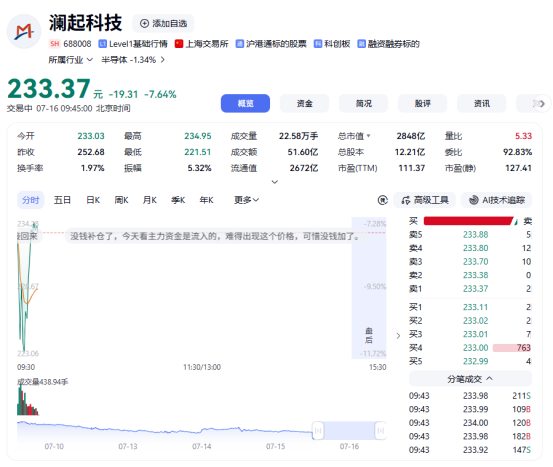
In the wake of this development, Montage Technology's stock price experienced a sharp decline of nearly 12% during early trading hours.
It has been reported that the prosecutors initiated this operation under suspicion of breaching South Korea's Fair Trade Act. An individual privy to the investigation revealed that law enforcement personnel confiscated mobile phones and electronic devices from certain employees at the scene. The process of evidence gathering is still underway, and the total monetary value implicated has not yet been disclosed.
The investigation is centered on whether the three firms engaged in price-fixing while supplying memory interface chips to Samsung Electronics and SK Hynix. These two South Korean giants collectively dominate over 70% of the global DRAM market, and any disruptions within their supplier networks are bound to have far-reaching consequences upstream.
Memory interface chips are responsible for managing signal connectivity and data between the CPU and memory. Each server necessitates multiple such chips, with their usage escalating in direct proportion to the number of memory channels. During the DDR5 era, the technical complexity and per-unit value of these components have witnessed a substantial surge.
From a competitive standpoint, Montage Technology, Rambus, and Renesas emerge as the principal global suppliers of DDR5 interface chips. These companies have been locked in intense competition within this specialized market for an extended period, with disputes over technological pathways permeating the entire generational shift from DDR4 to DDR5.
Now, the prosecutors' probe hints at possible collusion among these three companies.
In recent times, the Korea Fair Trade Commission has markedly intensified its antitrust efforts within the semiconductor supply chain. In 2024, the commission slapped a fine amounting to hundreds of billions of won on another foreign chip enterprise. This raid underscores that regulatory oversight has now expanded from the manufacturing sector to encompass the upstream design realm as well.
As per Montage Technology's 2025 financial report, revenue derived from interconnect chips constitutes over 90% of its total earnings. South Korea represents a pivotal end market for its DDR5 interface chips, with Samsung and SK Hynix serving as major buyers. The high degree of business concentration heightens the potential repercussions of a single-market investigation on the company.
Antitrust investigations in South Korea generally span from 6 to 18 months. The ultimate penalties may encompass fines based on revenue and criminal accountability for executives. The prosecutors have yet to unveil a timeline for their subsequent actions.
The pricing mechanism for memory interface chips remains relatively obscure. Industry norms dictate that price ranges are determined through long-term supply agreements, as opposed to open-market bidding. This practice inherently creates institutional leeway for allegations of collusion, given that the parameters of information exchange during agreement negotiations are frequently ambiguous.
-
![]()
Personnel Shuffle: Independent Director Mi Xuming Steps Down from OFILM
-
![]()
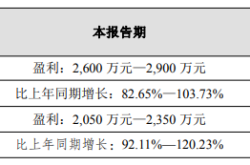
Net Profit Anticipated to Skyrocket by 103%: What Gives This Optical Company a Competitive Edge?
-
In Just One Year, China Unveils Unicorns Valued at 10 Trillion Yuan!
-
![]()
6 Park Companies Shine at WAIC: How Hong Kong Science Park Bridges AI from Research to Industry
-
![]()
Wang Wenjing’s Third Act: Can Yonyou Reinvent Itself in the AI Era?
-
![]()
Performance Coupe Entry Threshold Reduced to 170,000 Yuan: Assessing the 2027 Exeed ES's Prospects
-
![]()
Battery "Crisis" for 4 Million New Energy Commercial Vehicles
-
【Focus】Fluorinated Photosensitive Polyimide (FPSPI): A High-End Subdivision of PSPI with Great Potential in High-Tech Industries