From Valuation Recovery to Industrial Revaluation: Is the Hong Kong Stock Market’s Focus Shifting in the Second Half of the Year?
 07/16 2026
 407
407
Since late June, the market structure of Hong Kong stocks has shown signs of diversification.
Chinese internet stocks have stabilized and rebounded. Innovative pharmaceutical companies have regained momentum through overseas licensing and clinical data breakthroughs. Meanwhile, semiconductors and AI hardware continue to attract global computing power investments. While several key sectors are on the rise, the underlying drivers have shifted.
The AI sector stands out in particular.
Leading large model companies such as Deshi, Zhipu, and MiniMax have secured favorable valuations after listing on the Hong Kong stock market, collectively known as the "Deshi-Zhipu-MiniMax" trio.
Analyzing these three companies together reveals a shared focus on foundational large models. However, their approaches differ:
Zhipu and MiniMax initially concentrated on language models before gradually expanding into multimodal capabilities. Deshi, by contrast, focuses on processing medical imaging data, following a path centered on image-based foundational models. Despite differences in data types, customer bases, and application scenarios, all three prioritize establishing foundational model capabilities before advancing to applications and commercialization.
Specifically:
· Deshi has developed its proprietary iMedlmage foundational large model and, based on this, launched iMedLoop—the world’s largest medical imaging data platform. This positions the company deeply within medical vertical scenarios, optimizing traditional medical AI implementation processes.
· Zhipu specializes in large language models, primarily serving government and enterprise clients. The company has disclosed plans to allocate most of its raised funds toward research and development of general-purpose foundational large models.
· MiniMax adopts a consumer-facing interaction strategy, deploying large models in pan-entertainment scenarios such as live streaming and content creation.
These differences highlight three potential pathways for commercializing foundational large models: professional industry implementation, general capability output, and consumer product monetization.
Moreover, following their Hong Kong listings, Zhipu and MiniMax—both part of the "Deshi-Zhipu-MiniMax" group—have continued to pursue financing on the Science and Technology Innovation Board.
Overall, the AI competition is evolving into a protracted battle requiring sustained investment in computing power, talent, and research and development.
Gartner forecasts that global AI spending will reach $2.52 trillion by 2026, marking a 44% year-on-year increase. As capital expenditures grow, revenue opportunities are expanding beyond the model layer. Software, services, and industry applications are emerging as critical value drivers for the AI sector’s next phase.
Given this shift, the Hong Kong stock market’s second-half focus may center not just on companies labeled as "AI," but on those with genuine industry data integration, customer workflow alignment, regulatory approvals, and the ability to convert technology into sustainable revenue.
Liquidity Returns to the Hong Kong Stock Market, but Industrial Trends Dictate Capital Flows
The Hong Kong stock market retains a solid foundation for improved liquidity in the second half of the year.
Southbound funds have become the most stable source of incremental liquidity for Hong Kong stocks. As mainland residents’ demand for asset allocation rises and institutions expand their overseas presence, the pricing influence of mainland funds on internet, technology, and new economy assets will continue to strengthen.
If U.S. dollar interest rate pressures ease, overseas funds may also re-evaluate Hong Kong stocks. The combination of low valuations, Chinese growth prospects, and technological innovation remains appealing.
More significant changes are unfolding on the asset supply side.
Companies in semiconductors, artificial intelligence, robotics, advanced manufacturing, and medical technology continue to list in Hong Kong. The market is moving away from its historical reliance on internet and traditional finance sectors, gradually establishing itself as a key pricing hub for Chinese technology and manufacturing assets.
Overall, the Hong Kong stock market may transition further from "low valuation recovery" to "industrial trend revaluation" in the second half of the year.
Internet Giants Remain Market Stabilizers. Firms like Tencent and Alibaba boast strong cash flows and robust share buyback programs. Combined with marginal improvements in advertising, cloud services, and AI commercialization, they are well-positioned to support the index.
Chips, advanced manufacturing, and AI hardware are expected to drive market elasticity. With sustained growth in global AI capital expenditures and domestic companies benefiting from rising orders, market share expansion, and import substitution, this sector’s prosperity is unlikely to wane shortly.
However, the market will not remain fixated on upstream sectors indefinitely. As computing power investments materialize, funds will naturally flow toward companies capable of effectively utilizing this capacity and integrating into customer budgets.
Against this backdrop, software and vertical large models may emerge as new investment themes in the second half of the year.
After Chips and Hardware, AI Funds Seek a Second Growth Curve
Throughout this AI-driven market cycle, the industry has followed a clear pattern: hardware leads, followed by software.
The expansion of large model parameters has fueled a surge in inference demand, prompting global tech firms to increase capital expenditures. Upstream hardware companies were the first to benefit, securing orders and profits. With quantifiable hardware revenues and strong earnings visibility, they have commanded high market valuations as funds essentially bet on the dividends of AI computing power equipment procurement.
As the second half of the year approaches, hardware trading is entering more mature territory. Some popular companies have already seen substantial gains, and the market has formed high consensus expectations around computing power demand, expansion timelines, and order growth. While industry prosperity continues to rise, not all companies’ valuations will expand in tandem.
As hardware expectations become increasingly priced in, funds will shift focus to the monetization end of computing power. Attention will turn from who can supply more computing power to who can use it effectively and generate sustainable revenue.
General-purpose applications face low entry barriers but intense homogeneous competition. In contrast, vertical large models in healthcare, industry, finance, and other sectors leverage industry-specific data, standardized workflows, and paying customers. As production tools, they directly reduce costs and boost efficiency, seamlessly integrating into enterprises’ operational budgets upon implementation. Their commercialization paths are clearer, with long-term potential for platform-like valuations.
The market’s pricing of Deshi reflects this trend. Since its Hong Kong listing in March, the company has achieved significant cumulative gains. In July, it briefly surged on the back of medical imaging commercialization before retreating somewhat. Public trading data suggests some funds are temporarily speculating on expectations for medical AI implementation.
Deshi also signals a broader shift: the AI valuation focus is moving from computing power hardware and general-purpose large models to industrial vertical software. Hardware builds AI’s foundational capabilities, while general-purpose applications broaden its reach. Vertical large models, however, offer differentiated scenarios for industry workflow integration, potentially unlocking greater commercial potential. All three segments will grow, but capital market allocations will evolve with industrial phases.
Overall, funds in the second half of the year may not entirely abandon AI hardware, but their focus will become more pragmatic: how much computing power has been purchased, how much revenue it generates, and how much profit remains.
The AI industry is transitioning from a technological competition to an operational one. Companies that can genuinely integrate into industrial processes and deliver sustained results are more likely to secure long-term valuations.
Source: Hong Kong Stocks Research Society
-
![]()
Personnel Shuffle: Independent Director Mi Xuming Steps Down from OFILM
-
![]()
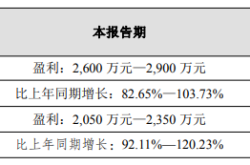
Net Profit Anticipated to Skyrocket by 103%: What Gives This Optical Company a Competitive Edge?
-
In Just One Year, China Unveils Unicorns Valued at 10 Trillion Yuan!
-
![]()
6 Park Companies Shine at WAIC: How Hong Kong Science Park Bridges AI from Research to Industry
-
![]()
Wang Wenjing’s Third Act: Can Yonyou Reinvent Itself in the AI Era?
-
![]()
Performance Coupe Entry Threshold Reduced to 170,000 Yuan: Assessing the 2027 Exeed ES's Prospects
-
![]()
Battery "Crisis" for 4 Million New Energy Commercial Vehicles
-
【Focus】Fluorinated Photosensitive Polyimide (FPSPI): A High-End Subdivision of PSPI with Great Potential in High-Tech Industries