Insights from the 2026 World Artificial Intelligence Conference: Computing Power and Manufacturing Fuel AI's Leap from Virtual to Physical Realms
 07/19 2026
 341
341

By Du Jie
Edited by Hou Yu
In 2004, the film "I, Robot," based on Isaac Asimov's novel, depicted a utopian society where humans and robots coexist harmoniously. Fast forward over two decades, and those scenes have come to life at the World Artificial Intelligence Conference. A reporter on-site quipped, "There are more robots than people here this year!"
As the premier global event in the field of artificial intelligence, this year's conference marks a significant leap in scale, announcements, and technological advancements. It signifies a new phase in AI deployment, clearly indicating that with robust support from computing power and manufacturing, AI has transitioned from the virtual to the physical world.
This shift represents not only a higher level of innovation but also a crucial pillar for the future of the AI industry.
Conference Highlights: Exploring the Cyber City with Robots in Full Swing
The "Model Era · Partner City" exhibit is a must-see at this year's conference. The English name "Model Era" is a clever play on words, representing both large models and implying "mass production." Once inside, you'll understand why the name fits perfectly.

This expansive exhibition area showcases a complete robotic assembly line, where various processes of new energy vehicle production operate autonomously. Humanoid robots work seamlessly together, handling tasks such as stacking, assembly, inspection, and warehousing with remarkable precision.
"Robots screwing in screws" is no longer a joke but a real demonstration of mechanical arms' environmental perception, achieving sub-millimeter positioning accuracy with calm precision.

Unlike the uniform and precisely coordinated "producers" on the assembly line, "lifestyle" robots are closer to our vision of future family life.
Here, tea masters perform tea ceremonies, chefs cook meals, appraisers identify counterfeits, and table tennis robots engage in matches with visitors.
All these roles are performed by robots, offering skill supplementation and emotional companionship, making them more appealing than industrial robots.

Robots also showcase impressive athletic abilities. Wall Street Tech Eye observed robots playing table tennis with backhand strokes, engaging in rallies that most people struggle to keep up with.
Many who played against them said, "It's addictive; their skills are beyond imagination." Some even told Wall Street Tech Eye, "I hope to see robot table tennis tournaments—more exciting than marathons."

At the conference, Wall Street Tech Eye noticed a significant change: in previous exhibitions, audiences were skeptical about robots' capabilities, interacting with them tentatively. Today, people accept robots' roles in society and engage with them while imagining future possibilities.
In this cyber city, robots have taken center stage, yet no one finds their presence out of place. It seems these robots are meant to be part of our human society. This exhibition hall is a microcosm of a future society where humans and robots coexist.
According to the organizing committee, around 300 robots are on-site, covering industrial manufacturing, lifestyle services, sports, entertainment, and other fields. This is undoubtedly the "highest silicon content" event to date.
This demonstrates that the AI industry is steadily transitioning from the virtual to the physical world. From skepticism to certainty, from doubt to imagination, this shift reflects widespread acceptance and long-term confidence in intelligent agents, embodied robots, and AI large models. It is precisely because AI is stepping into real life that people have more opportunities to experience it all.
Beyond the Excitement: AI's Transition from Virtual to Real, Delving into the Physical World
At this year's conference, people encounter various forms of physical AI. For the first time, embodied intelligence is listed as a core focus alongside computing power, gathering over 200 enterprises. Exhibited products cover industrial, consumer, medical, educational, and other fields, allowing audiences to witness AI's significant transformation from screen to reality.
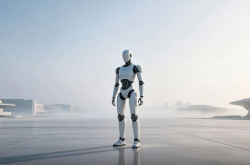
Unlike previous conversational or graphic AI, the shift from virtual to real marks an important milestone in current AI development. Embodied intelligence has become a more relatable AI concept, starting to take on physical forms and helping humans solve practical problems. The concept of embodied intelligence serves as a tool and lever, combining with traditional devices to transform traditional industries and spawn new industrial forms.
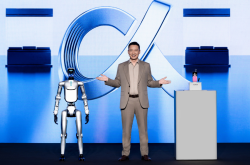
At this year's conference, Zhiyuan unveiled the Yuanzheng A3 Ultra embodied intelligent robot, officially announcing mass production of 15,000 units. Robots from Unitree, UBTECH, and XPENG also made appearances.

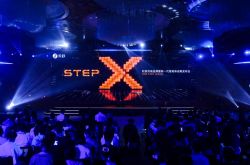
In the consumer sector, embodied intelligent products are even closer to daily life. The StepX Neo, unveiled at this conference and claimed to be the world's first intelligent agent-native smartphone, along with the earlier Honor Robot Phone announced at MWC, represent the integration of embodied intelligence with smartphones. Unlike previous large model AI phones, embodied smartphones' operating systems are designed specifically for intelligent agents. More importantly, they possess the ability to physically interact, think, and provide feedback with humans beyond the screen. This not only represents a new direction for the smartphone industry but also a significant scenario for embodied intelligence implementation.

Additionally, household service robots, elderly care robots, surgical robots, and others are finding applications in multiple fields. From mechanical arms to full-sized robots, from embodied smartphones to robotic vacuum cleaners, these physical forms of AI have tangible shapes: they have hands and feet, can perform tasks, and interact and provide feedback with humans in reality. Even on-site, there were 60 robot volunteers. AI has stepped out of computer screens and coexists with humans in physical form, marking not only a highlight of this conference but also a turning point for the AI industry.
Clearly, humans prefer anthropomorphic real interactions beyond keyboards and screens. A glance, a nod, or a subtle gesture can convey rich expressions—this is the more human-like aspect at the physical level, representing the humanization of AI's transition from virtual to real. It is also a technological means to lower AI barriers and eliminate the gap between humans and machines. The proliferation of robots at this conference makes us believe that AI is no longer just virtual but is entering our lives in physical form.
Of course, this requires a strong foundation of computing power and supply chain support.
Behind the Transition from Virtual to Real: Support from Computing Power and Manufacturing
The transition from virtual to real places higher demands on computing power, industrial chains, and manufacturing capabilities. These elements not only support the strength of embodied intelligence but also serve as grips for the AI industry to take root and develop at scale.
First and foremost is the support from computing power. In the era of embodied intelligence, robots need to perceive their environment, make decisions, and complete actions in real-time. Human-like companionship, lifelike interactions, and autonomous execution capabilities all require massive data processing and high-speed algorithmic operations, placing far higher demands on computing power than in the virtual AI era.
This conference showcases a concentrated outbreak of domestic computing power. Huawei, Sugon, Alibaba, ZTE, and Biren showcased 100,000/10,000-card-level fully domestic super nodes, equipped with self-developed high-speed interconnections and high-density cabinets, catering to various needs such as ultra-large model training, scientific simulations, and commercial inference.
Among them, Huawei's Atlas 950 SuperPoD made its global debut with real machines, featuring 64 Ascend 950DT NPUs per cabinet and scalable to over 80,000 cards, forming a 500,000-card cluster. Alibaba Cloud's Feitian Intelligent Computing Platform combines cloud, edge, and endpoint collaborative architectures, merging the powerful computing power of the cloud with the low-latency advantages of the edge to provide customized computing services for industrial robots, household service robots, and others.
Additionally, new domestic high-computing-power chips made their debut, completing the domestic computing power industrial chain. Dongfang Suanshin launched the DF1000 near-memory computing chip, the first in China to adopt wafer-level hybrid bonding 3D vertical packaging technology. Tianshu Zhixin and Moore Threads showcased full-series iterative chips covering cloud training, edge inference, and scientific simulations. Cambricon, Hygon, and Moore Threads simultaneously updated hardware products for cloud, endpoint, and rendering acceleration across multiple scenarios, forming a complete matrix of domestic computing power chips and providing diversified computing power options for embodied intelligent products.
On the other hand, manufacturing strengths also provide implementation support for embodied intelligent robots. Robot assembly lines extensively use industrial robots, intelligent inspection equipment, and others, enabling robots to manufacture themselves. At the conference, UBTECH's robot assembly line adopted a fully autonomous production mode, with industrial robots completing the entire process from component processing to finished product assembly and inspection. One assembly line can produce 50 humanoid robots per day, with a product qualification rate of 99.5%.

It can be said that the dual support of computing power and manufacturing has brought embodied intelligence from concept to reality, clearly conveying a signal: whoever masters the core advantages of computing power and manufacturing will hold the voice in the AI era.
AI and Embodied Intelligence: Stepping onto the International Stage
With continuous breakthroughs in AI computing power, embodied intelligence technology, manufacturing, and other fields, China's international competitiveness continues to rise, and its voice in the global AI development landscape becomes increasingly prominent.
At this conference, the Action Plan for Cooperative Development of Artificial Intelligence was released, providing a Chinese approach to global AI governance in terms of data, computing power, ecosystem, empowerment, talent, regulations, governance, and ethics.
The release of the action plan marks that China has the strength and influence to innovate in AI. Wall Street Tech Eye noted that the action plan emphasizes "inclusive computing power" as a key initiative, which is particularly important for developing countries under the principle of AI technology equity. It also builds a more friendly and recognized international bridge for China's AI technologies, products, and services to go global.
In the future, as AI and embodied intelligence technologies continue to evolve, global AI competition will intensify, with the focus gradually shifting from technology and product levels to deeper frameworks such as standards, ethics, and privacy.
With a solid foundation in AI capabilities and manufacturing advantages, promoting the international development of AI technologies and products will enable greater advantages on the global stage.
-
![]()
Artificial Intelligence: Its Next Phase of Growth Shines in Guangdong
-
The First Country to Be Shorted by AI Emerges
-
Monthly Sales of 2,000 Units, Declining for Three Consecutive Years: smart's Luxury Script is No Longer Playing Out
-
![]()
HONOR Creates the 'Body', nubia Infuses the 'Soul': Which Will Be Your First AI Phone?
-
Insights from the 2026 World Artificial Intelligence Conference: Computing Power and Manufacturing Fuel AI's Leap from Virtual to Physical Realms
-
The Moment to Evaluate Montage Technology Has Arrived
-
![]()
StepOn Has Solved the Monetization Challenge of Large Models with Just a Smartphone
-
![]()
Is a Camera the New AI Safety Guardian? Hikvision Introduces Active Vision Operation Monitoring Gun-Ball Camera at WAIC 2026