Artificial Intelligence: Its Next Phase of Growth Shines in Guangdong
 07/19 2026
 447
447
Source | Yuan Media Group
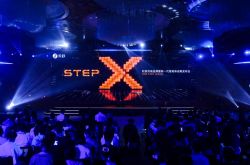
On July 17, 2026, the World Artificial Intelligence Conference (WAIC) kicked off in Shanghai.
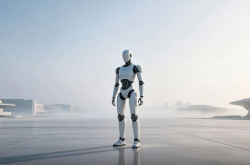
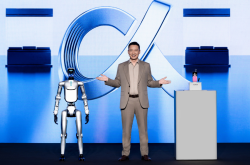
This year’s theme, "Intelligent Partners, Co-creating the Future," clearly emphasizes two keywords: "Partners" and "Co-creation." The direction is unmistakable—AI is transitioning from the digital realm to the physical world, empowering industries across the board.
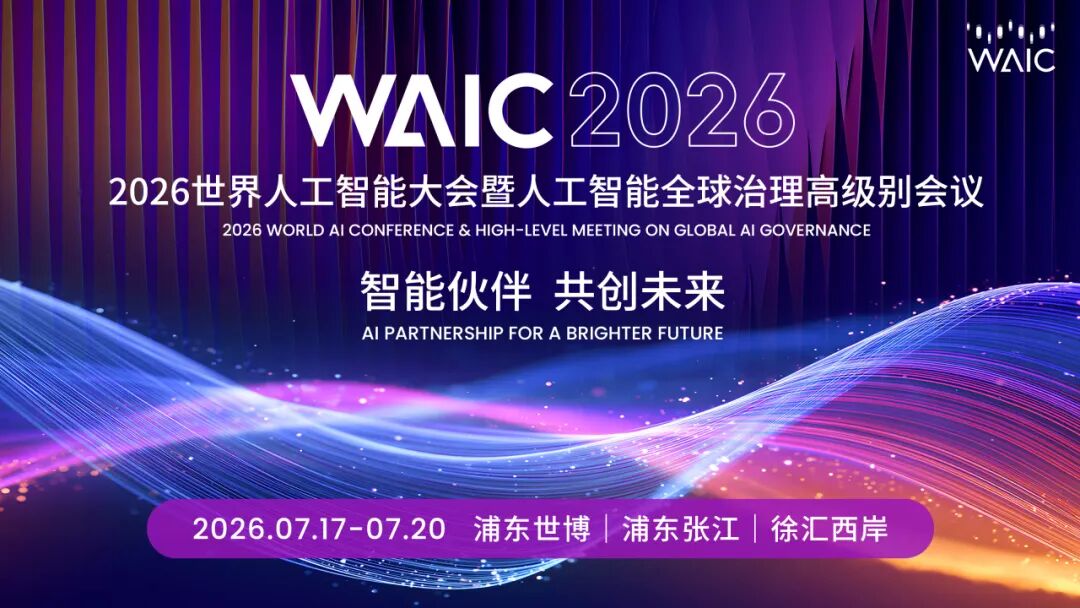
WAIC 2026 promotional image
Reviewing the themes of the past three years, a clear trajectory emerges: In 2024, the focus was on showcasing parameters and computational capabilities; in 2025, the emphasis shifted to exploring solutions and implementation paths; and in 2026, the focus is on entering real-world scenarios and achieving mass production and delivery.
While attention remains fixed on Beijing, Shanghai, and Hangzhou, the next phase of AI’s growth is quietly shifting southward to Guangdong.
Over the past few years, Guangdong has built a comprehensive industrial chain for AI agents and embodied intelligence.
01.
The Winds of Change
The most noticeable transformations are evident at this year’s conference.
Robots are no longer confined to dancing and entertaining; they are now brewing tea, providing guided tours, and working on factory floors. New energy vehicle production lines are replicated 1:1, with robots precisely screwing in bolts and conducting inspections. Origin Quantum and Jueyue Xingchen collaborated, deploying six robots that worked continuously for 15 hours to assemble an 80,000-piece LEGO Great Wall...
The numbers are even more striking. Before the conference opened, 57 core scenarios had been implemented, with Intent to Cooperate (intentional collaborations) reaching a cumulative value of 16.2 billion yuan. Fifty-seven scenarios, 16.2 billion—AI has finally evolved from mere stories into tangible business deals.
In this wave of "commercialization," Guangdong-based enterprises have taken center stage.
The number of Guangdong companies participating has surged from 60 in 2024 to over 140 this year, forming a well-defined and synergistic AI industry matrix in the Greater Bay Area: Shenzhen’s AI full-industry chain cluster, Guangzhou’s industrial humanoid robots, and Dongguan and Foshan’s components and computing power support.
In the three core sectors of computing power infrastructure, industry applications, and embodied intelligence, leading Guangdong companies have showcased their achievements.
In the computing power sector, Huawei unveiled its latest 1024-card super-node cluster, the Atlas 950 SuperCluster, boasting computing power exceeding that of 500,000 cards, marking the industry’s largest super-node real-machine debut. Tencent is competing head-to-head with Alibaba, Baidu, SenseTime, and others, showcasing its latest large models and intelligent agent applications.
Vertical scenarios are even more impressive. China Southern Power Grid’s "Dawatt · Yunrui" smart agent for distribution network planning was selected as one of WAIC’s top ten "museum pieces." It features autonomous diagnosis, planning, verification, and assessment capabilities, handling tens of thousands of feeders and thousands of schemes—this is Guangdong’s AI solution for the new power system.
In the forefront of embodied intelligence, Shenzhen’s UBTECH and RoboTeam are both present. The conference’s key topic of "robots taking on jobs" is already a fundamental skill in the Greater Bay Area.
From underlying computing power to vertical applications and then to terminal intelligent hardware, Guangdong companies have flourished at this year’s conference, steadily occupying the industry’s center stage in a venue outside their home region, backed by their irreplaceable industrial strength and scenario advantages.
02.
Prosperity in Guangdong
So, why Guangdong?
This is no coincidence but rather the result of two fundamental logics.
Guangdong boasts a deeply entrenched industrial chain. The Pearl River Delta is the only region in China capable of handling the entire chain from "chip design, sensors, and precision components to complete machine manufacturing and system integration." This "half-hour supporting circle" capability is unmatched elsewhere.
AI and robots ultimately need to be embodied in hardware. Without manufacturing, they remain castles in the air, and manufacturing is a strong suit of Guangdong.
Guangdong has strategically positioned itself along the AI chain. The AI chain has five segments: foundational theory—computing power chips—model algorithms—scenario applications—terminal products. Beijing, Shanghai, and Hangzhou excel in the first three segments—top universities produce talent, while chip and algorithm companies define technological boundaries.
Guangdong’s position, however, is at the end of the chain: close to manufacturing, close to scenarios, and close to the market. As AI shifts from parameter competition to industrial implementation, moving from screens into the physical world, this endpoint becomes the most valuable gateway—whoever can integrate models into production lines, bring robots into factories, and embed agents into power grids truly masters AI’s commercialization potential.
The data speaks for itself. Guangdong ranks first in the country for core indicators in the AI and robotics industries. Meanwhile, NVIDIA CEO Jensen Huang has stated, "Guangdong is the only region in the world where AI and mechatronics are deeply integrated."
In 2025, Guangdong’s AI core industry scale exceeded 300 billion yuan, growing by over 40% year-on-year and accounting for about a quarter of the national total. Guangdong is home to over 2,000 AI core enterprises.
Additionally, among Morgan Stanley’s global top 100 humanoid robot companies, Guangdong secured 11 spots thanks to enterprises like GAC Group, XPeng, BYD, Tencent, UBTECH, and RoboSense.
Policies are also ramping up. The province’s "1+1+N" embodied intelligence training grounds and the 10 billion yuan Greater Bay Area joint intelligent industry fund are creating a dense ecosystem from hardware to capital.
In the past, people often lamented that "the source isn’t in Guangdong." Now, looking back, as AI competition enters its next phase, the ability to manufacture, apply, and sell is the real expertise.
The low-key and pragmatic Guangdong hasn’t made much noise, but the foundation for "Black Myth," humanoid robot production lines, and super-node computing power has quietly been laid.
Artificial intelligence has once again reached the moment to shift its focus southward to Guangdong.
This time, it’s not just a concept—it’s business, it’s tangible, and it’s a visible future.
03.
Beijing and Shanghai Set the "Upper Limits"
The domestic AI landscape is gradually forming a clear division of labor: Beijing and Shanghai lead in setting industry benchmarks, while Shenzhen and Guangzhou ensure practical implementation.
Beijing is undoubtedly the "AI Capital."
Recently, Beijing released data showing that the city is home to 37% of China’s top AI talent, 40 AI unicorns, 259 large models registered and launched, and 195 AI products registered.
These four metrics are nearly all national firsts, with national shares around 30%. In 2025, Beijing’s AI core industry scale exceeded 450 billion yuan, with over 2,500 core enterprises and around 40 unicorn companies.
How intense is Beijing’s AI presence? While others have "Crazy Thursdays" with "cola and fried chicken," Wudaokou’s "Crazy Thursdays" involve "coffee and AI Agents."
Beijing’s confidence stems from top universities and research institutes like Tsinghua, Peking University, and the Chinese Academy of Sciences, as well as hardcore computing power bases like the Haidian Intelligent Computing Center and Jingxi Intelligent Valley. By 2027, the cumulative computing power scale is planned to reach around 200,000 P, with a focus on building the "Galaxy Computing Corridor" and a national integrated computing power network.
Beijing’s AI industry layout is no longer satisfied with breakthroughs in foundational technologies and model development; resources are now tilting toward full-stack autonomy and controllability.
Before WAIC, companies like Cambrian and Moonshot AI preemptively generated buzz.
Cambrian released the Thought Yuan 690, with single-card INT8 computing power reaching 2048 TOPS, compatible with over 95% of models. Moonshot AI unveiled its new-generation model, Kimi K3, with 2.8 trillion parameters, becoming the world’s largest open-source model to date.
Tech giants’ intelligent agents also took early action. At WAIC, ByteDance’s Doubao launched the world’s first AI agent smartphone, while Baidu unveiled its "Chip-Cloud-Model-Agent" full-stack AI system and its first AI memory glasses—all capable of autonomously completing complex tasks.
Beijing showcases foundational technology standards and large model ecosystem influence. Shanghai, while slightly behind Beijing in cutting-edge technology, has developed rapidly in recent years, forcefully breaking into the top tier.
In 2025, Shanghai’s AI enterprises above a certain scale generated total revenue exceeding 637 billion yuan, up 39.5% year-on-year, leading the nation in growth. Currently, the city is home to over 2,500 AI-related enterprises.
The cosmopolitan Shanghai also pursues an international route in AI, with technology layers featuring AI R&D centers from overseas giants like Microsoft, NVIDIA, and Tesla, as well as domestic giants like MiniMax and SenseTime.
Shanghai’s key to catching up lies in its AI computing power "heart"—Zhangjiang Science City, which gathers domestic AI chip companies like Enflame, Biren, and Iluvatar CoreX—and its scenario-based implementations in AI+finance and AI+biomedicine.
Every year at WAIC, many vendors, besides wanting to see cutting-edge hardcore tech, also aim to learn from "host" Shanghai’s AI application layer strategies.
At this year’s WAIC, Shanghai’s Zhangjiang "core" made a collective appearance, including Dongfang Suanchip’s debut of its first high-computing-power AI chip, the DF1000, and Moore Threads’ exhibition of its Xijing S-series super-nodes and Xisuo X-series new products. On the application layer, companies like Twist Biotech showcased their AI protein design platform, while Siemens debuted its industrial engineering AI agent, Eigen.
04.
Conclusion
Beijing and Shanghai have elevated AI to new heights, but when it comes to delivering tangible hardware, they still rely on Greater Bay Area manufacturers for the final step: mass production and delivery.
The transition from the "old economy" to the "new economy" doesn’t entirely abandon traditional industrial foundations but rather builds new opportunities upon them.
Just as it did over forty years ago, the next phase of AI is once again heading south to Guangdong for "prosperity."
Note: This article’s material is sourced from official reports and publicly available information. The views presented are for reference only. Some images are sourced from the internet; if there is any infringement, please notify us for removal.
-
![]()
Artificial Intelligence: Its Next Phase of Growth Shines in Guangdong
-
The First Country to Be Shorted by AI Emerges
-
Monthly Sales of 2,000 Units, Declining for Three Consecutive Years: smart's Luxury Script is No Longer Playing Out
-
![]()
HONOR Creates the 'Body', nubia Infuses the 'Soul': Which Will Be Your First AI Phone?
-
Insights from the 2026 World Artificial Intelligence Conference: Computing Power and Manufacturing Fuel AI's Leap from Virtual to Physical Realms
-
The Moment to Evaluate Montage Technology Has Arrived
-
![]()
StepOn Has Solved the Monetization Challenge of Large Models with Just a Smartphone
-
![]()
Is a Camera the New AI Safety Guardian? Hikvision Introduces Active Vision Operation Monitoring Gun-Ball Camera at WAIC 2026