A Whopping RMB 50 Billion in One Go! Liang Wenfeng Pours RMB 20 Billion into DeepSeek, Initiating an Unorthodox AI Capital Experiment
 07/20 2026
 428
428
On June 16, a financing deal sent ripples through the AI community. DeepSeek, a company that had steadfastly refused financing, commercialization, and roadshows, finally clinched its inaugural external investment since inception. The staggering sum: RMB 50 billion (around USD 7.4 billion), catapulting its post-investment valuation to a lofty USD 50 billion.
This figure not only shatters records for the largest single financing round in China's AI sector but also leaves previous financing rounds in the dust. Yet, it's not just the RMB 50 billion that's causing a stir in investment circles; it's the unique funding structure of this round.
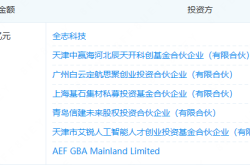
The lion's share of this round came from founder Liang Wenfeng himself, who plowed RMB 20 billion of his personal fortune into the venture, constituting 40% of the total investment. The remaining funds were sourced from a diverse array of investors: Tencent chipped in RMB 10 billion, CATL-related industrial entities contributed RMB 5 billion, while NetEase, JD.com, and IDG Capital each invested RMB 3 billion. The National Artificial Intelligence Industry Investment Fund also joined the fray with RMB 1 billion. This eclectic mix included internet behemoths, manufacturing giants, seasoned investment firms, and national-level funds.
However, the terms of this financing round deviated significantly from market norms.
Funds from external institutions won't be directly injected into DeepSeek's parent company. Instead, they'll be funneled into a partnership firm solely managed by Liang Wenfeng. External investors won't hold direct shares, have board seats, or voting rights in company operations. Moreover, all funds are subject to a five-year lock-up period, during which withdrawal or exit is prohibited.
Such a model is a rarity in China's RMB investment market. Typically, investing institutions acquire corresponding equity, participate in decision-making, and cash out upon maturity. DeepSeek has turned this conventional wisdom on its head: capital can only contribute funds without meddling in operations, lacking both decision-making power and short-term exit options.
Many are puzzled as to why capital is still flocking to DeepSeek despite these stringent constraints. There's a special provision: only the National Artificial Intelligence Industry Investment Fund is exempt from these restrictions, with its RMB 1 billion invested directly into DeepSeek's main entity. This fund enjoys normal voting rights and isn't bound by the five-year lock-up.
It's clear that these stringent constraints are aimed squarely at market-oriented investment institutions, while national team funds enjoy exclusive policy perks.
The most striking aspect of this entire saga is the stark contrast to Liang Wenfeng and his company's previous stance.
In recent years, DeepSeek has been dubbed the "Three Nos" in the industry: no external financing, no rush to monetize, and no roadshows to pitch stories. While most domestic AI companies were busy wooing capital, packaging their businesses, and expanding their scale, DeepSeek remained focused on technological development. Liang Wenfeng himself maintained an extremely low profile, rarely participating in public events, seldom giving speeches, and eschewing any monetization ventures like paid courses.
This understated approach to technical research earned DeepSeek a reputation as a breath of fresh air in the AI sector. Now, with the proactive completion of a massive financing round and the founder investing a significant chunk of his personal wealth, these previous labels no longer hold water.
The decision to undergo this transformation was driven by the current industry landscape, primarily for three practical reasons.
Firstly, computing power demand. In today's AI landscape, developing large models hinges on computing power reserves. A USD 50 billion valuation can help DeepSeek tap into the world's top computing power resources, which can't be sustained solely by the company's revenue. Given the continuously rising costs of computing power, internal funds can barely keep pace with the speed of technological iteration.
Secondly, attracting and retaining core R&D talent. A RMB 50 billion valuation serves as a powerful magnet for top AI researchers. A high-valuation, capital-backed platform offers vastly different career prospects compared to the previous state of zero financing and no plans for going public. Recruiting and retaining talent will become significantly easier post-financing.
Thirdly, industry competition pressure. Currently, most leading domestic AI companies have secured large-scale financing. Zhipu's market value exceeds HKD 920 billion, Yuezhi Anmian is valued at USD 30 billion, and MiniMax's valuation has also surpassed USD 20 billion. If DeepSeek continues to eschew financing, it risks being left behind in the capital race. In the current industry environment, this could easily lead to falling behind in the long run.
By comparing horizontally with peers, one can gauge where the USD 50 billion valuation stands: Zhipu's Hong Kong stock market value translates to approximately USD 120 billion, Yuezhi Anmian at USD 30 billion, and MiniMax exceeding USD 20 billion. DeepSeek's RMB 50 billion valuation firmly places it in the top tier of domestic large models, though there's still a considerable gap compared to Zhipu.
The core support for this valuation lies in DeepSeek's unique technological and cost advantages. The reasoning cost of its V4 series large models is a mere 1/70th of GPT-5.5's, coupled with a massive developer community built through comprehensive open-sourcing—two aspects that are hard for peers to replicate.
There's also an often-overlooked policy window: currently, the Sci-Tech Innovation Board is easing listing requirements for AI large model companies, with policies highly favorable to the industry. Zhipu has already kicked off the process of returning to list in China, and MiniMax is also gearing up for a listing. Although DeepSeek hasn't publicly announced related plans yet, with a valuation of RMB 50 billion, if it subsequently lists on the A-share market, there's significant room for the company's value to soar further.
-
![]()
Tesla Restructures Its Balance Sheet
-
![]()
Accelerating the High-Speed Interconnection Upgrade of AI Computing Clusters! JONHON Releases ELSFP External Light Source Optical Connectors
-
![]()
Breaking the overseas blockade of volumetric holographic materials, this optical enterprise secures nearly 100 million yuan in financing!
-
![]()
Why Does Jensen Huang So Openly Praise China’s AI?
-
![]()
"Wudang" Unveiled: Arm China's Next-Gen AI VPU Redefines Video Encoding
-
![]()
From Energy Conservation and Carbon Reduction to AI Decision-Making: GECON East Intelligence and Chery Group Explore a New Green and Smart Paradigm for Automobile Manufacturing
-
![]()
WAIC 2026 Observation | AI Accelerates Towards the Core of Industries, Industrial AI Enters a Critical Phase
-
![]()
Volkswagen China Fires the First Shot in Foreign-Funded 'White Box Delivery'!