In Light of Meta's $1.7 Trillion Valuation and XREAL's $2 Billion in Cumulative Losses, Is China's AI Glasses Market Being Undervalued?
 07/20 2026
 563
563
Summary: Meta's $1.7 trillion market valuation
Source: Chaoyang Capital Theory
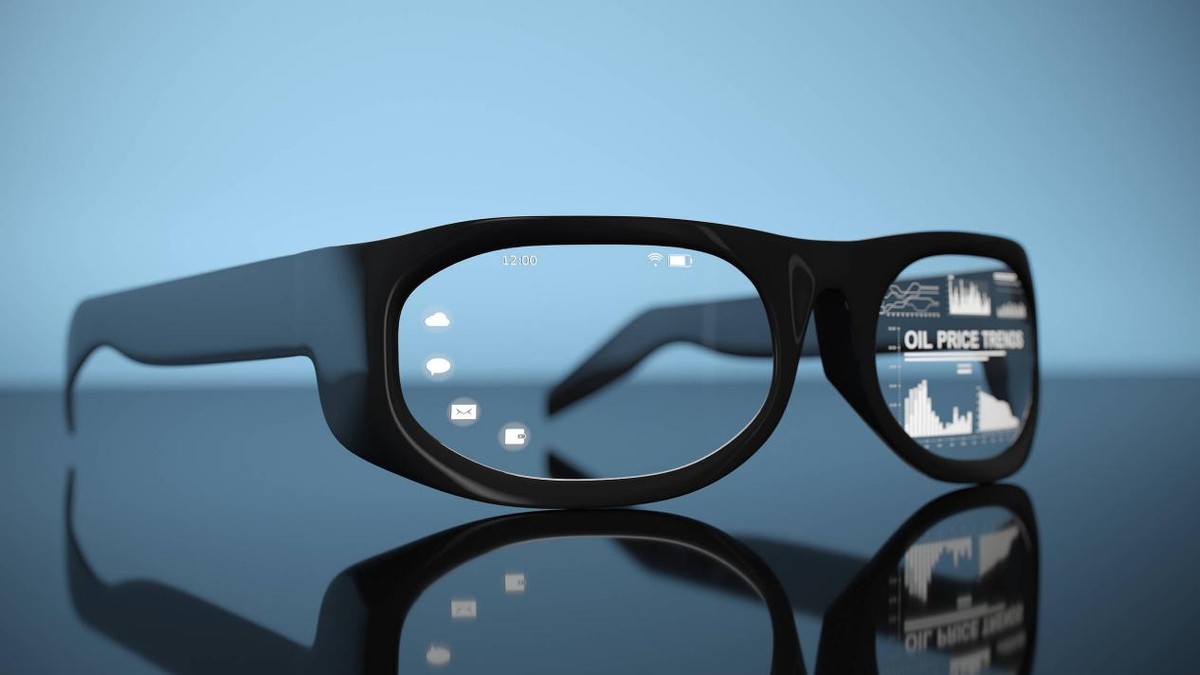
Since the onset of the edge AI revolution, AI glasses have emerged as the most promising alternative to traditional PC products.
According to Chaoyang Capital Theory's incomplete statistics, over 65 AI glasses models were launched in the first half of this year alone. Thunderbird introduced five models, including the Thunderbird X3 Pro, Thunderbird Air4 Pro, Thunderbird GT Max, Thunderbird GT, and Thunderbird V4, with prices ranging from 1,849 to 8,499 yuan.
In fact, it has been just over two years since the first domestic AI glasses were introduced.
Back then, early entrants like Rokid, Thunderbird, and XREAL, despite their extensive experience in AR technology, only managed to mass-produce AI glasses with standardized features—combining 'voice/visual AI + display/shooting' capabilities—in 2024 (XREAL's ONE series).
In essence, the domestic AI glasses industry has been developing for less than three years.
Overseas, Meta's first smart glasses, the Ray-Ban Stories, were officially released in September 2021. If we consider models with real-time AI assistant interaction capabilities, it would be the Ray-Ban Meta (second generation), released in September 2023.
Now, in this nascent sector of less than three years, the 'first AI glasses IPO' is on the horizon.
On April 1, 2026, XREAL officially filed its prospectus with the Hong Kong Stock Exchange.
Following closely, information from Aiqicha reveals that Rokid completed its joint-stock transformation, with an internal target for listing set for July. Thunderbird Innovation, after securing over 1 billion yuan in financing from China Mobile and China Unicom earlier in the year, publicly recruited a director of investors with IPO experience.
The three leading companies are almost simultaneously approaching the capital market.
2026 has been dubbed the 'Year of AI Glasses IPOs' by the industry.
Behind the hype, and returning to the core of business, is the AI glasses sector truly a promising opportunity?
Why 2026?
IDC reports that in the first quarter of 2026, global smart glasses shipments reached 3.566 million units, up 130.1% year-on-year.
Specifically for the Chinese market, shipments in the first quarter were 610,000 units, up 23.5% year-on-year, ranking third globally.
IDC predicts that shipments in the Chinese smart glasses market will exceed 4.915 million units in 2026. Excluding the 1.012 million units forecast by LuoTu Technology for the first half of the year, there remains a gap of 3.903 million units for the rest of the year.
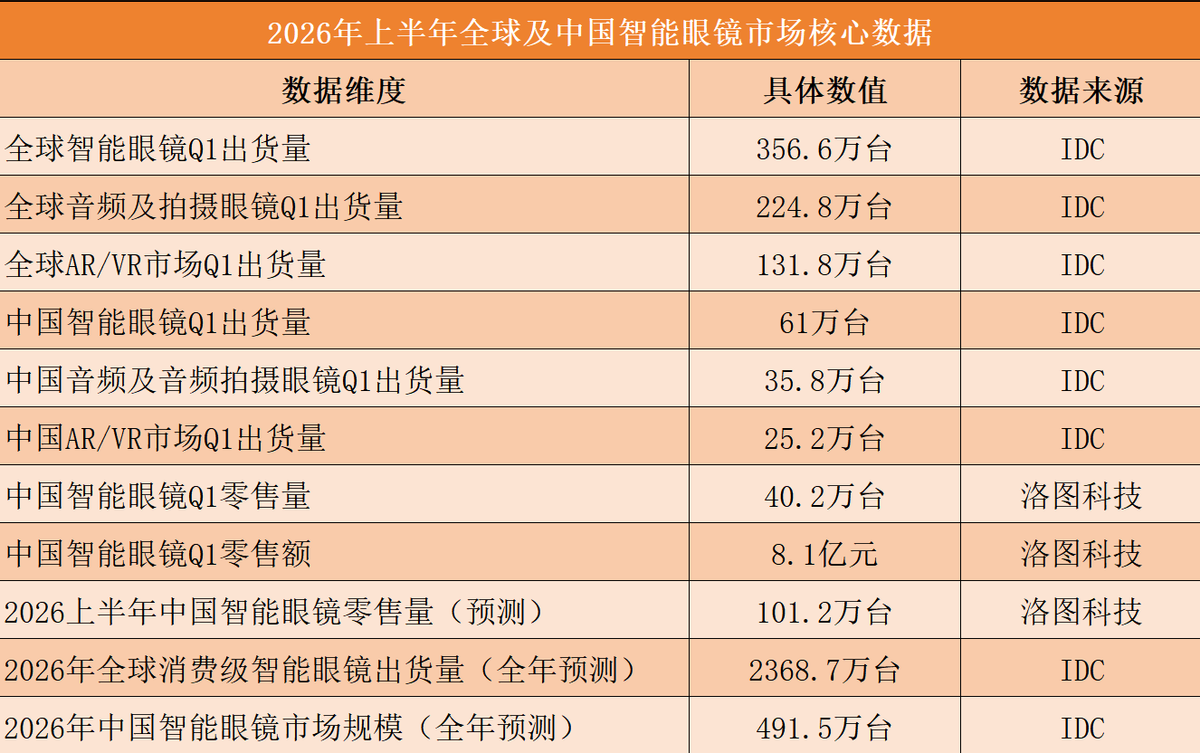
Why the surge in 2026?
After all, AI glasses are not a new concept; Google released Google Glass as early as 2012.
Ultimately, the credit goes to AI.
First, AI large models have matured. Whether in language or visual interaction, breakthroughs in large model technology after 2023 have transformed AI glasses from 'seeing' to 'understanding.' Tech companies are not just interested in glasses that display information but in new AI entry points. Behind this round of competition lies a redistribution of model capabilities, terminal entry points, and ecosystem control.
Second, the edge AI revolution. The rise of edge AI devices is not merely a technological extension but an inevitable result of AI application scenarios shifting from the cloud to terminals. 'Lightweight + AI' has become a clear trend, with the proportion of smart glasses weighing less than 50 grams steadily increasing. IDC predicts that over 45% of smart glasses products will weigh less than 50 grams in 2026.
Third, policy dividends. In 2026, smart glasses were included in national subsidies for the first time, joining smartphones, tablets, and smartwatches as the four major subsidized categories. Subsidies are set at 15% of the selling price, with a maximum of 500 yuan per unit, applicable to products priced up to 6,000 yuan. These subsidies have directly boosted channel stocking and end-user demand.
So, how are companies performing in this sector?
The current market landscape shows varying rankings under different statistical criteria.
In the AR glasses segment, Thunderbird Innovation leads globally with a 24.7% market share and 31.7% in China. In the more cutting-edge waveguide AR market, Rokid tops the global rankings with a 41% share.
In terms of overall smart glasses shipments, Counterpoint data shows Xiaomi leading the Chinese market with a 28% share, followed by Alibaba at 21%.
From an online retail perspective, Aowei Cloud Network data reveals Rokid leading in the first quarter of 2026 with 120 million yuan in sales and a 21.2% share.
In terms of full-channel sales, Frost & Sullivan certifies Alibaba's Qianwen AI glasses as the 'National Sales Champion for AI Glasses' from January to May 2026.
In short, AR technology-focused players (Thunderbird, Rokid, XREAL) are deepening their focus on technology and display experiences, while cross-industry giants (Xiaomi, Alibaba) are leveraging their ecosystem and channel advantages to quickly rise to the forefront.
But no single player has yet established absolute dominance.
Everywhere you look, there are 'leaders.' But are they making money?
While terminal brands are locked in fierce competition, upstream supply chain 'shovel sellers' are reaping substantial profits.
After all, compared to Thunderbird and Rokid, which need to ship products, upstream manufacturers are the first to receive tangible orders.
Generally, in AI glasses with display capabilities, optical display components account for 40-50% of the cost, while main control chips account for 20-30%. Together, these two components consume over 70% of the product's cost (data from Soochow and Fangzheng securities research reports).
The market has already provided answers.
Wind data shows that the AI glasses concept sector has been consistently favored by capital this year, with the Wind AI Glasses Theme Index (866535.WI) surging 17.71% in May. Companies like Biwin Storage, focusing on ePOP embedded storage, and Lante Optics, focusing on optical displays, have seen their stock prices rise over 100%.
Industry-level orders are also surging.
Huawei's HarmonyOS AI glasses are manufactured by Goertek; Biwin Storage supplies storage chips for Meta, Google, Xiaomi, and other brands; Lens Technology began mass delivery of waveguide lenses in the second half of the year; Taiwanese optical manufacturer Gentex saw a 58.78% year-on-year increase in revenue in the first half of the year, while Genius Electronic Optical's cumulative revenue reached 11.823 billion yuan in the same period.
As industry insiders put it: 'The hardware for AI glasses is largely controlled by the supply chain, and the profits are mainly going to the upstream players now.'
This historical pattern has repeated itself across industries.
During the smartphone boom, regardless of which brand won, Qualcomm and Corning always came out on top. In the era of new energy vehicles, CATL's market value surpassed that of most automakers.
The more chaotic the terminal market, the scarcer the upstream resources become.
In contrast to the certainty of upstream growth, terminal brands are trapped in a high-growth, high-loss dilemma.
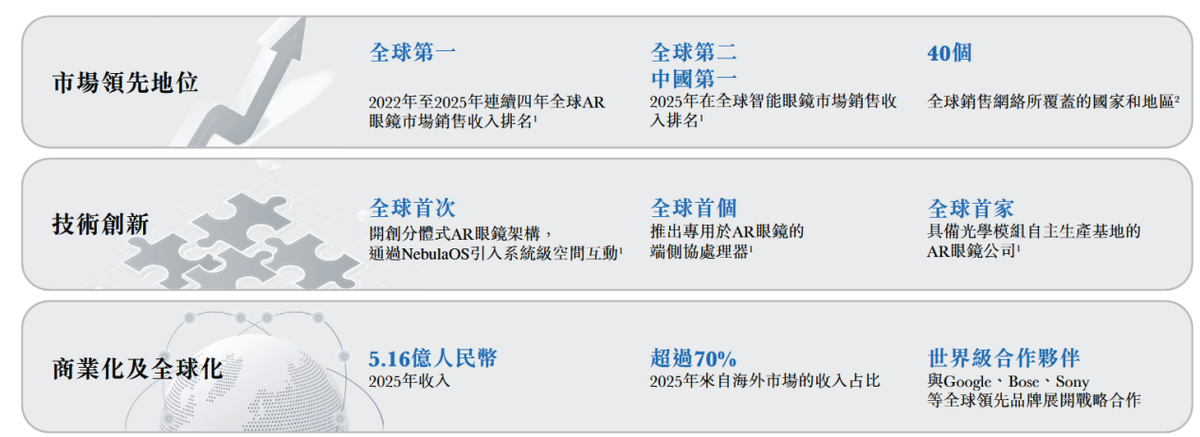
Source: XREAL prospectus
According to XREAL's prospectus, revenue is growing, but profitability remains elusive.
From 2023 to 2025, XREAL's revenue grew from 390 million yuan to 516 million yuan, with a 30.8% year-on-year increase in 2025. Gross margins improved from 18.8% to 35.2%, approaching levels seen in mature hardware companies.
However, net losses were 882 million yuan, 709 million yuan, and 456 million yuan, respectively, over the same period, totaling over 2 billion yuan in cumulative losses over three years. Even after adjusting for non-cash items like changes in fair value of preferred shares, adjusted net profits remained negative at -437 million yuan, -375 million yuan, and -250 million yuan.
As of the end of 2025, XREAL's cash and cash equivalents stood at approximately 63.63 million yuan, while net cash used in operating activities was -203 million yuan. Net current liabilities increased from 1.932 billion yuan in 2023 to 3.084 billion yuan in 2025.
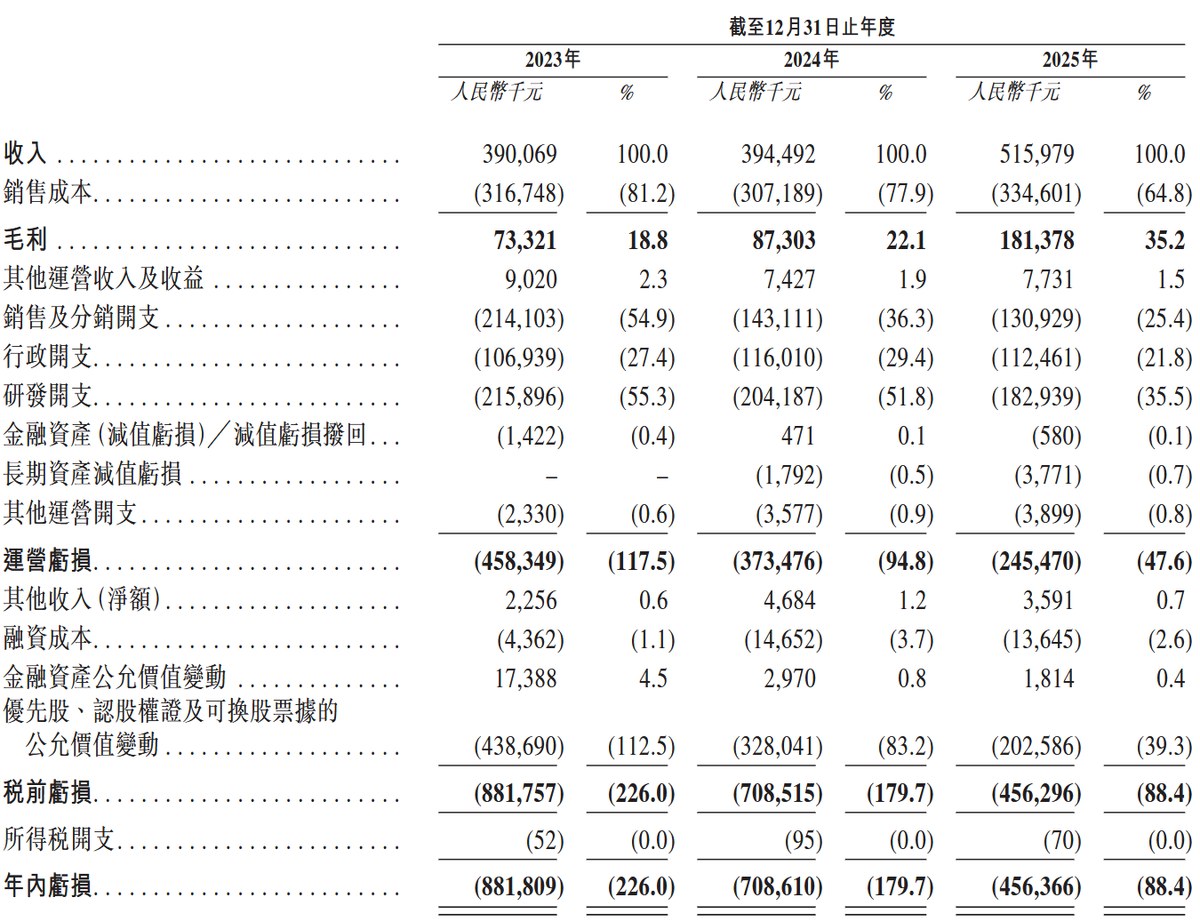
Source: XREAL prospectus
The reasons for the losses are clear.
First, non-cash losses from changes in fair value of preferred shares; second, sustained R&D investment, totaling approximately 216 million yuan, 204 million yuan, and 183 million yuan over three years; third, marketing and market education costs that are inevitable for a nascent industry.
XREAL is not alone; Rokid has also experienced prolonged losses since its inception.
The industry consensus is that smart glasses are an extremely capital-intensive sector, with ultra-small optical engines, waveguide lenses, spatial perception algorithms, and high-density batteries each requiring substantial 'upfront costs.'
XREAL's rush to IPO may partly stem from external shareholder pressure.
Public data shows that XREAL has raised over 2.3 billion yuan in cumulative financing, with investors including Alibaba, Kuaishou, Sequoia China, and other prominent firms. Founder Xu Chi holds a combined stake of approximately 27.98%, making him the largest single shareholder but without a majority stake.
For a company that has been operating for nine years, accumulated losses exceeding 2 billion yuan, and cash flow of less than 100 million yuan, an IPO is not just a funding channel but also a preferred exit path for investors.
Rokid and Thunderbird face similar pressures.
Aiqicha data shows that Rokid completed its C+ round of financing in January 2026, with new shareholders including Lens Technology, SenseTime, and Samsung Medical, boosting its cash reserves to over 1.5 billion yuan.
Thunderbird secured over 1 billion yuan in financing from China Mobile and China Unicom earlier in the year.
The 'first AI glasses IPO' is likely to occur in 2026, with XREAL having already submitted its prospectus, while Rokid and Thunderbird, though not officially filed, remain under market scrutiny.
The question now is not 'whether to go public' but 'who will go first.'
Is China's AI glasses market underestimated compared to Meta's $1.7 trillion valuation?
To raise capital from the market, companies must present tangible assets.
Currently, the fundamentals of the AI glasses sector remain solid.
First, while the market size is still small, growth potential is significant, and no absolute leader has emerged yet, giving everyone a chance to be first. IDC predicts that global smart glasses shipments will exceed 23.687 million units in 2026; iiMedia Research data shows the global smart glasses market at $12.58 billion in 2025, expected to reach $138.73 billion by 2029.
Second, a technological inflection point has arrived.
This year, AI glasses technology has diversified from single functions to multiple forms, with recording, shooting, translation, and payment capabilities meeting real-world needs.
Additionally, tech giants are collectively betting big.
In the past two months, players like Rokid, Thunderbird, XREAL, Alibaba's Qianwen, and iFlytek have intensively released or previewed new products. Meta plans to double the annual production capacity of Ray-Ban Meta to 20 million units by the end of 2026.
However, a 'good sector' does not necessarily equal a 'good business.'
The core contradiction facing AI glasses today is that while the market size is exploding, individual companies have yet to find a profitable model.
Industry statistics show that over 200 new AI functions have been added to the sector, but user retention rates for these features are below 6% in the long term. Average return rates for AI glasses on major e-commerce platforms like JD.com and Tmall are as high as 30%.
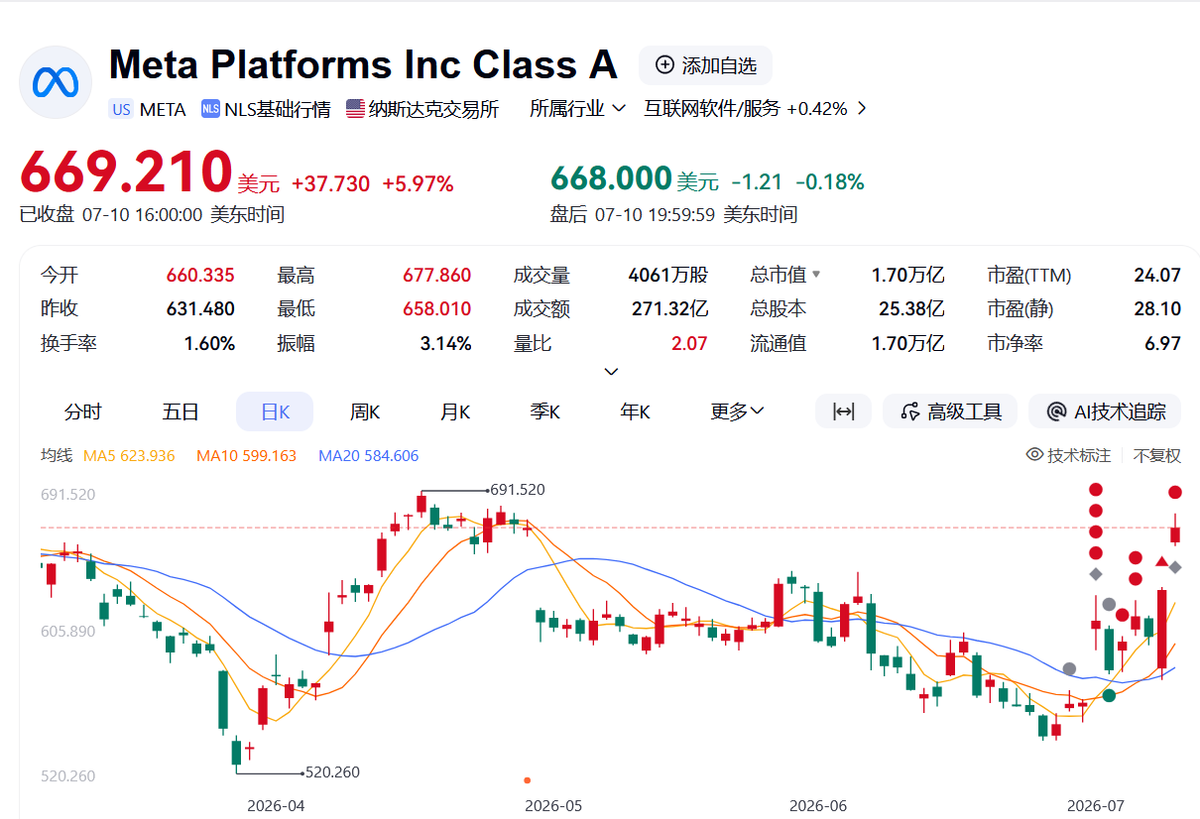
Figure: Meta's market capitalization
If there is a benchmark for China's 'first AI glasses IPO,' it would be Meta in the overseas market, given its dominant position.
As of now, Meta's market capitalization stands at $1.7 trillion in the U.S. stock market.
This valuation corresponds to shipments and market share: Meta holds nearly 84% of the global market for smart glasses without displays. In 2025, its AI glasses shipments reached 7.4 million units, up 281.3% year-on-year (Counterpoint data), with the U.S. remaining the largest smart glasses market globally.
In the Chinese market, according to Rokid founder Zhu Mingming's sales targets, the company aims to exceed 1 million units in 2026, 2-3 million units in 2027, and 10 million units in 2028.
In other words, it plans to catch up to the global leader's shipments within three years, though where Meta will be by then remains uncertain.
Notably, in contrast to the highly concentrated overseas market, the domestic market has seen dramatic changes in its top five players within a year.
This landscape means the domestic market remains volatile, with no company able to build a moat based on a single advantage.
Who can compete with Meta?
Based on the current competitive landscape, domestic players can be roughly divided into four tiers.
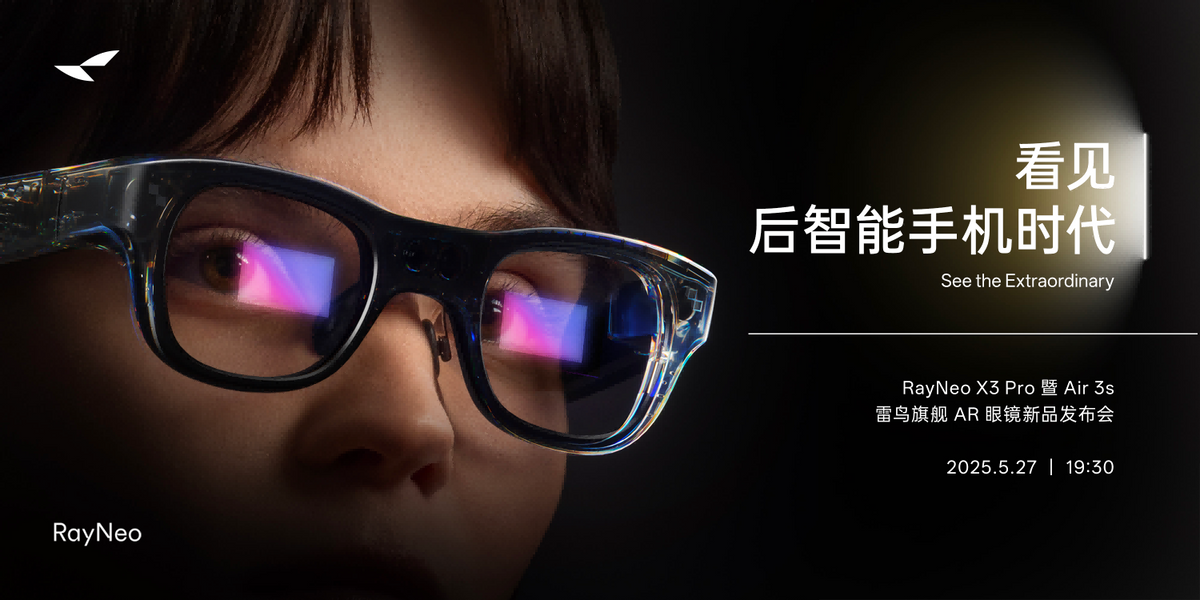
First tier: Thunderbird Innovation, the 'optical king' of the tech-focused camp.
Rokid's defining feature is its openness, enabling its smart glasses to seamlessly toggle among mainstream large models such as Qianwen, DeepSeek, and Gemini. It has proactively integrated industrial chain (supply chain) companies into its shareholder structure, transforming suppliers into stakeholders. Rokid's first-mover advantage, brand recognition, and its partnership with CCTV for World Cup broadcasts are key differentiators. However, profitability remains a pressing concern for the market.
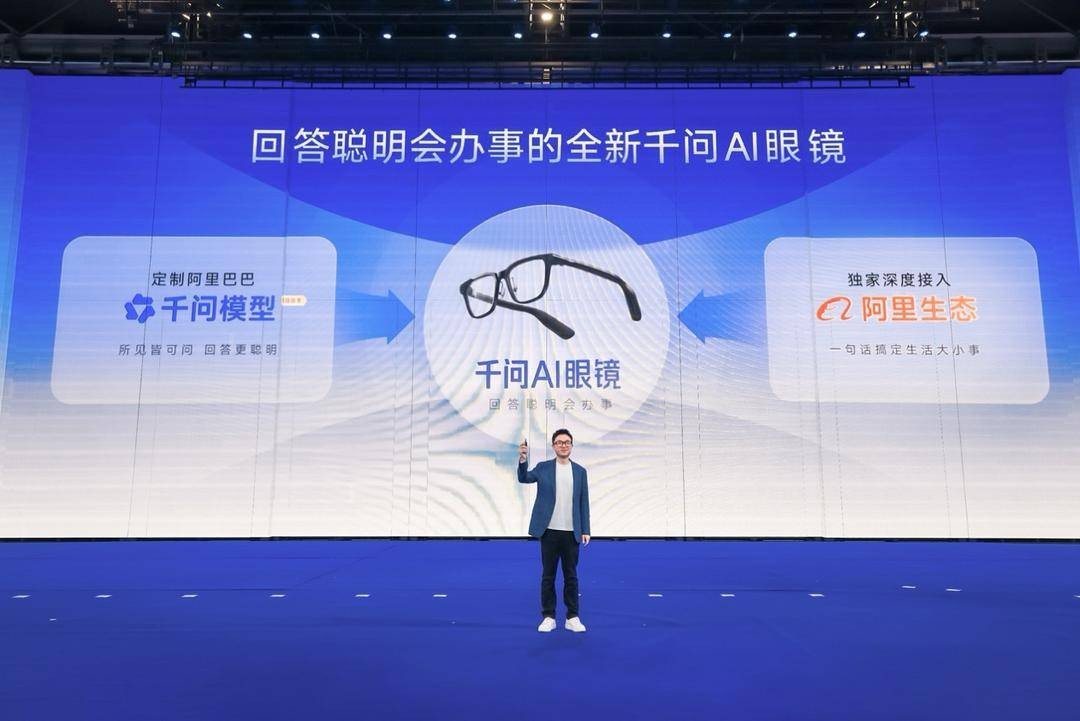
Tier 3: Alibaba's QianWen – The Ecosystem Powerhouse
QianWen AI glasses are deeply embedded within Alibaba's ecosystem, seamlessly integrating with Alipay, Taobao, and Gaode Maps. This 'hardware + AI + lifestyle services' trifecta exemplifies the strategy of internet giants venturing into hardware. Being the top-selling product across all channels from January to May 2026 highlights the strength of ecosystem-driven growth. However, hardware is not Alibaba's core strength, and refining product definition and supply chain management will take time.
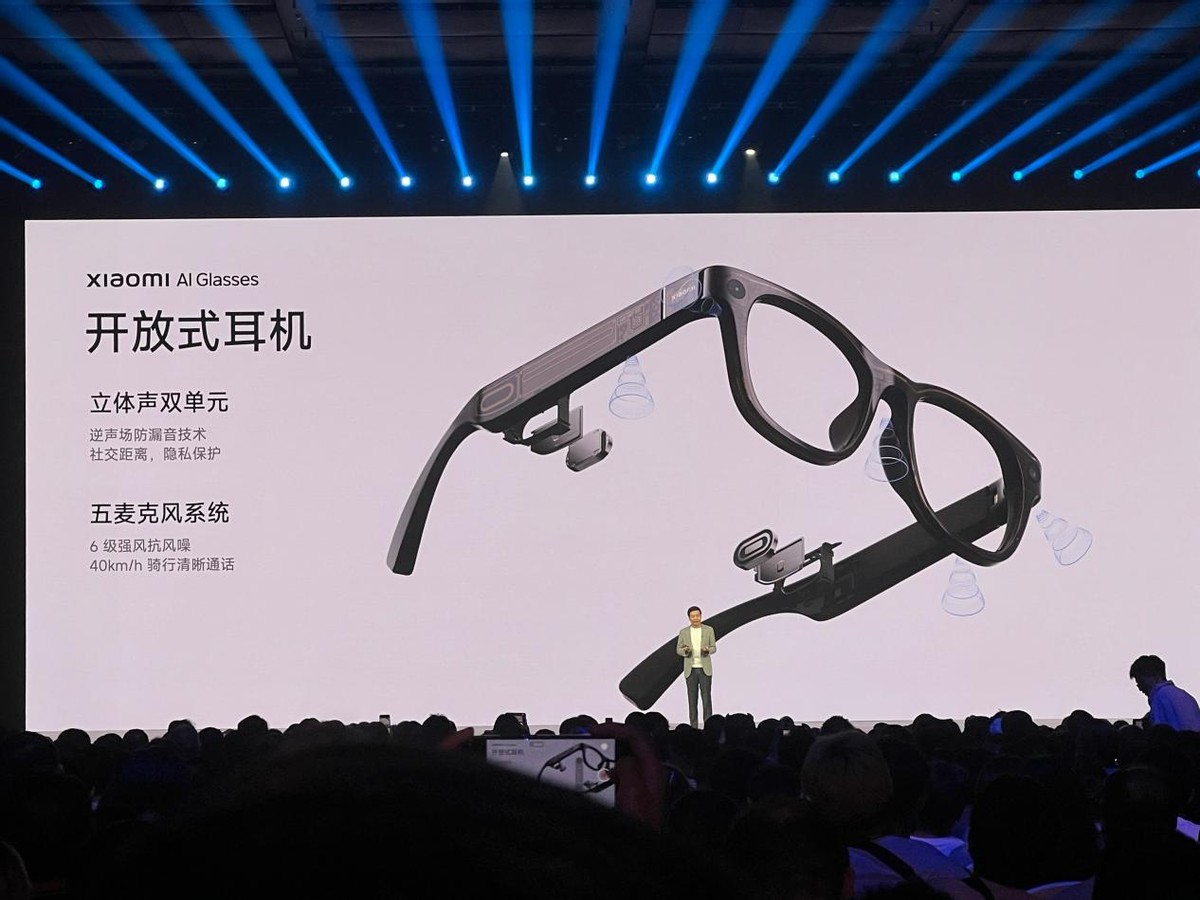
Tier 4: Xiaomi and Huawei – The Giants Ready to Strike
Xiaomi leads China's market with a 28% share in shipments, while Huawei's first HarmonyOS-powered AI glasses start at 2,499 yuan. Both companies boast well-established distribution networks, a massive user base, and robust supply chain management. Once the AI glasses market shifts towards 'cost-effectiveness' and 'ecosystem synergy,' their potential will be formidable.
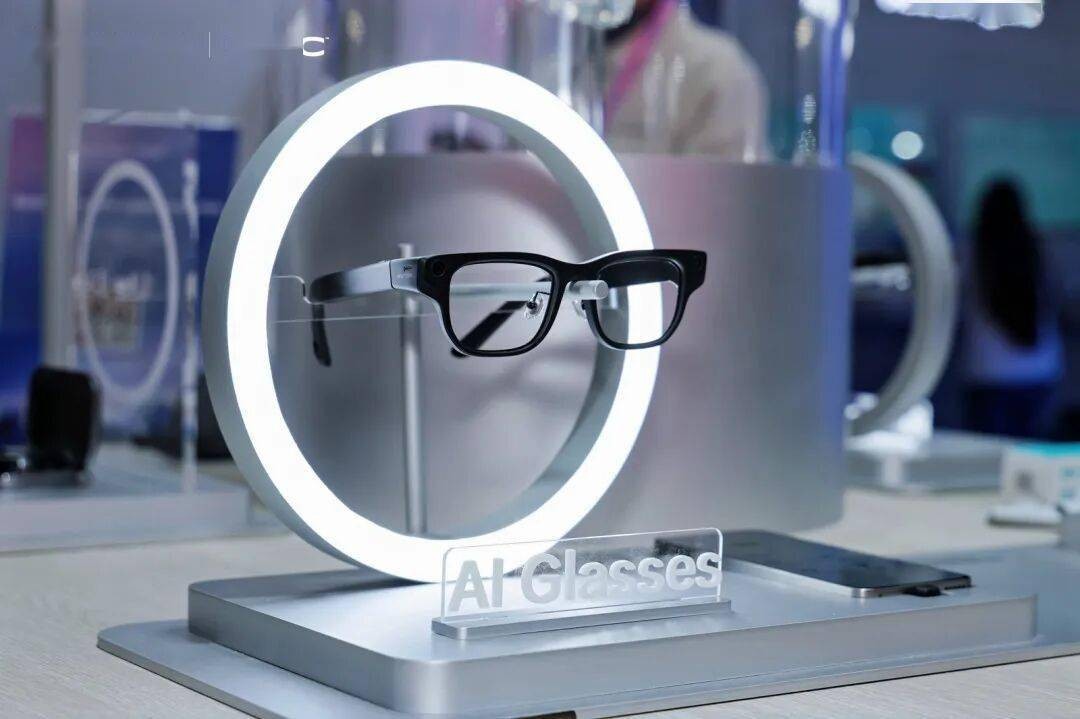
iFLYTEK, priced at 4,299 yuan and positioned for translation across 122 languages, primarily targets the niche market of business translation. In the broader consumer market for AI glasses, iFLYTEK currently faces significant challenges in competing directly with the top four players.
Overall, the industry is expected to remain in a chaotic 'battle of a hundred glasses' for the next 1-2 years, ultimately leading to a consolidation where only the strongest survive.
At the 2026 Ecosystem and Developer Conference, Zhu Mingming, founder of Rokid, remarked, 'At this stage, the industry should not overly focus on short-term market share. The entire sector is still in the 'BlackBerry era,' and the tipping point for true industrial-scale adoption has not yet been reached.'
Drawing parallels to the smartphone industry, in 2009, Nokia, BlackBerry, HTC, and Motorola were dominant players, but eventually, only a few—such as Apple, Samsung, Huawei, and Xiaomi—remained. The AI glasses market is likely to follow a similar trajectory.
As the upstream supply chain matures, entry barriers will lower, but barriers related to brand recognition, ecosystem integration, and distribution channels will rise.
Ultimately, no more than five players are expected to survive.
When AI glasses truly become the 'next-generation computing platform,' the competition among manufacturers will center on the redistribution of model capabilities, terminal access points, and ecosystem control.
Companies with strong capabilities in large models, operating systems, hardware manufacturing, and distribution networks will have a competitive edge in this evolving landscape.
-
![]()
After Three Attempts to List on the Hong Kong Stock Exchange, Has Yonyou Finally Broken Free from Its Painful Transition?
-
![]()
Qianwen Powers Apple’s AI: Alibaba Secures Its ‘Doubao Moment’ with iPhone Integration
-
![]()
JD Marches West, Pinduoduo Ventures East: The Clandestine Struggle for China’s Supply Chain Dominance
-
![]()
GAC Honda Secures 10-Year Contract Renewal: Debunks Merger Rumors, Unites for Market Breakthrough | Mirror Pro
-
![]()
Analysis of BBA Service Reputation Index in the First Half of 2026: Terminal Services Under Pressure
-
Observation of AI Business Models: From Token-Based Payment to Outcome-Based Payment
-
Observations on AI Business Models: From Token-Based Payment to Outcome-Based Payment
-
SpaceX Market Insight: The $1 Trillion 'Fireworks' Fizzle Out, Marking the Start of the Super IPO Gamble