GAC Honda Secures 10-Year Contract Renewal: Debunks Merger Rumors, Unites for Market Breakthrough | Mirror Pro
 07/21 2026
 374
374
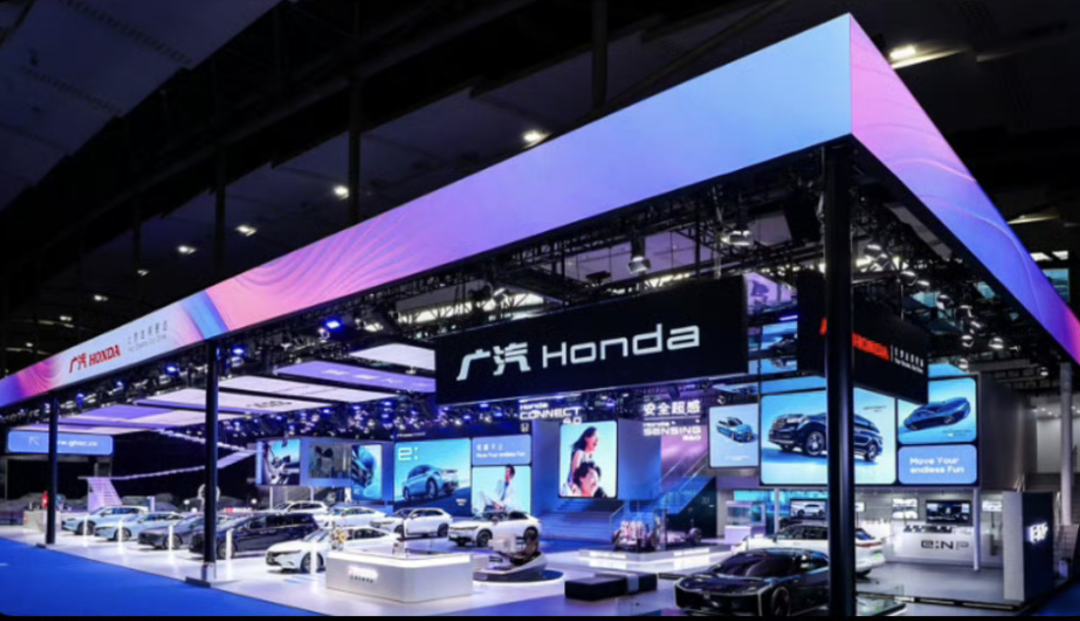
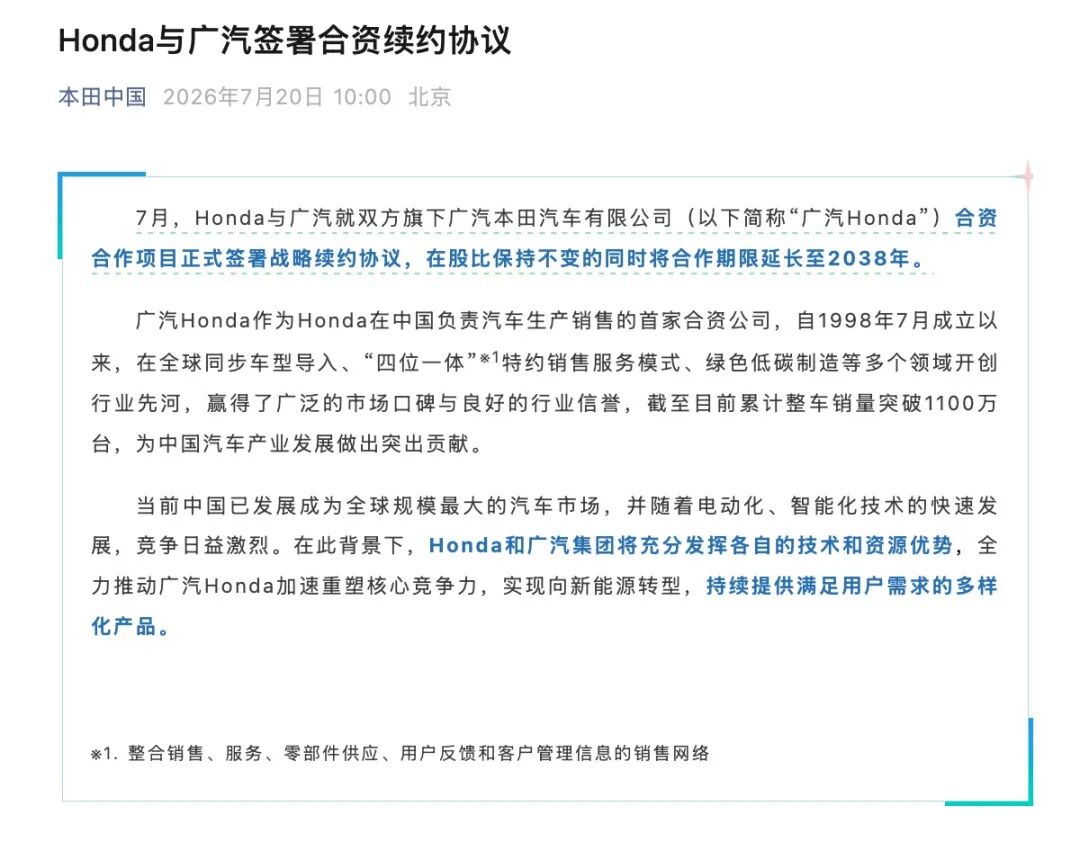
The long-awaited renewal of GAC Honda's contract has finally been confirmed. On July 20th, Honda and GAC jointly announced that GAC Honda Automobile Co., Ltd., their joint venture, had officially signed a strategic contract renewal agreement. This agreement extends their cooperation period to 2038, keeping the share ratio unchanged. The previous contract was set to expire in 2028.
Honda China stated in an official announcement: “Honda and GAC Group will fully utilize their respective technological and resource strengths to propel GAC Honda in accelerating the reshaping of its core competitiveness, achieving a transformation towards new energy, and consistently delivering diversified products that cater to user needs.”
Previously, as the contract period between GAC and Honda neared its end without any news of renewal, coupled with Honda's sluggish market performance in China, rumors and speculations began to swirl. These included plans to shut down the Huangpu Plant (GAC Honda) and Wuhan Plant (Dongfeng Honda), as well as GAC's acquisition of equity in Dongfeng Honda Engine from Dongfeng.
This contract renewal directly dispels three major speculations in the market. Firstly, it confirms that Honda will not exit the Chinese market. There had been concerns that Honda might withdraw from China, but the 10-year renewal is a strong indication that the Chinese market remains a vital part of Honda's global strategy. Furthermore, Honda's global CEO, Toshihiro Mibe, has publicly emphasized on multiple occasions that China is a key battleground for electrification transformation and that Honda has no plans to exit.
Secondly, there will be no merger between Northern and Southern Honda. If Honda had intended to integrate its two joint ventures in China in recent years, the optimal approach would have been to wait until the expiration of GAC Honda's contract in 2028. This would have provided greater flexibility in renegotiating equity and structure without the need for another 10-year renewal that could complicate a future merger. Additionally, Dongfeng Honda's contract is set to expire in 2043, meaning that, at least for the next 12 years, the dual-line structure of Northern and Southern Honda is unlikely to change. However, as seen with the merger of Changan Mazda and FAW Mazda before their contracts expired, it cannot be completely ruled out.
Thirdly, the control structure of the GAC Honda joint venture remains stable, with GAC and Honda maintaining a 50:50 equity ratio, contrary to external speculation of an adjustment where one party would increase its stake.
As Honda's first complete vehicle (vehicle manufacturing) joint venture in China, GAC Honda was officially established in July 1998. Beyond introducing products, GAC Honda also introduced the “four-in-one” franchised sales and service model to China, integrating sales, service, parts supply, and user feedback into a unified system. This transformed the then-fragmented and extensive domestic automotive distribution industry. This model was later adopted by almost all brands and became the standard paradigm for China's automotive channel system.
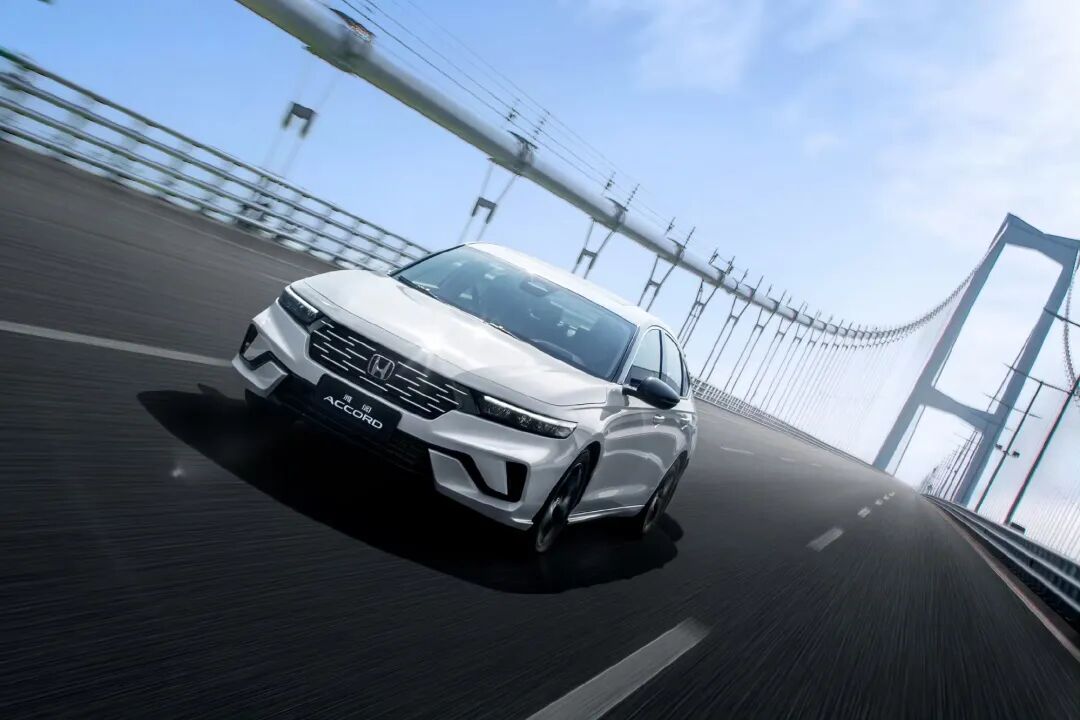
Over its 26-year presence in China, models such as the Accord, Fit, Vezel, Breeze, and Avancier have set benchmarks in their respective segments. The 10th-generation Accord consistently sold over 20,000 units per month at its peak, while the Fit became a phenomenal product in the small car market, earning the folk reputation of “supercar GK5.” In 2020, GAC Honda reached its peak sales of 805,600 units. To date, GAC Honda's cumulative vehicle sales have exceeded 11 million units.
However, with the market's shift towards electrification, GAC Honda's sales have been on a decline since 2021. Sales from 2021 to 2025 were 803,000, 741,800, 640,500, 470,600, and 351,900 units, respectively. In 2026, sales continued to plummet, with cumulative sales in the first half of the year reaching only 68,300 units, a year-on-year decrease of 55.82%. Mainstay models like the Accord and Breeze saw their sales halved year-on-year, while classic models like the Fit and Vezel sold just over 3,000 units cumulatively in the first half of the year. Within the GAC Group, GAC Honda is no longer the sales leader, with its annual sales surpassed by independent brands like Aion and Trumpchi.
Not just GAC Honda, but Honda's entire business in the Chinese market is facing a severe downturn. Honda's other joint venture in China, Dongfeng Honda, sold 116,400 units in the first half of the year, a year-on-year decrease of 22%. Honda China's sales in the first half of the year were 205,800 units, a year-on-year decrease of 34.7%. In the 2025 fiscal year, Honda reported its first annual net loss since going public in 1957, amounting to 423.9 billion yen (approximately RMB 18 billion).
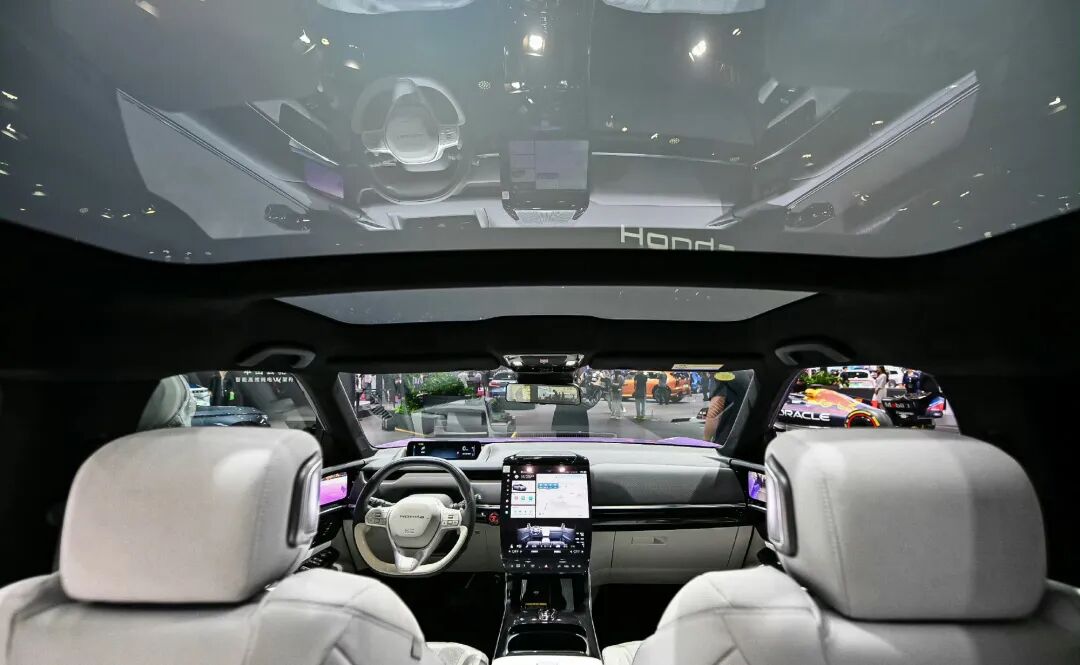
While the contract renewal resolves the questions of whether to stay and how to stay, the key issue now is what to do after staying—that is, how GAC Honda can achieve electrification transformation. Honda's statement responds by saying that Honda and GAC Group will fully leverage their respective technological and resource advantages to drive GAC Honda in accelerating the reshaping of its core competitiveness and achieving transformation towards new energy.
When Honda launched its e:N pure electric brand in 2021, it set a goal of introducing 10 pure electric models in the Chinese market within the next five years and electrifying all new models in China by 2030. Five years later, GAC Honda has introduced pure electric models such as the e:NP1 Extrem, e:NP2 Rays, and P7. However, due to issues like oil-to-electric conversions, lagging intelligence, and pricing missteps, their product competitiveness has been overshadowed by independent brands in the same price range, resulting in poor sales performance. In the first half of this year, GAC Honda's cumulative new energy sales were only 3,276 units, further declining by 46.52% year-on-year.
In contrast, joint ventures like GAC Toyota and Dongfeng Nissan have gradually found paths to break through. GAC Toyota, through local team-led R&D, collaborations with local intelligent driving companies, competitive pricing, and its long-established reputation for quality, achieved consecutive monthly sales of over 10,000 units for the BZ3X, ranking it among the top compact new energy SUVs. Dongfeng Nissan and SAIC-GM Buick have also adopted similar localization strategies, launching best-selling electric models like the N6/NX8 and ELECTRA 7, respectively.
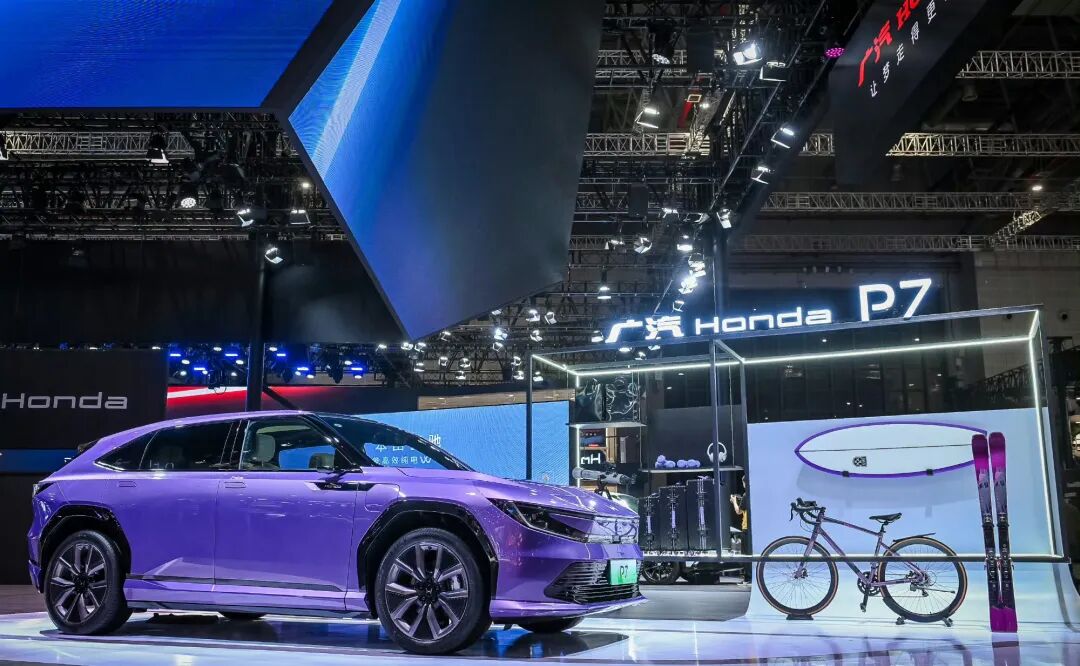
In comparison, GAC Honda's electrification efforts in recent years have remained entrenched in the traditional model of Japanese R&D and global platform imports by the Chinese joint venture. This model was effective during the fuel car era, with Honda conducting global unified R&D while Chinese factories handled production and sales, ensuring technological advancement and cost-sharing. However, in the rapid iteration of electrification and intelligence in China, the disadvantages of this model have become apparent, with slow response times and product definitions that are out of touch with local Chinese demands.
After recognizing the crisis, Honda has actually begun to make changes. For example, at the R&D level, Honda announced in April that it would transfer the lead development rights for China-exclusive pure electric models to Dongfeng Honda and GAC Honda for the first time. At the supply chain level, Honda has started to extensively engage local Chinese suppliers, particularly in intelligence, collaborating with companies like Momenta, DeepSeek, and Huawei.
Due to the slow progress of its previous transformation, GAC Honda has fallen behind some joint ventures in the electric vehicle segment and even further behind independent brands. This makes catching up more challenging for GAC Honda. Of course, GAC Honda is not without opportunities. On one hand, it has deep accumulation in Honda's hybrid technology, a brand base of 11 million users, a mature quality control system, and a nationwide dealer network. On the other hand, as it shares the same parent company, GAC Group, with GAC Toyota, the successful experiences of GAC Toyota can also be applied to GAC Honda.
GAC Honda has designated 2026 as a “year of accumulation and preparation.” There are reports that it has implemented a strict product competition mechanism internally, proactively halting model projects that fail to meet competitiveness standards and concentrating resources on core product development. According to the plan, GAC Honda will launch three new models in 2027, covering fuel, hybrid, and new energy segments, including a self-developed model based on a China-exclusive new energy platform.
The next two to three years will be a critical window for GAC Honda's electric vehicles to break through. If any newly launched electric models can achieve success, GAC Honda will still have a chance to remain competitive in the market.
-
![]()
Personnel Shuffle: Independent Director Mi Xuming Steps Down from OFILM
-
![]()
Net Profit Anticipated to Skyrocket by 103%: What Gives This Optical Company a Competitive Edge?
-
In Just One Year, China Unveils Unicorns Valued at 10 Trillion Yuan!
-
![]()
6 Park Companies Shine at WAIC: How Hong Kong Science Park Bridges AI from Research to Industry
-
![]()
Wang Wenjing’s Third Act: Can Yonyou Reinvent Itself in the AI Era?
-
![]()
Performance Coupe Entry Threshold Reduced to 170,000 Yuan: Assessing the 2027 Exeed ES's Prospects
-
![]()
Battery "Crisis" for 4 Million New Energy Commercial Vehicles
-
【Focus】Fluorinated Photosensitive Polyimide (FPSPI): A High-End Subdivision of PSPI with Great Potential in High-Tech Industries