Qianwen Powers Apple’s AI: Alibaba Secures Its ‘Doubao Moment’ with iPhone Integration
 07/21 2026
 381
381
Author|Zhang Qian
Editor|Hu Zhanjia
Operations|Chen Jiahui
Produced by|LingTai LT (ID: LingTai_LT)
Header Image|Publicly available online
On July 15, China’s Cyberspace Administration quietly approved seven smartphone-based generative AI services, marking a pivotal moment in the country’s AI race. The list included Huawei’s Xiaoyi, OPPO’s AI assistant, vivo’s Blue Heart AI, Xiaomi’s Surge AI, Samsung AI, Nubia’s Doubao Phone Large Model—and one outlier: Apple Intelligence, filed by Apple Technology Development (Shanghai) Co., Ltd. on July 8.
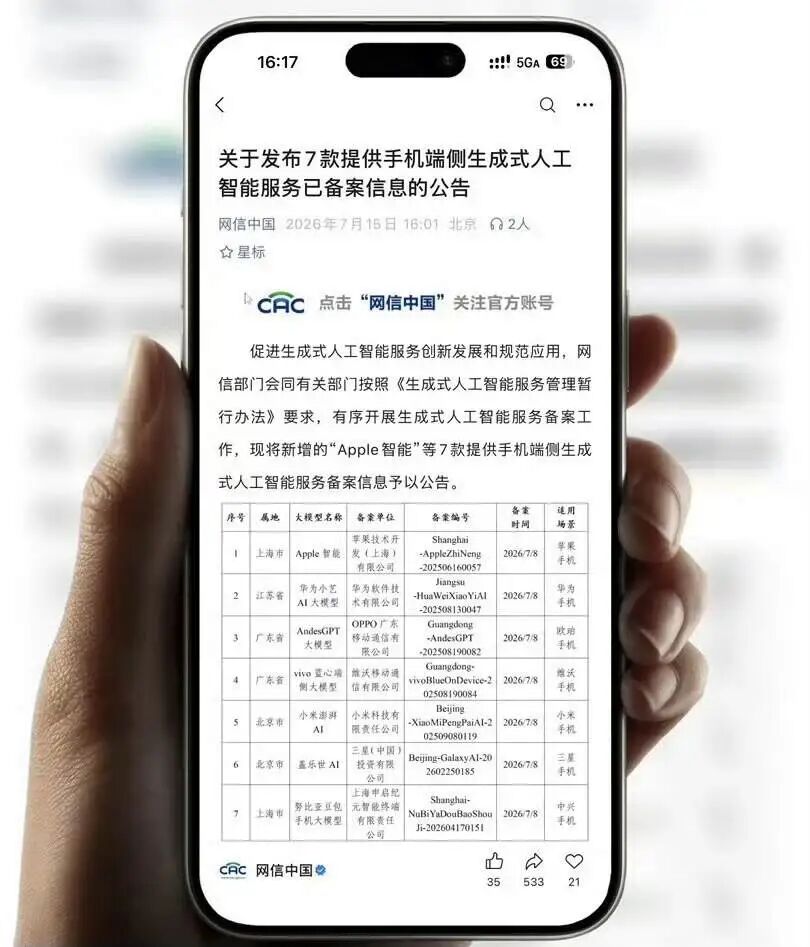
This approval signaled a critical shift: All major Chinese smartphone brands now have regulatory clearance for on-device AI. Apple, the last to join, is playing catch-up. Sources reveal Alibaba’s Qianwen provides the foundational AI capabilities, while Baidu supports visual search—a textbook example of “Apple sets the stage, Chinese firms deliver the performance.” Netizens joked: “Alibaba finally has its ‘Doubao Phone.’”
The real question: Why did Apple choose Qianwen over more prominent domestic models?
The answer lies in strategy, not technical prowess.

Why Qianwen? Strategic Alignment Over Technical Superiority
Clues emerged earlier. In February 2025, Alibaba Chairman Joe Tsai stated at a Dubai summit: “Apple is extremely selective. They evaluated multiple Chinese firms before choosing us.” This carried weight: “Multiple companies” confirmed Apple’s due diligence; “extremely selective” underscored Apple’s standards; “choosing us” reflected Tsai’s pride.
Yet Qianwen isn’t the market leader. Tianyancha data shows Qianwen had 167 million monthly active users (MAUs) in June 2026—impressive, but ByteDance’s Doubao boasted 382 million (2.3x Qianwen’s base), while DeepSeek trailed with 129 million. Technically, DeepSeek’s 2025 breakthrough in low-cost, high-performance models reshaped China’s AI narrative. Qianwen excels in open-source communities but lacks public dominance.
So what does Apple want? Five words: No competitive conflicts.
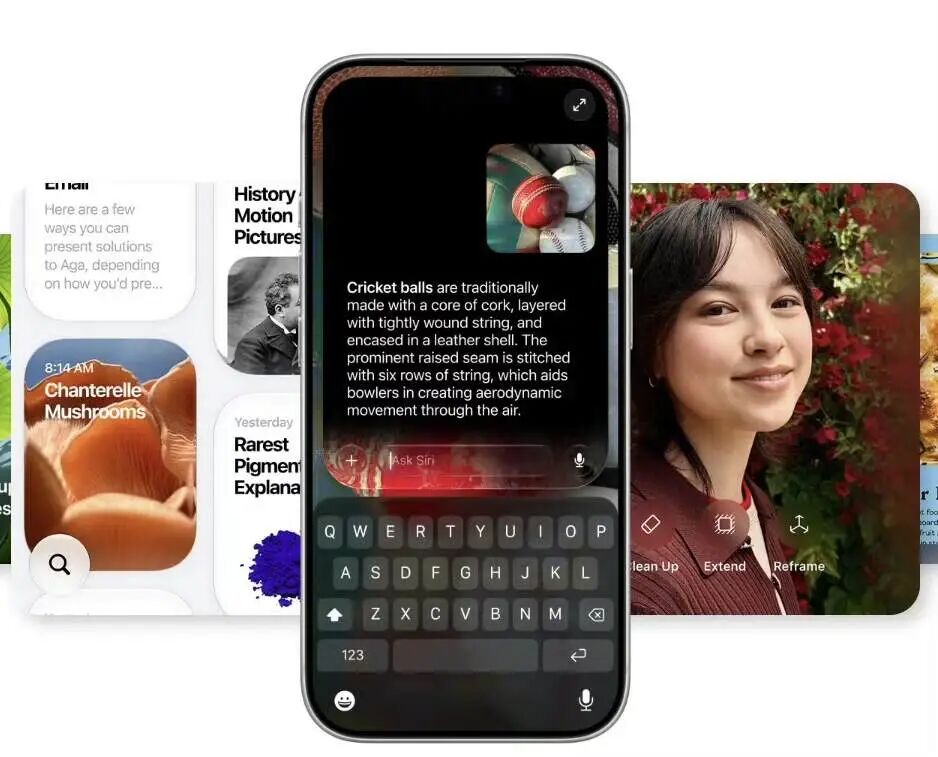
Apple’s global AI strategy relies on a three-tier architecture: a 3-billion-parameter on-device model for lightweight tasks, private cloud computing for moderate complexity, and a U.S. AI firm’s chatbot for advanced requests. This setup ensures privacy and security. However, in China, the U.S. firm’s services are banned, and Google’s AI models face compliance barriers. Apple needed a local cloud partner—Qianwen fit perfectly: strong technical chops, no rivalry with Apple’s hardware/software ecosystem, and urgent need for a consumer-facing breakthrough.
In short, this wasn’t a beauty contest but a matchmaking event. Qianwen isn’t the “prettiest” model but the most compatible, with the cleanest background and strongest cooperation意愿 (willingness).

For Alibaba: A Lifeline to Consumer Relevance
Qianwen faces existential pressure. With 167 million MAUs, it pales against Doubao’s 382 million, while DeepSeek’s 129 million closes in. Tencent looms larger: rumors swirl about WeChat embedding an AI agent. If launched, WeChat’s 1.3+ billion MAUs could instantly redefine China’s AI landscape. Alibaba knows: Qianwen needs a super-app entry point. Apple’s hundreds of millions of high-spending, brand-loyal users in China are ideal.
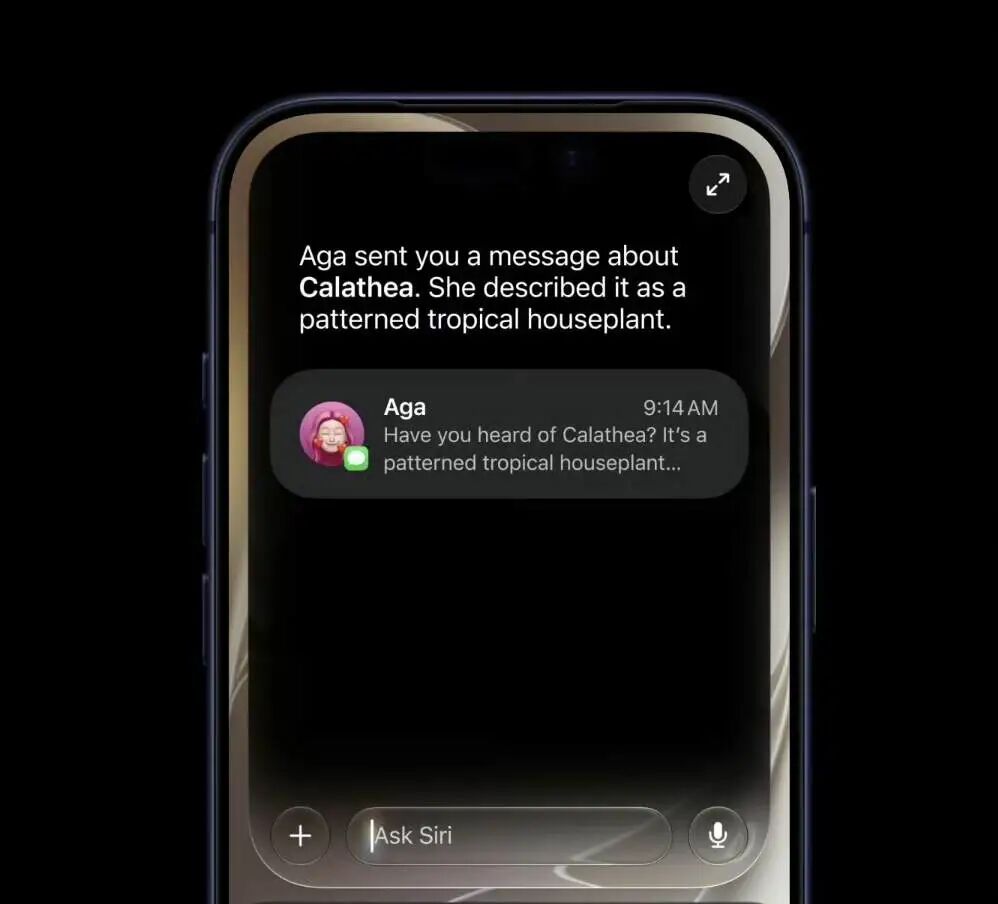
For Qianwen, these users represent the perfect “seed group.” Tsai’s “they chose us” isn’t just a partnership announcement—it’s a market signal: Qianwen is aligned with the world’s most valuable tech company. Qianwen’s March 2026 unified brand launch hints at scaling ambitions. Apple’s timing couldn’t be better.
But will Apple users embrace it? Apple’s audience demands seamless, “native” experiences. If Qianwen feels clunky or un-Apple-like, users will reject it. Qianwen must integrate so deeply into iOS that users perceive it as an iPhone enhancement, not a third-party service. This requires invisible, context-aware outputs—not overly formal, chatty, or robotic.
The challenge is immense. Success could catapult Qianwen’s user base from tens of millions to billions overnight via Apple device integration. No ad campaign can match that scale.

For Apple: A Race Against Chinese Rivals
Apple faces urgency. Competitors like Huawei’s Xiaoyi (HarmonyOS-integrated) and OPPO’s Andes Model already offer AI-driven features—intelligent recommendations, cross-app voice commands—while Apple lags. In China, AI is no longer a bonus but a purchase requirement. Delay risks cementing the perception that “iPhones lack AI,” hurting sales.
Apple’s 2025 annual report listed AI as a risk factor, citing potential harmful content, copyright issues, and liability for partner models. In plain terms: If Qianwen generates inappropriate content on iPhones, Apple bears the blame. This underscores Apple’s desperation to catch up in China.
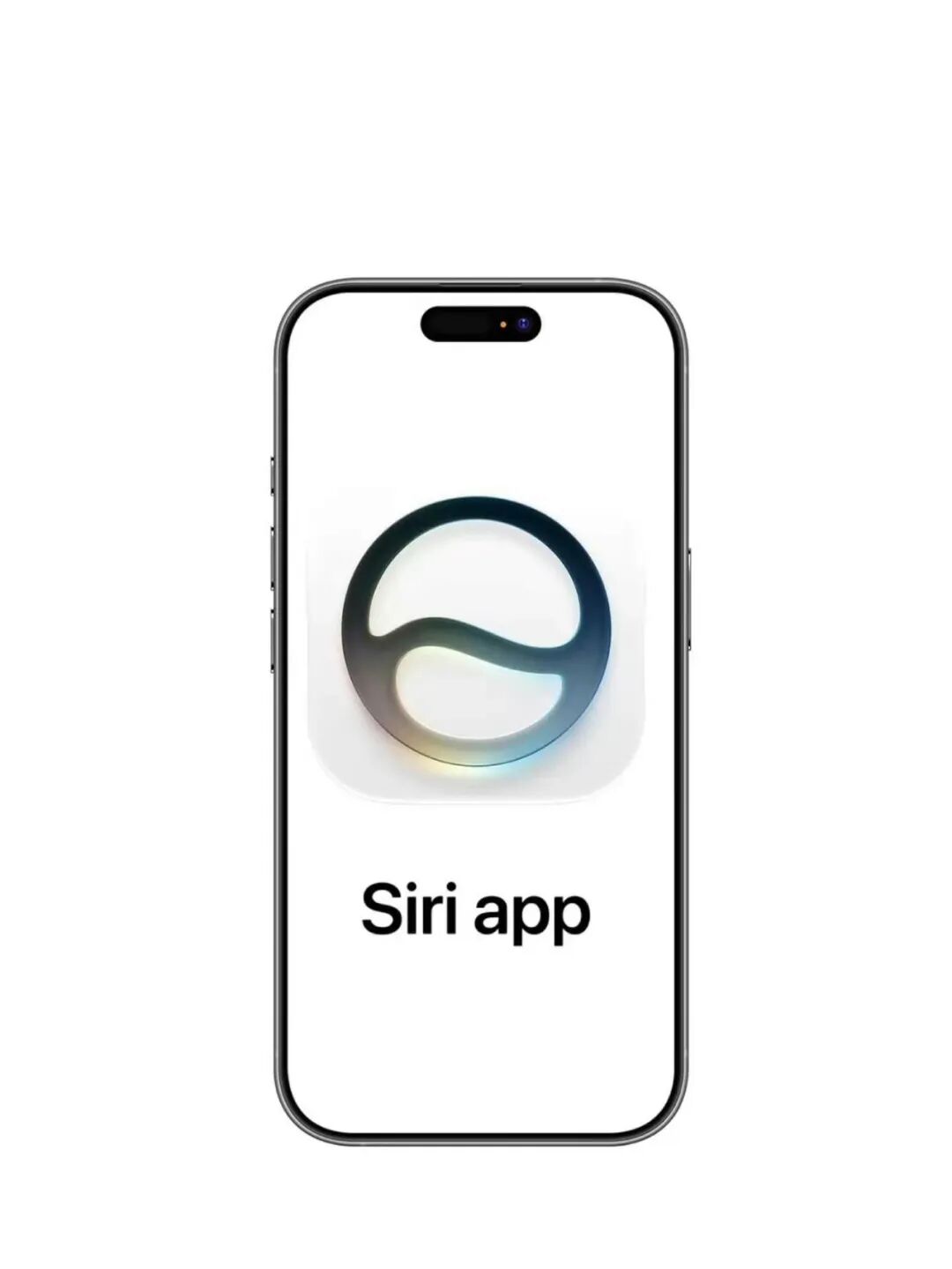
Globally, Apple Intelligence thrives on its three-tier architecture. In China, the U.S. AI firm’s replacement—Qianwen—requires delicate messaging. How will Apple explain to users that “your data is now processed by Alibaba”?
Apple Intelligence is expected to debut with iOS 27 in fall 2026, rolling out gradually in China. Apple’s Chinese website teases AI readiness on iPhone 17 Pro pages. Yet questions linger: Can Qianwen match overseas models’ complexity? Will users perceive the domestic version as inferior?
Apple will likely start conservatively—launching writing assistance and image editing before expanding. But social media comparisons could escalate quickly if gaps persist. For Apple, launching first is pragmatic. Rivals have already secured approvals; perfectionism risks missing the window.
User patience is finite. Late arrival is forgivable; prolonged absence is not.
Apple chose Qianwen not for technical supremacy but safety—no rivalry, no traffic ambitions, and urgent need for a consumer foothold. Qianwen accepted Apple not for exclusive tech but to compete with Doubao. This is mutual benefit: Apple catches up in China’s AI race; Qianwen gains access to high-value users.
The real test comes in autumn: When iOS 27 updates, users won’t celebrate “Apple finally has AI”—they’ll ask: “Is this any good?”
Success means Qianwen rides Apple’s comeback; failure reduces regulatory clearance to a hollow victory. In AI wars, approvals open doors—but only experiences keep users inside.
-
![]()
Personnel Shuffle: Independent Director Mi Xuming Steps Down from OFILM
-
![]()
Net Profit Anticipated to Skyrocket by 103%: What Gives This Optical Company a Competitive Edge?
-
In Just One Year, China Unveils Unicorns Valued at 10 Trillion Yuan!
-
![]()
6 Park Companies Shine at WAIC: How Hong Kong Science Park Bridges AI from Research to Industry
-
![]()
Wang Wenjing’s Third Act: Can Yonyou Reinvent Itself in the AI Era?
-
![]()
Performance Coupe Entry Threshold Reduced to 170,000 Yuan: Assessing the 2027 Exeed ES's Prospects
-
![]()
Battery "Crisis" for 4 Million New Energy Commercial Vehicles
-
【Focus】Fluorinated Photosensitive Polyimide (FPSPI): A High-End Subdivision of PSPI with Great Potential in High-Tech Industries