Ali Secures Apple! Qwen Triumphs!
 07/20 2026
 593
593
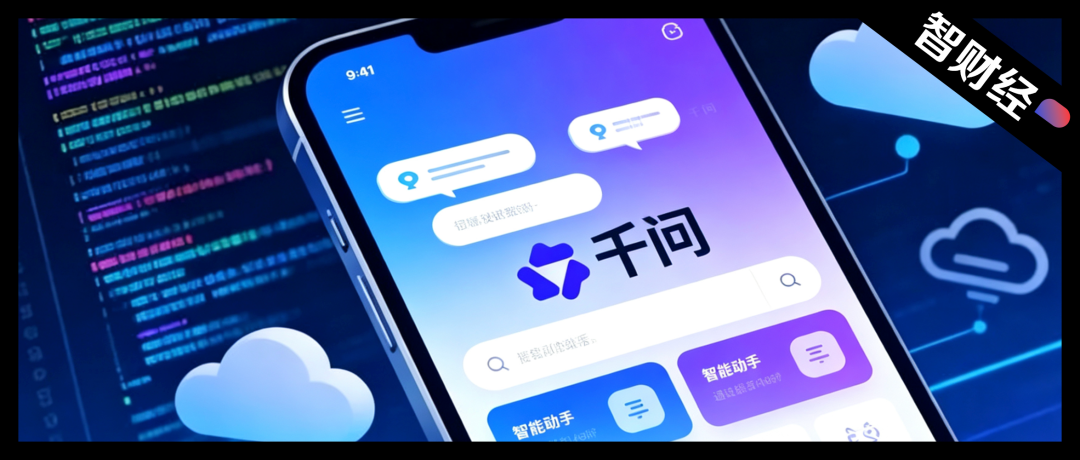
On July 15, two pivotal events unfolded simultaneously:
The Cyberspace Administration of China unveiled a new roster of approved generative AI services tailored for mobile devices, prominently featuring "Apple Intelligence." On that very day, Alibaba confirmed that its Qwen large model would be seamlessly integrated as the AI backbone for Apple Intelligence, catering to users across iOS, iPadOS, macOS, and visionOS platforms in mainland China.
This signifies that Qwen will underpin the AI capabilities of Apple devices in China. Users won't need to download extra apps; instead, they can directly harness Qwen's prowess in text comprehension, image interpretation, and content generation through system functionalities like Siri, writing aids, and image recognition.
Apple AI's foray into China has officially commenced.
I. Apple's Selection: From Initial Contact to Final Confirmation, Spanning Nearly Two Years
Public records indicate that Apple has been engaging with domestic large model providers for quite some time.
In June 2024, Apple unveiled Apple Intelligence at WWDC, with overseas versions gradually rolling out. However, the Chinese version's launch was delayed due to regulatory compliance mandates. China has established a stringent regulatory framework for large models, requiring them to be filed, store data domestically, and adhere to content norms.
In February 2025, Alibaba's co-founder and board chairman, Joe Tsai, publicly confirmed at the Dubai World Government Summit: "Apple has always been highly selective. They've engaged in discussions with multiple Chinese companies and ultimately chose to partner with us, aiming to leverage our AI technology to enhance their phones."
This marked the first official acknowledgment of Apple's choice of Alibaba. From initial contact to confirmation, the process spanned roughly eight months.
On July 15, 2026, Apple Intelligence cleared the CAC filing hurdle, and the Qwen integration solution was officially announced. From the WWDC announcement to its China entry, the entire journey took nearly two years.
II. Alibaba's Credentials: Assembling Capabilities from Public Data
What criteria guided Apple's selection of Alibaba? Public information enables us to piece together Alibaba's capability profile.
Model Performance: In third-party Arena global blind testing rankings for large models, Qwen3.7-Max emerged as the top Chinese model, nearing the performance of leading models like GPT, Claude, and Gemini.
Cloud Service Scale: According to Frost & Sullivan's 2025 report, Alibaba Cloud retained its position as China's premier AI cloud service provider, boasting RMB 23.9 billion in revenue and a 40.1% market share, outpacing the combined total of the second to fourth-ranked providers.
Enterprise Adoption: In the latter half of 2025, the total daily consumption of enterprise-level large models in China reached 37 trillion Tokens, with Qwen accounting for 32.1%, ranking first.
Full-Stack Self-Research Capabilities: Alibaba has achieved a comprehensive layout spanning "chips-cloud-models-inference," with a seamless chain from T-Head AI chips to inference platforms.
These four sets of data converge on one fact: Alibaba is among the few domestic providers capable of simultaneously meeting the four dimensions of "model performance + cloud service capabilities + engineering delivery capabilities + compliance experience."
III. System-Level Integration: Beyond an App, Embedded in the System
The technical intricacies of this collaboration have also been publicly disclosed.
Qwen is not integrated as a standalone app but is directly embedded into Apple's system layer. When users interact with Siri, utilize system-level writing tools, or perform image recognition, Qwen powers these functions at the underlying level. High-computational tasks, such as long-text processing, complex logical Q&A, and multimodal generation, are handled by Qwen's cloud models, while low-latency basic interactions are managed by the device's local chips. User data is stored on domestic servers in compliance with regulations.
This "on-device-cloud collaboration" architecture ensures seamless daily use while upholding data security compliance.
In contrast to the search-era collaboration model, where Google paid Apple approximately $20 billion to secure the default search position in Safari, AI-era system-level integration delves deeper. It's not just about "users clicking ads after searching" but about "Qwen running at the underlying level every time users engage with AI."
IV. Implications for Qwen: From "Downloadable" to "Built-In"
For Qwen, the core value of this collaboration lies in the leap in accessibility.
Previously, Qwen's user acquisition path involved users hearing about it, actively searching, downloading the app, and registering to use it. Each step entailed potential user attrition.
After integrating with Apple Intelligence, the path simplifies to: users turn on their device, and the system-included Qwen is ready for seamless use. Apple sells tens of millions of iPhones annually in China, and when including existing iPads and Macs, the user base swells to hundreds of millions. A significant portion of these users won't actively download standalone AI apps but will naturally utilize system-level AI functions.
This means Qwen reaches users who "won't actively choose AI but will be reached by AI."
Moreover, Apple's user demographic leans towards knowledge workers and design professionals—high-value target users for AI productivity scenarios. Products like Codex's early macOS launch and superior Windows experience further underscore this point.
V. Industry Signal: On-Device AI Compliance Pathways Are Mature, System-Level Integration Emerges as a New Battleground
Qwen's integration into Apple sends a resounding signal across the industry.
Firstly, compliant pathways for on-device AI are now well-established. The process of CAC filing, domestic data storage, and model review has transitioned from a "trial phase" to a "replicable phase." Future AI capabilities for overseas devices entering China can follow this blueprint.
Secondly, system-level integration has emerged as a new competitive dimension for large models. The escalating customer acquisition costs for standalone apps highlight the "zero-acquisition-cost" advantage of system-level entry points. In the future, AI collaboration rights with phone manufacturers and operating system providers will become indispensable for large model companies.
Thirdly, "full-stack capabilities" have become a prerequisite. Strong model performance alone is insufficient; providers must also excel in system integration, power efficiency optimization, on-device-cloud collaboration, and compliance alignment. This imposes higher engineering demands on large model companies.
Epilogue
Alibaba's Qwen integration into Apple Intelligence marks a pivotal step for Apple AI's entry into China and a landmark event for the deployment of Chinese large models on end-user devices.
Apple chose Alibaba based on publicly verifiable capability data: model performance, cloud market share, enterprise adoption, and full-stack layout. These factors collectively form the technical and commercial foundation for Alibaba's selection.
For Qwen, system-level integration brings access to hundreds of millions of users but also poses long-term challenges tied to hardware iteration cycles.
For China's AI industry, this event confirms a trend: the competition among large models is shifting from "cloud-based parameters" to "on-device entry points" and from "single technical points" to "full-stack delivery."
Disclaimer: This article is solely a commentary by Smart Finance and does not constitute any investment advice. The enterprise data and regulatory events mentioned herein are derived from public information and are for reference only; specifics should defer to official announcements. Image sources are from the internet; if copyright issues arise, please contact us for removal.
Welcome to leave your thoughts in the comments section!
Daily AI & Smart Finance Insights
-
![]()
After Three Attempts to List on the Hong Kong Stock Exchange, Has Yonyou Finally Broken Free from Its Painful Transition?
-
![]()
Qianwen Powers Apple’s AI: Alibaba Secures Its ‘Doubao Moment’ with iPhone Integration
-
![]()
JD Marches West, Pinduoduo Ventures East: The Clandestine Struggle for China’s Supply Chain Dominance
-
![]()
GAC Honda Secures 10-Year Contract Renewal: Debunks Merger Rumors, Unites for Market Breakthrough | Mirror Pro
-
![]()
Analysis of BBA Service Reputation Index in the First Half of 2026: Terminal Services Under Pressure
-
Observation of AI Business Models: From Token-Based Payment to Outcome-Based Payment
-
Observations on AI Business Models: From Token-Based Payment to Outcome-Based Payment
-
SpaceX Market Insight: The $1 Trillion 'Fireworks' Fizzle Out, Marking the Start of the Super IPO Gamble