Generous RMB 200-400 Million Share Repurchase Plan! Sanhua Intelligent Controls Uses Real Money to Retain Talent, Demonstrating Long-Term Confidence as a Thermal Management Leader
 07/21 2026
 485
485
On July 20, an announcement from Sanhua Intelligent Controls made waves in the investment community: The controlling shareholder has proactively proposed that the company utilize its own funds to repurchase A-shares, with a total amount ranging from RMB 200 million to RMB 400 million and a maximum share price of RMB 60 per share. All repurchased shares will be earmarked as equity incentives for core management and R&D personnel.
Many people's initial reaction to the repurchase announcement is: Is this aimed at supporting the stock price? However, a closer examination of the announcement reveals that this repurchase is not merely about share cancellations to prop up the stock price; rather, it reflects the thermal management leader's comprehensive strategic planning for the technology sector and future development.
I. The Major Shareholder’s Proactive Repurchase Proposal: A Singular Focus on Retaining Technical Talent
Let's delve into two highly practical aspects of this repurchase proposal:
The repurchased shares are strictly designated for employee stock ownership plans and equity incentives. If these plans are not implemented within 36 months, all shares will be canceled, ensuring there is no long-term capital occupation that could harm the interests of ordinary shareholders. 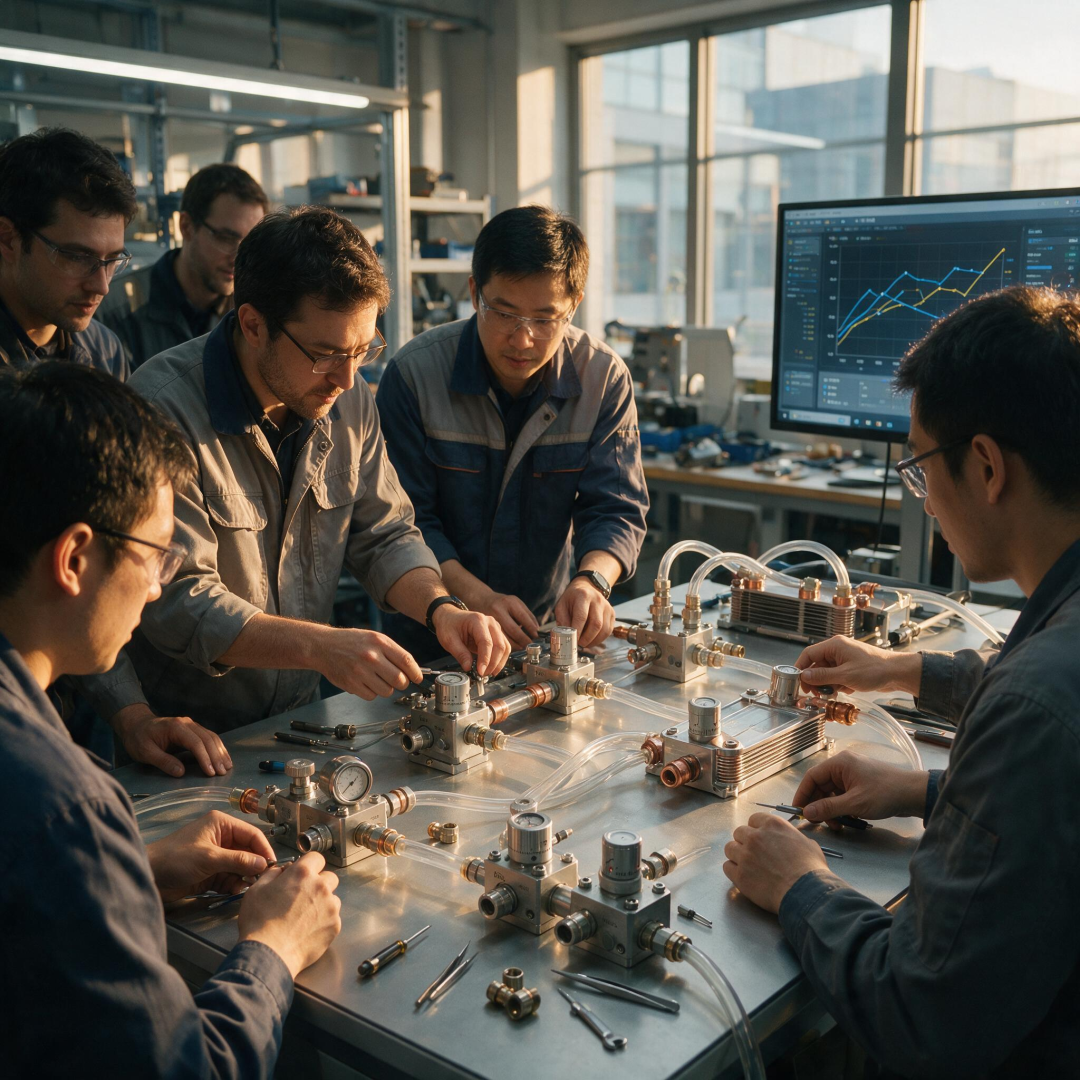
The major shareholder has not reduced their stake in the past six months and has no plans to do so during the repurchase period, thereby dispelling any concerns about exploiting positive news for personal gain.
For many manufacturing and technology companies, share repurchases typically fall into two categories: Some directly cancel shares to enhance returns for all shareholders, while others reserve them for employees to bolster team cohesion. Sanhua has unequivocally chosen the latter approach this time.
Why is the thermal control industry investing heavily in talent retention? To put it simply, "thermal management" is crucial in various devices such as air conditioners, new energy vehicles, AI servers, and energy storage batteries—any device that generates heat during operation and requires temperature control relies on valves and cooling components produced by Sanhua.
This industry does not compete on the basis of assembly line workers; the true value lies in engineers who possess expertise in precision fluid control, high-voltage heat pump, and liquid cooling technologies. Developing an 800V vehicle thermal management system or a data center liquid cooling solution requires two to three years of R&D. If the core team departs, the entire R&D line comes to a halt, rendering all previous investments worthless.
Sanhua now boasts thousands of patents and employs over 3,000 R&D personnel. Its expansion from home appliances to new energy vehicles and AI computing power has relied entirely on generations of technical experts persistently tackling challenges. The major shareholder's proactive funding for incentives essentially aligns employees' interests with the company's success: The more profitable the company becomes and the more advanced its technology, the higher the rewards for core personnel, who are no longer solely reliant on fixed salaries and are willing to double down on technical expertise.
II. The Confidence to Invest Hundreds of Millions in Talent Retention: Backed by Three Growth Drivers
The ability to allocate RMB 200-400 million in own funds for incentives is not impulsive; it reflects Sanhua's synchronized growth across three sectors, stable cash flow, and visible long-term expansion. 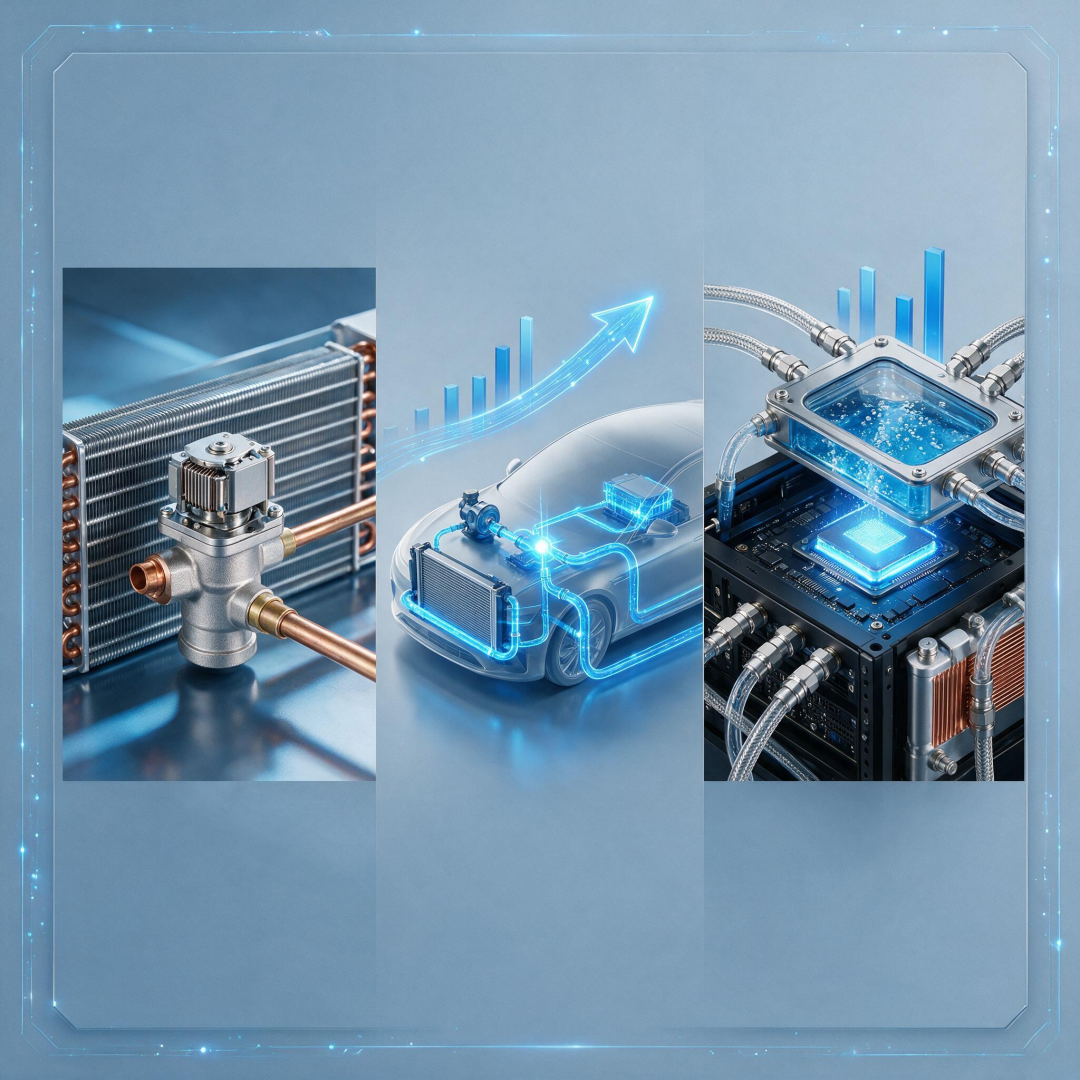
1. Home Appliances: A Steady Cash Flow Engine Supporting R&D
Over half of the variable-frequency air conditioners in households worldwide utilize Sanhua’s electronic expansion valves and four-way valves, with a global market share consistently exceeding 50%. Its clients include major domestic and international brands such as Gree, Midea, Daikin, and Panasonic. The home appliance business contributes tens of billions in annual revenue with stable gross margins, providing a continuous cash flow to fund R&D in new energy and liquid cooling sectors without relying on borrowed capital for expansion.
2. New Energy Vehicle Thermal Management: The Current Core Growth Engine
One of the most significant differences between new energy vehicles (NEVs) and internal combustion engine vehicles is the doubling of value in thermal management systems. Batteries are sensitive to both cold and heat, with temperature control components crucial for fast charging, range, and safety. Sanhua is now a core global supplier of thermal management solutions for automakers, with long-term partnerships with Tesla, BYD, Volkswagen, and Li Auto. Backed by hundreds of billions in long-term orders, its performance baseline for the next 3-5 years is secure. The industry continues to upgrade: 800V high-voltage platforms, integrated vehicle heat pumps, and CO2-based eco-friendly refrigerants—each technological refresh drives up the value of components per vehicle, continuously expanding market potential.
3. AI Liquid Cooling + Energy Storage Thermal Control: Unlocking New Growth Ceilings
The surge in AI servers over the past two years has shifted data center cooling from air to liquid cooling, while large-scale energy storage installations have exploded, creating a direct boom in thermal control demand. Sanhua’s decades of accumulated heat exchange and fluid control technologies can be directly applied without starting from scratch, allowing early entry into the liquid cooling sector with products already in mass supply. This new sector is expected to grow from hundreds of millions to billions in scale in the coming years, becoming the company’s second growth engine. Additionally, robot cooling and industrial precision thermal control are steadily materializing.
With traditional businesses stabilizing cash flow, automotive operations driving mid-term high growth, and AI liquid cooling opening long-term imaginative space, these three sectors form a layered growth strategy—the fundamental reason the major shareholder dares to propose such a generous repurchase.
III. Industry Competition Enters a New Phase: Technology and Talent Are Key
The global thermal control sector is undergoing major transformations: Eco-friendly refrigerant replacements, vehicle electrification, equipment integration, and intelligence are advancing simultaneously. Industry competition has shifted from price wars to battles over foundational R&D capabilities and core talent reserves.
Overseas incumbents are slow to react and face high costs, leading to shrinking market shares. Domestic peers mostly focus on automotive or home appliance components, while Sanhua stands out as a rare platform-type thermal management leader spanning home appliances, automotive, computing power, and energy storage.
With fierce competition for high-end manufacturing R&D talent, peers are launching repurchase incentive plans to stabilize teams. For Sanhua, this repurchase strengthens its moat: It stabilizes the R&D workforce in the short term, ensuring smooth progress on cutting-edge projects like heat pumps, liquid cooling, and high-voltage components. In the long term, it widens the technological gap with second-tier players and continues capturing global market share.
IV. A Rational Reminder: Don’t Misinterpret Repurchases as Guaranteed Gains
After examining the positive logic, it’s important to acknowledge uncertainties objectively and avoid blind optimism:
The Process Isn’t Finalized—Implementation Risks Remain: This is currently just a proposal from the controlling shareholder, requiring approval from the board and shareholders’ meeting. Repurchase prices, final amounts, and incentive details are subject to adjustment, with no certainty on implementation or execution methods.
Performance Hinges on Future Orders and Technical Execution: Whether growth in new energy vehicles or liquid cooling businesses materializes depends on mass production of new products, client deliveries, and overseas capacity ramp-ups. Fluctuations in vehicle sales or raw material prices could temporarily impact profits.
Repurchase Incentives ≠ Direct Benefits for Retail Investors: Unlike share cancellations, repurchased shares granted to employees do not directly boost earnings per share. Long-term value ultimately depends on technical execution and revenue growth.
Conclusion
From breaking foreign monopolies in valves to dominating global home appliance thermal control, from crossing over into new energy vehicles to preemptively positioning in AI liquid cooling, Sanhua’s development logic over three decades has remained consistent: Building on technology.
This RMB 200-400 million repurchase incentive is not just a capital maneuver; it’s a declaration of long-termism: Retaining those who create core technologies and seizing opportunities in new energy and AI industries matter more than short-term stock price fluctuations. 
The thermal management sector, a long-term growth track, is just entering its high-speed development phase. With stable cash flow, multi-sector positioning, and a bound core R&D team, Sanhua’s medium-to-long-term growth story remains worth tracking.
Interactive Discussion
Do you view manufacturing companies’ share repurchases for employee incentives as genuine positives or standard practice? Between NEV thermal management and AI liquid cooling, which sector do you favor? Share your thoughts in the comments.
Risk Disclaimer: This analysis is based on public announcements and industry data and does not constitute investment advice. The repurchase plan has not completed all approvals and remains subject to implementation risks. Downstream demand, raw material prices, and industry technological shifts may cause operational fluctuations. Invest with caution.
-
![]()
Personnel Shuffle: Independent Director Mi Xuming Steps Down from OFILM
-
![]()
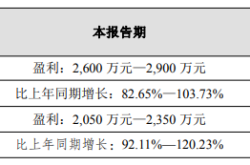
Net Profit Anticipated to Skyrocket by 103%: What Gives This Optical Company a Competitive Edge?
-
In Just One Year, China Unveils Unicorns Valued at 10 Trillion Yuan!
-
![]()
6 Park Companies Shine at WAIC: How Hong Kong Science Park Bridges AI from Research to Industry
-
![]()
Wang Wenjing’s Third Act: Can Yonyou Reinvent Itself in the AI Era?
-
![]()
Performance Coupe Entry Threshold Reduced to 170,000 Yuan: Assessing the 2027 Exeed ES's Prospects
-
![]()
Battery "Crisis" for 4 Million New Energy Commercial Vehicles
-
【Focus】Fluorinated Photosensitive Polyimide (FPSPI): A High-End Subdivision of PSPI with Great Potential in High-Tech Industries