Huawei Expands Computing Power Business into the Pig Farming Sector
 08/05 2026
 466
466
According to the official WeChat account of Muyuan Group, on August 3rd, Wang Tao, the rotating chairman of Huawei Technologies Co., Ltd., paid a visit to Muyuan for in-depth exchanges. During the meeting, both sides engaged in discussions on several key topics, including the establishment of AI computing power infrastructure, the deployment of industry-specific intelligent systems, the collaborative construction of smart parks, and the exploration of overseas business opportunities.
Huawei's ambitions in computing power now extend to the pig farming industry.
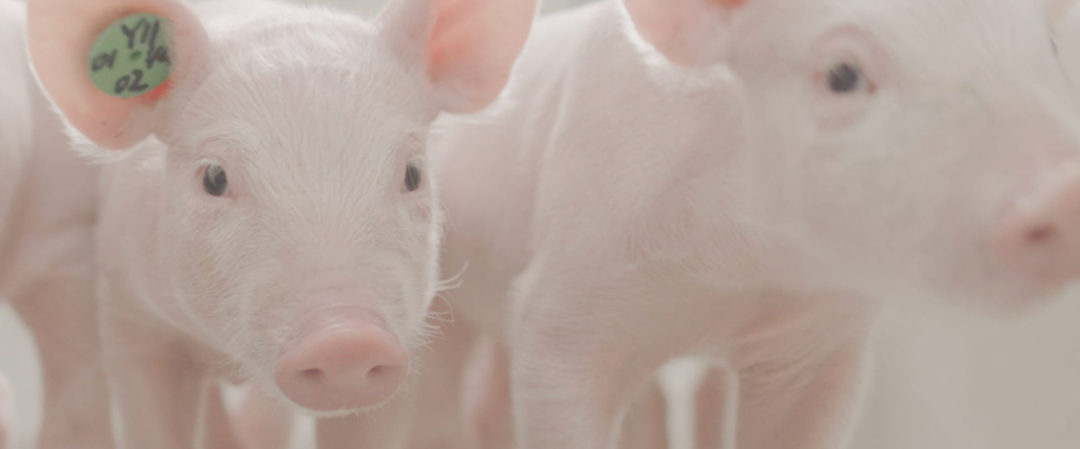
Image source: Muyuan's official website
According to Muyuan's 2024 annual report, the company slaughters an impressive 71.6 million pigs each year, representing over one-tenth of the national total. This feat is supported by a staggering 2.4 million sets of intelligent devices that tirelessly collect data 24/7. These devices generate nearly 2 billion data points daily, encompassing various parameters such as body temperature, feeding behavior, cough sounds, and ammonia concentration. The amount of data collected from a single pig from birth to slaughter may be even more extensive than the app usage patterns of an average smartphone user.
This data holds significant commercial value.
Feed constitutes the largest expense in pig farming, accounting for over 60% of the total costs. Muyuan has successfully reduced its feed-to-meat ratio to approximately 2.8, while the industry average remains above 2.9. The feed-to-meat ratio is a crucial metric that indicates the amount of feed required to produce one pound of meat.
A mere 0.1 reduction in the feed-to-meat ratio, coupled with slight improvements in other metrics for a volume of 70 million pigs, can lead to substantial cost savings.
This is the most compelling reason for AI to venture into the breeding industry—achieving real, measurable cost reductions.
The outside world often perceives AI implementation as a challenging task. The difficulties primarily arise from the open-ended nature of scenarios, the messy and unstructured data, and the lack of willingness to invest. In recent years, major internet companies have made efforts to extend their reach to rural areas. For instance, in 2018, an AI Lab collaborated with Wageningen University in the Netherlands to apply reinforcement learning techniques to cucumber cultivation, achieving top rankings in international challenges. That same year, Alibaba Cloud launched the ET Agricultural Brain, partnering with Tequ and Dekon to develop AI-based solutions for pig counting and weight estimation, which briefly captured media attention.
However, these initiatives often failed to translate into tangible results. Most of these projects remained confined to presentation slides, lacking practical, closed-loop scenarios and failing to demonstrate a clear return on investment. Ultimately, they became nothing more than impressive public relations stunts.
After three years of large-scale model development in the internet sector, the only companies truly reaping profits are those like NVIDIA that supply the essential 'tools' (such as GPUs).
Muyuan presents a stark contrast. Pig farms offer a controlled environment where pigs do not roam freely or generate fake data, ensuring the collection of clean and reliable data. The scale of operations is sufficiently large that even marginal improvements can translate into significant financial gains. Moreover, Muyuan is genuinely willing to invest—a single outbreak of African swine fever can devastate an entire farm, resulting in losses exceeding 100 million yuan. Therefore, if AI can provide a three-day early warning of an epidemic, Muyuan is prepared to pay a premium for computing power that would make internet companies envy.
This is precisely what Huawei is seeking.
Huawei is not merely looking for another server customer. It aims to find a real, high-frequency, and extremely costly physical scenario to test and run its Ascend computing power and Pangu large model in a closed-loop environment. Muyuan emerges as the most ideal test field for this purpose.
As Wang Tao stated, the objective is to drive digital and intelligent transformation in agriculture and animal husbandry. This is where AI can truly make a difference and empower these industries.
-
![]()
Unveiling Yin Tongyue's 'No Involution' Stance: Chery's Strategic Maneuvers
-
STO Express Faces Scrutiny: Franchise Model’s Safety Gaps Under the Microscope
-
![]()
The Richest Woman is Going Public Again! Valued at 22.5 Billion, Building an 'Optical Empire' with Her Brother
-
![]()
Buying More GPUs is No Longer Enough: Divergence in Monetization Progress Among the Top Four Cloud Providers
-
![]()
Leapmotor Exceeds 100,000 Units, Li Auto Faces Three Straight Months of Decline: China’s Auto Market Competition Intensifies in the Second Half
-
![]()
Can NASA Discover Extraterrestrial Life? UK Invests £3 Million, but First Must Block Out Stars
-
![]()
Huawei Expands Computing Power Business into the Pig Farming Sector
-
![]()
Asian Dragon Receives a 'Makeover': Is FAW Toyota Using the 'Crown' as a Substitute Strategy?