Asian Dragon Receives a 'Makeover': Is FAW Toyota Using the 'Crown' as a Substitute Strategy?
 08/05 2026
 552
552
Lead | Lead
Recently, FAW Toyota's new Asian Dragon model was included in the 409th batch of new vehicle declarations by the Ministry of Industry and Information Technology. The front end of the new Asian Dragon has undergone a complete redesign, featuring C-shaped headlights and a waterfall-style grille that closely resemble those of the 16th-generation Crown Sedan. The vehicle's length has been increased from 4990mm to 5055mm, successfully surpassing the 5-meter mark. Based on the declaration images, the new Asian Dragon bears a striking resemblance to the Crown. FAW Toyota is cleverly utilizing the iconic 'Crown' IP to infuse the Asian Dragon, which is currently undergoing product cycle adjustments, with distinct recognition and emotional value. Can nostalgia once again serve as a pivotal point for leveraging the market?
Published by | Heyan Yueche Studio
Written by | Cai Yan
Edited by | He Zi
Full text: 2072 characters
Reading time: 4 minutes
When the classic 'Crown' design language is applied to the Asian Dragon, it is not merely a superficial 'badge-engineering' move but a thoughtful inheritance of Toyota's brand heritage. In July 2026, the new Asian Dragon, boasting a distinctive 'Crown face,' appeared in the new vehicle declaration catalog by the Ministry of Industry and Information Technology. With a length exceeding 5 meters, it meets consumer expectations for a flagship sedan with a premium design aesthetic.
Can this time-honored nostalgia continue to serve as a potent tool for FAW Toyota's differentiated competition in this new era?

△ The new Asian Dragon inherits the 'Crown' design legacy
Is the Asian Dragon Becoming the 'Crown' Substitute?
Currently, the Asian Dragon is facing some sales pressure, with cumulative sales of 46,376 units in the first half of 2026, marking a year-on-year decline of 16.8%. Monthly sales figures show 13,349 units in January, 4,963 units in February, 10,700 units in March, 6,113 units in April, 5,225 units in May, and 6,026 units in June. Despite normal fluctuations during the Spring Festival and quarter-ends, the overall performance remains competitive within the segment. The Asian Dragon's positioning differs from its sibling model, the Camry, making them not directly comparable. As a B+ flagship, the Asian Dragon's target audience values stability and style, and the design upgrades of the new model precisely cater to this demand. Notably, FAW Toyota's entire lineup has demonstrated resilience amid market structural adjustments.
In the first half of 2026, FAW Toyota's domestic sales reached 273,700 units. Although this represents a year-on-year decline, it was achieved amid an overall contraction of the fuel vehicle market, with hybrid models accounting for over 70% of sales. The product mix is shifting towards greater efficiency and environmental friendliness. Compared to the 805,500 units sold in 2025, the current downturn is more of a short-term phenomenon resulting from industry cycles and product replacement rhythms. FAW Toyota's dealership network and user base remain robust. GAC Toyota led with 341,100 units in the first half, highlighting the healthy competitive and cooperative relationship between Toyota's two joint ventures in China, each focusing on different product strategies to meet the diverse needs of Chinese consumers.
FAW Toyota's fuel vehicle sales reached 262,300 units in the first half, a year-on-year decline, but the lost volume is being gradually offset by new hybrid and pure electric models. Mainstay models like the Corolla and RAV4 continue to maintain a significant market presence and strong reputation.
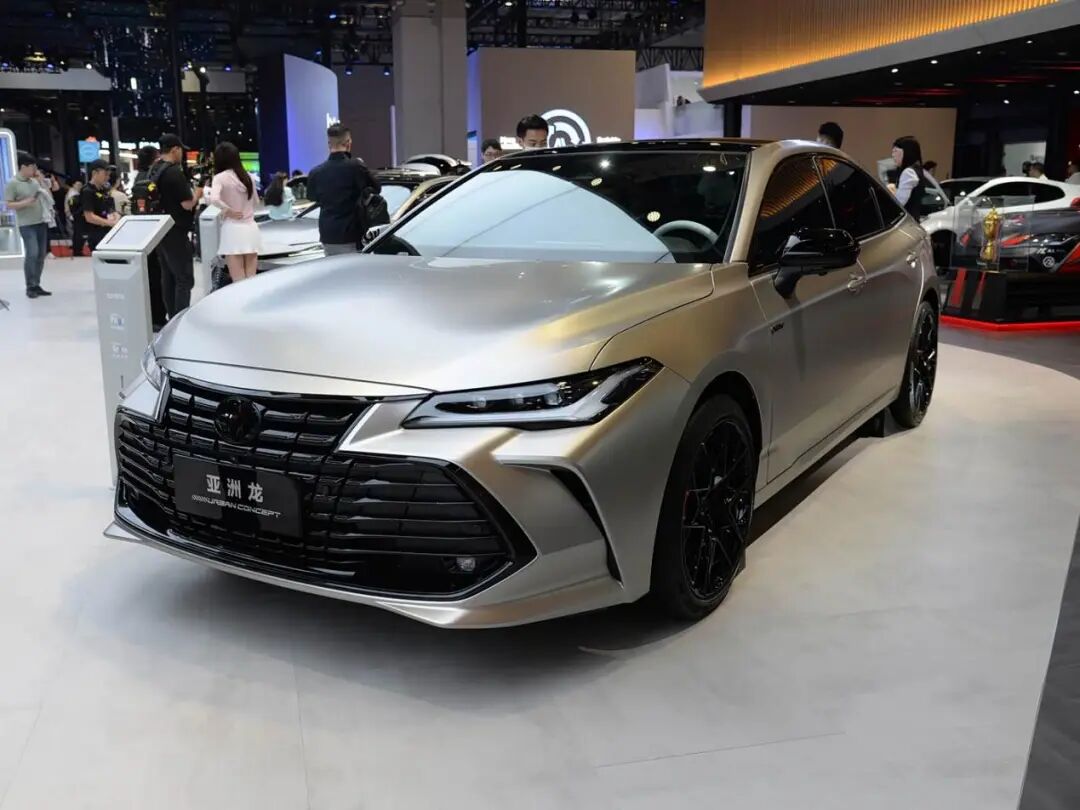
△ The Asian Dragon is FAW Toyota's B+ flagship
Against this backdrop, the new Asian Dragon's adoption of the 'Crown face' is a strategic move that considers the current market situation. The Crown holds an irreplaceable classic status in the hearts of Chinese consumers, once synonymous with premium sedans and carrying the automotive memories of several generations. Now that the Crown brand has returned as an independent model line, the Asian Dragon, by sharing its design language, not only elevates its own sense of premium quality but also enriches the Crown family's product lineup, creating a synergistic effect where 'one thrives, all thrive.' Consumers choosing the Asian Dragon not only acquire a spacious B+ sedan but also gain a sense of quality trust inherited from the Crown. This 'familial' design strategy, already common among luxury brands, is now being applied by Toyota to mainstream products, reducing design risk while strengthening brand recognition—a pragmatic move that balances nostalgia and market demands.
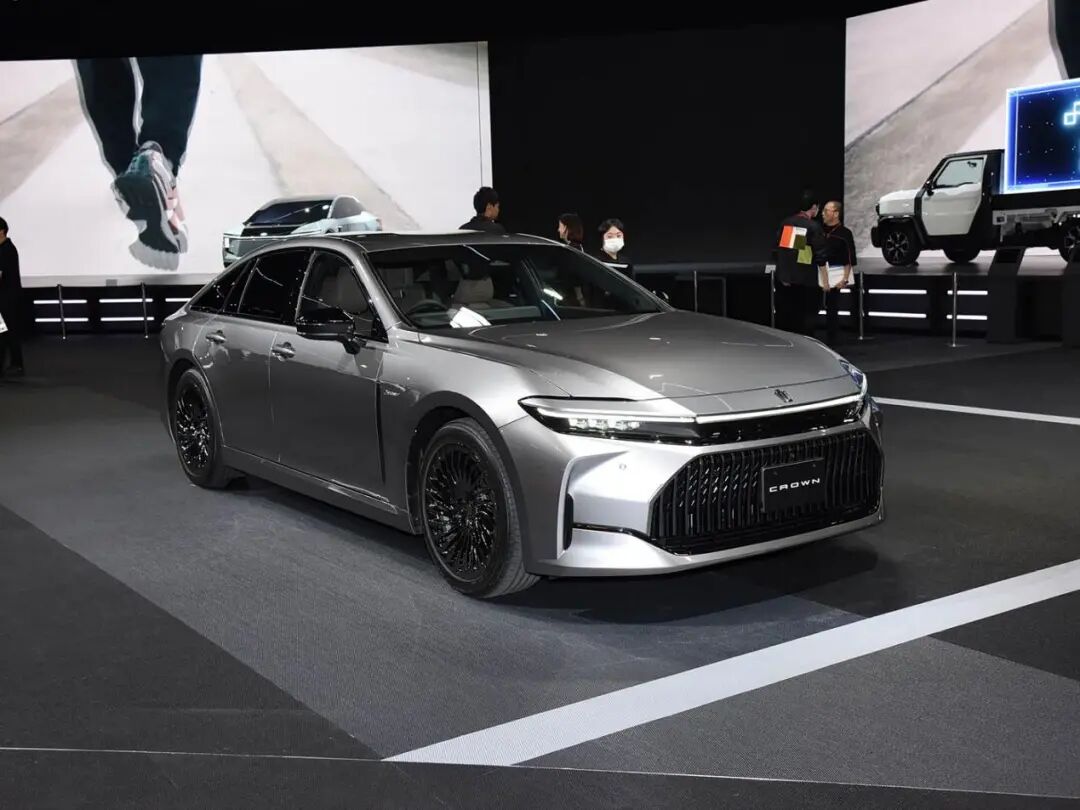
△ Crown imported model Sedan
Accelerating Electrification
The Asian Dragon's refresh is a microcosm of FAW Toyota's overall strategy, with more profound changes occurring in the electrification sector. In the first half of 2026, FAW Toyota's bZ series pure electric models sold approximately 11,500 units. While the absolute volume is still improving, the growth momentum is noteworthy. GAC Toyota's bZ series sold approximately 51,900 units during the same period. The gap between the two highlights Toyota's differentiated electrification strategies through its two joint ventures in China. FAW Toyota maintains its hybrid advantage while needing to step up efforts in pure electric products.
It is particularly noteworthy that Toyota's hybrid technology remains globally leading—the fifth-generation intelligent electro-hybrid system is undisputed in fuel economy and reliability. In 2025, FAW Toyota sold 380,100 hybrid models, a year-on-year increase of 14%, accounting for 47% of total sales. This data fully demonstrates consumer recognition of Toyota's electrification technology. The hybrid proportion continued to rise, surpassing 70% by May, proving that the 'parallel operation of fuel and hybrid' strategy remains highly viable in the current market environment.
Toyota's pure electric布局 (layout, meaning 'strategy' or 'plan') is also significantly accelerating. In April 2026, it established a wholly-owned pure electric company in Shanghai, with cumulative investments of approximately $37 billion in 'electrification.' This includes not only pure electric (BEV) and all-solid-state batteries but also hybrid (HEV), plug-in hybrid (PHEV), and hydrogen fuel cell (FCEV) technologies. These investments will translate into tangible product competitiveness in the next two to three years. GAC Toyota's bZ7, equipped with Huawei's intelligent cockpit and Momenta's intelligent driving solution, offers a CLTC range of 710km, while the bZ3 uses BYD's Blade Battery, fully leveraging the efficiency advantages of China's local supply chain and reflecting Toyota's open attitude of 'in China, for China.' Toyota President Akio Toyoda's 'multi-path strategy' is moving from theory to practice—hybrid, plug-in hybrid, pure electric, and hydrogen energy coexist, respecting differentiated market demands while accumulating strength for future technological breakthroughs.
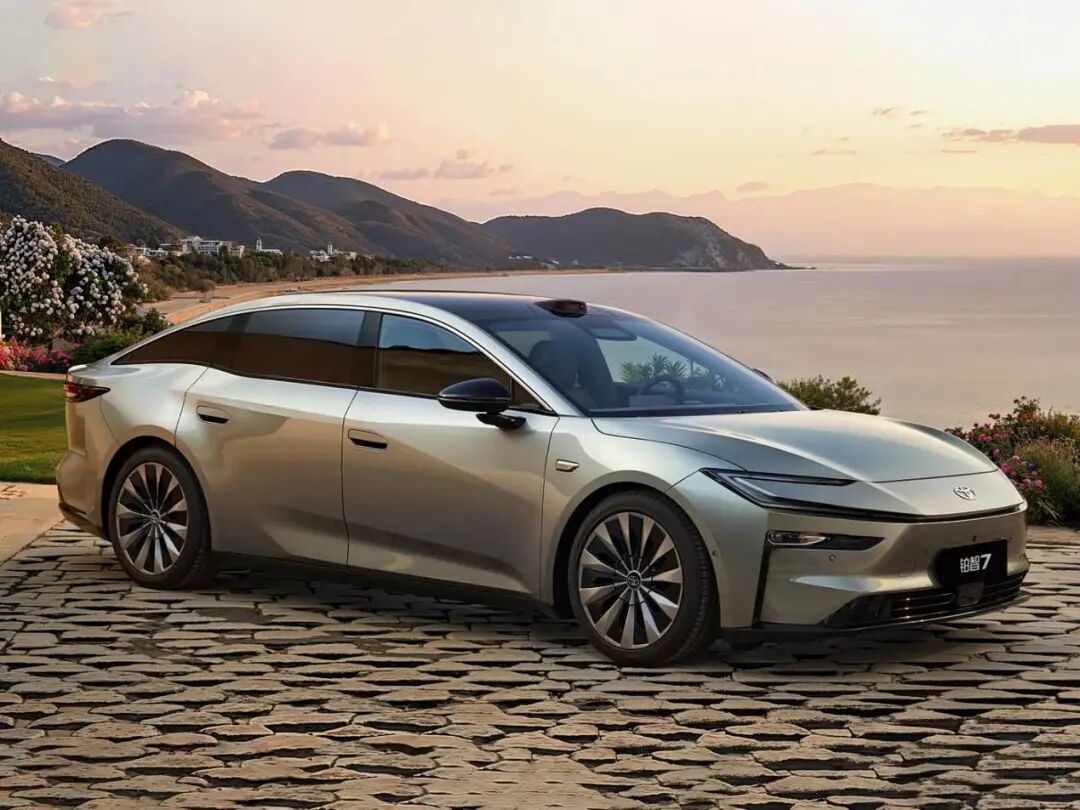
△ The bZ7 is equipped with Huawei's electric drive system and Momenta's autonomous driving technology
Currently, while joint ventures in China generally face challenges, some, through strategic adjustments and accelerated transformation and upgrading, still have the opportunity to secure a place in the next phase. FAW Toyota's 'dual-track system'—maintaining Japanese-quality hybrids while embracing China's supply chain for pure electrics—is striving to break through. 2026 is a watershed year for transformation. Besides empowering the Asian Dragon with the classic 'Crown' IP, FAW Toyota needs to further consolidate its hybrid lead and accelerate its pure electric efforts, using time to gain space and quality to earn reputation.
Commentary
FAW Toyota is experiencing growing pains during its transformation period and urgently needs breakthroughs in the mid-to-high-end market. The Asian Dragon's adoption of the 'Crown face' is a creative use of brand assets; while its electrification approach may not be aggressive, its deep technological reserves give it the potential to 'arrive late but overtake.' The market is a marathon. With user trust and a clear strategy, Toyota's nostalgia is poised to endow products with stronger vitality in the new context.
(This article is original to 'Heyan Yueche' and may not be reproduced without authorization.)
-
![]()
Unveiling Yin Tongyue's 'No Involution' Stance: Chery's Strategic Maneuvers
-
STO Express Faces Scrutiny: Franchise Model’s Safety Gaps Under the Microscope
-
![]()
The Richest Woman is Going Public Again! Valued at 22.5 Billion, Building an 'Optical Empire' with Her Brother
-
![]()
Buying More GPUs is No Longer Enough: Divergence in Monetization Progress Among the Top Four Cloud Providers
-
![]()
Leapmotor Exceeds 100,000 Units, Li Auto Faces Three Straight Months of Decline: China’s Auto Market Competition Intensifies in the Second Half
-
![]()
Can NASA Discover Extraterrestrial Life? UK Invests £3 Million, but First Must Block Out Stars
-
![]()
Huawei Expands Computing Power Business into the Pig Farming Sector
-
![]()
Asian Dragon Receives a 'Makeover': Is FAW Toyota Using the 'Crown' as a Substitute Strategy?