Another AI Computing Power Unicorn Launches IPO! Founded by a Changjiang Scholar
 08/07 2026
 559
559
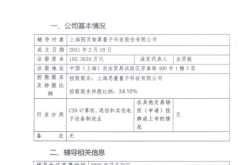
Recently, information disclosed on the official website of the China Securities Regulatory Commission (CSRC) revealed that Shanghai Turin Quantum Intelligence Quantum Technology Co., Ltd. (hereinafter referred to as "Turin Quantum") has officially submitted its IPO tutoring application, thereby initiating the overall process of its A-share IPO. It is understood that Turin Quantum completed its shareholding system transformation on July 23 this year and signed a relevant tutoring agreement with Guotai Haitong on July 24.
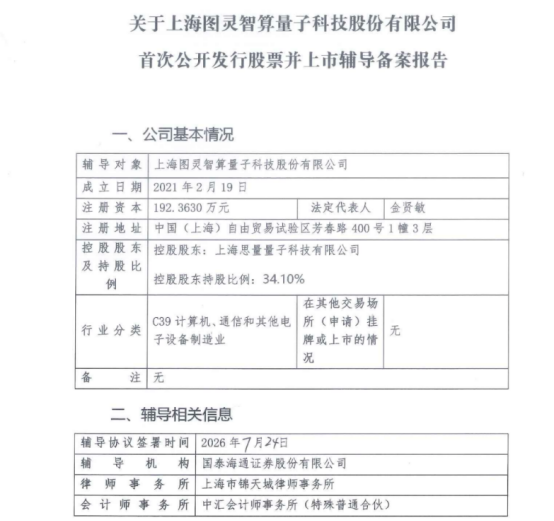
As things currently stand, Turin Quantum has not yet disclosed the specific amount of funds to be raised in this A-share IPO, and the relevant fundraising projects are still in the stages of screening and demonstration. However, judging from the disclosed purposes of the most recent round of financing amounting to several hundred million yuan completed by the company in April 2026, as well as the pace of its quantum-classical hybrid computing strategy, the main uses of the funds raised this time will roughly be concentrated in the following areas.
First, to advance the upgrading and replacement of hardware products such as the commercial photonic quantum computer TuringQ series; second, to continue investing in software and algorithms for the Quantum Engine Cloud Platform and the quantum-classical hybrid computing architecture; third, to carry out industrial deployment of the "quantum-classical hybrid computing" intelligent computing center nationwide and promote projects related to the large-scale application of photonic quantum computing in actual industry scenarios.
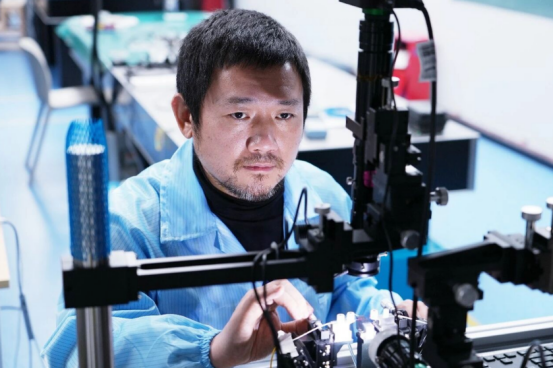
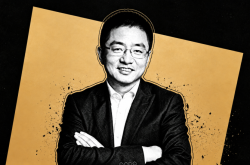
Relevant information shows that Turin Quantum was founded in 2021 by Professor Jin Xianmin, a Changjiang Scholar, Distinguished Professor at Shanghai Jiao Tong University, and Director of the Institute of Optical Science and Technology. It is the first domestic enterprise focusing on integrated photonic chips and programmable photonic quantum computers and has assembled a team that is the only one in the country to possess technologies related to "chip fabrication + quantum computing + artificial intelligence + photonic computing."
As the first domestic photonic quantum enterprise operating under the IDM model, Turin Quantum has already made corresponding layouts in core links such as photonic quantum chips, optical connections, and complete quantum computing systems, and by 2025, its order volume has reached the hundred-million-yuan level.
On the product side, its second-generation commercial photonic quantum computer can already support the solving of problems with over 100,000 variables, achieving a thousandfold-plus increase in the solving efficiency of complex problems. Meanwhile, the QAgent platform released by the company at the 2026 World Artificial Intelligence Conference has encapsulated the computing power of actual photonic quantum machines into a bottom-layer support that AI agents can scheduling .
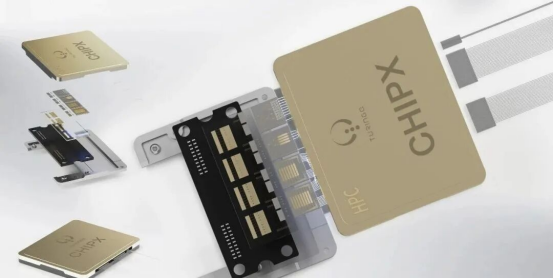
In June 2025, the first domestic pilot line for photonic chips, in which the company participated in construction, successfully achieved pull-through, completing the large-scale manufacturing of wafer-level thin-film lithium niobate photonic chips and integrating thousands of optical components into a single chip. This shortened the research and development iteration cycle from the original "yearly" level to the "monthly" level.
In terms of computing power, Turin Quantum has integrated quantum computing with classical supercomputing centers through a "quantum-classical hybrid computing" architecture, building a distributed quantum computing cluster and achieving efficient collaboration between quantum computing power (QPU) and classical computing power (GPU/CPU). This step represents a crucial leap for quantum computing from "scientific research demonstrations" to "industrial-grade computing power infrastructure" and is also key to Turin Quantum's accelerated promotion of the nationwide deployment of "quantum-classical hybrid computing" intelligent computing centers. This has driven the transition of photonic quantum computing from scientific research prototypes to standardized computing power nodes and then to cluster-level computing power infrastructure, laying a corresponding core foundation for the large-scale commercialization of quantum computing power.
In terms of customers, Turin Quantum has reached relevant collaborations with institutions such as China Mobile, State Grid, Shaanxi Digital Group, Hygon, Moore Threads, and Zhongshan Hospital Affiliated to Fudan University. Turin Quantum's business scope is quite extensive, covering many fields such as fintech, biopharmaceuticals, energy and transportation, and government security; moreover, it has undertaken more than 10 projects that have actually landed at the national, provincial, and central enterprise levels, comprehensively covering hardware, algorithms, and ecological applications.
According to information previously disclosed by Professor Jin Xianmin, Turin Quantum's revenue was 500,000 yuan in 2022 and exceeded 10 million yuan in 2023; by 2025, its order volume had surpassed the 100 million yuan mark, and its revenue had reached the scale of tens of millions of yuan, with a compound annual revenue growth rate of 200%.
As the first domestic IDM-model photonic quantum enterprise, Turin Quantum has established core links such as photonic quantum chips, optical connections, and complete quantum computing systems, with order volumes reaching the hundred-million-yuan level by 2025.
On the product side, its second-generation commercial photonic quantum computer already supports the solving of problems with over 100,000 variables, achieving a thousandfold-plus increase in the solving efficiency of complex problems. The QAgent platform released by the company at the 2026 World Artificial Intelligence Conference has encapsulated the computing power of actual photonic quantum machines into a base that AI agents can schedule.
-
![]()
Wang Huiwen, Former Meituan Executive, Achieves 20-Fold ROI, Supports 24 AI Startups
-
![]()
Another AI Computing Power Unicorn Launches IPO! Founded by a Changjiang Scholar
-
![]()
OFILM Holdings Secures Zhongke Daojing, Marking a Significant Leap in the Optical Communication Industry!
-
What Will Be the Next Key Battleground for Large Models After AI Coding?
-
![]()
Leapmotor's Sales Soar, Yet Hidden Concerns Loom
-
![]()
China’s Action Camera Market Soars: 3.12 Million Units Sold in Six Months, DJI Secures 74% Dominance
-
![]()
Zhang Yiming: Strategic Retreat as a Path Forward
-
![]()
Exploring Charging for Some Features of QianWen App: Can It Follow the Path of Doubao?