Leapmotor's Sales Soar, Yet Hidden Concerns Loom
 08/07 2026
 337
337

Monthly Sales Hit 100,000 Units! Leapmotor, a rising star in the automotive industry, has recently garnered significant attention. The company's latest performance report has sent shockwaves throughout the New Energy Vehicle (NEV) sector: global deliveries reached 101,267 units in July 2026, marking a 102% year-on-year increase. This achievement makes Leapmotor the first new car manufacturer to surpass 100,000 monthly deliveries, a milestone that sets it apart in the industry. Among other NEV startups, HiPhi delivered 45,000 units, XPENG delivered 38,000 units, NIO delivered 35,900 units, and Li Auto delivered 30,500 units. Leapmotor's 101,300 units clearly place it in a leading position, much like the internet slang "far ahead" (used here without any negative implication).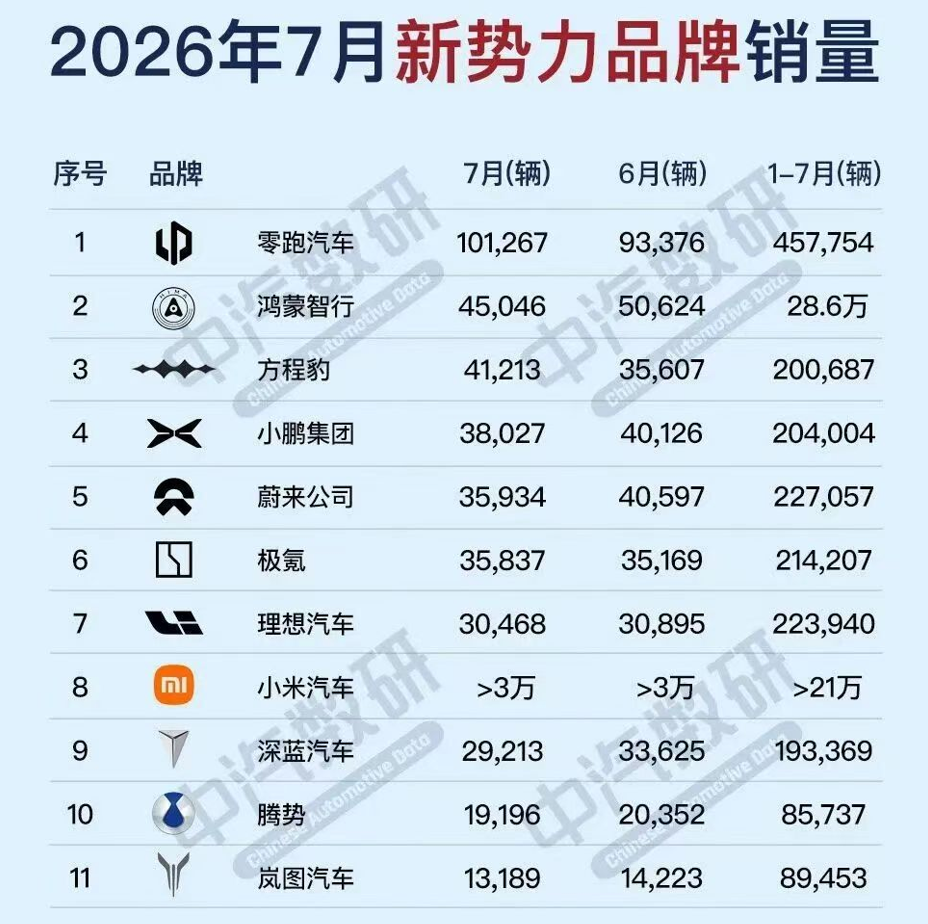 Data Source: Official Automaker Data & Public Information; Compiled by China Auto Research
It took Leapmotor just four years to progress from monthly deliveries of 10,000 units in March 2022 to breaking the 100,000-unit mark. During this period, the company transitioned from significant losses to profitability. In 2025, its total operating revenue reached RMB 65.785 billion, doubling from the previous year, while net profit swung from a loss of RMB 2.821 billion to a profit of RMB 538 million. This makes Leapmotor the second Chinese NEV startup to achieve annual profitability.
Several key factors have contributed to Leapmotor's sales success:
Product Positioning: Leapmotor's main models are priced between RMB 100,000–200,000, targeting China's largest passenger vehicle consumer segment. In July 2026, monthly deliveries reached 101,267 units, up 102% year-on-year. Four models—A10, B-Series, C10, and D19—each exceeded 10,000 monthly sales, indicating a balanced product matrix that covers niche markets without over-reliance on a single model.
Cost Control and Self-Research Ratio: Over 65% of core component costs are covered by in-house R&D and manufacturing, reducing reliance on external suppliers and lowering per-vehicle material costs.
International Expansion: Full-year 2025 exports reached 67,000 units, ranking first among NEV startups. Through collaboration with Stellantis, Leapmotor entered over 40 markets, including Europe. The company also generated approximately RMB 1.1 billion in carbon credit trading revenue in the same year, with overseas operations contributing positively to both sales and profits. Amid widespread price wars and losses among NEV peers, Leapmotor achieved rapid sales growth through self-research cost reductions and scale expansion, outpacing industry averages in growth rate and profitability timing. 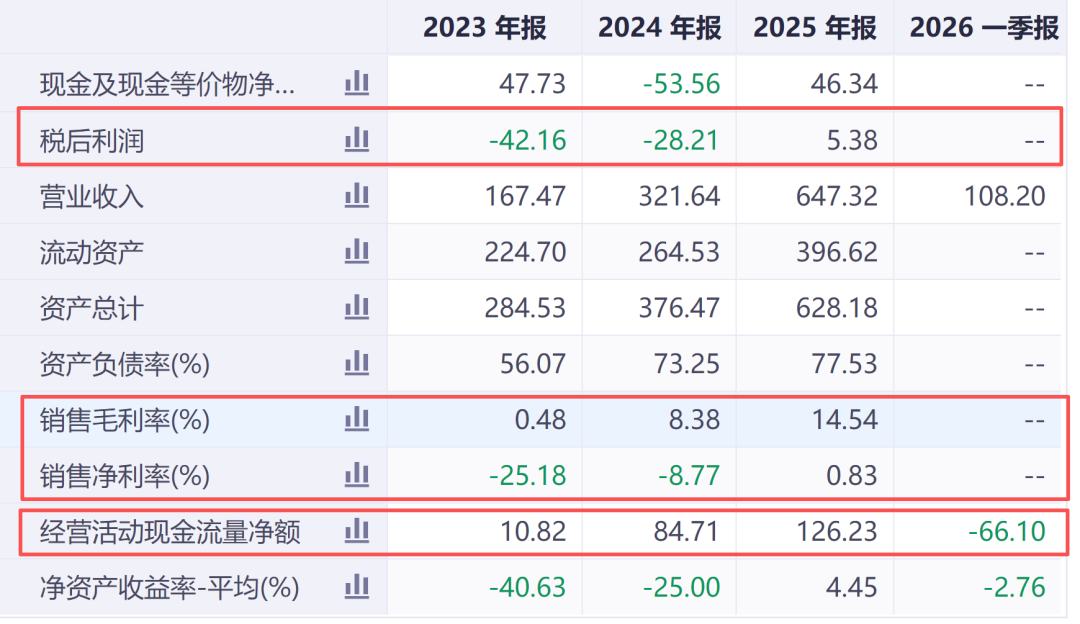
Data Source: iFinD
However, despite these achievements, the company's stock price has nearly halved from last year's peak over the past year. 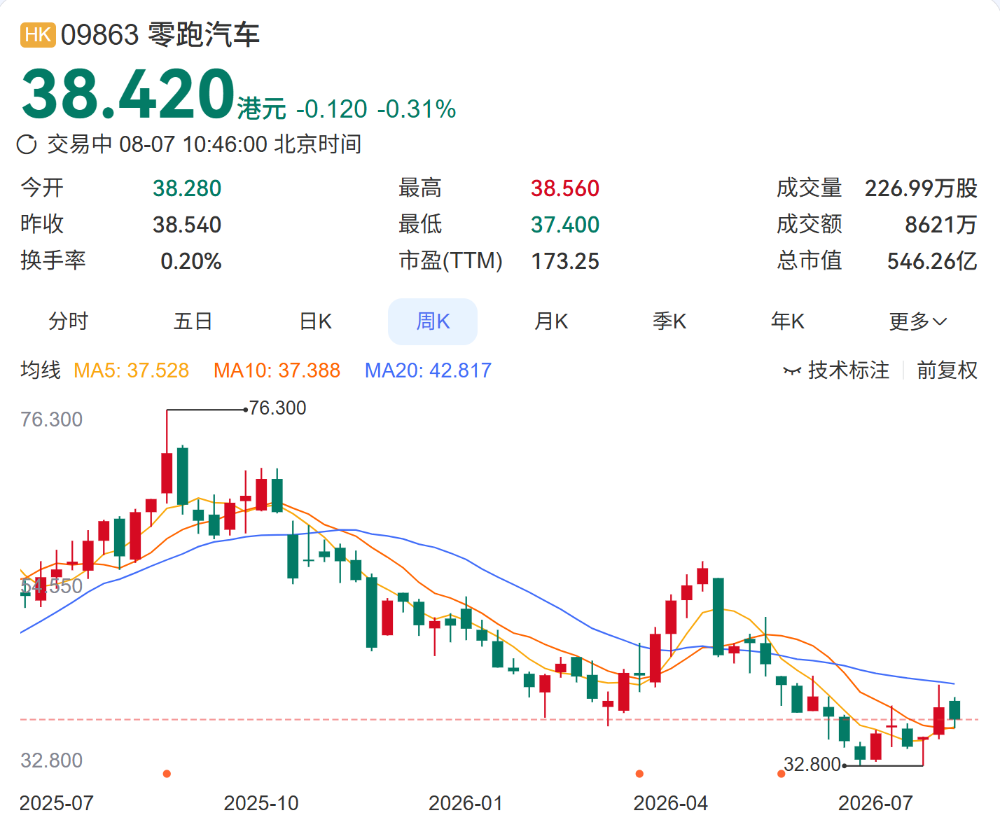
While the numbers look impressive and the achievements are commendable, future growth drivers and expectations must also be considered. There are, however, noteworthy concerns behind the surface. 
RMB 500 Million in Profit: How Much Came from Vehicle Sales?
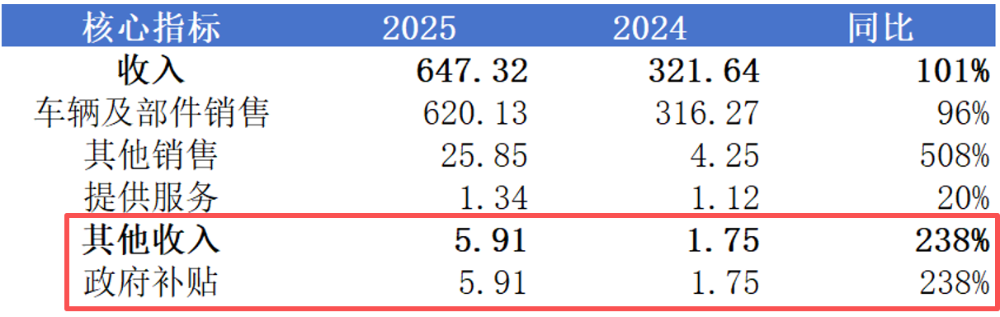
According to Leapmotor's 2025 annual report, other revenue streams include sales of carbon credits, customer loyalty points, online store merchandise, after-sales services, R&D services, and miscellaneous income. Notably, carbon credit sales involve related-party transactions with Stellantis (holding 19.99% of Leapmotor's issued shares as of late March 2026), a major shareholder.
Leapmotor signed an agreement with Stellantis affiliates to transfer carbon credits generated from sales and registrations of Leapmotor-branded BEVs in the EU and UK markets to Stellantis affiliates. In 2025, Leapmotor's government subsidy revenue also surged, but sustainability remains uncertain due to undisclosed details in the annual report. While net profit reached RMB 538 million in 2025, carbon credit trading revenue from Stellantis amounted to RMB 1.11 billion, and government subsidies contributed RMB 591 million.
In other words, without these two transactions, Leapmotor would not have been profitable in 2025 but would have slipped back into losses. This raises questions about the true extent of the "profitability" of China's second NEV startup to achieve annual profitability. More alarmingly, in Q1 2026, Leapmotor's financials reverted to form, with a net loss attributable to shareholders of RMB 390 million and gross margin declining from 14.9% to 9.4%. The company attributed the sharp margin drop to changes in its vehicle product mix, partially offset by ongoing cost management and reduced strategic cooperation business.
Notably, Leapmotor only disclosed its 2026 strategic cooperation agreement with Stellantis on carbon credits in late Q1 2026, suggesting Q1 losses may relate to unrecognized carbon credit revenue. This raises further questions about whether Leapmotor's short-term profitability relies entirely on this cooperation agreement. Future sustainability and pricing fairness of related-party transactions between Leapmotor and Stellantis will likely remain under scrutiny.
 Data Source: Leapmotor 2025 Annual Report
Selling 600,000 Vehicles: How Much Profit Can Be Made?
Leapmotor sold 596,555 vehicles in 2025, generating RMB 62.013 billion in vehicle and component sales revenue. For comparison, Li Auto delivered 406,343 vehicles in 2025, with vehicle sales revenue of RMB 138.538 billion, more than double Leapmotor's revenue.
More notably, per-vehicle revenue: Li Auto generated over RMB 340,000 per vehicle, while Leapmotor averaged just over RMB 100,000 per vehicle. In other words, Li Auto's revenue from one vehicle equals Leapmotor's revenue from three vehicles. The "half-price Li Auto" label has boosted Leapmotor's sales but also capped its upside. Once branded as a "budget alternative," why would consumers pay more? Leapmotor's product matrix spans RMB 60,000–300,000, but main sales remain concentrated below RMB 150,000. Its long-standing strategy of affordable pricing and cost-effectiveness will continue to compress per-vehicle profit margins. 
Image Source: Leapmotor 2025 Environmental, Social, and Governance Report
Low R&D Investment: Will It Compromise the Future?
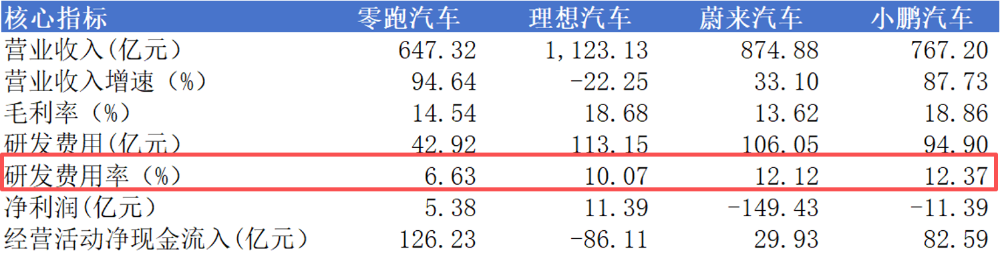
One of Leapmotor's proudest labels is "in-house R&D and manufacturing of core components." However, a noteworthy detail is that large-scale self-research is reflected in bottom-ranked R&D spending in financial statements. In 2025, Leapmotor's R&D expenditure and R&D-to-revenue ratio were significantly lower than those of NIO, XPENG, and Li Auto.
From 2021 to 2025, Leapmotor's cumulative R&D spending was just RMB 11.259 billion, while NIO, Li Auto, and XPENG spent RMB 10.605 billion, RMB 11.315 billion, and RMB 9.490 billion, respectively, in 2025 alone. Delivering blockbuster models with less money is commendable. Low R&D investment saves costs in the short term but may compromise future competitiveness. To stay competitive in the NEV technology races, R&D efforts must remain robust.
 Data Source: Enterprise Early Warning Radar
How Long Can Leapmotor Rely on Stellantis?
In October 2023, Stellantis invested EUR 1.5 billion in Leapmotor and established a joint venture, "Leapmotor International," with Stellantis holding 51% and Leapmotor 49%. This deal instantly gave Leapmotor a "highway" to Europe, leveraging Stellantis' extensive European distribution network to rapidly enter the market. By 2025, Leapmotor ranked among the top three Chinese passenger vehicle brands in 29 European countries by BEV sales. Stellantis appears to be a robust and reliable partner, becoming Leapmotor's most critical springboard for globalization.
However, Stellantis faces its own troubles. In 2025, Stellantis reported net revenue of EUR 153.508 billion, down 2% from EUR 156.878 billion in 2024, with net losses reaching EUR 22.332 billion compared to a net profit of EUR 5.520 billion in 2024. More concerning for Leapmotor, Stellantis' former CEO wrote a book titled Pilot in the Storm, publicly predicting Stellantis' potential disintegration. He speculated that the fragile balance of power among French, Italian, and American factions within Stellantis is unsustainable, suggesting scenarios where Chinese automakers acquire European operations or the U.S. reclaims North American brands.
While Stellantis officially dismissed talk of a breakup, a former CEO publicly criticizing his own group in a memoir is highly unusual in the automotive industry. The first issue to arise in Leapmotor-Stellantis cooperation was production: Stellantis halted plans to assemble the Leapmotor T03 in Poland.
If the giant further reduces overseas investments or geopolitical conflicts escalate, their partnership may become precarious. A more immediate concern is the sustainability of carbon credit trading. Essentially, this is a policy-driven related-party transaction. EU carbon credit policies may change, and Stellantis' own electrification progress will reduce reliance on such transactions, making this revenue stream unsustainable long-term. If carbon credit trading shrinks or ends, Leapmotor's profitability could decline significantly. These operational issues have also drawn regulatory attention.
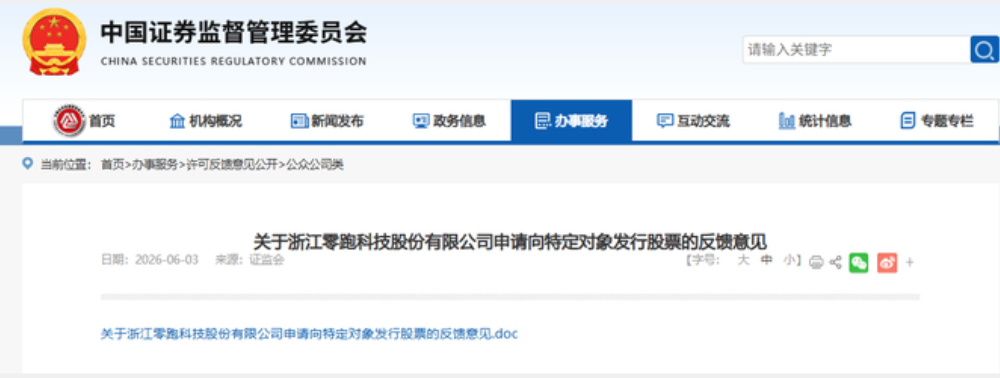
In June 2026, Leapmotor received feedback from the China Securities Regulatory Commission (CSRC) regarding its application for a private share placement. The CSRC raised multiple questions about Leapmotor's turnaround to profitability, gross margin improvements, revenue recognition, related-party transactions, fund usage, and shareholding structure, focusing on the sustainability and financial quality behind Leapmotor's profitability improvements.
Conclusion
Founded in 2015, listed on the Hong Kong Stock Exchange in 2022, and achieving first-time profitability in 2025 and monthly sales exceeding 100,000 in 2026, Leapmotor has completed a remarkable 11-year journey from "survival" to "leader," with a promising future. Leapmotor has done many things right: cost reductions through self-research, precise pricing, and rapid scaling. Its six-year turnaround deserves study by all NEV startups.
However, being a sales leader does not equate to being a profitability leader. RMB 1.1 billion in "carbon credit" revenue, low per-vehicle revenue, R&D spending far below competitors, and reliance on Stellantis for overseas markets—any of these four issues could undermine Leapmotor's "leading" narrative. When combined, questions arise: Is Leapmotor's "good but inexpensive" model a sustainable business strategy, or a fragile balance propped up by policy dividends and related-party transactions?
It has become the norm for Leapmotor to sell 100,000 vehicles a month. The question that Leapmotor needs to answer is no longer "Can it sell more?" but "Can it truly make money after selling so many?" Only by making good cars and achieving profitability can a company achieve sustainable growth. What are your thoughts on the significant increase in Leapmotor's sales? We look forward to your civil and rational insights in the comments section.
Disclaimer: This article is solely for financial hotspot analysis. The data and information are sourced from publicly available queries, company announcements, and Tonghuashun IFinD. The viewpoints are for reference only and do not constitute any investment or consumption advice.
#FinancialHotspots #InDepthAnalysis #BusinessFinance #InvestmentBankingCommunity #ListedCompanies #PrimaryMarket #IPO #Leapmotor
Thank you for your patience in reading. Feel free to give us a 'Like' if you enjoyed it.
-
![]()
Wang Huiwen, Former Meituan Executive, Achieves 20-Fold ROI, Supports 24 AI Startups
-
![]()
Another AI Computing Power Unicorn Launches IPO! Founded by a Changjiang Scholar
-
![]()
OFILM Holdings Secures Zhongke Daojing, Marking a Significant Leap in the Optical Communication Industry!
-
What Will Be the Next Key Battleground for Large Models After AI Coding?
-
![]()
Leapmotor's Sales Soar, Yet Hidden Concerns Loom
-
![]()
China’s Action Camera Market Soars: 3.12 Million Units Sold in Six Months, DJI Secures 74% Dominance
-
![]()
Zhang Yiming: Strategic Retreat as a Path Forward
-
![]()
Exploring Charging for Some Features of QianWen App: Can It Follow the Path of Doubao?