The Next Challenge for Shen Dou After Leading Baidu Intelligent Cloud for Three and a Half Years
 04/07 2026
 551
551
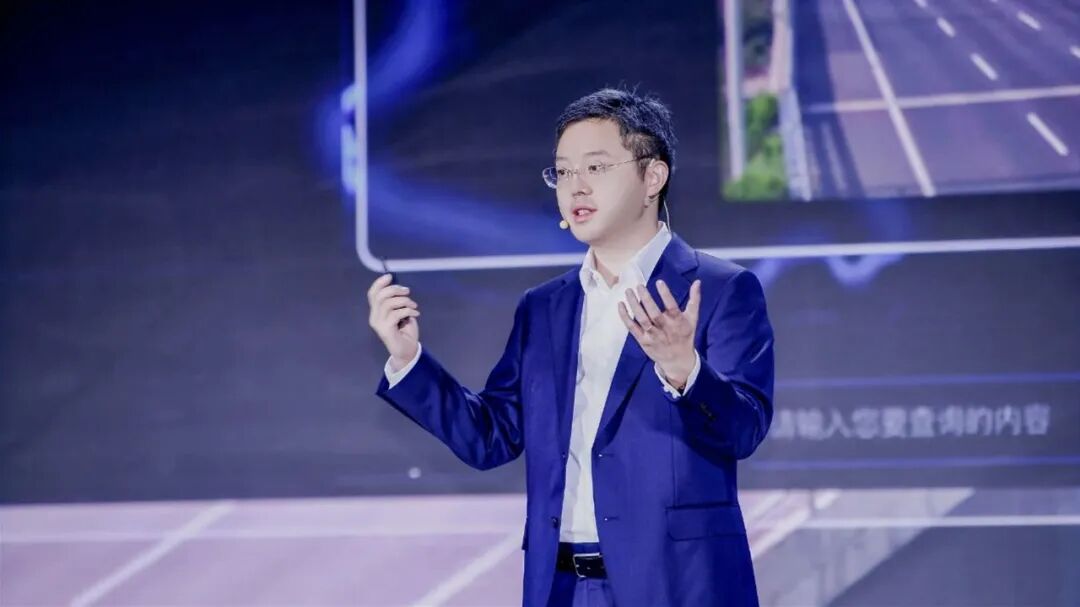
In the second half of Baidu Intelligent Cloud's journey, Shen Dou needs a new victory.
Not long ago, Baidu released its 2025 annual financial report, with industry attention largely focused on Baidu Intelligent Cloud's performance. With annual revenue of approximately 20 billion yuan, a 34% year-over-year increase, this achievement is not explosive but solid in an environment where the overall growth of China's public cloud market has slowed.
As a Baidu veteran, Li Yanhong once described Shen Dou as having a strategic vision and being capable of fighting tough battles and achieving victories. Since taking over Baidu Intelligent Cloud in September 2022, he has been deep cultivation (deeply involved) in this B2B sector for three and a half years. During this time, he led the team to pull the intelligent cloud out of the mire, deeply integrated the Wenxin large model with cloud services, and achieved a breakthrough amidst the three giants: Alibaba Cloud, Huawei Cloud, and Tencent Cloud.
However, the rules of the game in China's cloud computing market have long changed. The first half, characterized by rapid expansion, has completely ended, and the second half, focused on refined operations, has fully begun. Market growth has declined from earlier high rates, clients have shifted from paying for concepts to paying for results, and all cloud providers have incorporated AI-native into their core strategies. The competitive environment Baidu Intelligent Cloud faces is far more complex than when Shen Dou first took over three years ago.
For Shen Dou, the achievements of the past three years have merely allowed Baidu Intelligent Cloud to gain a firm foothold in the cloud computing arena. To truly differentiate Baidu in the second half, where AI and industries are deeply integrated, and to support Baidu's expectations for a second growth curve, he needs to lead the team to achieve a new victory.
01
Shen Dou and Intelligent Cloud's Three Years: From Finding Direction to Setting the Pace
Many people's perception of Shen Dou still lingers at the stage when he was in charge of Baidu's mobile ecosystem. At that time, his main battlefield was on the consumer side (C-end), facing fierce competition in the information feed track (sector) and safeguarding Baidu Search's fundamental position. When he took over Intelligent Cloud in 2022, there were many skeptical voices in the industry about whether a manager with a long-standing focus on the C-end could tackle the tough B2B challenge.
At that time, Baidu Intelligent Cloud was in an awkward position, neither advancing nor retreating. Canalys' 2023 data showed that Baidu Intelligent Cloud ranked fourth with a 9.2% market share, but its growth had slowed, and the gap with the leading players was widening. More critically, years of high investment had not yielded stable profitability. Price wars in the industry had squeezed the profit margins of the IaaS layer increasingly thin. There was still no smooth closed loop between Baidu's years of accumulated AI technology and the commercialization of cloud services.
After taking over, Shen Dou did not follow the industry's conventional path of relying on low prices to seize market share and scale up. Instead, he directly set the tone for Intelligent Cloud's strategy, making Baidu's core AI capabilities the central pillar of the entire business. This adjustment was met with a crucial opportunity half a year later. In March 2023, Wenxin Yiyan (ERNIE Bot) was officially released, making Baidu the first tech company in China to launch a generative large model and providing the core product carrier (vehicle) for Shen Dou's strategic implementation.
Over the next three years, Baidu Intelligent Cloud's entire business system was reconstructed around the industrial deployment of large models. In terms of organizational structure, he drove multiple rounds of adjustments, reintegrating the originally dispersed industry, product, and technical teams into combat units centered around industry solutions. This allowed technology, products, and the sales front to directly align with client needs, shortening the path from large model capabilities to industry scenarios.
At the product level, Baidu Intelligent Cloud rapidly implemented solutions based on the Wenxin large model across more than ten industries, including industrial, governmental, financial, transportation, and healthcare sectors. Simultaneously, it fully integrated the full-stack capabilities of the PaddlePaddle deep learning framework and the Kunlunxin AI chip into the cloud service system, forming a full-stack AI-native cloud layout from underlying computing power to upper-layer applications. This has become the core differentiator between Baidu Intelligent Cloud and other cloud providers.
The effects of these three years of adjustments have gradually been reflected in financial reports and industry data. In the fourth quarter of 2023, Baidu Intelligent Cloud achieved operational profitability for the first time, breaking the cycle of "the larger the scale, the greater the losses" among domestic cloud providers. Data shows that in 2025, Baidu Intelligent Cloud ranked first in both the number of large model-related bid wins and the total bid amount throughout the year, becoming the cloud provider with the most bid wins and the highest total bid amount for two consecutive years.
More important than the numbers is the transformation in team thinking. In the past, Baidu's B2B business easily fell into a technology-driven inertia (inertia), using existing technical solutions to approach clients while overlooking actual industry pain points. Over these three years, Shen Dou repeatedly emphasized internalizing AI capabilities within the team. Clients do not want large models with leading parameters or cutting-edge technologies; they want usable tools that can truly solve business problems and achieve cost reduction and efficiency gains. This shift from a technology-driven to a client-needs-driven approach has allowed Baidu Intelligent Cloud to truly immerse itself in industrial scenarios rather than float on technological concepts.
For Shen Dou, over the past three years, he has led Baidu Intelligent Cloud through the most difficult transition period, stabilized the business foundation, and found its own development rhythm. However, the second half of cloud computing tests not just the ability to gain a foothold but also the ability to continuously break through and establish long-term barriers.
02
No Easy Path in the Second Half's Competition
In 2025, China's cloud computing market reached a critical turning point. In the first half, competition focused on computing power scale, data center coverage, and price advantages, with the core goal of expanding the client base as much as possible and using scale to drive growth. However, in the second half, client decision-making logic has become increasingly rational. Especially for core clients such as government and enterprise customers and large manufacturing companies, they no longer simply use computing power price as the selection criterion but place greater emphasis on the cloud provider's depth of industry understanding, its ability to deeply integrate AI technology with their business processes, and its ability to deliver long-term, quantifiable business value.
This industry transformation subjects Baidu Intelligent Cloud to multi-dimensional challenges, none of which offer shortcuts.
The first challenge is the all-around pressure from leading players and the aggressive pursuit by new entrants. In addition to the established three cloud giants, Volcano Engine, a subsidiary of ByteDance, has become the biggest variable in the market.
Leveraging the technical capabilities honed through ByteDance's vast internal business scenarios, as well as the traffic and enterprise resources from the Douyin ecosystem, Volcano Engine has rapidly expanded in sectors such as the internet, new retail, and content creation. Simultaneously, it launched the Doubao large model, using AI capabilities as its core breakthrough, directly impacting Baidu Intelligent Cloud.
In this market landscape, Baidu Intelligent Cloud faces comprehensive pressure from the top three giants while contending with Volcano Engine's aggressive pursuit from below. Achieving a significant breakthrough in market share is undoubtedly challenging.
The second challenge comes from the deep waters of large model deployment. When generative AI first emerged a couple of years ago, many enterprise clients' understanding of large models remained at the conceptual stage, willing to pay for technological novelty. Cloud providers could achieve significant order growth simply by providing large model API access services. However, by 2026, the hype around large models has faded, and client demands have become more pragmatic. They no longer care about the model's parameter scale or technological sophistication but only whether it can truly integrate into their business processes and achieve cost reduction and efficiency gains.
This requires cloud providers to have an extremely deep understanding of specific industries, capable of deeply integrating large model capabilities with industry scenarios to create deployable and replicable solutions. However, the digitalization levels vary widely across domestic industries, and business processes differ significantly. Achieving deep industry penetration requires long-term industry accumulation, professional industry talent teams, and continuous project refinement—no shortcuts exist. Although Baidu Intelligent Cloud has accumulated certain strengths in sectors like transportation and industry, covering more industries and achieving broader benchmarking effects requires sustained resource investment and time.
The third challenge is the pressure to sustain profitability and meet the group's expectations for a second growth curve. Although Baidu Intelligent Cloud has achieved consecutive operational profits, the profit scale remains low. Among domestic cloud providers, only Alibaba Cloud has achieved large-scale, stable profitability, while most others remain at break-even or marginal profit levels.
Cloud computing is inherently a capital-intensive, long-cycle business, requiring continuous high investment in underlying computing infrastructure construction, core technology R&D, and industry solution refinement. Especially in the AI era, investment scales in computing power chips and large model R&D continue to expand. Balancing core investment while continuously improve (continuously improving) profitability is a core issue Shen Dou must address.
More importantly, Baidu Group's expectations for Intelligent Cloud extend far beyond stable profitability. For years, Baidu's core revenue has primarily come from advertising in its mobile ecosystem. As the internet advertising market reaches its growth ceiling, revenue growth in the mobile ecosystem has gradually slowed. Baidu needs a new growth curve to support its long-term value, and Intelligent Cloud represents the most critical carrier (vehicle) for commercializing Baidu's AI technology and the second growth curve the group places high hopes on.
Li Yanhong has explicitly stated on multiple public occasions that AI is Baidu's core strategy and that Intelligent Cloud is the primary position (position) for implementing Baidu's AI capabilities. This means that Shen Dou and the Intelligent Cloud team must not only balance revenue and profit but also truly translate Baidu's AI technological advantages into sustainable commercialization capabilities, bolstering market confidence in Baidu during the AI era. This expectation brings pressure far more direct than market competition.
03
The Key to a New Victory: Transforming AI Advantages into Industry Barriers
Despite the numerous challenges, Shen Dou and Baidu Intelligent Cloud are not without opportunities to break through. The key to victory in this second half lies not in seizing market share through low prices or scaling up through volume but in truly transforming Baidu's over-two-decade AI technological advantages into irreplaceable industry barriers and forging a differentiated AI-native cloud path.
Baidu's core competitive barrier is its domestically rare full-stack, self-developed AI technology system, an advantage difficult for other cloud providers to replicate. Most domestic cloud providers have followed a development path of first building cloud infrastructure and then gradually supplementing AI capabilities, relying on external partners for many core technological links. In contrast, Baidu is the only domestic cloud provider with full-stack, self-developed capabilities spanning from underlying AI chips and deep learning frameworks to foundational large models and upper-layer industry applications.
Currently, the Kunlunxin AI chip has completed three generations of iterations, continuously increasing its market share in China's large model computing power market and providing stable, controllable underlying computing power support for Intelligent Cloud's business. The PaddlePaddle deep learning platform is China's market-leading open-source deep learning framework, fostering a vast developer ecosystem. The Wenxin large model has undergone multiple iterations, consistently ranking among China's top tier in terms of the depth and breadth of industry deployment.
This full-stack, self-developed capability gives Baidu Intelligent Cloud the initiative in the competition for AI-native clouds. Other cloud providers' AI services are susceptible to upstream supply chain fluctuations, with uncontrollable costs and delivery timelines. In contrast, Baidu Intelligent Cloud can achieve synergistic optimization across its full-stack technologies, offering clients more stable and cost-effective AI services. Especially against the backdrop of China's ongoing push for indigenous innovation in IT and the growing demand for fully self-developed cloud services among government, enterprise, and large state-owned enterprise clients, this represents Baidu Intelligent Cloud's greatest opportunity window.
More critically, the first-mover advantages Baidu Intelligent Cloud has established in core industries can serve as its core defensive moat in the second half's competition. While the first half of cloud computing competition was won through breadth of client coverage, the second half will be won through depth of industry penetration. Those who can penetrate deeply enough into core industries, develop replicable standardized solutions, and establish industry barriers will secure long-term, stable growth.
Baidu Intelligent Cloud's intelligent transportation sector, which it has deep cultivation (deeply cultivated) for years, serves as the most typical example. Leveraging Baidu's long-term technological accumulation in autonomous driving, the Baidu ACE Intelligent Transportation Engine has formed a full-chain solution spanning intelligent traffic control, smart parking, vehicle-road coordination, and autonomous driving. In this sector, Baidu Intelligent Cloud has established an absolute leading position that other cloud providers will find difficult to catch up with in a short time. Intelligent transportation projects typically involve long-cycle, high-stickiness collaborations that, once landed, generate sustained revenue while extending into additional cooperation scenarios such as urban governance and governmental services, forming a virtuous business cycle.
Similarly, in the industrial sector, Baidu Intelligent Cloud's industrial solutions, built on the Wenxin large model, cover multiple core links, including production manufacturing, quality inspection, equipment operation and maintenance, and supply chain management. It has landed multiple benchmark cases in high-end manufacturing industries such as steel, heavy industry, and energy. China's manufacturing industry still holds vast market space for digital transformation, and the deep integration of AI with industrial production represents one of the most certain industry trends for the next decade. Baidu Intelligent Cloud's early accumulations in this sector will serve as a core driver for its future growth.
Beyond this, the AI accessibility market for small and medium-sized enterprises (SMEs) represents a new growth space Baidu Intelligent Cloud can tap into. Over the past few years, the commercialization of large models has primarily focused on large enterprises and government clients, leaving the vast AI demands of SMEs largely unmet. Most SMEs aspire to achieve cost reduction and efficiency gains through AI but lack professional technical teams and cannot afford the high costs of customized solutions. Baidu Intelligent Cloud can leverage the Wenxin large model to develop lightweight, standardized AI products, enabling SMEs to access mature AI capabilities at extremely low costs. This market's scale far exceeds that of the large enterprise market.
One could even say that Baidu's approach to cloud computing has followed a different path from the outset. Most providers first built cloud infrastructure and then filled it with AI capabilities, whereas Baidu first accumulated over two decades of AI technology and then used cloud services as a carrier (vehicle) to deploy AI capabilities across industries. This path may not have been the fastest in the early years, nor did it generate much buzz, but each step has been solid and holds significant long-term value.
Similarly, the new victory Shen Dou needs is not about short-term market share surpasses or doubling revenue figures. It is about truly establishing Baidu Intelligent Cloud as an industry leader in the AI-native cloud era, integrating Baidu's AI technology into the digital transformation of thousands of industries, and making Intelligent Cloud a truly stable second growth curve for Baidu.
This article is an original piece by Xin Mou.
— END —
-
![]()
AI Giants Start Borrowing to Fuel Computing Power Race
-
ByteDance Initiates Largest B2B Structural Adjustment, This Time It's Truly Different
-
![]()
Let's Talk About Kingsoft Office's Mid-Year Outlook and the True Strength of Its AI-Powered Office Solutions
-
Despite 150 Million Users, Struggles Persist: AIShige Faces Tough Competition from Seedance and Kling in AI Video Monetization
-
![]()
Ensuring Safe Gear Shifting in the Automotive Industry: Transitioning from 'Product Oversight' to 'Full-Chain Governance'
-
![]()
Net Profit Soars to $133.7 Billion! Azure Revenue Tops $100 Billion, with AI Fueling Microsoft's Growth
-
![]()
Before 6G Hits the Market, the U.S. Forges a 'Rules Alliance': What Challenges Await Chinese IoT Enterprises?
-
![]()
Intelligent Driving's 'Little Blue Light' Faces Ban: Night Glare and Cut-in Risks Prompt Official Action