Hot Topic | The Advent of Computing Power Futures: A Redistribution of Pricing Influence in the AI Sector
 05/18 2026
 650
650
Foreword:
While the race to enhance model capabilities persists, a more fundamental conflict has stealthily shifted to the control over pricing for computing resources.
The most vital 'raw material' in the AI sector has long lingered in a semi-transparent, or even opaque, state.
The introduction of computing power futures aims to shine a light on this concealed cost sheet.
Why Are Computing Power Futures Necessary?
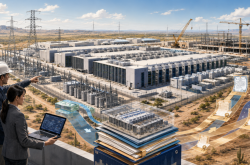
On May 12, the Chicago Mercantile Exchange Group (CME Group) unveiled a partnership with Silicon Data, a GPU computing power index firm, with plans to introduce the world's inaugural computing power futures contracts by 2026. The Singapore Exchange and domestic data trading platforms are also making strides in this direction.
From the AI industry chain's vantage point, this signals that computing power is transitioning from a mere technical service to a novel asset class that can be priced, traded, and hedged—effectively installing a 'price dashboard' for the AI sector.
For any commodity to be eligible for the futures market, three common criteria usually apply: significant scale, considerable price volatility, and a need for risk management from both upstream and downstream industry chain participants. Computing power now fulfills all three criteria.
① AI infrastructure has emerged as the most substantial capital expenditure for global tech firms. Larger models entail higher training costs; broader application adoption means more rigid inference expenses.
Historically, internet companies operated under the assumption that 'the marginal cost of software approaches zero,' but the era of large models contradicts this—AI is evolving into a capital-intensive industry.
GPUs, servers, HBM, advanced packaging, liquid cooling, electricity, data centers, and networks all necessitate substantial upfront investments. AI firms may appear to offer intelligent services, but their underlying consumption involves electricity, chips, and data center depreciation.
② Computing power prices have begun to exhibit sharp fluctuations. The supply of high-end GPUs is concentrated, with extended delivery cycles, while demand is rapidly escalating due to large model training and inference. Cloud provider price hikes, GPU rental increases, and strained data center resources are no longer isolated incidents.
This is why the outdated notion that 'cloud services only become cheaper' is losing its relevance. Computing power is no longer an affordable resource with infinitely compressible costs but has transformed into a scarce strategic asset in the AI era.
③ All stakeholders in the industry chain require risk hedging. Large model firms are concerned about future computing power price hikes disrupting training plans and inference costs; cloud providers fear rapid depreciation of high-priced GPU assets; computing power lessors aim to secure revenue in advance; financial institutions perceive a new asset class.
When all parties confront price volatility, the market naturally seeks an open, standardized, and continuous price discovery mechanism. Computing power futures have emerged to fill this void.
What Exactly Is Traded in Computing Power Futures?
Computing power futures do not entail the physical delivery of a GPU chip to an exchange.
They are more akin to service-based derivatives, such as electricity or freight rates. Contracts are linked to GPU rental price indices and settled in cash upon expiration.
In essence, trading parties settle based on the disparity between the index price and the contract price, reflecting expectations of future computing power prices over a specified period.
The core value of this mechanism lies in two words: pricing and hedging.
For AI firms, futures enable them to secure computing power costs months or even years in advance, mitigating the risk of sudden price hikes that could disrupt product timelines and financial models.
For cloud providers and computing power lessors, futures allow them to lock in partial revenue in advance and hedge against the risks of falling computing power prices or idle resources.
For the industry as a whole, the forward curve formed by futures prices becomes a public price signal.
It informs the market whether computing power will become scarcer or more abundant, whether high-end GPU capacity will improve, and whether AI application growth can sustain higher computing power prices.
In the past, computing power prices were concealed within private contracts; in the future, they will surface through indices, curves, hedging, and liquidity.
This marks the commencement of a shift in pricing influence.
Revaluation of the Entire AI Industry Chain
Computing power futures will not only alter trading methods but also reshape the power dynamics within the industry chain.
Over the past few years, profits in the AI industry chain have been heavily concentrated upstream. The scarcity of high-end GPUs and the dominance of the CUDA ecosystem have granted NVIDIA near-total pricing influence. The fiercer the competition among model firms and the more aggressive the expansion by cloud providers, the more they all revert to the bottleneck of chip and computing power supply.
Cloud providers, positioned midstream, appear to command resources but face immense pressure. They must procure large volumes of GPUs and construct data centers in advance, then rent computing power to downstream clients. Overpaying leads to enormous depreciation pressure; underbuying means missing out on demand surges.
Model firms find themselves in an even more precarious position, squeezed between rising upstream computing power costs and downstream user expectations for low-cost APIs and free applications. Over the past year, token prices have been repeatedly driven down. Many model vendors appear to be expanding rapidly, but their bills are mounting.
AI application firms and SMEs are even more passive, lacking both chip bargaining power and the capital to build their own computing infrastructure, forced to absorb price increases.
Computing power futures will introduce a breach in this rigid structure.
Once prices become public, opacity diminishes. Once forward price curves form, firms can plan procurement, training, inference, and capital expenditures more clearly. Computing power will no longer be dictated solely by 'who has the resources' but will also be priced according to market expectations.
This does not imply that NVIDIA will immediately relinquish its advantage—barriers for high-end GPUs and software ecosystems remain formidable. However, futures markets will provide a public reference: price differentials between various GPUs, regions, and leasing models will gradually become visible to the market.
Visibility itself constitutes a form of checks and balances.
From 'Water Sellers' to 'Computing Power Market Makers'
One of the most direct beneficiaries of computing power futures will be cloud providers and AI cloud service providers.
Their past business model was straightforward: acquire chips, construct data centers, and sell computing power. In the future, this model will become more financialized.
Cloud providers with extensive GPU resources will not only rent computing power to clients but also engage in hedging, quoting, liquidity management, and even design more complex trading and service products around computing power assets in futures markets.
They will increasingly resemble power companies and traders in energy markets: possessing both physical resources and participating in price formation.
This will also lead to new differentiations.
Vendors with self-developed chips and comprehensive cloud ecosystems will more readily gain cost initiative. Google has TPUs, Amazon has Trainium, and domestic cloud providers are also bolstering self-developed chips and domestic computing power adaptation.
Whoever can provide stable computing power at lower costs will gain greater leverage in the forward price curve.
Cloud providers entirely reliant on external GPU procurement will confront greater capital expenditure and profit pressures.
Amplified Risks of Computing Power Financialization
Computing power is more challenging to standardize than crude oil, copper, or gold. Even among H100s, actual usable value varies significantly depending on the cloud provider, cluster scale, network environment, and interconnection methods.
Single-card leasing and large-scale training clusters do not represent the same capability, nor are on-demand calls and long-term contracts governed by identical pricing logic.
This implies that computing power futures will inevitably carry basis risk—firms can manage broad price fluctuations through futures but cannot fully cover differences in specific resource quality.
Once computing power transforms into a financial asset, speculative capital will enter. Price discovery will enhance transparency but may also introduce new volatility. AI firms will gain risk management tools but must also navigate more complex financial markets.
This will compel the industry to establish more mature systems for indices, auditing, rights confirmation, scheduling, and clearing.
In the future, a whole new ecosystem will emerge around computing power: computing power index companies, trading platforms, scheduling systems, risk management services, and computing power asset valuation agencies.
Conclusion:
The emergence of computing power futures indicates that the AI sector has transitioned beyond a phase solely focused on technological imagination.
Models can iterate, applications can migrate, and traffic can be reallocated, but computing power costs will increasingly burden the financial statements of every AI firm.
Partial sources referenced: OpenAI: OpenAI 2025 Annual Report, The Wall Street Journal: Anthropic Spends 72% of Revenue on Compute as AI Race Intensifies, Goldman Sachs Global Investment Research: Compute Power Futures: A $3 Trillion Market by 2028, China Academy of Information and Communications Technology: 2026 China Computing Power Development Index White Paper, IDC China: Global AI Computing Power Cost Forecast Report (2026-2030)
-
![]()
AI Giants Start Borrowing to Fuel Computing Power Race
-
ByteDance Initiates Largest B2B Structural Adjustment, This Time It's Truly Different
-
![]()
Let's Talk About Kingsoft Office's Mid-Year Outlook and the True Strength of Its AI-Powered Office Solutions
-
Despite 150 Million Users, Struggles Persist: AIShige Faces Tough Competition from Seedance and Kling in AI Video Monetization
-
![]()
Ensuring Safe Gear Shifting in the Automotive Industry: Transitioning from 'Product Oversight' to 'Full-Chain Governance'
-
![]()
Net Profit Soars to $133.7 Billion! Azure Revenue Tops $100 Billion, with AI Fueling Microsoft's Growth
-
![]()
Before 6G Hits the Market, the U.S. Forges a 'Rules Alliance': What Challenges Await Chinese IoT Enterprises?
-
![]()
Intelligent Driving's 'Little Blue Light' Faces Ban: Night Glare and Cut-in Risks Prompt Official Action