The Attack of 618: Apple iPhone 17 Sees Price Drop, Why Did Huawei Enjoy 90 Sell Like Hotcakes Before?
 05/18 2026
 659
659
Lujiu Business Review predicts that future competition will not be confined to a single price segment but will encompass entire systems and ecosystems. The smartphone battle during this year's 618 shopping festival is heating up.
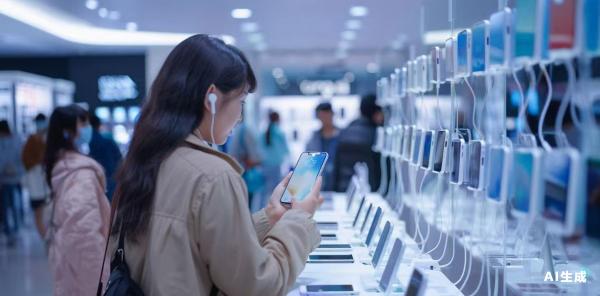
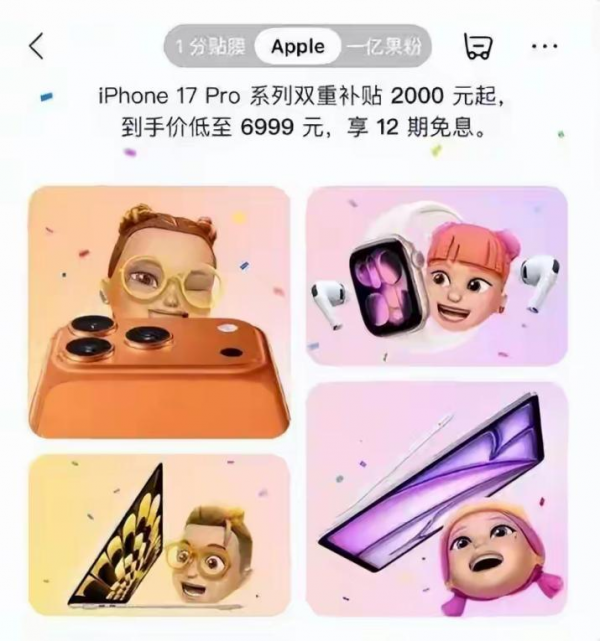
The era of dual-front warfare in the smartphone age has arrived. This 618, Apple took the lead in launching a price war, with even its high-end phones seeing price reductions despite rising memory costs.
Previously, the main battleground for price wars among domestic smartphone makers was in the mid-to-low-end models. Among them, the most eye-catching was Huawei's Enjoy 90 series.
This product, labeled by many as an "entry-level phone under 1,000 yuan," sold out explosively upon release, attempting to facilitate Huawei's full return to this price segment.
Of course, the Enjoy series' success also tore away a layer of fig leaf in the industry: over the past five years, all manufacturers have been desperately pushing towards the high-end market, often collectively overlooking the mid-to-low-end users who account for nearly 50% of the market.
With Huawei, this formidable competitor, entering the fray, the defenses in the mid-to-low-end market are being breached one by one by others, leaving Xiaomi and others somewhat powerless.
But is this the end? No.
As Huawei returns to this forgotten battlefield with its complete technological and channel systems, the structural crisis of "focusing on the high end while neglecting the low end" in China's smartphone industry has finally been fully exposed, a significant characteristic somewhat overlooked in current market competition.
Bargain-hunting in the mid-to-low-end segment
According to industry forecasts, Huawei's Enjoy 90 series is expected to reach shipments of 12 to 15 million units throughout 2026.
However, many people's perception of Huawei previously stay at [translated as 'remained' for smoother flow] more on the high-end labels of its Mate and P series. When Huawei phones are mentioned, most people's first reaction is flagship models priced at five to six thousand yuan, representing the pinnacle of domestic high-end smartphones. Yet, few have noticed that one of Huawei's fastest-growing segments in 2026 is likely the mid-to-low-end market priced between 1,000 and 2,000 yuan.
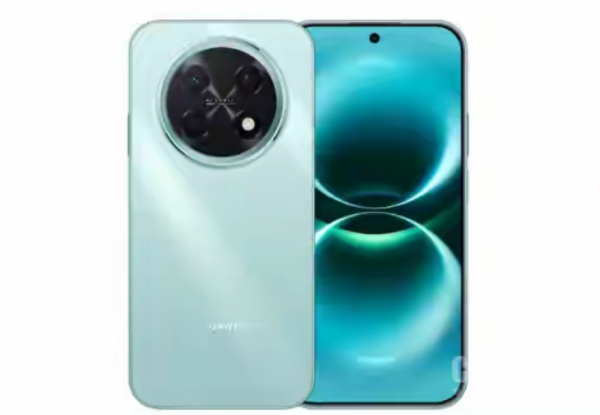
It is reported that the Huawei Enjoy 90 series includes three models: Huawei Enjoy 90, Huawei Enjoy 90 Plus, and Huawei Enjoy 90 Pro Max, with prices starting at 1,299 yuan.
Due to chip issues in previous years, Huawei was forced to abandon most of its mid-to-low-end market share. Some mid-to-low-end phones had to be replaced with Smart Selection models, and the mid-to-low-end market was quickly divided among Xiaomi, Honor, OPPO, and Vivo, with Huawei's share relatively limited.
According to previous reports by Kuaikeji, in the brand share of the 0-2K yuan smartphone market in 2025, Vivo took the top spot in the 1,000-1,500 yuan price segment, with OPPO and Honor ranking second and third, respectively, together accounting for 66% of the market share. The 1,500-2,000 yuan price segment became Honor's stronghold, ranking first in this category, with Vivo and Xiaomi in second and third place. The top three brands collectively held 70% of the market share, indicating highly concentrated competition in this interval.
Honor's ability to rank first in the 1,500-2,000 yuan price segment largely benefited from its Qinghai Lake large battery technology and the strong performance of models like the X70 series in the entry-level market. This also indicates that Huawei has significant room to fill in this area while facing formidable competitors with notable products in this price segment. Moving forward, if Huawei wants to achieve breakthroughs in these price segments, responding to the differentiated demands of the market and users will be a necessary task.
With the release of this year's Enjoy 90 series, the situation instantly reversed. Online reports suggest that sales exceeded 250,000 units across all channels on the first day of sale, making it one of the best-selling smartphone models at the start of 2026.
Someone who has had contact with Huawei's business told Lujiu Business Review that such efforts were far from impromptu.
This person believes that, on the one hand, Huawei aims to rebuild its market defense across all price segments. While the high-end market represents the brand's pinnacle, the mid-to-low-end market is the foundation for sales volume. Previously, Huawei's advantage in this area was not prominent, and penetrating these segments requires support from mid-to-low-end shipments. On the other hand, the Enjoy series carries the core mission of driving the HarmonyOS ecosystem's penetration. Currently, the user base of the HarmonyOS is experiencing rapid growth and is expected to surpass 100 million before this winter. The number of terminal devices equipped with HarmonyOS 5 and HarmonyOS 6 has already exceeded 47 million. With a vast base of mid-to-low-end users, only by bringing HarmonyOS to millions of ordinary users' phones can a true ecological closed loop [translated as 'closed loop'] be formed.
Looking back, the market has never been divided into high and low ends, only differing in user needs. Those ordinary users overlooked by the industry are precisely the largest and most loyal consumer group. Huawei's foray into the mid-to-low-end market is less about a dimensional strike and more about returning to the essence of business: providing valuable products to the broadest user base.
If all manufacturers are gazing at the stars, someone will bend down to pick up the ground beneath their feet.
The Enjoy series' success goes beyond product features; there's operational value as well
Is the Enjoy series' success truly solely reliant on factors such as the HarmonyOS, Kirin chips, and improved battery life, as outsiders claim?
Lujiu Business Review gathered insights from personnel in terminal retail stores. In their view, the Enjoy 90 series offers stronger signal strength, longer battery life, fewer ads in the HarmonyOS, a stronger anti-fraud system, robust privacy protection, and a durable body. She also mentioned that users with limited budgets are primarily guided towards Huawei's series, with other brands considered only when options within the same price range are unavailable.
The aforementioned perspectives indicate that product strength, including the HarmonyOS, is indeed a key factor in the Huawei Enjoy series' success. However, they also highlight that retail promotion and other elements play significant roles.
This means that manufacturers are not simply pursuing "low prices for high volumes." It represents a concentrated validation of Huawei's technological, brand, and channel capabilities in the mid-to-low-end market, redefining the competitive rules for 1,000-yuan smartphones.
For instance, the differentiated advantages of Kirin chips and the HarmonyOS ecosystem are indeed fundamental thresholds for the Enjoy series. Other models in the same price segment often rely on Qualcomm Snapdragon 4 series or MediaTek Dimensity 6 series chips, while the Enjoy 90 is equipped with Huawei's self-developed Kirin chip, paired with pure-blood HarmonyOS, offering comparable smoothness and stability. This needs no further elaboration; it is Huawei's unique moat.
However, beyond these factors, further driving the Enjoy series' sales growth requires operational capabilities, with "retail promotion" mentioned earlier being just one element.
Therefore, before discussing the Enjoy series' sales, we need to clarify the factors contributing to a smartphone's success from product development to market launch. In the view of Mr. Zhu from the smartphone industry, aside from the well-known supply chain and product technology selling points, a smartphone's journey to market involves several stages (taking offline channels as an example):
(1) Product allocation. Manufacturers typically determine allocation rules, focusing on core retailers and stores or opting for full coverage. These two strategies can sometimes start with a focus before expanding or remain focused on one. Specific allocation rules generally consider historical sales contributions, customer tier levels, retail resources like demo units and guides, and the customer's previous market orderliness.
(2) Training, launch mobilization, and resource investment. This includes comprehensive training for the retail team on product selling points, setting sales targets with key customers for important product launches, and resource investment such as retail incentives and commissions. These are standard provisions for new product launches.
(3) Market order control. Monitoring and managing the secondary market prices of new products.
Huawei's products can sometimes be freely ordered on relevant platforms, while others rely on allocation. At least from the perspective of the Enjoy 90 series, the allocation strategy this time seems to lean towards full coverage. A retailer told Lujiu Business Review, "We can order as long as there's stock," and "this series has ample SKU models available," indicating that these models are being openly sold.
Public information shows that Huawei's retail system currently includes personnel such as retail GTM, retail managers, retail supervisors, and retail guides. Honor has a similar retail team structure, which brings about some new implications.
For example, individuals close to terminal operations emphasized to Lujiu Business Review that Huawei frequently follows up with retail clients and store sales for many of its models, both from the manufacturer and agents, to track restocking and sales conversion.
On the pricing side, Huawei generally maintains good control over new products, also monitoring the secondary market to prevent channel partners from diverting goods, thereby maintaining market price stability and encouraging retailers to focus on genuine retail sales, bringing them profits.
Therefore, factors such as allocation rules, retail management, and market order control also contribute to the success of the Enjoy 90 series. Another aspect is channel management capabilities. Currently, nearly 60% of smartphone sales in China come from offline channels, with sink [translated as 'lower-tier'] markets almost entirely reliant on offline distribution. Huawei's channel model differs significantly from other manufacturers.
Some manufacturers commonly adopt a "provincial agent exclusive distribution" model, where they sell products to provincial agents, who then handle allocation, sales, and promotion, with limited control from the manufacturer. In contrast, Huawei employs a representative office system, with each province having an operational team directly representing the manufacturer. This system plays a guiding role in efficiency and implementing manufacturer policies, serving as a guarantee for winning market competition.
If we expand the discussion from the Enjoy 90 series to Huawei's entire mid-to-low-end product line, unlike other players, Huawei also utilizes the Smart Selection model (Smart Selection phones enjoy Huawei's technology and ecosystem adaptations and are jointly launched with partners), providing significant supplements for mid-to-low-end growth. From currently available products, even with the full return of Kirin chips, Huawei still retains series like Maimang and Nova Smart Selection, which are jointly operated with various partners such as China Telecom and TQ. These products fill gaps in Huawei's various price segments, leveraging partners' channel resources to further expand market coverage.
This shows that competition in the mid-to-low-end market is not about a single product but a battle of systemic capabilities. Product performance such as chips, systems, and battery life is merely an entry ticket; channels, operations, and operational capabilities are equally crucial in determining success or failure.
Balancing high and low ends has become a dilemma
Apple's decision to lead with price reductions for the iPhone 17 Pro in the high-end smartphone market has put pressure on all domestic smartphone makers.
Over the past decade, the high-end smartphone market in China has primarily been dominated by Huawei and Apple. These two players can capture 70-80% of the market share, while all other domestic manufacturers combined account for only 20-30%. Xiaomi and others have attempted to break into the high-end market but have yet to achieve significant success. In recent years, Vivo has shown some promise in the high-end market with its imaging technology and foldable phones, but its performance remains just satisfactory.
This stands in stark contrast to the new energy vehicle industry. In the automotive market, new forces like Li Auto, NIO, and Xpeng have successfully broken through the monopoly of traditional luxury cars. In the 300,000 yuan and above market segment, domestic brands now account for nearly 50% of the market share. However, in the smartphone industry, aside from Huawei, no other domestic manufacturer has truly established itself in the high-end market or gained a significant market share.
More awkward [translated as 'awkwardly'], while manufacturers are desperately trying to break into the high-end market, they are facing enemies on all fronts in the mid-to-low-end market.
In the past, some mid-to-low-end products became mere "volume tools," with reduced configurations and poor user experiences, leading to widespread user dissatisfaction. The result was a failure to break through in the high-end market while also losing ground in the low-end market, leaving them in a precarious position.
Now, with competitors returning to the mid-to-low-end market, this contradiction has been further exacerbated.
The mid-to-low-end market inherently has thin profit margins. The entry of competitors with technological and channel advantages further squeezes the survival space of other manufacturers. Many manufacturers face a dilemma: matching Huawei's configurations would lead to losses; not doing so would result in losing market share.
As a result, we see some manufacturers starting to reduce technological investments in their mid-to-low-end product lines, concentrating top-tier configuration resources on high-end models. However, recent price reductions and promotions by Apple, Xiaomi, and other manufacturers have also put pressure on the high-end smartphone market, which has always been highly competitive. Some manufacturers are attempting to shift towards overseas markets, but the mid-to-low-end market overseas is equally competitive.
However, it cannot be denied that some manufacturers remain highly competitive in the mid-to-low-end market and are exploring new innovative technologies. For example, Honor launched the new Honor GT Pro, targeting the esports segment with comprehensive upgrades in performance, battery life, and eye protection, achieving sales championship in the 3,000-5,000 yuan price segment across all platforms during its initial sale. Meanwhile, Honor Power was the first to break through the industry's 8,000mAh battery barrier, propelling Honor to the top spot in the 2,000-2,500 yuan market segment and reclaiming a place in the domestic top five during this period. Redmi exploded onto the market with the Redmi Turbo 4 Pro, featuring an "extra-large" battery. Vivo expanded its coverage by leveraging esports optimizations and fast-charging technology.
This indicates that competitors possess product definition capabilities in the mid-to-low-end market. While the Huawei Enjoy 90 series has sold well, it still faces a complex and fierce market competition environment. Moreover, the rankings in China's smartphone industry seem fluid, with manufacturers' past advantages often fleeting and short-lived.
Looking back, without a strong high-end presence, there is no future; without a solid low-end foundation, there is no present. A healthy industry should see collaborative development [translated as 'synergistic development'] between high and low ends. The high end leads in technological innovation, while the low end ensures sales volume. Both are indispensable. Focusing solely on the allure of the high end while neglecting the needs of hundreds of millions of ordinary users will ultimately lead to a house of cards.
Therefore, China's smartphone industry has reached a crossroads. Should it continue to "focus on the high end while neglecting the low end," leading to intense internal competition in the high-end market until exhaustion? Or should it reevaluate the mid-to-low-end market and build competitiveness across all price segments? Perhaps some manufacturers can navigate this choice with ease, while others may find themselves caught between the two.
-
Ofilm Teams Up with ADSensE to Propel Large-Scale Deployment of All-Solid-State LiDAR Powered by ADS6311 Chip!
-
![]()
Loss of 2.5 Billion Yet Facing Strong Demand for Shares? Another Battle for Control of Lianchuang Electronics
-
![]()
Huawei’s Enjoy Series Flies Off the Shelves, Prompting Xiaomi to Double Down on Budget Smartphones
-
![]()
Beijing Hyundai's Top Executive Criticizes Industry Disorder: Certain Brands Treat Customers as Beta Testers
-
![]()
The domestic mobile phone market has declined for five consecutive quarters! Huawei defies the trend with significant growth: maintains its top market share
-
Annual Revenue Surpasses 3 Billion: An Automotive Trim 'Little Giant' Makes Its Debut on the Beijing Stock Exchange
-
![]()
The Space Force Wants to Spend $30 Billion on Rocket Launches: Is Trump Doubling Down, and Is SpaceX the Big Winner?
-
![]()
Going Crazy! One out of Every Three Plug-in Hybrids Sold in Europe is a Chinese Vehicle