Equal Strength at the Dinner Table: Understanding the New Industrial Landscape Between China and the U.S. Through a Banquet
 05/18 2026
 661
661
 One Dinner Table, A Decade of Change in the Chinese Economy
Original Content by DianShu · Digital Economy Studio
Author | Uncle You
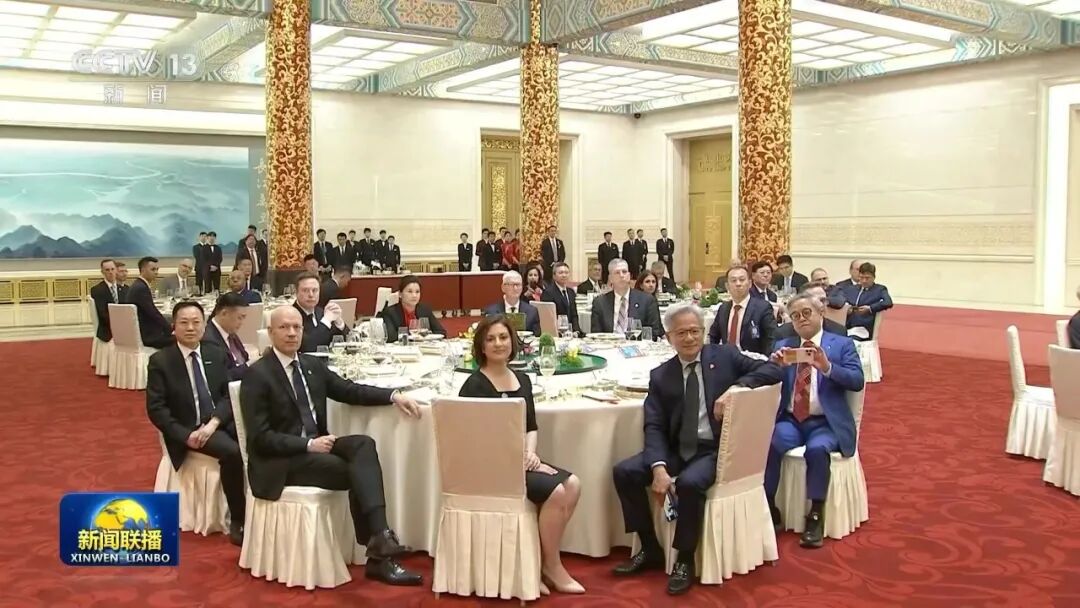
In recent days, a high-profile banquet has dominated online discussions. The Sino-U.S. Entrepreneur Welcome Banquet held at the Great Hall of the People on the evening of May 14 has become the most talked-about financial event of 2026. Netizens have meticulously analyzed frames from the Xinwen Lianbo broadcast, scrutinizing everything from seating arrangements to interactions between entrepreneurs, with every detail dissected repeatedly.
At this banquet, 16 Chinese entrepreneurs sat alongside U.S. business titans such as Apple's Tim Cook, NVIDIA's Jensen Huang, and Tesla's Elon Musk. These dinner tables have become a barometer of the global industrial landscape and a true reflection of China's evolving economic structure.
From 2017 to 2026, two Sino-U.S. leader dinners nine years apart, with two vastly different guest lists, clearly illustrate China's economic trajectory—from 'scale expansion' to 'innovation-driven' growth, and from the 'world's factory' to a 'global hub of intelligent manufacturing.'
Why Were They Seated at the Table?
A closer look at the list of Chinese entrepreneurs reveals a clear commonality: none operate in isolation. All are deeply intertwined with the U.S. industrial chain, forming a community of shared interests where 'you are in me, and I am in you.'
The first category consists of locally entrenched enterprises that have long established roots in the U.S., becoming integral parts of the local economy. Take Haier Group, for example, which built a factory in South Carolina in 1999 and became the largest appliance company in the U.S. after acquiring GE Appliances in 2016. With 12 factories and nearly 20,000 employees in the U.S., Haier is a major player. Fuyao Glass, which built the world's largest automotive glass factory in Ohio in 2014, is now the largest manufacturing employer in the region, supplying Tesla, General Motors, and Ford. Wanxiang Group, the first Chinese company to enter the U.S. automotive supply chain in 1984, now operates over a dozen factories in the U.S. and is a key global supplier of humanoid robots.
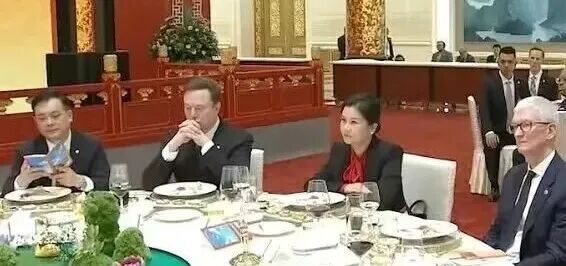
The second category includes supply chain- Symbiotic type (symbiotic) enterprises that have formed inseparable supply-demand relationships with U.S. tech giants. Bluethink Technology's Chairwoman Zhou Qunfei was seated between Cook and Musk—a seemingly coincidental arrangement with deep implications. Bluethink is both a supplier of iPhone glass panels for Apple and a major producer of Tesla's central control screens, securing hundreds of billions in orders annually from the two U.S. companies. Lenovo Group, the world's largest PC manufacturer, procures large quantities of chips from Qualcomm and Micron each year while providing the largest global distribution channel for Microsoft and Intel. Xiaomi Group's smartphones and smart hardware ecosystem are deeply integrated with Qualcomm chips and Google's Android system, with products sold in over 100 countries and regions worldwide.
Even seating arrangements strictly adhered to the principle of 'industry benchmarking and supply chain pairing.' The first table featured consumer electronics and automotive supply chains, with U.S. representatives like Cook, Musk, and Huang seated alongside Chinese counterparts such as Zhou Qunfei, Cao Hui, Lu Weiding, and Jia Shaoqian—brand owners sitting with core suppliers, all long-standing business partners. The second table focused on aerospace and national strategic industries, with U.S. leaders from Boeing and GE seated opposite Chinese executives from COMAC and Air China, blending competition with cooperation. The third table centered on AI and intelligent ecosystems, with U.S. representatives from Qualcomm and Micron seated alongside Chinese leaders like Lei Jun, Yang Yuanqing, Liang Rubo, and Zhou Yunjie.
A noteworthy detail is Huang Renxun's 'misaligned seating.' As CEO of NVIDIA, he should have been seated at the AI-focused third table but was placed at the main table instead. This arrangement reflects AI computing power's critical role in current Sino-U.S. relations—NVIDIA is the global leader in AI chips and a cornerstone of U.S. tech hegemony, while China, as the world's largest AI application market, is one of NVIDIA's most important revenue sources.
The seating arrangements at this state banquet fully reflect a Sino-U.S. industrial landscape of reciprocity, cooperation, and complementarity—phone makers with phone makers, automakers with automakers... From 'following' to 'keeping pace' and even 'surpassing,' this small dinner table mirrors China's industrial evolution.
The Absent Companies Are Equally Thought-Provoking
Huawei, BYD, and DJI—three highly competitive Chinese companies in the global market—were notably absent from the banquet list. This was no coincidence but rather a deliberate diplomatic choice. The state banquet is a platform for cooperation, not a competition arena. Deliberately avoiding companies under U.S. sanctions reflects both courtesy and a clear signal: China is willing to engage in pragmatic cooperation with the U.S. on the premise of mutual respect but will never relinquish its right to independent innovation.
Nine Years, Two Rounds of Major Guest List Changes
Rewind nine years to 2017, during Donald Trump's first visit to China, the Sino-U.S. Entrepreneur Dialogue featured Alibaba, Tencent, and JD.com—the three giants of internet platforms—at center stage, followed by traditional energy companies like Sinochem and ENN, with only a few established manufacturers like Haier and Fuyao representing the sector. Back then, China's economy was riding the wave of mobile internet growth, with business model innovation, traffic monetization, and scale expansion as the main drivers. We exchanged our vast consumer market for investment, manufacturing capacity for technology, and an open posture (posture) to integrate into the global industrial chain. The $253.5 billion in trade deals signed in two days set a new record in global economic and trade cooperation.
The 2026 guest list, however, reflects a entirely new industrial orientation. Internet platform companies and traditional energy firms from 2017 were not invited this time. Among the 16 entrepreneurs, most come from high-end manufacturing, hard tech, and national strategic equipment sectors, with ByteDance representing digital technology. Haier and Hisense symbolize China's leadership in home appliance manufacturing, while Bluethink and Fuyao Glass are global leaders in their niche markets. COMAC and Air China are pillars of China's aviation industry, while Xiaomi, Lenovo, and ByteDance have deep roots in digital technology and smart hardware.
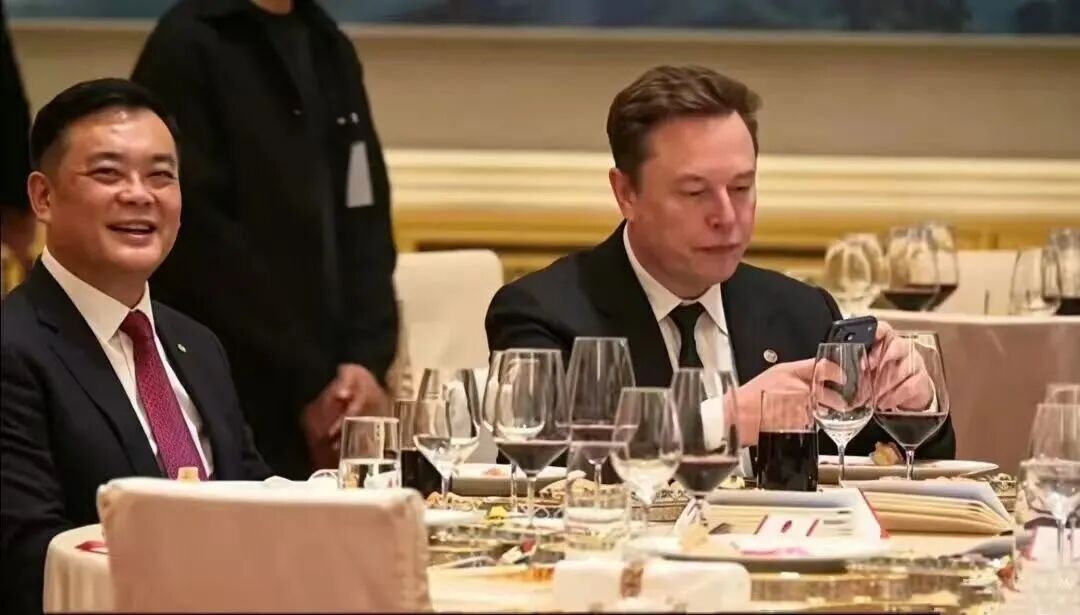
The differences between the two guest lists represent a fundamental shift in China's economic development logic. Over the past nine years, China's economy has undergone four major transformations:
First, industrial logic has shifted from 'consumer internet' to 'real economy.' In 2017, the nation chased after asset-light models like e-commerce, social media, and food delivery, with capital flooding the internet sector and 'burning money for traffic' becoming the industry norm. Today, traffic-driven growth has reached its limits, and capital is accelerating its shift toward hard tech fields like semiconductors, AI, high-end manufacturing, and new materials. National policies, resource allocation, and market expectations all now favor the real economy, with 'shifting from virtual to real' becoming China's primary economic direction.
Second, global positioning has evolved from 'world's factory' to 'global hub of intelligent manufacturing.' Nine years ago, 'Made in China' was synonymous with cost-effectiveness, OEM manufacturing, and assembly, with China occupying the mid-to-lower end of the global industrial chain and earning meager processing fees. Today, China has achieved global parity in high-end home appliances, automotive components, and precision glass, with major breakthroughs in national strategic sectors like aircraft manufacturing. We no longer rely on low-end capacity for profit but instead derive high added value from technological, process, and industrial chain barriers.
Third, the technology pathway has transitioned from 'market-for-technology' to 'self-reliance + open cooperation.' In 2017, China actively opened its market to import advanced foreign technologies, with many core components and high-end equipment dependent on imports. Today, China insists on technological self-reliance and accelerates import substitution in key areas like chips, operating systems, and high-end equipment. At the same time, it maintains high-level openness, refusing to close doors or decouple but instead participating in global competition and cooperation while securing its own industrial chain.
Fourth, growth engines have shifted from 'factor-driven' to 'new quality productivity-driven.' Past growth, fueled by population, land, capital, and traffic, has peaked. Future growth will come entirely from technological innovation, industrial upgrading, and production efficiency improvements.
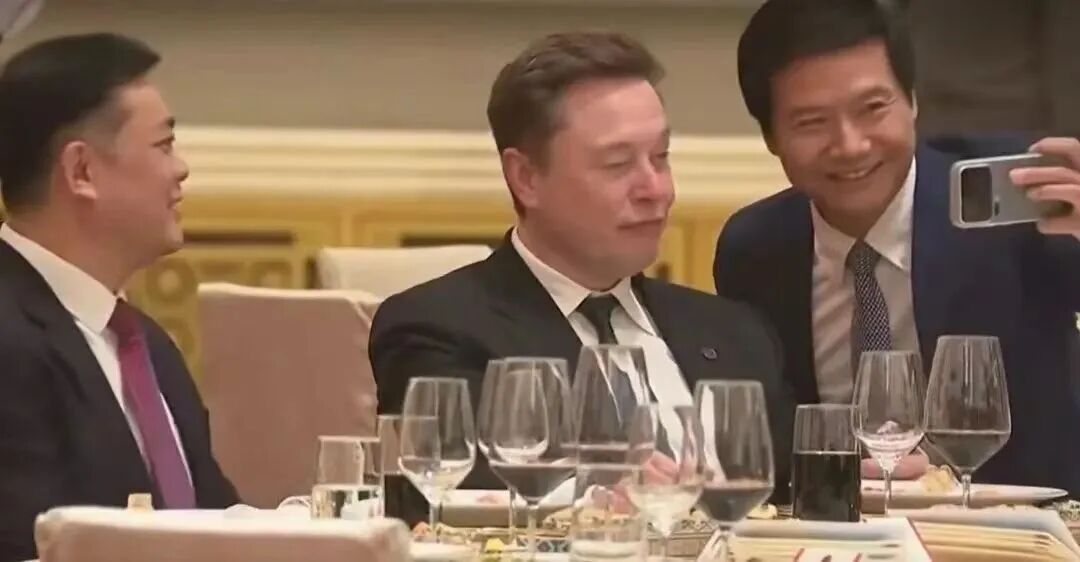
Notably, Lei Jun is the only Chinese entrepreneur to attend both Sino-U.S. leader dinners. Nine years ago, he represented internet entrepreneurs, leading Xiaomi to transform the traditional smartphone industry with an internet-based model. Today, he leads Xiaomi as a hard tech pioneer, venturing into smartphones, smart cars, robotics, and more. This transformation epitomizes China's industrial upgrading.
China Is No Longer a Supporting Actor in the Industrial Chain
The strongest signal from this banquet is that the Chinese and U.S. economies are deeply integrated, forming a tightly interconnected community of shared interests. Decoupling and severing links is neither realistic nor economically sustainable for both sides.
This integration is first evident at the supply chain level. Apple is a prime example—the production of an iPhone involves thousands of Chinese suppliers, with most processes, from chip packaging and glass panels to structural components and final assembly, completed in China. China's supply chain not only delivers the world's highest manufacturing efficiency but also cultivates a vast pool of engineers and skilled workers mastering core processes. As Cook said, Apple could not have achieved its success without its Chinese partners.
Integration is also seen in orders and production capacity. Tesla's Shanghai Gigafactory, now its largest global production base, exports vehicles to over 50 countries and regions. Tesla's success relies on China's engineering capabilities and supply chain efficiency, while China has leveraged Tesla to upgrade its entire new energy vehicle industrial chain.
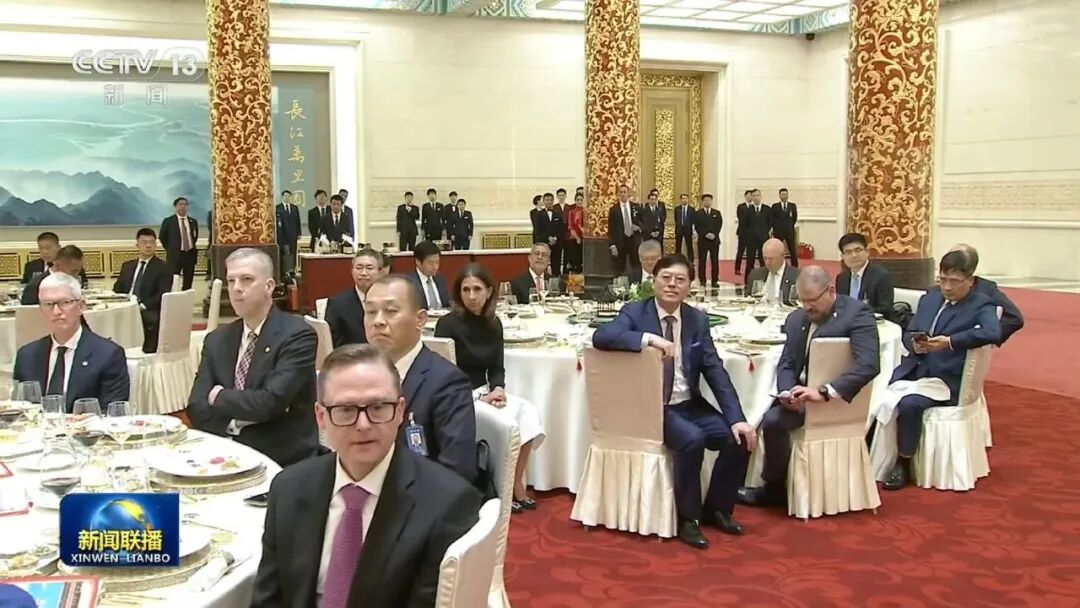
Third is the integration of technology and customers. China is one of Qualcomm's largest global markets. The globalization of Chinese smartphone brands like Xiaomi, OPPO, and vivo has not only brought Qualcomm massive chip orders but also driven growth in its patent licensing business. Conversely, Qualcomm's chip technology supports the global competitiveness of Chinese smartphone brands. This 'you-in-me, me-in-you' integration of technology and customers has formed a stable interest structure.
Finally, there is integration in financial rules. Top financial institutions like Citigroup, Goldman Sachs, BlackRock, and Blackstone have operated in China for years, with Citigroup's presence exceeding a century. Goldman Sachs has gained greater control over China's securities business, while BlackRock, Vanguard, and other global asset management giants have entered China's public fund market. They have not only participated in China's financial opening but also become vital channels for global capital to allocate Chinese assets.
Of course, integration does not mean the absence of competition. In cutting-edge fields like chips, AI, new energy, and aerospace, competition between China and the U.S. is intensifying. But competition does not equate to severing ties, nor does rivalry mean closing doors. True business logic has never been a zero-sum game but rather finding common ground and pursuing mutual benefit.
In Conclusion
Through this extraordinary banquet, we can glimpse the future of Sino-U.S. relations. It will neither descend into full-blown confrontation nor return to the Simple complementarity (purely complementary) state of the past. Instead, it will enter a new phase of 'cooperating amid competition, competing amid interdependence, and coexisting with restraint.'
For Chinese companies, this means both adhering to independent innovation to secure industrial chain safety and maintaining an open mindset to deeply integrate into the global economic system.
From 2017 to 2026 lies a decade of transformation in the Chinese economy. It has witnessed China's evolution from 'integrating into the global system' to 'rising through self-reliance,' proving a simple truth:
Only by Deep cultivation in the real economy (deepening industrial roots) and mastering core technologies can China stand firm in global industrial competition. Only by upholding open cooperation and mutual benefit can it achieve long-term economic prosperity.
Over the next decade, new quality productivity will continue to drive China's economy to break through ceilings and secure a more prominent position in global tech and industrial competition.
THE END
-
![]()
Proposed to Raise 955 Million Yuan through Private Placement! Huicheng Vacuum Boosts Localization of Ultra-Precision Optical Coating Equipment
-
![]()
Cash Flow Soars 13-Fold! What Major Strategic Move is Wuhan Five Square Optoelectronics Planning?
-
![]()
Leaked Design of vivo X500: Reverts to Circular Camera Module in Top-Left Corner, Pays Homage to Classic X90 Aesthetic
-
![]()
DeepSeek Shows Signs of Foraying into Code Agents, Launches WeChat Official Account Focused on Harness
-
![]()
Auto Companies Deny Claims That ‘Cooperation with Huawei Is Non-Essential’, as Huawei Transforms into a ‘Public Platform’
-
![]()
Starship to Independently 'Return to the Launch Tower': SpaceX's Ambitions Extend Beyond Rocket Building to Dominating Space Transportation
-
![]()
Starship Set to Independently 'Return to the Launch Tower': SpaceX is Revolutionizing Space Transportation, Not Just Building Rockets
-
![]()
Anthropic and OpenAI Face Off Against Deepseek