Some New Thoughts on ModelBest
 07/21 2026
 367
367
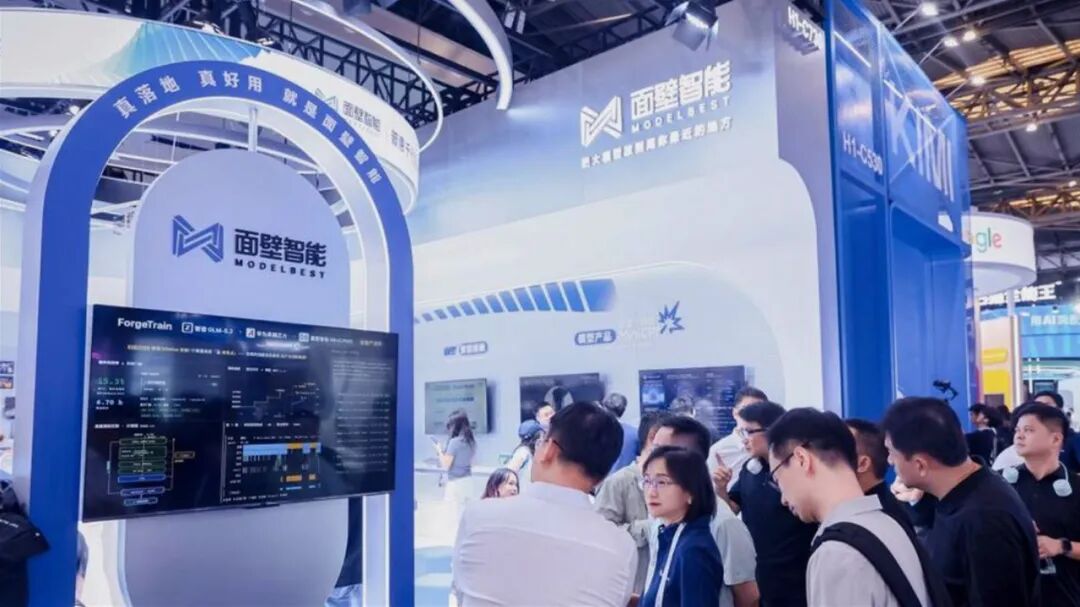
ModelBest, Valued at 20 Billion Yuan: How Far Has It Come?
Two years ago, few would have bet on edge large models as the narrative logic for China’s AI sector. At the time, the prevailing view was that local computing power was insufficient to support complex large model inference, and edge devices could only handle simple tasks like voice wake-up and image recognition—far from true general intelligence.
ModelBest was one of the few players to go all-in on this path from the start. Founded out of Tsinghua University’s NLP Lab in 2022, the startup anchored its technology on improving the efficiency of small-parameter models, aiming to free large models from cloud dependency through high-density algorithmic design, enabling native operation on smartphones, cars, robots, and other edge devices.
By 2026, the industry had shifted. Edge-cloud collaboration became a consensus across the sector, with mid-to-high-end smartphones and new energy vehicles nearly all equipped with local large models. Edge AI transformed from a marginal supplement into a foundational capability for intelligent terminals.
ModelBest rode this wave, achieving exponential growth: over 5 billion yuan in funding raised in the first half of 2026, a valuation surpassing 20 billion yuan, and becoming China’s highest-valued publicly disclosed unicorn in the edge AI sector. Industrial capital had replaced financial investors as the main backers.
Amid the hype, questions lingered: How could a startup build long-term barriers in a field where Huawei, Xiaomi, Alibaba, and Tencent were all developing in-house edge models? Was the so-called Density Law—the cornerstone of ModelBest’s approach—a technical shortcut or a viable foundation for industrial-scale deployment in 2026, dubbed the “year of edge AI Large scale implementation (large-scale deployment)”?
ModelBest offers a compelling case study for these questions.
01
Density Law
A Non-Mainstream Technical Path
From its inception, ModelBest diverged from industry norms.
Around 2022, China’s large model sector broadly followed a “parameters-first” logic, with soaring compute investments. Training costs reached hundreds of millions of yuan, raising barriers to entry. Yet ModelBest’s chief scientist, Liu Zhiyuan, led a team that took the opposite approach: achieving stronger intelligence with smaller parameter counts.
This philosophy was later summarized by ModelBest CEO Li Dahai as the “Density Law”—intelligence depends not on model size but on information density and inference efficiency per parameter. Through architectural optimizations and training innovations, small-parameter models could achieve leapfrog capabilities, enabling large models to run natively on edge devices.
In fact, as early as 2020, the team released China’s first Chinese large model, CPM-1, focusing on efficient training and lightweight deployment. Subsequent iterations like CPM-2 and CPM-Ant series built on model compression and efficient inference. The 2023 launch of the MiniCPM series brought edge models to the open-source community, widely popularizing ModelBest’s technical approach.
The latest results of this path were unveiled at the 2026 World Artificial Intelligence Conference. ModelBest released MiniCPM5-2B, an edge text model with just 2 billion parameters, leading globally in comprehensive knowledge, mathematical reasoning, coding, instruction following, and agent capabilities within its size class.
The model natively supports hybrid thinking modes, switching between rapid responses and deep reasoning, while incorporating core agent abilities like tool invocation and code generation, making it usable as a base for edge agents.
More notably for industry, ModelBest unveiled its first embodied AI model series, MiniCPM-Robot, featuring two open-source products: the general-purpose VLA model MiniCPM-RobotManip and the tracking-navigation model MiniCPM-RobotTrack.
The 1.5B-parameter manipulation model addressed a key gap in current VLA models—long-term sequential memory. In demos, robotic arms remembered operation sequences and completed tasks requiring sustained memory, such as pressing buttons a specified number of times—a feat most single-frame reactive VLA models struggle to achieve stably.
To date, MiniCPM’s open-source models have surpassed 38 million downloads, making it China’s most influential edge open-source model system. For a startup, this scale provides an ecological foundation.
02
Third-Party Survival Space Amid Big Tech Entry
The edge AI boom drew big players into the field, marking 2026’s most significant shift.
Current edge large model players in China follow clear paths.
Terminal manufacturers like Huawei, Xiaomi, OPPO, and Vivo aim to strengthen their device experiences. Huawei pursues full-stack autonomy, integrating Kirin chips, Ascend compute, and deep model-system-chip collaboration (collaboration). Xiaomi anchors its strategy in a human-vehicle-home ecosystem, tied to its Mi Home platform. OPPO and Vivo also launched edge large model versions, refining system-level agent capabilities.
Recently, China’s Cyberspace Administration approved seven smartphone edge AI products from Apple, Huawei, Xiaomi, OPPO, Vivo, Samsung, and Nubia, marking the formal entry of smartphone edge AI into a regulated, large-scale phase. Most top smartphone makers now develop core models in-house for stronger terminal control and better hardware-software collaboration (collaboration).
Meanwhile, cloud providers like Alibaba Cloud, Tencent Cloud, and Baidu Intelligent Cloud leverage their cloud large model technologies to deploy edge solutions. Their strength lies in offering integrated edge-cloud solutions to industry clients without directly competing in consumer hardware.
For independent model vendors like ModelBest, the value proposition lies in neutrality. Without proprietary hardware or client competition, they can serve multiple terminal makers and industry clients as a third-party general-purpose base.
ModelBest’s commercialization follows this logic.
In smartphones, it powers Samsung Galaxy AI’s edge model capabilities across flagship models, the only independent model vendor in a top global smartphone maker’s supply chain.
In automotive, its self-developed SuperMate intelligent cockpit solution is deployed in mass production (mass-produced) models like Geely Galaxy M9 and Changan Mazda EZ-60, with additional clients including Volkswagen.
In embodied AI, it partnered with Ubtech Robotics to launch a pure-edge offline guidance robot for inspection and exhibition scenarios, while natively supporting quadruped robots from brands like Unitree with navigation and interaction abilities.
This third-party supply model reflects industry specialization. Not all terminal makers can afford in-house large model development, nor do all want sustained high R&D costs.
Independent model vendors offer lower-barrier solutions for small-to-medium terminal makers and vertical industry clients, while providing supplementary capabilities for head (top) firms.
Yet challenges persist. Top terminal makers will increasingly develop core models in-house, especially full-stack players like Huawei and Xiaomi, leaving third-party vendors to edge scenarios or mid-to-low-end product lines. To sustain growth, ModelBest must expand into new verticals and fragmented edge scenarios without over-relying on single large clients.
Current expansions reflect this strategy. Beyond smartphones and automotive, ModelBest has entered aerospace, low-altitude, industrial, and home sectors, partnering with Yiwei Aerospace on in-orbit intelligent early warning and remote sensing solutions.
More dispersed scenarios reduce single-client risk but raise customization costs, demanding higher standardized product capabilities.
03
The True Test of the “Year of Large-Scale Deployment”
“2026 marks the first year of large-scale edge AI deployment,” Li Dahai has repeatedly stated in public, a core conclusion in ModelBest’s latest report.
Data signals a turning point.
IDC’s Q1 2026 data shows global cloud AI chip shipments grew just 12% YoY, slowing sharply from 35% in Q1 2025, while edge AI chip shipments surged 45% YoY, with mid-to-low-end IoT and industrial AI chip growth exceeding 110%. A clear growth divergence emerged.
In China, the edge AI chip market is expected to surpass 21 billion yuan in 2026, up 38% YoY, with the overall edge AI market reaching 866.1 billion yuan.
Terminal penetration is accelerating. Seven approved smartphone products mean mainstream flagship models will fully adopt edge large models in 2026, with nearly all new mid-to-high-end smartphones featuring local AI inference.
In automotive, intelligent cockpit large model adoption is rising rapidly, with over 60% of 2026’s new energy vehicle models deploying edge or edge-cloud collaboration (collaborative) solutions. Industrial, security, and robotics sectors are also seeing rapid edge AI adoption.
Yet underlying industry issues remain unresolved.
According to insiders, most edge models use under 7B parameters, with 2B–4B parameters common in smartphones. While sufficient for daily dialogue, summarization, and simple tool use, complex reasoning, deep creation, and professional tasks still rely on the cloud.
Edge AI primarily handles high-frequency, simple, privacy-sensitive tasks, with complex tasks reverting to the cloud—making edge-cloud collaboration (collaboration) the long-term norm. Edge models thus optimize experiences and reduce costs rather than Refactoring (reconstruct) capabilities.
Unlike cloud large models, which serve massive users with a single solution, edge devices vary widely in chip platforms, compute power, power constraints, and system environments. Each adaptation requires extensive tuning.
ModelBest now supports over ten chip platforms and twenty terminal forms, but this is just the tip of the iceberg. IoT device diversity complicates standardization.
The market is more concerned with edge AI’s commercialization model. Cloud large models charge per Token with clear monetization, while edge models often use one-time licensing or per-device fees, limiting average revenue.
ModelBest’s current revenue comes from project-based collaborations and technology licensing with automakers and smartphone makers, with open-source models generating no direct income. Converting open-source ecosystem traffic into sustainable revenue remains a common challenge for all open-source model vendors.
By 2026, edge AI had transitioned from “optional” to “foundational.” From a marginal role to an industry must-have, edge intelligence reached center stage in four years. ModelBest’s rise epitomizes this trend.
Its path is representative: starting from a university lab, entering a niche with differentiated technology, building ecological influence via open-source communities, accelerating deployment with industrial capital, and becoming a sector-leading unicorn. This is a typical growth trajectory for Chinese AI startups, validating the viability of vertical technical routes.
Of course, the endgame remains unclear. Edge AI is just entering large-scale deployment, with chips, models, applications, and ecosystems evolving rapidly. Big firms vs. startups, in-house vs. third-party, and cloud vs. edge routes will continue to compete long-term.
ModelBest has secured its place in the next phase. Its 20 billion yuan valuation is both recognition and pressure. The edge AI story has just begun—the real tests lie ahead.
— END —For more, click below to follow
-
![]()
Personnel Shuffle: Independent Director Mi Xuming Steps Down from OFILM
-
![]()
Net Profit Anticipated to Skyrocket by 103%: What Gives This Optical Company a Competitive Edge?
-
In Just One Year, China Unveils Unicorns Valued at 10 Trillion Yuan!
-
![]()
6 Park Companies Shine at WAIC: How Hong Kong Science Park Bridges AI from Research to Industry
-
![]()
Wang Wenjing’s Third Act: Can Yonyou Reinvent Itself in the AI Era?
-
![]()
Performance Coupe Entry Threshold Reduced to 170,000 Yuan: Assessing the 2027 Exeed ES's Prospects
-
![]()
Battery "Crisis" for 4 Million New Energy Commercial Vehicles
-
【Focus】Fluorinated Photosensitive Polyimide (FPSPI): A High-End Subdivision of PSPI with Great Potential in High-Tech Industries