Apple Reclaims Global Market Cap Crown: Is a Strong Device the True Path for AI?
 07/28 2026
 528
528
The "compute is king" narrative for AI just took a major hit. On July 28, Nvidia's stock plummeted nearly 5%, bringing its market cap down to $4.76 trillion, while Apple reclaimed the global top spot with a market cap of approximately $4.95 trillion. This marks the first reversal after Nvidia suppressed Apple's market cap for over a year.
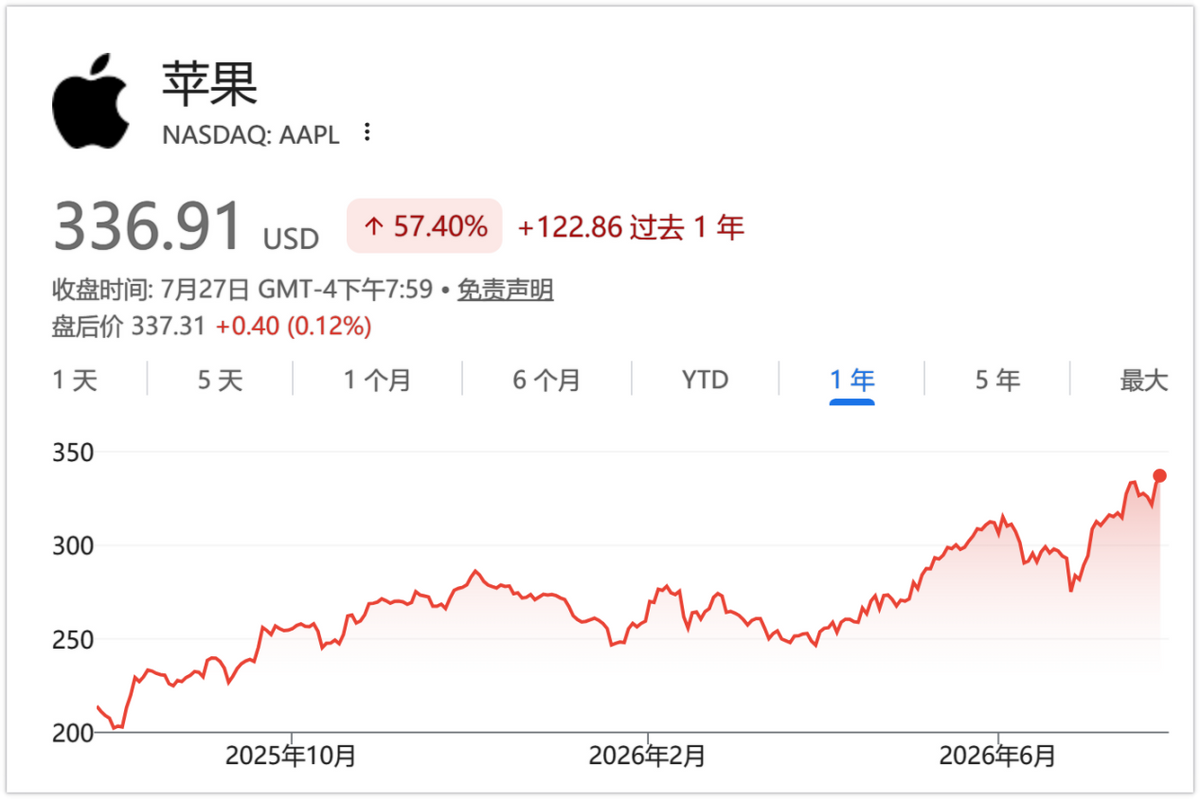
The immediate catalyst for this reversal is the market's persistent concern that AI investment returns may fall short of expectations. However, one detail that deserves attention is Apple's position.
As the king of devices, Apple is one of the brands that has reached the most consumers since the birth of intelligent products. Previously, due to the scarcity of "computing capacity" in the AI market, the market was accustomed to focusing on computing power and hardware companies on the production side, while the consumer side was overlooked.
However, since the beginning of this year, including Apple, many changes have taken place on the consumer side, with intelligent devices being one of the most important areas. This change suggests that the market may need to pay more attention to the psychological expectations of billions of consumers worldwide—they are not interested in nor do they have any deep understanding of so-called computing power, tokens, or open-source versus closed-source systems at the consumption level. However, if AI truly aims to revolutionize human life in a dominant way, focusing solely on the development of a small number of vertical software and functions at the B-end, G-end, or C-end is tantamount to selectively ignoring the prospects of intelligent AI devices.
Admittedly, the market could previously argue that the development of AI devices fell short of expectations. However, in 2026, the pace of strengthening the AI supply side has also begun to slow—not because model capabilities have stopped improving, but because the marginal returns on parameter scale are visibly declining. Meanwhile, the large-scale deployment of downstream applications has not materialized as expected. Customers who purchase API services show usage frequency, diffusion range, and willingness to pay that fall far short of the standards for a so-called new industrial revolution.
Industrial progress is not constrained by a year or two, but companies must achieve benefits ahead of social trends; otherwise, they risk falling behind.
This has created an awkward situation: upstream computing infrastructure investors and model manufacturers are doing their utmost to widen the pipeline, but downstream users—the true source of sustained paid AI-native services—have yet to turn on the tap. The industry suddenly realizes that the computing capacity built up during the past two years of rapid expansion could turn into a massive bubble if real demand outlets are not found.
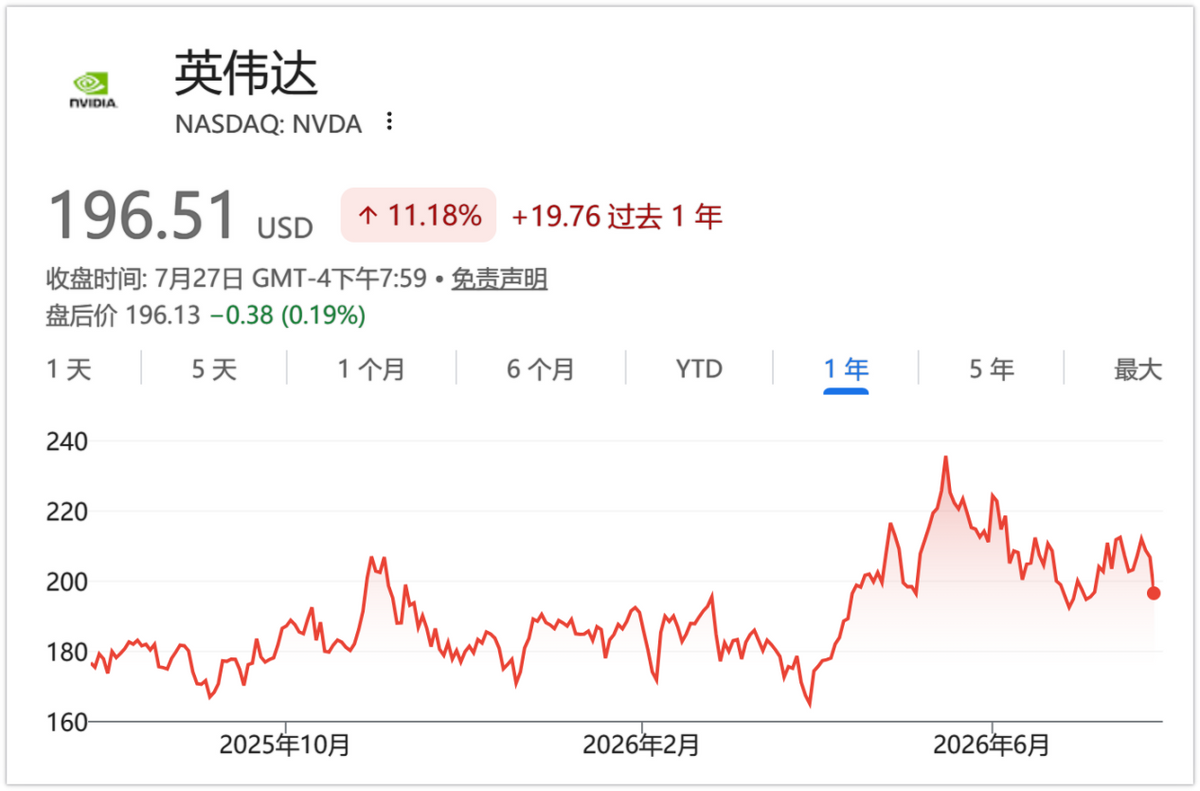
Apple's ascent to the top at this moment seems metaphorical. It reminds the entire market of one thing—no matter how powerful the model is, what ultimately reaches users is always a screen, a microphone, and a device. After the AI industry moves from the excitement of "what can it do" to the deep waters of "who will use it and how," those closest to users are regaining the power to define value distribution.
I. Why AI Cannot Bypass Devices
This is not simply a story of "Apple's good luck." The importance of devices to AI lies in the users themselves.
Cloud-based large models can answer any question, but they cannot answer "what do you need right now?" A user sprinting through Shanghai Pudong Airport to catch a flight has his phone aware of his location, his flight information stored in his calendar, and his health data showing his heart rate spiking from running. The cloud model has all the world's knowledge but does not know that what this specific person needs most at this second is not a sentence but an automatically popped-up boarding gate navigation. Real-time perception of personal context requires full interaction with the edge side.
Moreover, for any intelligent agent to truly act on behalf of users, it inevitably needs to remember users' preferences, habits, social relationships, and behavioral styles over the long term.
If this data circulates in the cloud, every invocation carries a risk of privacy exposure. The edge side allows sensitive data to remain on the device locally, with models performing local inference and only returning necessary, de-identified results to the cloud. This forms the basic infrastructure for building user trust in AI.
To date, most people, even if they do not understand the technical details, find it difficult to directly enable permissions like "allow reading all emails" or "allow access to real-time location" in the settings of cloud-based AI assistants. However, on their phone's system-level AI, these permissions can be granted cautiously and in context-specific scenarios.
Considering the diversity of these applications, there is growing consensus in the industry that not all tasks require the most powerful models. Simple intent recognition, message sorting, and photo classification—these high-frequency, low-complexity inference tasks can be completed faster, more cost-effectively, and more privately using small edge models than by invoking large cloud models.
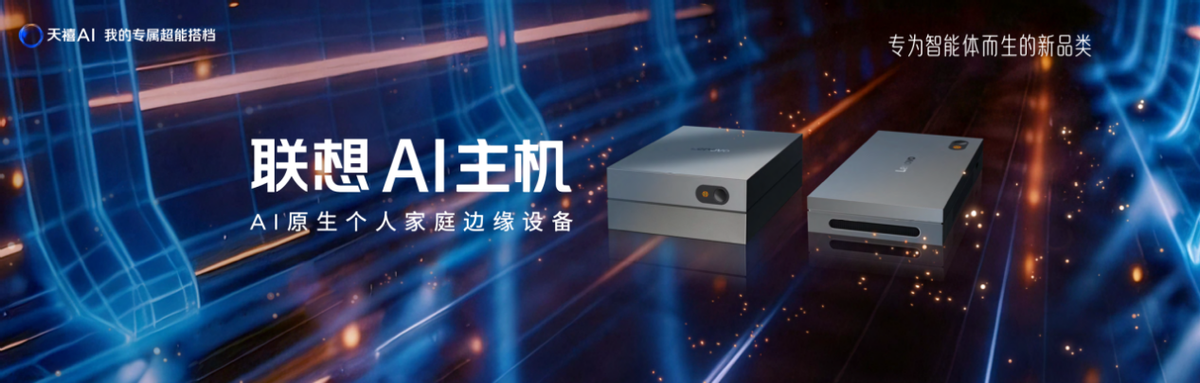
Lenovo Group has fully benefited from the AIPC trend this year. Its chairman, Yang Yuanqing, mentioned during an earnings call that the future goal is to hope that 80% of tokens can be processed on the edge or device side, with only 20% requiring cloud access. This is not just about cost but also about efficiency—the latency of edge inference is in milliseconds, while cloud inference requires network requests and server queuing, with latency gaps dramatically amplified in Agent scenarios requiring continuous interaction.
Qualcomm CEO Cristiano Amon has also judged that conversational AI may involve approximately 10,000 tokens per task, complex reasoning tasks up to about 100,000 tokens, and agent tasks may surge to the million-token level. When token consumption scales by orders of magnitude, keeping everything in the cloud poses severe challenges to both cost and efficiency for business models.
From a commercial perspective, cloud-based large models are inherently a scale-driven, winner-takes-all business because the convergence of model capabilities ultimately compresses differentiation space, and customer migration costs are extremely low. However, devices are carriers of hardware, and hardware inherently has a locking effect. When a user continuously uses the same intelligent agent on their phone for half a year, the agent accumulates a deep understanding of that person's habits, preferences, and social circle, making it difficult for the person to migrate to another agent—because the new agent would have to start from scratch.
The long-term usage data of users precipitate (chen di, meaning "accumulated") on the device constitutes the unique value of this intelligent agent. This locking effect is difficult to achieve in the cloud.
II. Operating Systems Are Becoming the New Main Battleground
The logic of the device competition is clear, but who can define the AI experience on devices remains unanswered.
Looking back at a series of events that occurred densely in July, we believe that operating systems are the current key competitive point:
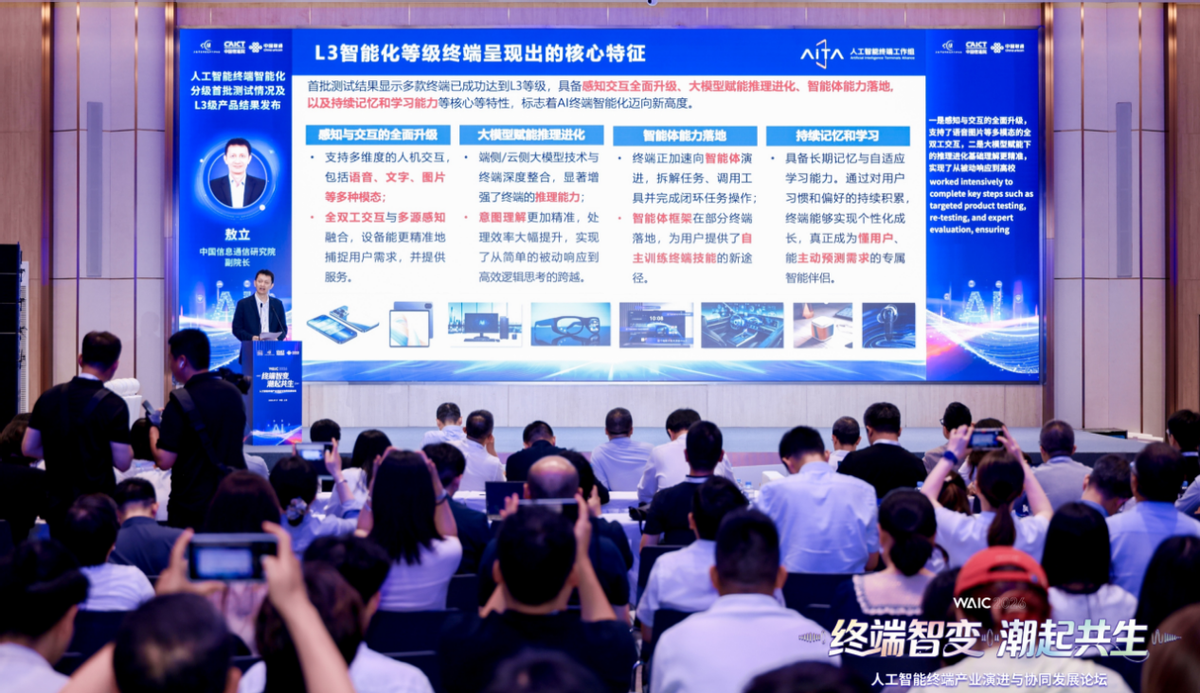
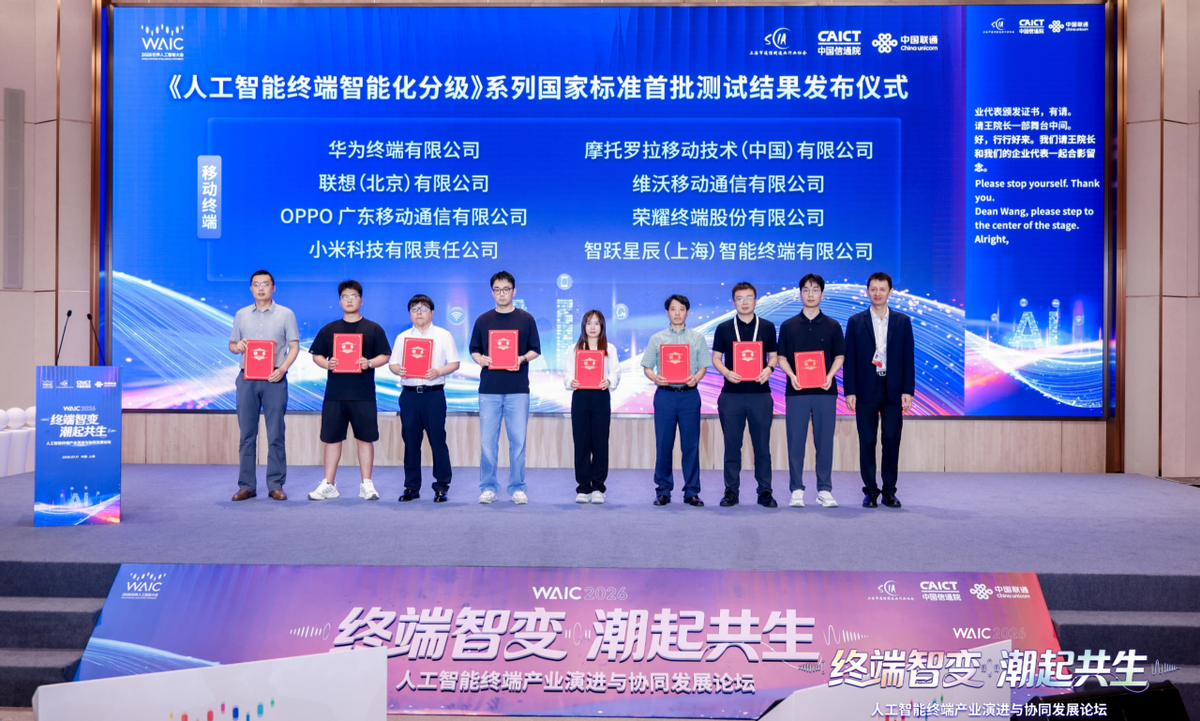
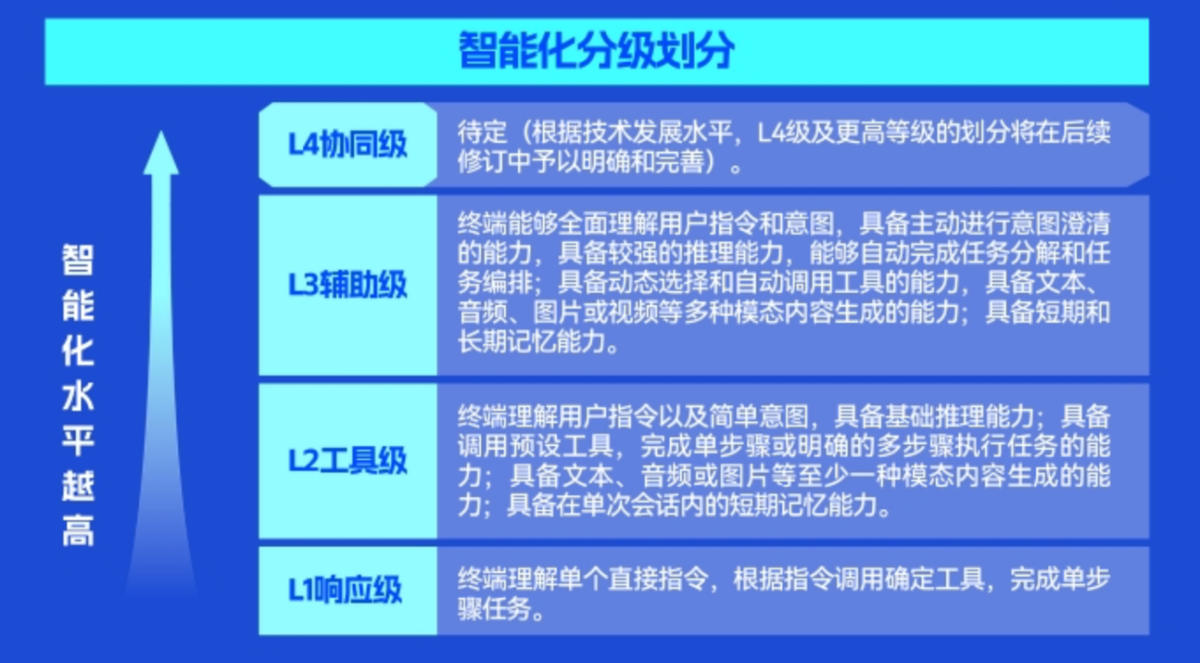
The Ministry of Industry and Information Technology (MIIT) released for the first time the test results of the national standard series "Grading of Intelligence for Artificial Intelligence Terminals," with 11 mobile phone models from Huawei, Xiaomi, OPPO, vivo, Honor, and others reaching L3 assistance level; the Cyberspace Administration of China (CAC) released for the first time the filing information of seven mobile phone edge-side generative AI services, including Apple, Huawei, Samsung, Honor, and Nubia.
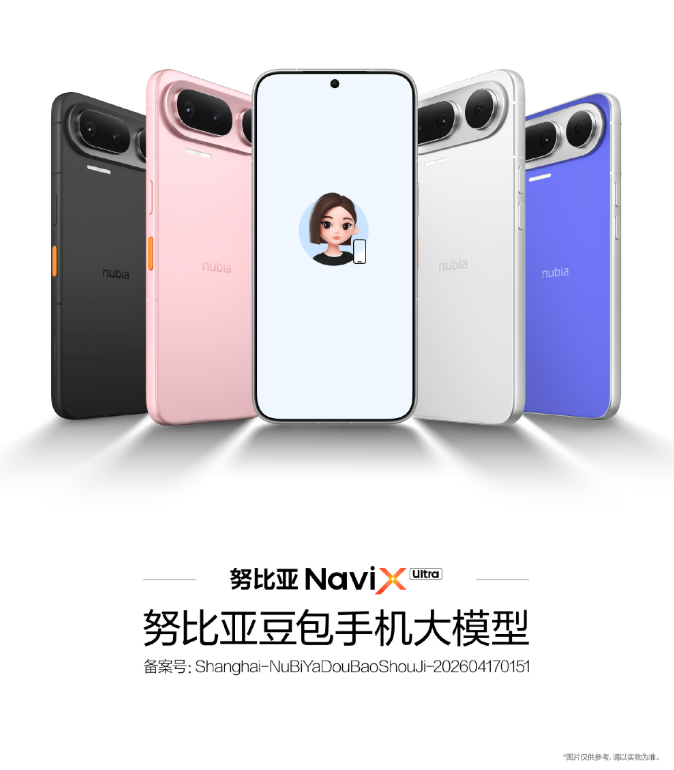
At WAIC, Jieyue Xingchen released Step AOS, an agent-native operating system. Honor announced its long-term partnership with Alibaba to jointly advance the next-generation terminal operating system, Agentic OS. Nubia, in collaboration with ByteDance's Doubao, showcased the second-generation AI agent phone, NaviX Ultra.
The convergence of these signals once again reveals factions in the AI device competition, with the core question for major enterprises being "who can define the operating system for the agent era."
Why operating systems? Because in the traditional smartphone era, the value of operating systems lay in defining the rules for application distribution. iOS and Android packaged applications into Apps, which users downloaded via app stores. Apps were isolated from each other, and the system layer was responsible for resource scheduling and security. This architecture worked well over the past decade, but it had a fundamental assumption—that the phone had only one active agent: the human.
When AI agents become the second active agent, they need system permissions to invoke data and services across applications, require long-term residence to understand user behavior and preferences, and need to run continuously in the background to proactively provide services at the right moment. Traditional operating systems were not designed with a "second agent" in mind regarding permission systems and scheduling logic. This has become the fundamental motivation for major manufacturers to intensively reconstruct operating systems this year:
Jieyue Xingchen's Step AOS elevates the agent to a system-level identity close to the user, uniformly scheduling CPU, GPU, and NPU, establishing cross-application semantic memory, and decomposing system capabilities into atomic services that agents can invoke. Honor's Agentic OS emphasizes a human-centric approach, enabling the system to proactively understand user intent and collaborate across devices. Huawei's HarmonyOS Agent-based reconstruction transforms the underlying stack across four dimensions: communication, interaction, data, and AI.
Their paths differ, but all aim to reshape interaction and information distribution in the AI era. And it is not just hardware manufacturers perceiving this trend.
At the end of last year, Doubao's first-generation mobile phone faced restrictions from WeChat, Taobao, and some banking Apps. The platform's instinctive reaction was to keep agents out.

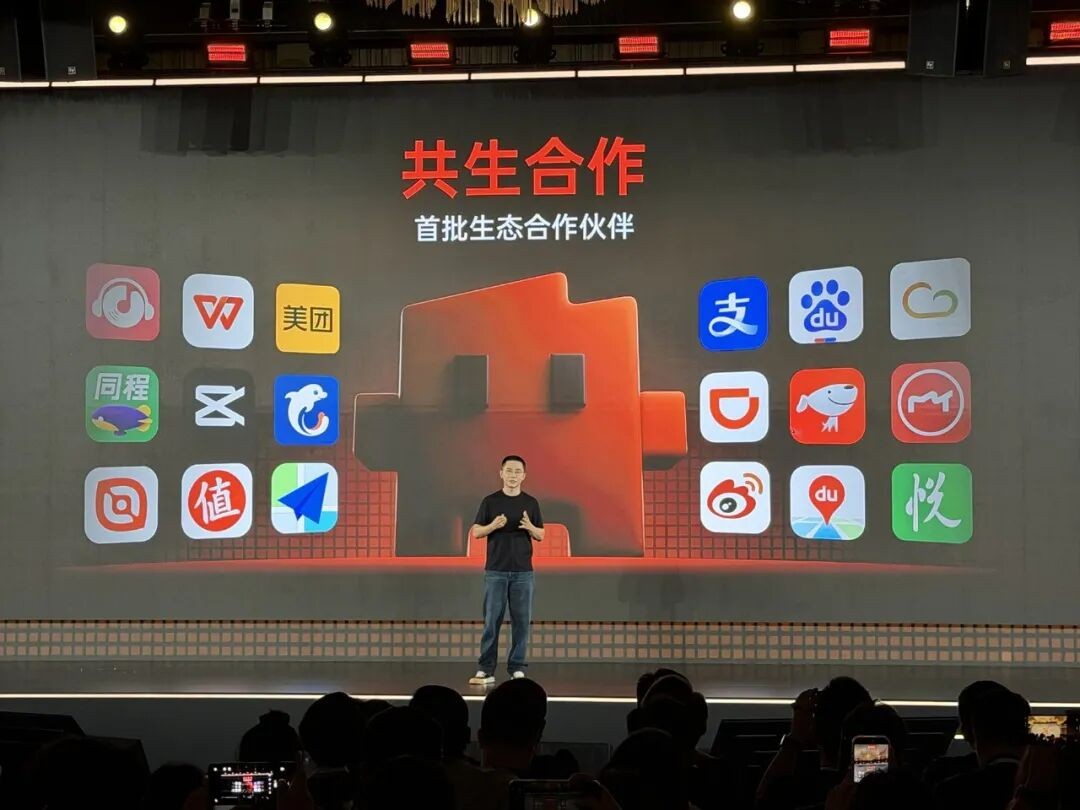
However, by July this year, Alipay announced a system-level collaboration with Jieyue Xingchen at WAIC, and WeChat was reported to be advancing the A2A protocol with multiple mobile phone manufacturers. Platforms are beginning to realize that if they continue to cling to closed ecosystems and do not support system-level agent protocols, their gateway status could truly be replaced in the agent era. Rather than passively defending, they might as well actively participate in rule-setting.
III. Potential Issues During the Concentrated Evolution Period
From the current stage, although AI phones are the most promising form of intelligent devices for widespread adoption, they are still constrained by the sluggish consumer electronics market.
IDC data shows that global smartphone shipments in the second quarter of 2026 reached 277.5 million units, down 6.7% year-on-year. Rising storage chip prices have put pressure on flagship phone costs, and consumer willingness to upgrade remains low. The industry desperately needs a story that can truly drive phone replacement demand. Currently, while the phone form factor incorporates AI agents, it is not yet a true AI device.
One issue is how to address the numerous non-standard scenarios and unexpected bugs in daily use. In stable demo environments, agents can smoothly complete cross-App tasks like booking flights, planning itineraries, and comparing prices for orders. However, in real-world scenarios, pop-up ads, network fluctuations, App version updates causing interface button position changes, and users changing their minds—any minor variable can disrupt the agent's task chain.
When task processes become complex to a certain degree, will users accept a failure rate of one in every two tasks? The answer should be no. Users' tolerance for errors on phones is far lower than that for chatbots.
The second issue remains security related to payments and privacy. Ni Fei, president of Nubia, summarized the capabilities of AI phones as "understanding, acting, remembering, and being secure." But what does "being secure" mean?
The new filing system requires edge-side models to complete filing before entering the system and being publicly commercialized. However, filing is just the starting point of the regulatory framework. When agents perform operations involving property security, such as payment orders, the boundaries of user confirmation, the integrity of auditing, and the reliability of withdrawal mechanisms all require more refined technical standards and industry consensus to support.
Finally, there is the issue of business models. If agents open fewer Apps for users, App launch ad and recommendation traffic revenue will decrease. If they prioritize Ctrip over Meituan when choosing hotels, the bidding logic among platforms will need to be redesigned. The interests involved are vast, and it is clearly impossible to resolve these issues with just a few AI hardware releases.
The industry eagerly awaits the arrival of an "iPhone moment." However, between the iPhone's stunning launch and its truly changing the daily habits of people worldwide, there was a gap of two to three years. Moreover, the iPhone later defined an entire Apple ecosystem. In the current AI field, no player yet wields such influence, and integration is still far off.
Going forward, the market will pay closer attention to the speed and depth of AI's penetration into real life. The ultimate outcome of the AI industry may never be a binary choice between "the cloud devours everything" or "devices dominate everything" but rather a deeper form of collaboration. The endpoint of technological revolution is always human life. A technology truly fulfills its mission not when it needs to be actively "used" but when it naturally fades into the background of daily life. And for AI, the starting point of this process is the screen in your pocket, quietly becoming a part of your life.
Source: Songguo Finance
-
![]()
139 Institutions Conduct Research as Robotec Promptly Secures a Major Order Worth 129 Million Yuan!
-
![]()
Zeiss Boosts Investment to Expand 25,000-sqm Optical Plant, Elevating Its Exclusive EUV Optical Manufacturing Capabilities!
-
![]()
SAIC’s Four Key Divisions See Leadership Overhaul: Lu Xiao Moves to Passenger Cars, Xu Ping Takes Charge of GM, Wu Yun Leads Volkswagen
-
![]()
Nearly a Year On, Traffickers Still Reap Tens of Thousands by Selling Zeekr 9X in Russia
-
![]()
Apple’s New Business Model: Pay $39 a Month, But at What Cost to Your Wallet?
-
![]()
Tencent Places Its Bets on WorkBuddy: The Next Frontier in AI-Driven Office Solutions, Vying for the Smart Gateway
-
![]()
Apple Reclaims Global Market Cap Crown: Is a Strong Device the True Path for AI?
-
![]()
Apple Regains Global Market Cap Leadership: Are Smart Devices the Future of AI?