Tencent Places Its Bets on WorkBuddy: The Next Frontier in AI-Driven Office Solutions, Vying for the Smart Gateway
 07/28 2026
 479
479
© New Game
Ma Huateng's 'Ambitious Project': Can WorkBuddy Capture the Next Gateway in AI-Powered Office Solutions?
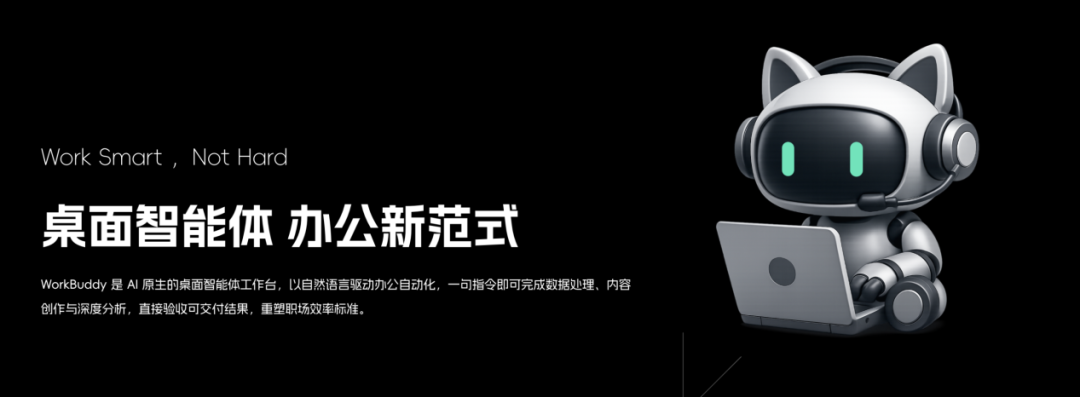
Today, Tencent's WorkBuddy desktop application officially debuted on Huawei's HarmonyOS PC App Market, marking its distinction as the first desktop office intelligent assistant on the HarmonyOS platform. This move also signifies Tencent's strategic expansion of AI products from mobile to desktop office environments.
Beyond the launch of the application, the strategic implications are even more significant.
Zhang Jun, Tencent's Director of Public Relations, disclosed that WorkBuddy has worked closely with the HarmonyOS expert team to ensure core capability adaptations, including system login, computer connectivity, skill invocation, and output preview. Leveraging the underlying architecture of HarmonyOS, it introduces the innovative 'Tap and Share' feature, which is not yet available on other mainstream systems, enabling seamless cross-device collaboration between phones and computers.
Numerous media outlets have reported that Ma Huateng places immense importance on WorkBuddy, 'virtually never missing a product meeting,' and the project is being pushed forward as an 'ambitious project' internally. This raises the question: What role does WorkBuddy play in Tencent's AI ecosystem?
From 'AI Tool' to 'Office Gateway'
Why is Tencent Making a Significant Investment in WorkBuddy?
WorkBuddy's introduction on HarmonyOS PC is viewed as a pivotal move in Tencent's AI strategy shift from the model layer to the application layer.
Over the past two years, the global tech industry has witnessed fierce competition centered around large models. From OpenAI's ChatGPT to Google Gemini, Microsoft Copilot, and domestic offerings like Tencent's Hunyuan, Alibaba's Tongyi, and Baidu's Wenxin, companies have initially focused on model capabilities—who possesses stronger reasoning, better generation, and lower costs.
However, as foundational model capabilities converge, industry competition has entered a new phase. More companies are realizing that the true commercial value lies not in the models themselves but in how they are integrated into real-world workflows.
In other words, in productivity scenarios, users may require more than just a 'chatty' AI—they need an intelligent assistant (Agent) capable of truly completing tasks.
Gartner, McKinsey, and other authoritative institutions have all highlighted in their 2025 reports that the global AI industry's keyword is shifting from 'large models' to 'AI Agents.' McKinsey's '2025 State of AI Report' even directly refers to this year as the 'Year of the Agent Turning Point.'
Microsoft positions Copilot as an AI assistant for every employee; OpenAI launches Agent products capable of autonomously executing complex tasks; Google continues to enhance AI office capabilities within Workspace; domestic platforms like Alibaba's DingTalk and Feishu also focus on Agents as their next competitive frontier.
Tencent's WorkBuddy was developed in this context.
Unlike traditional chatbots, WorkBuddy is no longer confined to Q&A but is evolving into a task executor. It can comprehend natural language instructions, autonomously plan task workflows, invoke different skills, process local files, and produce final results using ecosystem tools like Tencent Docs.
In fact, Tencent's product evolution pace clearly shows acceleration.
In March of this year, WorkBuddy officially released its PC version; on July 18, Tencent launched standalone apps for iOS, Android, and HarmonyOS, enabling users to remotely initiate tasks on their computers via mobile phones, facilitating cross-device office work; just a week later, the HarmonyOS PC version officially launched with system-level capability adaptations. The product update speed is noticeably faster than most of Tencent's past office products.
Behind this high-frequency iteration lies Tencent's significant resource investment in recent years. Observing Tencent's AI strategy in recent years reveals a clear shift in its strategic focus.
Reviewing Tencent's AI development path, around 2023, Tencent heavily focused on the Hunyuan large model, addressing the question of 'whether it has its own foundational model'; from 2024 to 2025, Tencent began embedding AI capabilities into products like Tencent Meeting, Tencent Docs, Enterprise WeChat, and Tencent Yuanbao, addressing whether 'AI can serve its existing ecosystem'; entering 2026, its strategic intent is interpreted by the industry as establishing an AI operation layer for Tencent's office ecosystem.
This change is crucial.
In the past, Tencent boasted a diverse array of office products, but they were mostly independent tools: Tencent Meeting handled communication, Tencent Docs facilitated collaboration, Enterprise WeChat connected organizations, and Tencent Cloud provided underlying computing power, each fulfilling its specific role.
In the era of intelligent agents, what is needed is a new gateway capable of understanding user intent, orchestrating multiple applications, and linking complete workflows.
For example, a user can simply input, 'Organize yesterday's meeting content and generate a PPT to send to the project team.' The intelligent assistant can then access meeting records, read document materials, organize content, generate a presentation, and share it via Enterprise WeChat or Tencent Docs. This capability is no longer confined to a single product but spans the entire office workflow.
In other words, WorkBuddy aims not to be a new office software but the 'AI operation layer' for Tencent's future office ecosystem.
This strategic positioning also explains why Tencent chose to launch first on HarmonyOS PC.
On one hand, HarmonyOS PC is still in its early ecosystem-building phase, and completing native adaptations early helps secure a new platform gateway; on the other hand, HarmonyOS emphasizes cross-device collaboration and system-level capability openness, which naturally aligns with the operating logic of intelligent agents. The newly introduced 'Tap and Share' feature is essentially a new interaction method resulting from the deep integration of AI and the operating system, not just adding a functional button.
For Tencent, WorkBuddy's importance may already surpass that of a single product. If Tencent successfully built a social ecosystem connecting people in the past, today, it likely hopes to build an AI ecosystem connecting people and work.
AI-Powered Office Solutions Move Toward the Agent Era
Where Does Tencent's Competitive Edge Lie?
If the past two years of large model competition focused on model capabilities, then as generative AI accelerates its implementation, this year's industry competition is gradually shifting to another question—who can truly help users complete tasks.
Behind this change is a shift in the commercialization logic of generative AI.
The initial wave of AI enthusiasm sparked by ChatGPT proved that large models possess strong understanding and generation capabilities, but enterprise users soon found that mere chat-based Q&A could not solve complex office needs. A task often involves multiple systems, various documents, and collaboration among different roles, making it difficult to complete the entire process through a single conversation.

Against this backdrop, intelligent agents (Agents) are becoming a key focus for global tech companies. Agents can not only understand user intent but also autonomously break down tasks, invoke tools, connect data, execute workflows, and continuously adjust based on feedback, ultimately completing a full work cycle.
Microsoft Copilot coordinates across Word, Excel, PowerPoint, Outlook, and Teams; Google continuously strengthens Gemini's capabilities within Workspace, integrating AI into emails, documents, spreadsheets, and meetings; OpenAI launches ChatGPT Agent with autonomous execution capabilities, hoping AI can directly complete complex tasks rather than just provide suggestions.
The domestic AI office market is also accelerating its evolution toward Agents.
Besides Tencent, Alibaba continues to strengthen intelligent office capabilities around DingTalk, Feishu deeply integrates AI with knowledge bases and collaborative office tools, and Baidu advances enterprise-level Agent applications within its Wenxin ecosystem... International Data Corporation (IDC) expects China's AI software market to maintain rapid growth in the coming years, with enterprise AI and intelligent agent applications becoming key growth drivers.
Large models are shifting from 'capability competition' to 'scenario competition.' The factors determining product value no longer lie solely in response quality but in whether they can more efficiently complete real-world tasks. The key to achieving this lies not in whether a model can 'answer one more sentence' than others but in whether it can truly integrate into users' workflows.
This is precisely one of Tencent's key advantages in AI office strategy.
For a long time, Tencent has not been as enterprise-software-centric as Microsoft or Salesforce in enterprise services, but after years of strategic布局 (layout), it has formed a digital product system covering the entire office workflow:
Enterprise WeChat connects organizational collaboration, Tencent Meeting handles audiovisual communication, Tencent Docs facilitates multi-person collaboration, Tencent Cloud provides computing power and data infrastructure, and Tencent's Hunyuan large model supplies intelligent capabilities. These products, originally independent, are now accelerating integration via WorkBuddy to form a unified intelligent office gateway.
More important than single-point capabilities is ecosystem synergy.
An employee's daily work does not occur within a single software but involves constant switching among meetings, documents, instant messaging, knowledge bases, emails, calendars, and other scenarios. The value of Agents lies in reducing this switching cost, enabling AI to understand task goals rather than requiring users to repeatedly tell different software 'what to do next.'
Tencent's years of accumulated office product matrix provides a foundation for cross-application collaboration by intelligent agents.
For example, within Tencent's ecosystem, meeting minutes, document content, team collaboration, and instant communication are already highly interconnected. Intelligent agents can more smoothly obtain authorized data, invoke existing capabilities, and complete tasks while ensuring user permissions and data security.
Compared to AI assistants that primarily rely on general models for answers, intelligent agents built on office ecosystems and authorized data can more deeply penetrate enterprise workflows and improve task execution efficiency.
On the other hand, Tencent's continuous investment in AI foundational capabilities in recent years also provides technical support for WorkBuddy.
After multiple iterations, the Hunyuan large model has continuously upgraded in text understanding, reasoning, and multimodal capabilities; Tencent Cloud continues to improve model training, inference, and enterprise deployment capabilities, offering private and hybrid deployment solutions for enterprise clients.
This means WorkBuddy not only serves individual office scenarios but also lays a technical foundation for Tencent to further expand into the enterprise-level AI office market.
Of course, the Agent track (track) is still in a rapid evolution phase, and the industry has not yet formed a final pattern (landscape). Whether it's Microsoft, Google, OpenAI, or domestic internet companies, all are still exploring the best product forms and business models for intelligent agents.
AI-powered office solutions still face significant challenges in achieving large-scale implementation.
On one hand, intelligent agents' execution accuracy, stability, and cross-application collaboration capabilities in complex tasks still need improvement, and true end-to-end automated office work remains some distance away; on the other hand, enterprise clients are more concerned about data security, permission management, privacy protection, and model controllability. Balancing efficiency improvements with security guarantees remains a key focus of industry competition.
Returning to WorkBuddy's launch on HarmonyOS PC, its significance may lie not just in a product launch but in reflecting the changing direction of AI office development.
It is foreseeable that future AI office competition will hinge not just on model capabilities but on ecosystem integration capabilities. Whoever can connect models, applications, data, and operating systems to build a secure, stable, and collaborative intelligent office closed loop (loop) will be more likely to gain an early advantage in the next phase of industrial competition.
-
![]()
139 Institutions Conduct Research as Robotec Promptly Secures a Major Order Worth 129 Million Yuan!
-
![]()
Zeiss Boosts Investment to Expand 25,000-sqm Optical Plant, Elevating Its Exclusive EUV Optical Manufacturing Capabilities!
-
![]()
SAIC’s Four Key Divisions See Leadership Overhaul: Lu Xiao Moves to Passenger Cars, Xu Ping Takes Charge of GM, Wu Yun Leads Volkswagen
-
![]()
Nearly a Year On, Traffickers Still Reap Tens of Thousands by Selling Zeekr 9X in Russia
-
![]()
Apple’s New Business Model: Pay $39 a Month, But at What Cost to Your Wallet?
-
![]()
Tencent Places Its Bets on WorkBuddy: The Next Frontier in AI-Driven Office Solutions, Vying for the Smart Gateway
-
![]()
Apple Reclaims Global Market Cap Crown: Is a Strong Device the True Path for AI?
-
![]()
Apple Regains Global Market Cap Leadership: Are Smart Devices the Future of AI?