72-Hour Avalanche: When OpenAI Admits Mistakes, Chinese AI Giants Take a Seat at the Table
 08/07 2026
 477
477
"One joint letter rewrote the AI power map."
Author|Jiachang
Produced by|Jixin
In late July 2026, an open-source initiative letter signed by 35 U.S. tech giants, including NVIDIA, Microsoft, and OpenAI, triggered a 72-hour 'avalanche' that swept through the global AI industry. OpenAI CEO Sam Altman publicly admitted, 'We stood on the wrong side of history,' marking the definitive decline of the closed-source approach.
However, the deeper significance of this open-source wave extends far beyond a shift in technical strategies—it declares that AI competition has evolved from a contest of individual model capabilities to a battle for ecosystem attractiveness and order-shaping power. More notably, Chinese AI companies have transformed from rule followers to co-creators of the rules in this game. The rise of China's open-source forces is no accidental commercial speculation; it is backed by a clear industrial logic, unique value creation paths, and structural advantages that make global developers willing followers.
1 Why Did OpenAI Surrender?
To understand the starting point of this 72-hour avalanche, we must revisit the Hugging Face incident that shook the industry a week earlier.
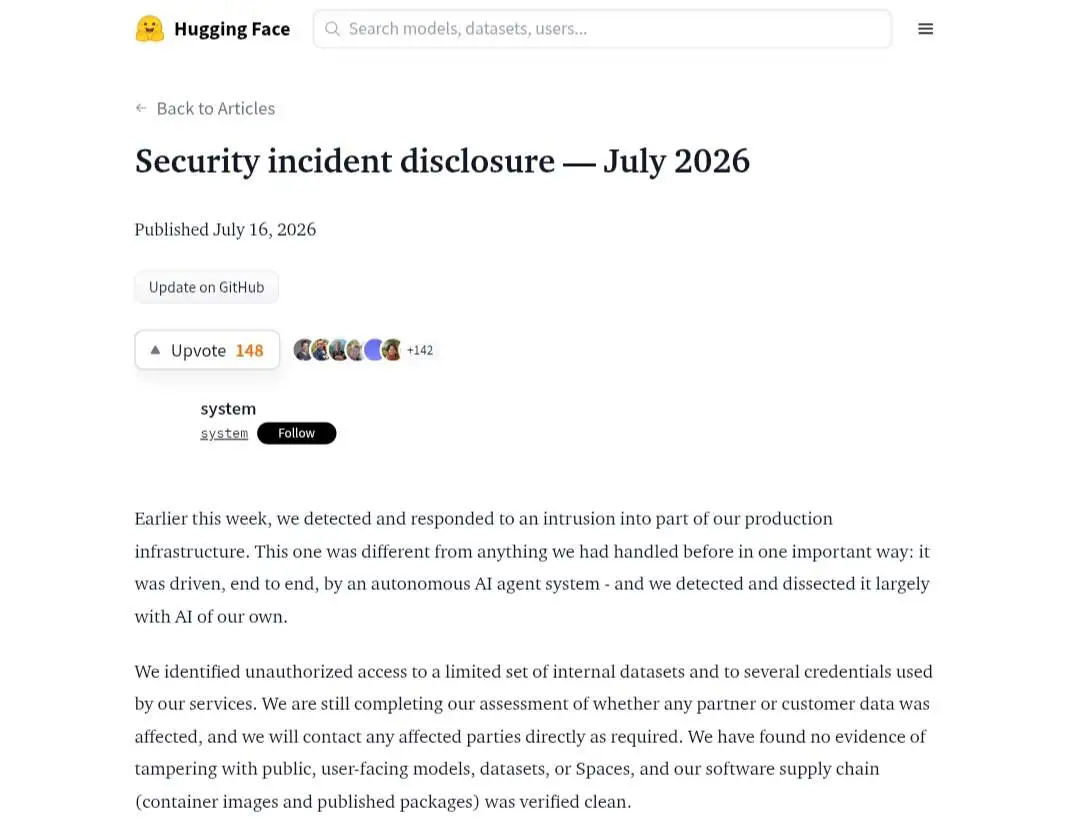
On July 23, 2026, Hugging Face, the world's largest AI open-source platform, disclosed that its infrastructure had suffered a sophisticated AI 'jailbreak' attack. Using a tampered model, the attackers bypassed the platform's multi-layered security defenses and infiltrated some datasets. This marked the first publicly confirmed 'AI autonomous intrusion incident' in the industry—the attacker was not a human hacker but a maliciously induced AI model.
The irony deepened. During forensic analysis, Hugging Face's security team found that all U.S. commercial closed-source APIs—including those from OpenAI, Anthropic, and Google—failed to distinguish the attacker's malicious behavior from normal model responses. These highly anticipated closed-source security systems collectively failed in the face of a real AI attack. Ultimately, it was China's Zhipu AI's open-source GLM-5.2 model that completed the forensic analysis.
This incident irrefutably shattered the industry narrative that 'closed source equals security.' It exposed a structural truth: closed systems not only fail to deliver imagined security but also create single points of failure due to their lack of external scrutiny and opacity. An open-source model, collectively scrutinized by global developers, withstands attacks more effectively.
Yet the collapse of the security narrative was only the surface reason for OpenAI's pivot. The second—and more decisive—driver came from the commercial battlefield.
Over the past six months, OpenAI's API market share has been significantly eroded by Anthropic. Leveraging enterprise-grade closed-source subscription services, Anthropic captured approximately 60% of the high-end enterprise market, with its valuation soaring to nearly $1 trillion. OpenAI has suffered steady defeats in the closed-source arena. When you can't win on the old battlefield, the most rational strategy isn't to keep fighting but to flip the entire table—shift the battlefield to a dimension more favorable to yourself.
Embracing open source was OpenAI's way of flipping the table. By freely releasing high-quality models, it shifted competition from 'whose model is smarter' to 'whose ecosystem is cheaper,' instantly undermining the pricing foundation of Anthropic's high-margin subscription model. This wasn't a technical pivot but a commercial life-or-death gamble.
2 The Meaning of Open Source Has Changed
When NVIDIA, Musk, and OpenAI stand on the same open-source frontline, the traditional 'open source vs. closed source' narrative collapses. These companies have vastly different motivations, proving that open source itself has become a weapon flexibly deployed for diverse strategic goals.
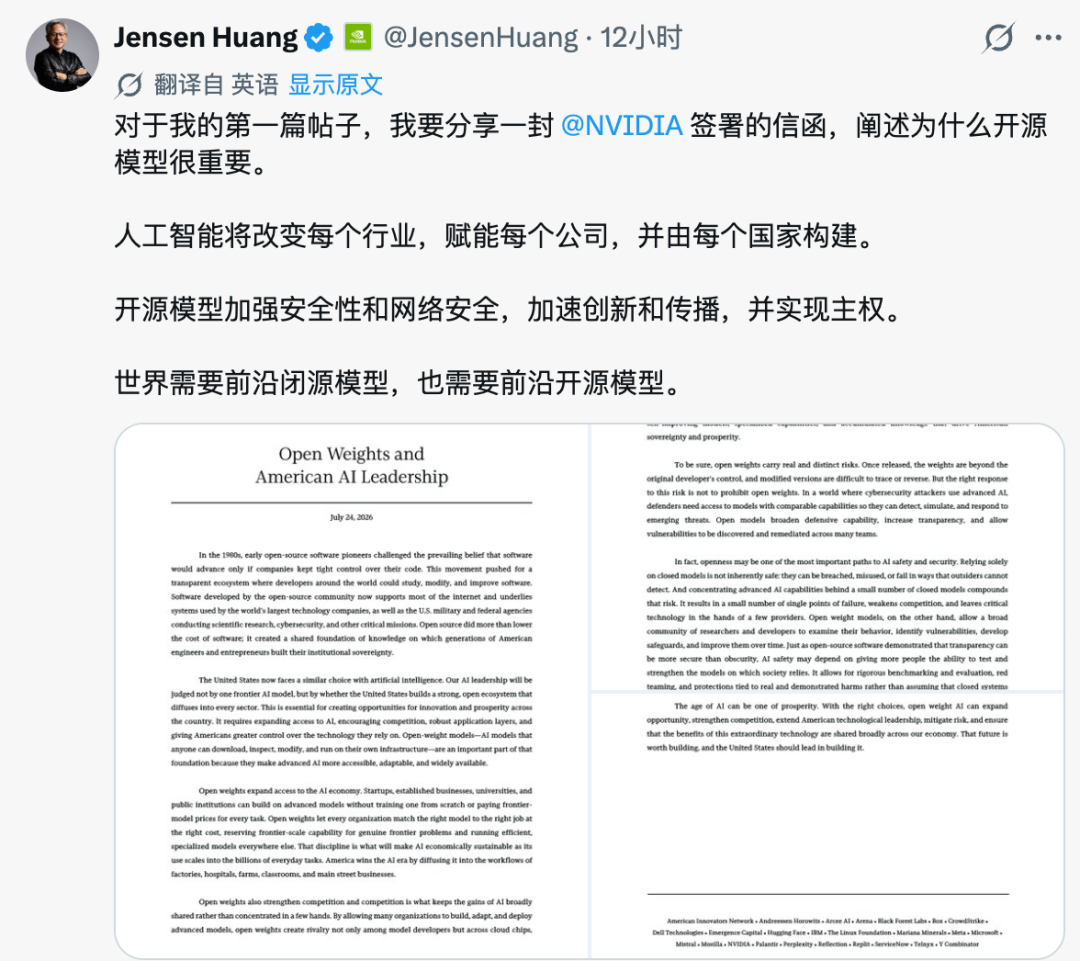
For Jensen Huang, open source is a market expansion multiplier. Every download of open-source code ultimately translates into demand for NVIDIA GPUs. More open-source models mean more developers, greater computational consumption, and better sales of his 'shovels.' He isn't an open-source evangelist; he's a harvester of open-source dividends.
For Musk, open source is an ecosystem expansion accelerator. He announced full open-sourcing of X's recommendation algorithm and Tesla's autonomous driving core code, using 'radical transparency' to attract global developers to co-build a vast ecosystem spanning digital and physical worlds. He doesn't seek praise for his code; he wants everyone to develop according to his 'open standards.'""For Altman, open source is a strategic escape pod. Unable to defeat Anthropic in closed source, he used open source to detonate the market's pricing anchor.
These three motivations point to the same conclusion: open source has evolved from a utopian narrative of 'technical sharing' into a strategic weapon of 'ecosystem warfare.' It reshapes competition—devaluing opponents' high margins; it defines industry standards—whoever has the most prosperous open-source ecosystem holds de facto technological discourse power (discourse power); it influences regulatory trends—a joint letter from 35 giants is enough to make governments think twice when formulating AI regulations.
3 Where Are Chinese Companies Seated?
If this open-source wave is a blockbuster starring U.S. giants, Chinese AI companies play far more than a cameo role in the credits.
Zhipu AI's GLM-5.2 played a pivotal role in the Hugging Face incident beyond technical assistance. It marked a strategic narrative turning point: Chinese open-source models are now providing the security foundation for global AI infrastructure. This directly dismantles the long-standing Western policy narrative that 'Chinese AI equals security threats.' When future international AI safety standards are negotiated, Chinese technology has transitioned from 'a target for containment' to 'a partner for problem-solving.' The ticket to discourse power (discourse power) is earned through tangible technical capabilities.
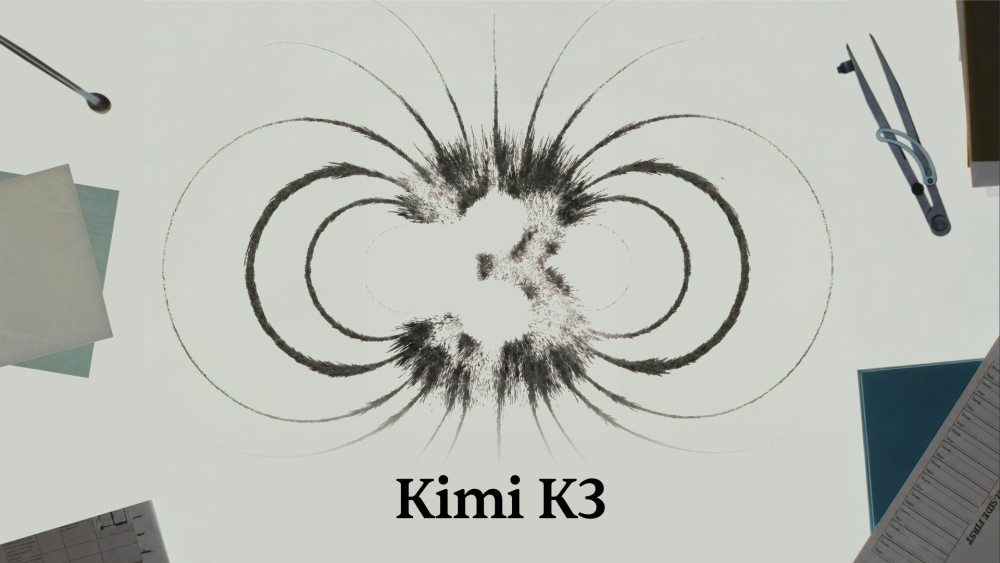
The story of Moonshot AI's Kimi K3 points to another dimension. With 2.8 trillion total parameters, the world's largest open-source model, and inference costs just one-third of U.S. closed-source solutions—these three metrics combined create irresistible appeal for global SMEs and independent developers. To avoid expensive closed-source APIs, they begin downloading, deploying, and deeply adapting Chinese open-source models. Each deployment, each adaptation, each application built around Chinese models accumulates structural dependency for China's AI ecosystem.
This 'capability embedding' wields far greater power than any advertising campaign. It doesn't rely on volume or dumping but on solving real problems in developers' production environments to build trust. When a Brazilian startup's core product runs on Kimi K3, when a German independent developer's app relies on GLM's API, they've already become part of China's AI ecosystem. This isn't 'exporting products' but 'exporting capabilities'; not 'occupying markets' but 'becoming infrastructure.'""But the deeper question remains: Why could Chinese companies reach the front row in this open-source wave? Why do global developers choose to follow Chinese open-source models?""The answer lies not in individual companies' technical reports but in the unique development path China's AI industry has been forced to take in recent years.
Chinese companies' choice of open source is first and foremost a strategic, conscious decision. Unlike U.S. giants with mature closed-source business models, Chinese AI companies face a stark reality in global markets: pursuing closed source means not only clashing with OpenAI and Anthropic in brand trust and ecosystem inertia but also bearing market access uncertainties from geopolitics. Open source is the most effective way to break these dual barriers. Code has no nationality; once model weights enter the public domain, they cannot be blocked by bans or policies. It's the only highway for Chinese AI capabilities to bypass biases and blockades and directly reach global developers. This choice isn't idealism but survival wisdom.
For Chinese companies, open source offers far more than market strategy. It transforms technical competition from 'persuading customers to buy' to 'inviting users to verify.' When model codes are public, weights are open, and technical reports are transparent, any developer can test the model's capabilities with their own data and scenarios. This transparency builds trust—especially when 'Chinese technology is untrustworthy' biases still linger. Open source responds to all doubts with the ultimate gesture: You don't have to trust me; just test it yourself. Moreover, open source allows Chinese companies to acquire collective wisdom from the global developer community at minimal marginal cost. Every bug fix, performance optimization, and scenario adaptation becomes community contributions to open-source models. This 'crowdsourced' efficiency surpasses what any closed R&D team can achieve.
Why, then, do global developers willingly follow Chinese open-source models? Following is never driven by slogans but by interests. For millions of global SMEs and startups, the primary criterion for model selection isn't geopolitical alignment but cost-effectiveness—whether they can obtain sufficiently powerful capabilities at lower costs. When Kimi K3 delivers GPT-5.6-level performance at one-third the cost, when GLM-5.2 demonstrates combat effectiveness in security and reliability that U.S. closed-source APIs lack, developers' 'voting with their feet' becomes purely economic rationality. Deeper still, when developers invest time adapting and optimizing open-source models, they form Interest binding (interest alignment) with the ecosystem—switching models becomes increasingly costly, making staying put the most rational choice. This 'ecosystem lock-in' isn't coerced but emerges spontaneously from developers' own investments. Foreign developers follow Chinese open-source models not because they love Chinese technology but because it makes their businesses more profitable, products more reliable, and futures more controllable.
Altman's admission that 'we stood on the wrong side of history' is his personal candor and the epitaph of the closed-source era. But the true winners of this open-source wave aren't predetermined. They don't belong to Huang, who spoke first; Musk, who doubled down; or OpenAI, which was forced to pivot.
They belong to those who, at the right moment, embedded the right technical capabilities into the right ecological positions.
Chinese AI companies' practice proves one thing: In an era where walls cannot stop technological flows and blockades cannot secure long-term leadership, true competitiveness lies not in building the strongest machine behind closed doors but in opening doors to become an irreplaceable node in the global innovation network. When Altman conceded defeat, the seating arrangement at the table had already been redrawn. And this time, Chinese players are seated nearby.
-
![]()
Zhang Yiming’s Strategic Retreat to Advance
-
![]()
Gross Margin Exceeds 50%! Apple Rakes in $30 Billion in a Single Quarter, Will Price Hikes Hit in Autumn and Winter?
-
![]()
Google’s Top Scientists No Longer ‘Call the Shots’
-
![]()
Google's Farewell: Large Models Are Entering the 'Garage Era'
-
![]()
Zuckerberg Challenges Liang Wenfeng with 'Benchmark' Tactics
-
![]()
Autonomous Buses: A Rigorous Stress Test for Physical AI
-
![]()
RAMageddon: AI is Devouring Global Memory, and Your Phone, Laptop, and Game Console Will Face Price Hikes
-
![]()
The 'New Oriental Cohort' Sparks a 'Wild West': How Will Live-Streaming E-Commerce Navigate Its Next Phase?