Zuckerberg Challenges Liang Wenfeng with 'Benchmark' Tactics
 08/07 2026
 572
572
▲ All images featured in this article are sourced from the internet. Should there be any copyright infringement, please contact us for removal.
The Bidding Model for Agent Programming
This article was initially published in Shadow Memo by Mo Yingsheng.
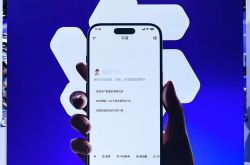
On August 5, Zuckerberg proudly unveiled Meta's inaugural programming AI agent, Muse Code, with an open beta version now available for download. The Muse Spark 1.2 model, which powers Muse Code, boasts an astonishingly low price point—just $4.25 per million output tokens. Should you be willing to contribute data to aid Meta in refining the model, the cost can plummet by more than tenfold.
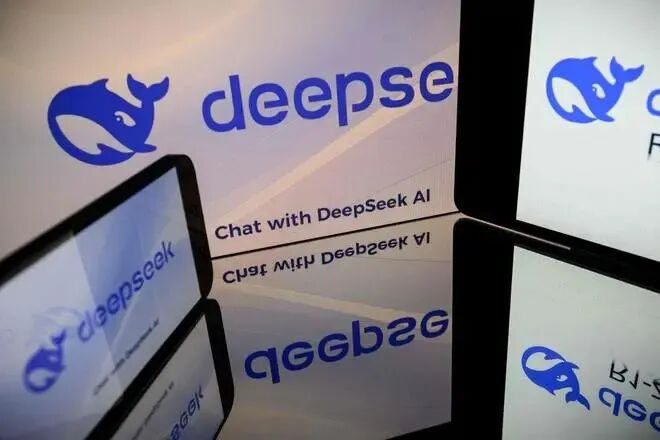
The very next day, DeepSeek made waves among developers by announcing a significant price hike for its API services in the near future.
One company is aggressively slashing prices to capture market share, while the other is quietly raising prices in preparation for a strategic battle.
Few would believe this is purely coincidental. The two models made their debuts in rapid succession, both honing in on long-duration agent tasks. Zuckerberg's move clearly aims to disrupt DeepSeek's rhythm.
However, the real intrigue lies not just in the timing but in the starkly contrasting approaches: one is driving prices down to the floor, while the other is raising them amid surging demand.
Several developer friends in my circle are discussing this. Some say Zuckerberg is poised to dominate the AI programming market, while others argue DeepSeek has overreached with its price hike.
Whether DeepSeek has overreached is debatable, but the situations and strategies of both companies warrant a closer examination.

What Exactly Is Muse Code?
Let's delve into Muse Code first.
This is no mere toy designed to complete a few lines of code. It operates within the terminal, installs with a single command, and once set up, it can perform remarkably—handling 'complete software engineering tasks' in large code repositories. From planning changes and writing code to verifying results, Muse Code covers the entire process.
For particularly complex tasks, it can even divide itself into multiple sub-agents, each working independently without interference, before merging the results back together.
Zuckerberg himself provided an example in a post, stating that during internal testing, Muse Code simultaneously built six independent features in a game project without any conflicts.
Six features developed in parallel without clashing—that's genuinely impressive.
But what truly excites developers isn't just the functionality—it's the price.
What does $4.25 per million output tokens mean? Let's compare: competitor GPT-5.6 Terra charges $12 for output, while Claude's top models are even more expensive. Muse Code's pricing is a fraction of its competitors'.
If developers opt for the contributor subscription—essentially allowing Meta to use your code data to improve the model—the price can drop to as low as $0.20 per million output tokens. For $0.20, you can't even buy a bottle of mineral water in Beijing.
Alexandr Wang, head of Meta's Superintelligence Lab, put it bluntly: 'The differentiating factor for Muse Code and the Muse Spark series is price, not capability.'
In simpler terms: I know my model might not be as smart as yours, but it's way cheaper.
This candid admission belies Zuckerberg's deeper anxieties. In 2026, Meta plans to invest $130 billion to $145 billion in AI infrastructure, nearly doubling the $72 billion spent in 2025.
But Wall Street is growing impatient. A week before Muse Code's release, Meta's stock dropped 10% due to a weak revenue outlook and a significant decline in free cash flow.
Investors keep asking Zuckerberg: With all this money being spent, when will we see returns?
Muse Code is one of Zuckerberg's answers—letting AI generate revenue, even if it starts with pennies.
His strategy is straightforward: use ultra-low prices to attract developers, subsidize market share, and once users are hooked on your toolchain, gradually raise prices.
Netflix employed this tactic, and Uber did too. But the problem is, switching costs in AI are far lower than in ride-hailing or streaming—migrating APIs essentially means changing a few lines of code.
Many see Muse Code as just a price war, but they overlook a crucial question: Why did Zuckerberg choose programming agents specifically?
After all, Meta's Llama series has always taken a 'general-purpose' approach in large models, with previous AI products focusing on consumer-facing scenarios like chat assistants and image generation.
Suddenly diving into the geeky realm of programming agents, going head-to-head with Claude Code and DeepSeek—this strategic intent deserves deeper scrutiny.
The answer may lie in two numbers.
The first is developers' willingness to pay. Among all AI industry segments, programmers are the most willing to pay for productivity tools—by a wide margin.
Asking average users to pay $20 monthly for a ChatGPT subscription makes many hesitate. But ask an engineer to pay $50 monthly for an agent that handles tedious tasks, and they won't blink.
Moreover, developers naturally amplify the spread of great programming tools in tech communities, with extremely efficient word-of-mouth promotion.
The second number is Meta's own predicament. Zuckerberg has spent hundreds of billions on computing power, chip stockpiling, and model training but hasn't found a product form that allows AI to sustain itself financially.
Llama, being open-source and free, primarily attracts research institutions and academia, with a commercialization path that's too long.
Programming agents are different—API calls are metered, and every line of code generated produces revenue. This is a commercialization path as clear as day.
Simply put, Zuckerberg chose programming agents to find the AI scenario 'closest to money.'
Muse Code's mission isn't to become the smartest programming model but to become the first product that lets Meta's AI business see actual revenue.

What's Behind DeepSeek's Price Hike?
Now, let's turn our attention to DeepSeek.
After announcing the price hike on August 6, the developer community erupted. Some called it 'the butcher sharpening his knife,' while others dug up old news: DeepSeek had just made its V4-Pro's 25% discount permanent in May, only to reverse course less than a quarter later—too quick a turnaround.
But if you examine DeepSeek's moves over the past six months, the price hike was predictable.
In mid-July, DeepSeek introduced peak-valley pricing, doubling API prices during weekday peak hours (9 AM-12 PM and 2 PM-6 PM) compared to off-peak times.
Goldman Sachs issued a research note, stating this reflected sustained domestic AI model demand, tightening computing resources, and the industry shifting from price wars to rational pricing.
Simply put: demand is too high, and servers can't keep up.
By early August, peak-valley pricing wasn't enough, so DeepSeek raised prices overall. The core reason is straightforward: DeepSeek's models are genuinely good, developers rely on them, usage soars, and computing costs follow suit.
Unlike Meta's hundred-billion-dollar capital expenditure budget, DeepSeek had to raise prices to maintain service quality.
But there's a deeper layer: Liang Wenfeng's strategic choices.
In late July, Liang held a four-hour closed-door meeting with investors—quite lengthy for a founder. Many of his remarks, viewed alongside the price hike, carry significant weight.
He made an interesting point: 'Restraint is a strategy—sometimes you sacrifice some things to gain others.'
What kind of restraint? Liang listed several areas DeepSeek avoids: 3D generation, video generation, world models, chasing user numbers, or aiming to become the next super app.
DeepSeek concentrates all resources on one path: the technological mainline toward AGI (Artificial General Intelligence).
Given DeepSeek's current influence and technical reserves, it could easily raise funds for video or multimodal applications if it wanted to.
But Liang chose to put all eggs in one basket—the farthest, hardest, and most uncertain one.
His exact words: 'Now isn't the time to maximize product returns. When you stand at a technological high ground and develop lower-level technologies, it's a dimensionality reduction. Products are byproducts on the path to AGI.'
In plain terms: If I achieve AGI, products will follow effortlessly. But if I divert energy for quick profits and fail to reach AGI, that's the real loss.
Regarding pricing, Liang's principle is 'reasonable profit, not profit maximization.'
He revealed DeepSeek's API pricing aims to recover costs in about 10 months, unlike peers who price at 'the highest the market can bear.'
Note he said 'recover costs,' not 'capture market' or 'subsidize for share.'
This diverges sharply from Zuckerberg's logic. Zuckerberg focuses on price wars to capture market share and make AI self-sustaining. Liang focuses on pouring limited resources into AGI technology, with commercialization secondary. The price hike reflects demand exceeding supply capacity, not an attempt to harvest profits.

Two Logics, One Offense, One Defense
Viewing both companies together makes the differences starker.
What does Zuckerberg have? Hundreds of billions in capital expenditure, the world's largest social user ecosystem, and a history of advertising-funded operations. His strategy is to build a price barrier with money—you price high, I undercut you by three-quarters; you can't match subsidies, I push you out.
This is a classic 'internet playbook': burn money to capture market, then monetize after achieving monopoly. It worked in ride-hailing, food delivery, and e-commerce.
But this playbook has a fatal flaw in AI. Switching costs for ride-hailing apps are high—you won't install a new app for a $2 discount. But API migration costs? Just change a few lines of code. If DeepSeek's model clearly outperforms Muse Code in programming, will developers sacrifice code quality for a $1 difference?
No. Programmers are the least willing to compromise on tool quality.
What does Liang have? A model widely recognized by developers, an AGI-focused R&D system, and a patience for delayed commercialization.
His strategy is to concentrate all resources on 'making models smarter,' avoiding diversification, and ignoring short-term commercial returns.
As Liang put it: 'The time for us to fully shift to commercialization should be very far off.'
This confidence stems from DeepSeek not needing AI to sustain itself yet. It has stable financing and technical accumulation, no immediate need to show investors a pretty profit sheet.
Meanwhile, Wall Street is pressuring Meta.
One attacks: using price wars to seize territory, barging into rivals' strongholds.
One defends: deepening moats to keep rivals from catching up technologically.
The attacker brings money and anxiety; the defender brings technology and patience.

Whose Anxiety Is Greater?
One background detail completes this story.
DeepSeek is also developing programming agents. In May, it formed the Harness team to compete with Claude Code in this space, with products reportedly in active development (internal codename: DeepSeek Code).
Liang explicitly stated at the closed-door meeting that coding agents are the top priority for current investment.
In other words, Muse Code is entering a track where DeepSeek has already set up defenses and is preparing counterattacks.
More interesting are the product positioning differences. Muse Code pursues 'full-process automation'—you give it a task, and it plans, executes, and verifies everything independently.
DeepSeek's programming tools, according to internal sources, emphasize 'human-AI collaboration'—AI executes, humans decide, working together to advance.
Which approach is better? Hard to say. Full automation saves effort but may stray with complex logic. Human-AI collaboration ensures precision but demands more developer input.
Each has suitable scenarios and target users.
But one thing is certain: the clash between these two companies in this track has just begun.
In AI, whose anxiety is greater?
On the surface, DeepSeek seems anxious. A competitor with a budget several times larger charges a fraction of your price and barges into your main field—anyone would feel tense.
However, on a deeper level, the truly anxious one might be Zuckerberg.
Meta has invested an enormous amount in AI. With capital expenditures in the hundreds of billions of dollars, a global scramble for GPUs, and exponentially expanding computing clusters, all of this is testing the patience of shareholders.
If Muse Code fails to deliver sufficiently impressive data in a short period, such as user numbers, usage volume, retention rates, etc., then Zuckerberg will face increasing pressure from investors.
In contrast, DeepSeek's price hikes are due to supply falling short of demand and insufficient computing power. This kind of 'sweet trouble' is something many AI companies can only dream of.
When a product needs to rely on price increases to regulate demand, it indicates that it has established irreplaceable value in the minds of users. What does it mean to succeed? This is it.
To put it bluntly, Zuckerberg is buying time today, using subsidies to gain market share and prices to acquire users, so that the AI business can generate revenue quickly and silence Wall Street.
Liang Wenfeng, on the other hand, is betting on tomorrow's technology by forgoing today's profits in exchange for a higher probability of achieving AGI. If he truly succeeds, today's price war will be insignificant.

In Conclusion
As the adage has it, "there's no such thing as a free lunch." Yet, in the realm of the AI race, a more fitting adaptation might be, "what comes cheap may prove the least dependable."
Consider this scenario: you're utilizing Muse Code at a bargain price of $4.25, convinced you've struck a great deal.
However, if Muse Code consistently lags behind DeepSeek in terms of capabilities, if its performance ceiling remains perpetually lower than that of its rivals, then the meager savings you've made come at the expense of code quality.
For product creators, this is far from a favorable exchange.
Naturally, this is predicated on the assumption that DeepSeek can sustain its technological edge. This is the most formidable challenge for all competitors, as while prices can be matched, intelligence remains an unparalleled asset.
Two companies, two distinct strategies. One is reaping the benefits of users today, while the other is planting the seeds for tomorrow's technological advancements.
Identifying short-term winners and losers is relatively straightforward, but predicting long-term outcomes remains a gamble.
In the AI race, lavish spending has never been a sustainable competitive advantage. The true differentiator lies in possessing a more intelligent model than the rest.
And no amount of financial investment can guarantee that. It hinges on time, dedication, restraint, and a dash of luck in making the right strategic choices.
-
![]()
Wang Huiwen, Former Meituan Executive, Achieves 20-Fold ROI, Supports 24 AI Startups
-
![]()
Another AI Computing Power Unicorn Launches IPO! Founded by a Changjiang Scholar
-
![]()
OFILM Holdings Secures Zhongke Daojing, Marking a Significant Leap in the Optical Communication Industry!
-
What Will Be the Next Key Battleground for Large Models After AI Coding?
-
![]()
Leapmotor's Sales Soar, Yet Hidden Concerns Loom
-
![]()
China’s Action Camera Market Soars: 3.12 Million Units Sold in Six Months, DJI Secures 74% Dominance
-
![]()
Zhang Yiming: Strategic Retreat as a Path Forward
-
![]()
Exploring Charging for Some Features of QianWen App: Can It Follow the Path of Doubao?