Autonomous Buses: A Rigorous Stress Test for Physical AI
 08/07 2026
 466
466
In the past two years, the term "Physical AI" has increasingly gained prominence in robotics, autonomous driving, and intelligent manufacturing.
NVIDIA characterizes it as intelligent systems capable of real-world operation. Jensen Huang envisions robots, autonomous vehicles, and smart factories evolving along a shared technological trajectory. Fei-Fei Li's emphasis on "spatial intelligence" adds a critical layer—AI must not only perceive objects but also comprehend their three-dimensional spatial relationships. Yann LeCun has long advocated for world model research, arguing that advanced machine intelligence requires internal representations of real-world dynamics, enabling it to predict environmental changes before taking action.
Despite their differences, these concepts collectively form a technological framework for Physical AI: perceive reality, understand spatial contexts, predict outcomes, and execute actions.
Autonomous driving brings this framework to life. Model outputs are no longer confined to text or images but manifest as the real-time movement of a multi-ton vehicle.
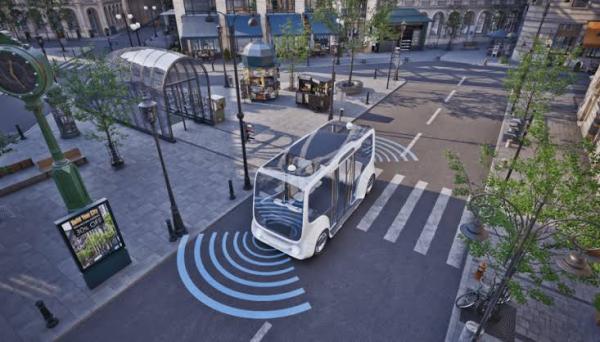
Autonomous buses introduce additional layers of complexity. While robotic arms can perform a single grasp, robotaxis can complete point-to-point trips, and robotrucks can transport goods, autonomous buses must operate daily on fixed routes.
They must navigate not only roads but also schedules, stops, passenger services, and public regulations. Thus, autonomous buses serve as a tangible example for observing how Physical AI integrates into public transport systems while acting as a rigorous stress test in real-world public transit scenarios.
1. Physical AI Has Tangible Costs
Large language models can correct errors upon re-questioning; image models can retry failed generations. Autonomous driving, however, lacks such flexibility. Misidentifying a pedestrian, misjudging an intersection, or braking at the wrong time can have immediate and severe real-world consequences. Actions taken by Physical AI carry inherent costs and are often irreversible.
This places autonomous driving under scrutiny across multiple capabilities. Vehicles must first perceive their surroundings—roads, vehicles, pedestrians, and traffic lights—then understand the spatial relationships among these objects. Next, they predict pedestrian movements, lane changes, and traffic conditions after turns. Finally, they translate these judgments into steering, braking, and acceleration.
However, "correct action" is not a static concept. Gradual braking far from an obstacle differs from emergency braking near it—both may avoid collisions, but only the former qualifies as smooth driving; the latter merely prevents accidents.
Autonomous buses amplify this distinction.
Robotaxis typically carry few passengers, all seated. Buses, however, may have standing or moving passengers, including the elderly, children, and wheelchair users. An emergency stop to avoid a collision could still cause passenger falls. Thus, autonomous buses must balance safety with acceleration, deceleration, and turning smoothness. They must decelerate preemptively based on obstructions, intersections, and pedestrian movements before risks fully emerge. Here, world models play a crucial role in preventing accidents and absorbing risks into imperceptible driving actions.
Robotrucks also embody Physical AI but with focused, simpler goals: reduce ton-kilometer costs in cargo transport and improve vehicle utilization and efficiency.
Autonomous buses face a different set of challenges. They must consider cost per passenger-kilometer, punctuality, route coverage, accessibility, and public safety. Cargo rarely requests stops or struggles to board due to platform distance. Robotrucks turn AI into transport efficiency; autonomous buses test whether AI can become a reliable public service.
2. After Learning to Drive, AI Must Learn Public Transit
Autonomous technology most visibly demonstrates steering wheel turns. Public transit systems, however, prioritize something else: Will this bus leave on time tomorrow morning?
At 3:30 AM on April 16, 2026, Seoul's A148 autonomous morning bus commenced operations. Covering 22.1 kilometers from Sanggi Station to Express Bus Terminal, it runs on weekdays, departing 30 minutes earlier than regular buses.
Prior to A148, Seoul launched two morning autonomous routes, A160 and A741, which had served approximately 29,500 passengers by A148's debut. These buses address real commuting needs before regular services start.
Once integrated into schedules, vehicles must adhere to public transit rhythms—leaving on time, reaching stops, and continuing to the next trip. When faults occur, dispatch centers must assess whether the bus can continue, exit the route, or identify a replacement.
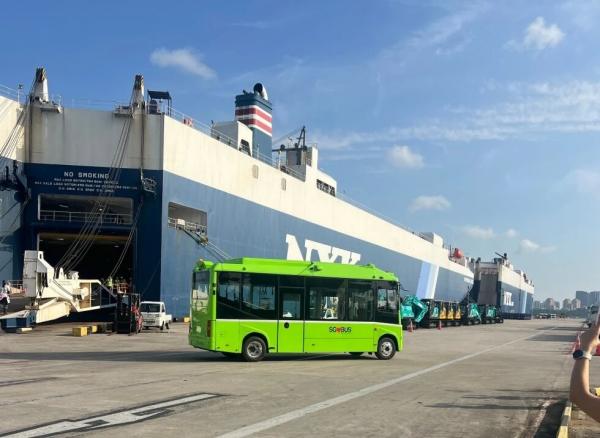
Public transit prioritizes the stable repetition of tasks. Singapore's autonomous public bus project further illustrates this. The Land Transport Authority (LTA) plans to integrate Mushroom Car Connection's (MOGOBUS) autonomous buses into traditional routes, operating alongside conventional buses under unified regulation.
Vehicles cannot receive laxer standards for being autonomous. According to the project team, Singaporean buses involve habits like hailing rides and pressing bells to alight. Autonomous systems must distinguish genuine hailing from phone use, hair grooming, or waving to others.
This goes beyond simple object recognition. Vehicles must infer intent by combining waiter position, body orientation, action duration, and vehicle status. What human drivers judge instinctively requires perception, spatial understanding, and behavioral prediction for AI.
Autonomous buses concretize Fei-Fei Li's "spatial intelligence," which emphasizes understanding three-dimensional spaces, objects, and action consequences. Her "World Labs" project aims to enable models to perceive, generate, reason, and interact with the 3D world.
Autonomous buses must grasp 3D relationships among vehicles, stops, doors, and passengers to execute driving, turning, and stopping. Precise docking results from continuous perception, reasoning, and control over the final several tens of meters.
For passengers, technical concepts like Physical AI matter little—they notice only whether the bus stops steadily, doors align with platforms, and wheelchairs board smoothly.
This represents the second layer of stress testing for Physical AI in real-world public transit: perception, prediction, and control determine driving ability; schedules, stops, and passengers determine whether it functions as public transit.
3. Physical AI in Cities Must Enter Institutional Frameworks
Physical AI emphasizes autonomous machine action. Public transit first asks whether such actions can be managed.
On June 24, 2026, Tampere, Finland's Route 301 autonomous bus removed its in-cabin safety driver while continuing regular fare-based operations. Connecting residential areas with Tram Line 3, it operates under continuous remote monitoring. Passengers can request help via in-vehicle systems, and remote operators can intervene if needed.
Humans left the driver's seat but not the operational system. The driver's role split: autonomous systems handle regular driving, remote operators manage anomalies, customer service responds to passengers, maintenance teams ensure vehicle and sensor health, and dispatch centers manage schedules and capacity.
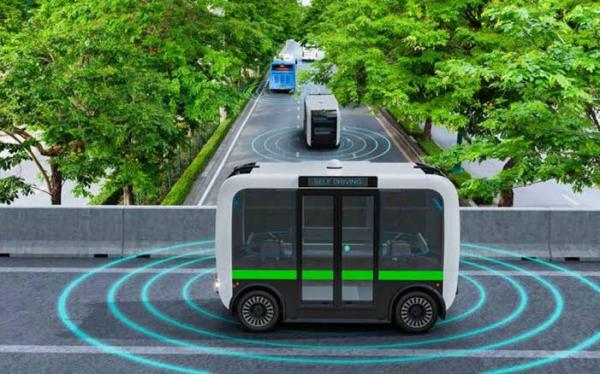
This spawns new industry roles. In July 2026, German mobility provider CleverSolutions launched CleverSolutions Autonomous. It neither builds vehicles nor develops autonomous systems but manages fleets, control centers, remote operations, emergency responses, and customer service for transport authorities and bus operators. Investors include two traditional German passenger transport firms.
Previously, the autonomous driving industry debated vehicle manufacturing and algorithm development. As vehicles prepare for daily operations, questions shift: Who keeps them running daily? Who handles anomalies? Who manages schedules?
Regulatory frameworks must adapt accordingly.
Singapore employs phased evaluations for real-world autonomous projects. Beyond closed-course M1 testing, vehicles undergo site demonstrations, operational document reviews, remote operation assessments, and deployment readiness evaluations based on real-road data. Regulation extends from vehicles to operational processes, remote control, and fault handling.
This indicates that Physical AI, in autonomous bus form, requires more than better models to enter public spaces. Vehicle actions must be recordable, remote intervention possible, system failures must have clear exit protocols, and accountability must be traceable post-accident.
For autonomous buses, meaningful metrics shift from autonomous mileage to remote staff per vehicle, average intervention frequency, post-fault recovery time, daily trip counts, and full lifecycle cost per kilometer. Thus, autonomous buses represent a stress test for Physical AI rather than proof of its successful urban integration.
Autonomous driving proves AI can act in the physical world. Autonomous buses pose the next question: Can such actions be sustainably, stably, and cost-effectively applied to public services?
-
![]()
Wang Huiwen, Former Meituan Executive, Achieves 20-Fold ROI, Supports 24 AI Startups
-
![]()
Another AI Computing Power Unicorn Launches IPO! Founded by a Changjiang Scholar
-
![]()
OFILM Holdings Secures Zhongke Daojing, Marking a Significant Leap in the Optical Communication Industry!
-
What Will Be the Next Key Battleground for Large Models After AI Coding?
-
![]()
Leapmotor's Sales Soar, Yet Hidden Concerns Loom
-
![]()
China’s Action Camera Market Soars: 3.12 Million Units Sold in Six Months, DJI Secures 74% Dominance
-
![]()
Zhang Yiming: Strategic Retreat as a Path Forward
-
![]()
Exploring Charging for Some Features of QianWen App: Can It Follow the Path of Doubao?