RAMageddon: AI is Devouring Global Memory, and Your Phone, Laptop, and Game Console Will Face Price Hikes
 08/07 2026
 374
374
Global memory prices have skyrocketed several times due to AI companies' frenzied buying spree, affecting phones, laptops, game consoles, and routers. Samsung, SK Hynix, and Micron almost monopolize the supply and prioritize AI.
You may have vaguely sensed it: memory prices are outrageously high. According to The Verge, driven by AI companies' Crazy procurement (frenzied purchasing), RAM prices have risen three, four, or even six times, depending on the chip type. More critically, there is no sign of this surge stopping—and its impact extends far beyond the few memory sticks you buy when building a PC.
Many might think, 'I don't build my own PC or buy memory sticks, so what does this have to do with me?' It has a lot to do with you. Today, almost all devices with 'computer' in their name rely on RAM for short-term memory: the phone you want to upgrade, the game console you covet, the laptop you can't live without, and even the router you rent or buy from your carrier. By 2026, all these devices will face shortages, price hikes, or both. Even if you don't plan to buy new devices soon, the businesses and services you rely on are paying higher costs to upgrade their equipment.
Three Companies Almost Decide the World's RAM Supply
The root of the problem lies in the highly concentrated supply. About 95% of the world's RAM comes from three giants: Samsung, SK Hynix, and Micron. In the AI-driven computing arms race, their production capacity is prioritized—almost exclusively—for lucrative, high-demand AI clients. When AI data centers are willing to pay a higher premium for every GB of memory, the capacity left for consumer electronics is naturally squeezed—this is not a conspiracy but a cold, hard result of capacity allocation.
Furthermore, AI itself is a 'memory-hungry machine.' Large models require massive amounts of RAM to process data during inference and training, with almost insatiable demands for bandwidth and capacity. Data from Counterpoint and other institutions show that memory price increases have spread to previously 'unaffected' areas, from broadband routers and set-top boxes to telecom equipment. Even tractors, hospital devices, and TV boxes—products seemingly unrelated to 'computing power'—contain RAM and cannot escape this round of price hikes.
Phones, Game Consoles, Routers—None Can Escape
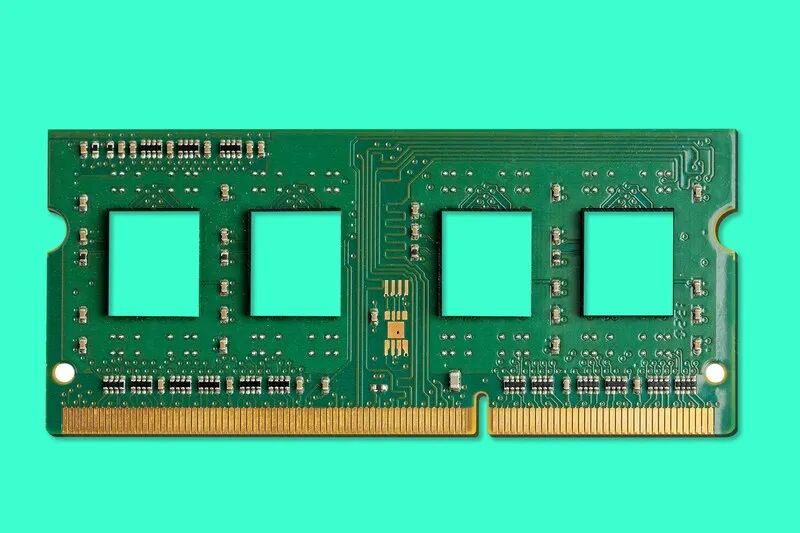
Image Source: The Verge
On the consumer side, the list of affected products is long. Smartphones are heavy users of memory, and the cost structure of flagship models is already fragile—price hikes will directly reflect in their retail prices. Game consoles and handhelds have extremely high specifications for unified memory, and supply shortages may delay new models or raise prices. Home networking devices like routers and set-top boxes, which previously operated on thin margins and were sensitive to component prices, will see their release and stocking schedules compressed due to memory price increases. In other words, AI's appetite will ultimately be paid for by every ordinary consumer's wallet.
Market research firms IDC, Omdia, and Counterpoint all point out that 2025 may well be the 'best year' for the traditional smartphone market. With memory costs remaining high and AI taking priority in supply, the 'sweet spot' for consumer electronics in terms of cost-effectiveness may continue to narrow after 2026. Sony's new PlayStation model is even predicted to be delayed until 2029, and there are rumors—unconfirmed but indicative of the tension—that Nvidia may skip a game GPU update for the first time in 30 years.
No Shortcuts, Only Waiting
Expanding memory production capacity is not a quick process. Building new fabs, improving yield rates, and reallocating production lines all take years. Before new capacity truly comes online, the competition for memory between AI and consumer electronics will only intensify. For manufacturers, the options are either to raise prices and pass on costs or to cut specifications to maintain prices—neither is what consumers want to see.
The term 'RAMageddon' aptly describes the current situation—not a memory crisis for a single type of device but a supply storm triggered by AI that engulfs almost all chip-equipped devices. It reminds us that AI's prosperity is never a free lunch; its cost is quietly being written into the price tags of your next device upgrade.
Today's Golden Quote
'Every evolution of AI silently rewrites the price tags of countless ordinary devices behind the scenes—memory is the first chip to be sacrificed in this prosperity.'
Follow [Degaoxing Zhiqinglang] for more insights into semiconductors and cutting-edge technology.
-
![]()
Wang Huiwen, Former Meituan Executive, Achieves 20-Fold ROI, Supports 24 AI Startups
-
![]()
Another AI Computing Power Unicorn Launches IPO! Founded by a Changjiang Scholar
-
![]()
OFILM Holdings Secures Zhongke Daojing, Marking a Significant Leap in the Optical Communication Industry!
-
What Will Be the Next Key Battleground for Large Models After AI Coding?
-
![]()
Leapmotor's Sales Soar, Yet Hidden Concerns Loom
-
![]()
China’s Action Camera Market Soars: 3.12 Million Units Sold in Six Months, DJI Secures 74% Dominance
-
![]()
Zhang Yiming: Strategic Retreat as a Path Forward
-
![]()
Exploring Charging for Some Features of QianWen App: Can It Follow the Path of Doubao?