Viral FDE Faces Final Payment Delays First
 08/07 2026
 559
559
Author|Zhu Fenglin
Editor|Li Xiaotian
Several months have elapsed since the integration of AI, with the system now operational. Yet, the project lingers, not quite complete.
FDE continues to polish the details and coordinate on-site acceptance. All on-site and travel expenses are self-funded; a single comment from the client, like "adjust this" or "the results don't meet expectations yet," can push the acceptance date further back. Daily costs accrue, with no guarantee when the final payment will arrive. Many who initially ventured into FDE independently find that, in the end, profit margins are razor-thin.
Despite this, they must persist in seeking the next project.
Because FDE is fundamentally a service-intensive business. From initial client communication to business analysis, solution design, POC (Proof of Concept), to delivery and acceptance, the truly time-consuming aspect is not development but guiding the enterprise step-by-step through AI implementation. The longer the project cycle, the greater the pressure on FDE.
Yet, despite being a "grueling" role, it has seen a surge in popularity.
In recent months, from internet giants to large AI model companies, mass recruitment of FDEs has commenced. The hiring criteria are largely consistent: proficiency in AI and technology, strong client communication skills, business acumen, and high stress tolerance. Some companies require project delivery experience, while others have lowered the bar to include fresh graduates, offering annual salaries typically ranging from 400,000 to 800,000 yuan.
On one hand, the recruitment market is heating up; on the other, real-world projects offer meager profits, pose customer acquisition challenges, and suffer from slow payment collection. While being courted by capital and enterprises, FDEs also face the most direct commercial tests in reality. Is FDE software outsourcing in the AI era, consulting services, or an entirely new role?
The same title yields different answers from different individuals.

Chen Hong: To minimize on-site and travel expenses, projects must be completed swiftly
I recently transitioned into an FDE role, but I don't accept just any project—I focus solely on the financial industry.
Currently, I'm simultaneously advancing AI transformations for several venture capital and private equity firms, all still in the POC stage. From consulting and solution design to POC validation, subsequent optimization, and formal delivery, the entire process is still being explored step by step.
I initially anticipated numerous challenges, but the project has progressed smoother than I imagined.
From the outset, we engaged directly with decision-makers within the enterprise. Only true decision-makers can determine whether the organization should adopt AI, which processes warrant change, and where budgets should be allocated. Discussing with the boss is far more efficient than passing information up the chain layer by layer—it avoids countless meaningless communication costs. FDE doesn't create small tools for a single department but transforms the entire organization. If the direction isn't set, even the best technology struggles to be implemented effectively.
For me, becoming an FDE wasn't a strict career transition.
I was previously based in Singapore, working as an LLM engineer at an internet giant on Agent Memory-related tasks. It was inherently B-end, customized, requiring constant client understanding, solution design, and carried a consulting edge. Now, as an FDE, I'm essentially taking what I did before a step further.
So, rather than a transition, it's a shift in service approach. Previously, I focused on technology; now, I face enterprises. Of course, coding remains, but the emphasis shifts to understanding clients, communicating needs, designing solutions, and translating these into technical implementations.
That's why, in my eyes, FDE resembles a new role blending consulting and software delivery.
If clients already know what they want and just need a team to develop it, that's traditional software outsourcing. True FDE arises in scenarios where enterprises recognize AI's importance and potential value but don't know where to start or which areas truly warrant change.
Thus, my work often begins with conversations with the enterprise.
Initial communication involves mostly listening—listening to the boss discuss business, employees share daily workflows, then shadowing them to see how demands arise, circulate, and get stuck.
Often, enterprises propose a list of demands, and FDE must discern which are worth pursuing and which hold little value even if implemented.
The true challenge lies here.
There are no shortcuts—only through continuous projects and accumulating industry experience can one develop insights and foresight. This is why consulting firms hold value—they've seen enough cases. FDE, too, requires such accumulation.
A classic example: Many enterprises have CRM systems mandated by bosses, yet sales teams resist filling them out—essentially a clash between management and employees.
To resolve this, many first think to add AI to the CRM. But the crux isn't "adding AI" but motivating sales to input data voluntarily.
If the CRM's Agent directly helps sales close more deals and earn higher commissions, they'll willingly maintain data; bosses won't need to enforce rules, and the enterprise's data assets will grow increasingly complete.
The result isn't just an efficiency tool but a transformation in how the entire organization operates.
Enterprises may not recognize such needs themselves. Bosses see management issues; employees see work burdens. Connecting both sides is where FDE adds the most difficulty—and value.
Hence, nearly all our projects are customized. Consulting, solution design, POC, optimization, acceptance—each enterprise's process is similar, but the delivered content is never identical.
Our team consists almost entirely of engineers with no mature sales experience. From sales to solutions to delivery, we're still refining everything. How to distill customized capabilities into reusable standardized methods is an ongoing consideration.
That's why we chose to specialize in a specific industry rather than take on any project. The more vertical the industry, the easier it is to develop genuine industry-specific methodologies. Switching between finance, manufacturing, and retail daily makes it hard to build competitive barriers.
After all, organizational structures vary greatly across industries. Without industry knowledge, it's hard to discern genuine demands; without experience, accurate future predictions are elusive.
Currently, our projects primarily serve domestic clients. On one hand, we're more familiar with domestic business environments and market traits; on the other, domestic demand for AI transformation is growing rapidly. Over time, we've noticed an interesting phenomenon: FDEs discussed domestically and in Silicon Valley aren't the same concept.
Silicon Valley's large AI model firms serve mostly major enterprises, with single deals worth tens of millions of dollars, demanding higher FDE standards. Domestically, we mostly engage SMEs, especially in traditional industries. They lack sufficient AI engineers and can't maintain high-cost tech teams long-term. Compared to building in-house teams, external FDEs are cheaper and more flexible. Thus, many perceive FDE as closer to software delivery, just with an added layer of AI consulting.
Additionally, a practical issue plagues the domestic market: many projects fail to collect final payments. On-site and travel costs must be self-funded. Each day of delay adds costs. Thus, for FDEs, delivering projects quickly isn't just about quality—it's critical for survival. Efficiency becomes paramount.
Wherever possible, we standardize capabilities; custom parts leverage AI Coding for rapid completion. Only by compressing delivery cycles can the model truly scale.
Many ask online if now is the best time to transition to FDE.
Two distinct groups are already moving in: consultants learning technology and engineers learning consulting. The market will likely demand individuals who understand industries, organizations, and clients while effectively implementing AI in business—not just programmers or consultants.
As for whether FDE will persist, I believe that's secondary. It will increasingly resemble an AI-era consulting firm or a hybrid of consulting and SaaS services.

Athena: Customer acquisition remains the top priority
I'm currently based in Japan and co-organize a global FDE team with partners worldwide.
One memorable delivery since arriving in Japan was for a cross-border trading firm in Osaka.
They manage a vast array of toy SKUs, adjusting procurement and inventory seasonally based on past sales. Data exists, and local SaaS systems have been used for years, yet replenishment decisions still rely on a few veteran employees' experience. Daily routines involve checking multiple systems, compiling statistics, and gradual analysis.
Initially, I considered redesigning their system.
But after fully understanding their business processes, I abandoned that idea. The issue wasn't technical but rooted in decades-old work habits. Many documents, approvals, and even business materials remain paper-based, and the enterprise didn't want AI to overhaul their workflow.
Instead, I overlayed an Agent atop their existing data and knowledge base. New hires no longer need to search for information—they can ask directly about a SKU's past sales peaks, current inventory, and replenishment needs. The Agent proactively alerts them to inventory anomalies instead of waiting for manual data searches.
The workflow remained virtually unchanged, yet they gained a digital employee continuously learning business expertise.
This project encapsulates modern FDE work, revealing that enterprises truly need solutions for repetitive daily issues, not AI for its own sake.
A year ago, I never imagined becoming an FDE.
I previously worked as a product manager in internet and fintech sectors. As AI rapidly entered enterprises, people constantly asked: Which tasks can AI handle? Which processes need optimization? A CTO friend and I shared these questions, so we assembled a small team to deliver AI solutions to enterprises. Members are based in Tokyo, North America, Hong Kong, and mainland China, ensuring on-site presence for offline client communication.
I assumed technical development would consume the most time, but FDE work proved otherwise.
Often, enterprises can't articulate their needs clearly—they only know which processes are inefficient or repetitive. Before a project begins, much time is spent clarifying business processes, understanding workflows, and identifying true pain points with clients.
What clients truly pay for isn't solely AI.
Domestically or overseas, clients ultimately care about efficiency gains, cost reductions, and business growth. AI is merely a means to these ends, not the goal. Thus, we don't start with wholesale transformations but tackle the most painful scenario first, letting clients see results before deciding to proceed further.
This is why we insist on building our foundational capabilities.
Unlike fully customized projects, we don't redevelop systems for each client. Instead, we iterate based on our AIOS and underlying models. New Agents, workflows, and industry insights continuously enrich these models, benefiting subsequent projects.
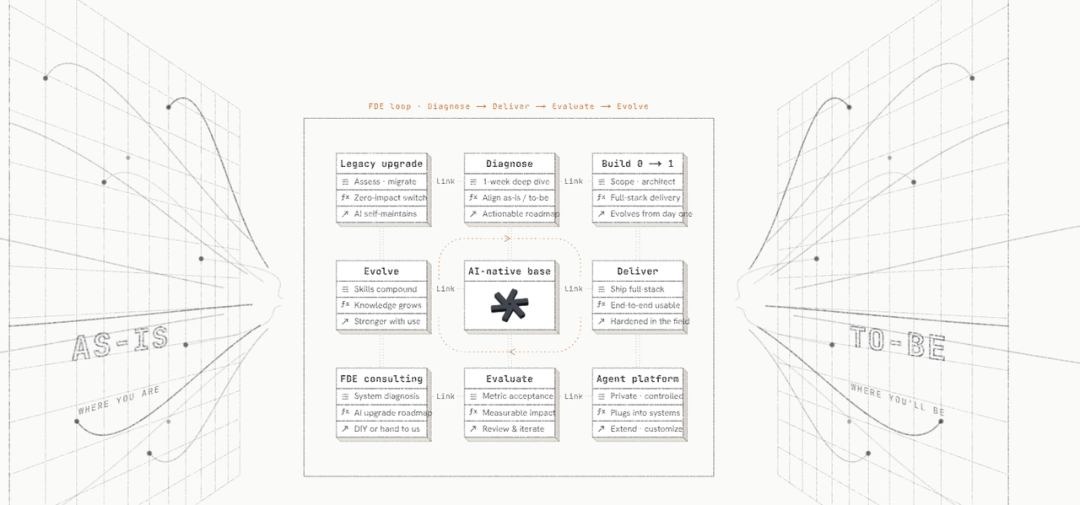
Team Capability: Integrating Enterprise-Specific AI Operating Systems by Phase
Thus, most projects have short cycles. Simple demands can be fulfilled in two weeks; full projects typically take a month. On one hand, foundational capabilities are pre-built, eliminating zero-to-one development each time. On the other, engaging true decision-makers from the start allows on-the-spot decisions, avoiding lengthy internal approvals. Clients are highly cooperative, accelerating progress. Though we consider ourselves outsourced, clients treat us as advisors or teachers, showing great respect.
Moreover, project delivery doesn't mark the end of service.
We adopt a system subscription model, providing continuous maintenance, upgrades, and support. After several years, enterprises can outright purchase the system.
Currently, our clients span China, Japan, Indonesia, and North America. A clear observation: Differences arise from regional digitalization gaps and enterprises' development stages and industries.
Many large tech firms have in-house engineering teams, preferring to handle AI internally. External support is primarily sought by traditional enterprises that have digitized to some extent but lack full R&D capabilities.
As for whether to choose local engineers or Chinese engineers for FDE, that's not the focus. The real challenge lies in building trust.
Why would a newly established team be trusted with a company's business? Is the data secure? What are the limitations of AI capabilities? Nearly every client asks these questions. To this day, our greatest effort still goes into acquiring clients.
We try almost every channel: referrals from friends, our official website, self-media content, offline events, and introductions from partners. Instead of active marketing, we prefer to consistently produce content and real-world case studies, allowing those with genuine needs to come to us. This approach leads to more efficient collaboration and easier establishment of long-term trust.
There isn't a universally accepted definition of what an FDE is even today.
In my opinion, this role is more akin to a blend of pre-sales consultant, product manager, and solution engineer. There are two truly pivotal skills: first, the capacity to genuinely grasp the client's business; second, the know-how to harness the latest AI technologies to translate those needs into actionable solutions.
No one on our team started out as an FDE (Field Digital Engineer). Some were originally engineers, others product managers, and some had long-standing responsibilities in enterprise solutions. Each brought their own expertise to the table, but with the advent of AI, they gradually acquired the additional skills necessary for the role.
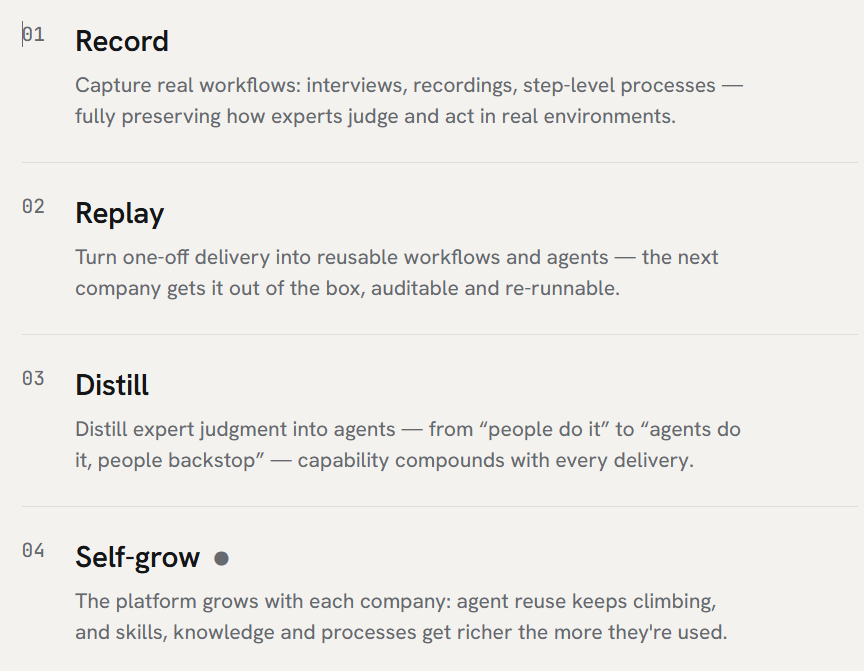
We've distilled the 'diagnosis → decomposition → delivery → iteration' process of seasoned FDEs into reusable Agents.
Lately, I'm frequently asked whether now is the right time to transition into an FDE role.
Honestly, I think this question is somewhat misguided. If someone is already leveraging AI to solve real problems for their team or company, they're essentially already functioning as an FDE—they don't need to wait for a formal title change. It's more about adopting a new way of working than assuming a new identity.
The AI boom may only last a few more years, but the need for businesses to solve operational problems will persist. In the future, the role might have a new name and may no longer be called FDE, but the essence will remain unchanged—using new technologies to solve real-world problems.
As technologies become increasingly commoditized, what truly sets apart a successful FDE isn't just the model itself but the ability to translate cutting-edge AI into solutions that clients can truly understand, trust, and are willing to pay for.

Shen Yue: As an FDE, most of my time is spent mediating interdepartmental disputes.
I worked as a product manager for 12 years, serving as a product leader at major companies like NetEase, ByteDance, and 360. With the rise of AI, I decided to venture out on my own.
Some time ago, I joined a state-owned enterprise as an FDE. When I actually started, the project was already in a somewhat precarious state. Everyone on-site shared the same goal—to solve the problems first, otherwise, the entire project would stall, and the final payment wouldn't be received.
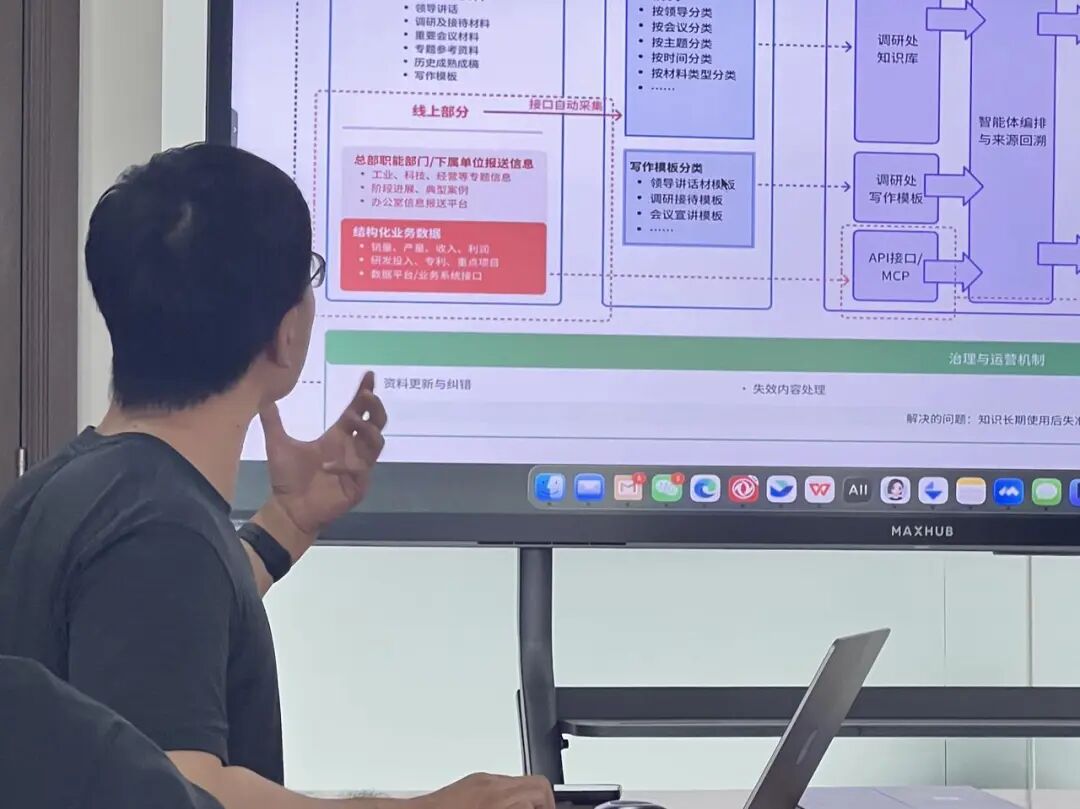
On-site communication photo of Shen Yue, provided by the interviewee.
Many assume that technology is the cornerstone of an FDE's role. However, after actually doing the job, I've found that AI and coding aren't the most urgent priorities.
Upon joining, my first task is usually to attend meetings. I discuss the business with clients,梳理(which means 'sort out' or 'clarify')processes, and repeatedly collaborate with pre-sales, business development, and partners on solutions. Often, the level of cooperation from enterprises isn't high. A whole day can be spent clarifying business processes and resolving interdepartmental disputes.
I currently take on some domestic projects in an OPC (On-site Project Consultant) capacity. My main responsibility isn't the final development but rather the earlier stages: first, clarifying what problems the client needs to solve, and then translating these needs into solutions that AI can understand and engineers can develop. Therefore, my actual on-site time isn't very long; most of my work is in the early project stages. Later development and operations are handed over to the team to continue.
When people discuss the FDE role, they often first ask: What exactly does this position entail? It's hard to explain in one sentence.
According to definitions from companies like OpenAI and Palantir, an FDE is more like a full-stack engineer. They participate from the moment a project is contracted and officially launched until its final deployment and acceptance.
However, working on domestic projects is a different ballgame. Often, you're already on-site before the contract is even signed. The reason is simple: many foreign enterprises have already organized their systems, processes, and interfaces during the digitalization phase. They know what they need to do, and FDEs mainly complete development and deployment based on existing solutions.
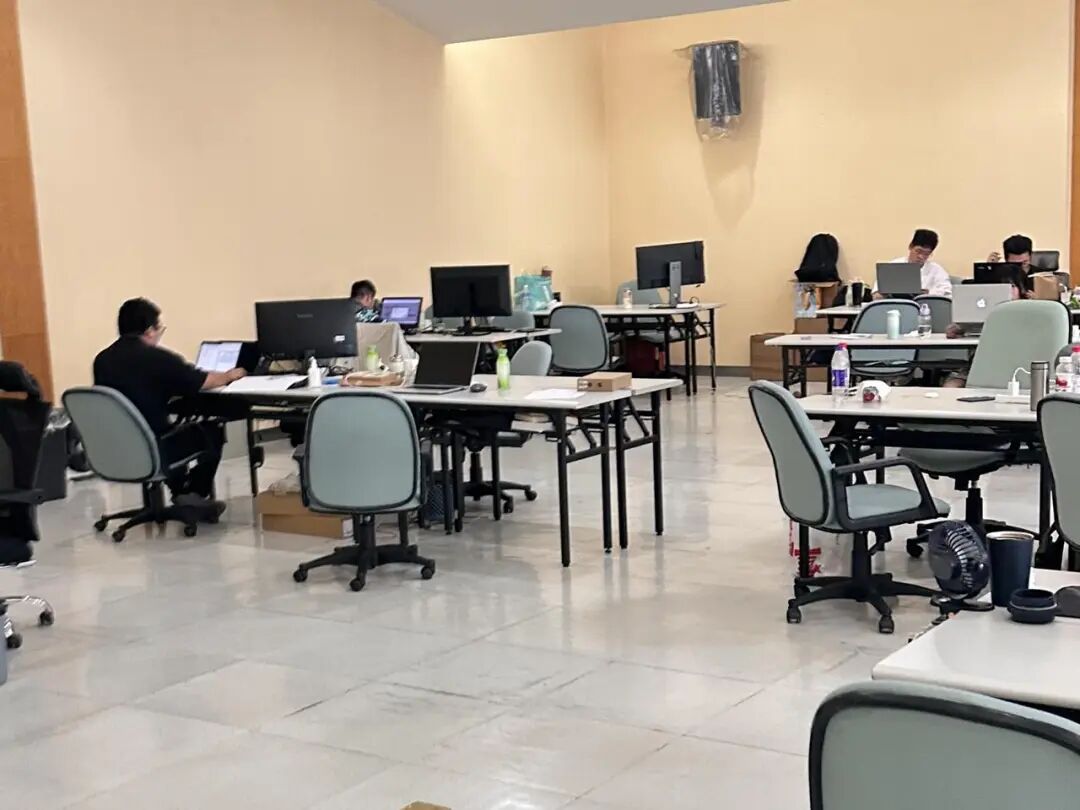
Worksite photo of Shen Yue, provided by the interviewee.
The situation is different in China. Many enterprises are implementing AI for the first time, and their biggest challenge isn't the model but understanding what AI can actually do.
Therefore, even before the project officially begins, a lot of time is spent accompanying clients to investigate their business, clarify processes, design solutions, and even create demos in advance. Together, we gradually turn a vague idea into an implementable project.
Only then does the actual development phase begin.
Moreover, the responsibilities of FDEs can vary greatly across different domestic enterprises. Some focus mainly on coding and development, while others, like me, spend most of their time on business clarification and solution design.
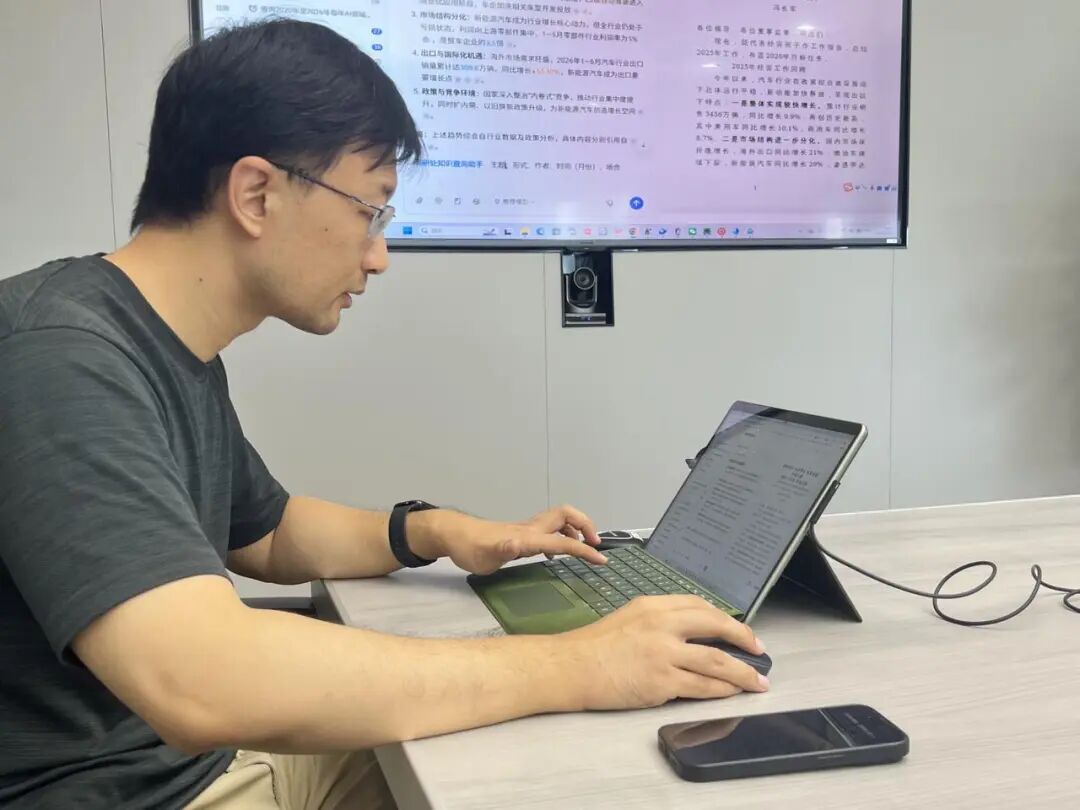
Work photo of Shen Yue, provided by the interviewee.
This means the overall project timeline naturally isn't short. For relatively fast projects, the main work can be completed in three months; for slower ones, it's normal for a project to take a year without conclusion.
The process is often hindered by various issues, but most of the time, it's not due to technology.
Unlike in the US, where the FDE role is relatively mature and clients are willing to pay for the process, domestic enterprises hope that AI transformation will yield results quickly. However, what truly determines the success or failure of a project is often the most invisible work—clarifying processes, governing data, and unifying business terminology.
The problem lies precisely here: this work is difficult to quantify and hard to see immediate results. Many clients are only willing to pay for the final outcome but find it hard to accept that several months were spent on preparation. When the project reaches acceptance, if the actual results deviate slightly from expectations, signing off is delayed, and the final payment isn't received.
Therefore, the real difficulty isn't building the AI but getting clients to pay for the process.
Some say, 'Isn't FDE just outsourcing under a different name?' Frankly, I understand this sentiment and can't entirely disagree.
Recently, numerous FDE-related positions have appeared on job platforms. It seems everyone is scrambling to hire, but the actual reasons for hiring vary greatly.
For internet giants, they used to sell models, computing power, and platforms. Later, they realized that handing over the platform didn't mean clients could use it effectively, and projects still wouldn't run smoothly. So, they began building their own FDE teams to keep key clients and flagship projects in-house.
For other companies, the need is more direct. Bosses hope to reduce costs and increase efficiency through AI. While their IT teams can develop, they don't know how to truly apply AI to the business. In this case, they need someone who can communicate with both business and technical sides to bridge the gap.
From the projects I've encountered in recent years, most of the urgent AI transformations are still in traditional industries. Internet companies aren't as hurried. Many already have their own technical teams internally and rarely hire external teams for complete projects; instead, they focus on training and consulting. Traditional enterprises, however, don't even know where to start and need someone to guide them through the process.
Recently, many people have asked me whether they should transition into an FDE role given its popularity. I believe this moment might represent an opportunity—not because I think the role has immense future prospects but because there's currently no standard definition.
Companies have different understandings and thus different requirements for candidates. Development engineers, B-side product managers, and even some particularly AI-savvy fresh graduates have opportunities to enter this field. Especially fresh graduates today, who are part of the AI-native generation, naturally think in terms of whether something can be done with AI and how to do it. With a bit of training, such individuals can easily become superstars in AI transformation at traditional companies.
However, this window won't remain open indefinitely. Just like product managers a decade ago, when the role first emerged, anyone could do it; but as the industry matured, responsibilities became increasingly clear.
The same will likely happen with FDEs. In the future, the role will probably continue to differentiate. One part will specialize in requirements and solutions, called FDE Echo, while another will focus on development and implementation, called FDE Delta.
No matter how it evolves, enterprises will always need someone to truly integrate AI into their business. It's just that this person might not be called an FDE in the future.
-
![]()
Wang Huiwen, Former Meituan Executive, Achieves 20-Fold ROI, Supports 24 AI Startups
-
![]()
Another AI Computing Power Unicorn Launches IPO! Founded by a Changjiang Scholar
-
![]()
OFILM Holdings Secures Zhongke Daojing, Marking a Significant Leap in the Optical Communication Industry!
-
What Will Be the Next Key Battleground for Large Models After AI Coding?
-
![]()
Leapmotor's Sales Soar, Yet Hidden Concerns Loom
-
![]()
China’s Action Camera Market Soars: 3.12 Million Units Sold in Six Months, DJI Secures 74% Dominance
-
![]()
Zhang Yiming: Strategic Retreat as a Path Forward
-
![]()
Exploring Charging for Some Features of QianWen App: Can It Follow the Path of Doubao?