DeepSeek Plans API Price Hikes, Signaling the Close of Low-Cost Era and the Dawn of a New Commercial Pricing Phase for Domestic Large Models
 08/10 2026
 426
426
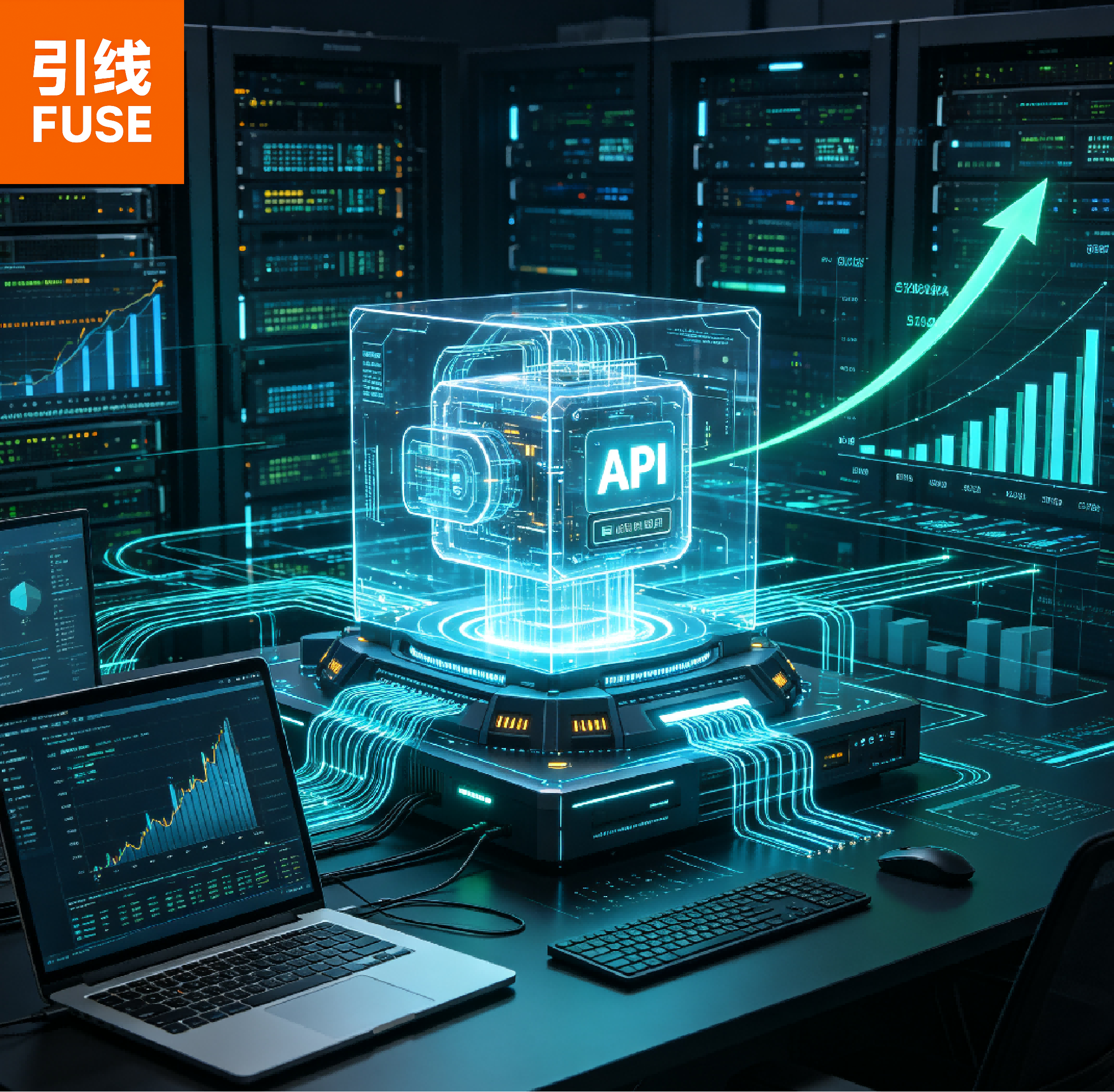
On August 6, DeepSeek announced on its developer platform that it anticipates a substantial increase in the pricing of all API services in the foreseeable future. Developers are urged to adjust their usage plans accordingly, with further details on the pricing adjustments and their effective dates to be released officially. This news has swiftly ignited fervent discussions within domestic AI developer communities. As a domestic large model provider that once sparked industry-wide price wars and earned the moniker of "price destroyer," DeepSeek's decision to raise prices sends a clear message: the era of relying on low-cost subsidies to gain market share is drawing to a close, and the domestic large model industry is officially stepping into a new phase of commercialization that prioritizes cost considerations and sustainable profitability.
Reflecting on the competitive landscape of domestic large models over the past year, price wars have undoubtedly been the most prominent feature. To swiftly attract developer traffic and amass model usage data, various providers have continuously slashed API usage fees. DeepSeek led the charge with exceptionally low prices, offering input pricing as low as 0.02 yuan per million tokens with cache hits for its V4-Flash model, effectively disrupting industry pricing norms. Other domestic model providers soon followed suit, with many models operating at prices below computing power costs for extended periods, relying on ongoing financial subsidies to maintain operations. While this low-cost strategy indeed lowered the entry barrier for developers, it also propelled domestic open-source models to dominate the global developer market, establishing competitive advantages over closed-source products like those from OpenAI and Anthropic in overseas markets.
The first significant turning point in the industry was the introduction of peak-valley time-based pricing. As early as late June, DeepSeek implemented peak-valley pricing, doubling prices during peak computing power hours on weekdays to manage traffic flow and balance computing load. At the time, the market largely viewed this as a computing power scheduling measure, failing to foresee the impending comprehensive price hikes. Just over a month later, the provider directly announced across-the-board price increases, signaling that short-term traffic acquisition is no longer the primary focus, with computing power cost pressures and cash flow health now taking center stage for enterprises.
This pricing shift is primarily driven by fundamental changes in the computing power supply and demand dynamics. With the widespread adoption of AI agents, the number of tokens consumed per task has skyrocketed far beyond traditional conversational scenarios, leading to a continuous surge in model usage across the network. A large volume of concurrent requests is concentrated during peak daytime hours, resulting in persistent strain on high-end GPU resources and escalating computing power leasing costs. Meanwhile, prices for HBM and high-end server hardware remain elevated, necessitating significant capital expenditures for continuous expansion. A pricing model consistently below cost only exacerbates losses, making it difficult to sustain model iteration, safety alignment, and investments in technology R&D. The era of relying solely on financing to sustain operations has passed, as capital markets no longer tolerate unrestrained spending, compelling large model providers to prioritize revenue and gross margin as core performance indicators.
Looking at the global market, the AI pricing cycle is also undergoing a simultaneous transition. Previously, OpenAI initiated a price war by lowering prices for GPT-5.6 Luna to fend off competition from open-source models. However, industry trends have since shifted, with both domestic and international providers reevaluating their return on investment. On one hand, overseas closed-source giants maintain profitability through high-end flagship models and tiered pricing strategies to balance market share and revenue. On the other hand, after intense price competition, domestic providers have reached a consensus: general-purpose foundational models are unlikely to generate substantial profits through API usage alone, and endless low-cost competition will only stifle the entire industry. As leading providers take the lead in ending low-cost competition, the focus of industry competition will shift from pricing to value-added services such as model capabilities, industry-specific fine-tuning, private deployment, and agent-based solutions.
For developers and AI startups, the gradual disappearance of low-cost benefits necessitates adjustments to their business models. In the past, many applications that simply wrapped large models and lacked differentiated scenarios relied on extremely low usage costs to survive. As API prices rise, the survival space for homogeneous applications continues to narrow. Only projects that deeply integrate into vertical industries, establish dedicated business processes, and possess proprietary data barriers will be able to absorb reasonable usage costs. The entrepreneurial path of relying solely on third-party models for simple aggregation and conversational applications will become increasingly arduous.
Of course, price increases do not signify a return to the era of high premiums or replicate the early pricing levels of closed-source models, which often reached several dollars. After multiple rounds of technological iteration, quantization optimization, and inference framework upgrades, the inference costs of large models have significantly decreased compared to two years ago. The upward adjustment in price levels primarily reflects a return to reasonable ranges, covering computing power losses and ending irrational loss-making competition. Meanwhile, tiered competition will persist, with lightweight versions for individual developers and off-peak nighttime hours likely maintaining relatively affordable prices to sustain ecosystem activity.
DeepSeek's price adjustment carries significant industry implications. Previously, the domestic large model sector was caught in a dilemma where failing to lower prices risked losing customers, while continuous price reductions led to sustained losses. The proactive adjustment of pricing strategies by leading providers is expected to foster a healthy competitive environment in the industry. In the future, a clear differentiation will emerge: general-purpose foundational models will compete on efficiency and comprehensive costs, vertical domain models will command premiums through scenario-specific barriers, and the enterprise services market will shift toward charging for customized solutions.
In the long run, the maturation of the AI industry will inevitably involve a transition from subsidized expansion to healthy profitability. While low-cost competition has fostered a vast developer ecosystem, it cannot sustain long-term technological innovation. As domestic large model providers begin to rationally account for costs, the industry is moving away from its wild growth phase focused on user acquisition and entering a new phase centered on commercialization capabilities. In the global AI competition, sustainable business models are the foundation for continuous iteration and long-term international competitiveness of domestic models.
Source: Investor Network
-
![]()
BYD's Auto Overseas Expansion Review: 26 Months from 'Catching Up' to 'Advancing'
-
![]()
Are Commercial Rockets Progressing Due to Increased Girth?
-
![]()
From Imitation to Reinforcement: How Far Have End-to-End Large Models Come?
-
![]()
The Debate Between Autonomous Driving VLA and World Models: What Is It Really About?
-
![]()
Sealing the Deal: The Rationale Behind GAC Honda and SAIC-GM’s Early Joint Venture Renewals
-
Third-Party SIM Card Services Discontinued: Strategic Calculations of China Mobile, China Unicom’s Bold Move, and China Telecom’s Tactical Advancement
-
Investigation Launched 3 Days Prior to Listing Meeting! Urgent Withdrawal of RMB 3 Billion Financing Initiative
-
![]()
After Two Years of 'Big Smart,' Smart is Set to Launch Its 'Small Smart'