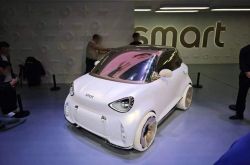
After Two Years of 'Big Smart,' Smart is Set to Launch Its 'Small Smart'
 08/10 2026
 423
423
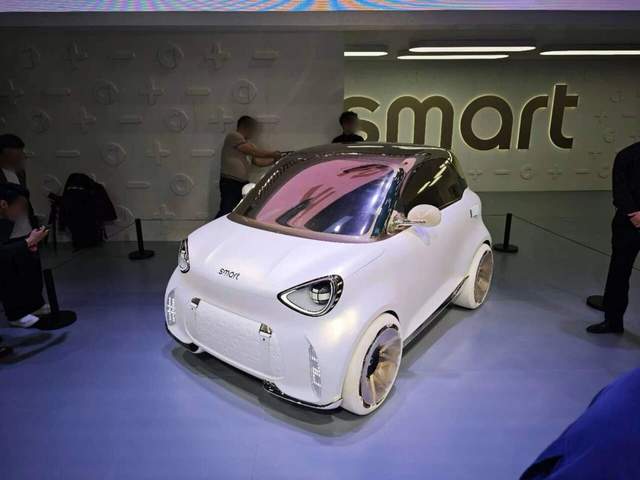
Source | Yuan Auto
If the smart models #5 and #6, both exceeding 4.7 meters in length, can be dubbed 'big smart,' then the automaker, backed by Geely and Mercedes-Benz, is poised to embark on a new phase marked by 'small smart' breakthroughs.
On August 7, the Ministry of Industry and Information Technology unveiled the 410th batch of new product listings in the
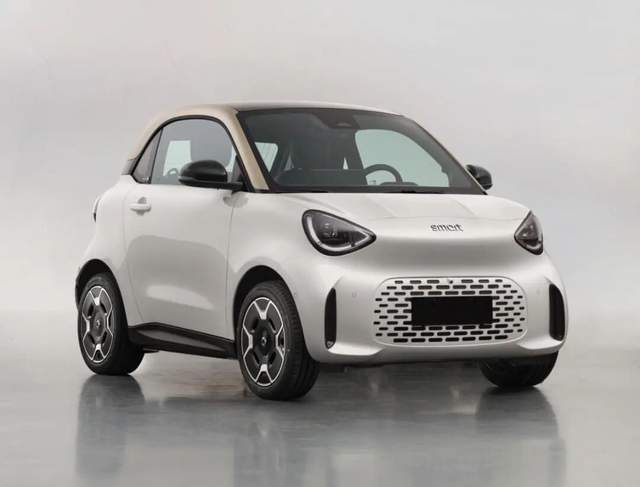
Just a day before the #2's product listing, smart also rolled out a significant upgrade to its compact pure electric SUV, the #1, which has been a sales leader for the brand over the past four years. While the new #1's exterior remains largely unchanged, its core 'three electric systems'—motor, battery, and electronic control—have undergone comprehensive enhancements, including a full upgrade to an 800V high-voltage architecture, a switch to lithium iron phosphate batteries, and the integration of Geely's cutting-edge 16-in-1 electric drive system.
The back-to-back releases of these two 'small smart' models are akin to a festive celebration for smart's brand enthusiasts.
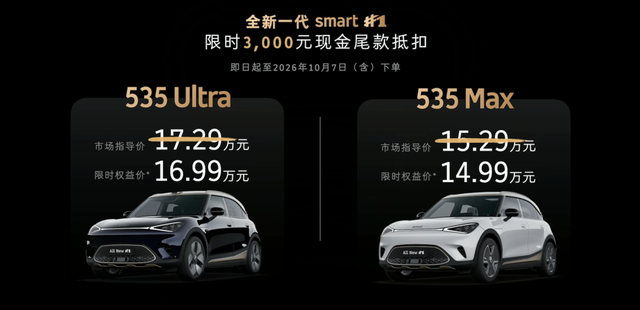
Despite the new #1 being priced approximately 40,000 yuan lower than its launch price four years ago, at 149,900 yuan (limited-time offer), few existing owners have voiced feelings of betrayal on social media. Instead, they are lauding the targeted upgrades in assisted driving and the central infotainment system. As for the #2, the sentiment is overwhelmingly positive, with many eager to purchase.
Smart, which has spent the past three years attempting to sell larger vehicles to consumers, appears to be returning to its roots.
01
Are Larger Cars More Profitable?
'Smart is not just a small car brand; it embodies a lifestyle. Relying solely on the small car segment is insufficient to sustain the smart brand,'
According to a report by China Business Journal, Tong Xiangbei, CEO of smart Global, publicly addressed market skepticism regarding the brand's shift towards larger vehicles, citing profitability differences between small and large cars as a pivotal factor.
Indeed, Tong's perspective is valid, but the critical question is whether the market will embrace these larger vehicles. Judging by the sales performance of the #5 and #6 models, at least Chinese mainland consumers remain unconvinced.
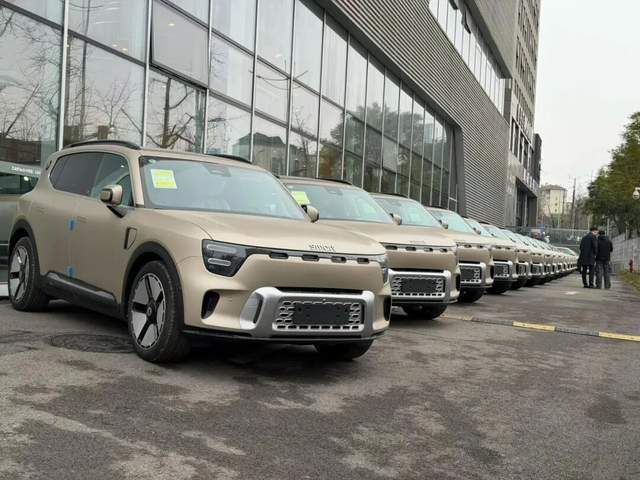
According to terminal sales data from the China Association of Automobile Manufacturers and the China Passenger Car Association, the #5, available in both pure electric and later plug-in hybrid versions, has sold approximately 10,000 units since its launch in October 2024 through June 2026, with monthly sales often hovering in the hundreds or even double digits. The #6, launched in June of this year, sold 198 units in its inaugural month.
Regarding the #5's sales, a smart brand representative informed Yuan Auto that the vehicle has performed well in markets outside the Chinese mainland, such as Hong Kong. According to public data, 688 new smart #5 units were registered in Hong Kong in 2025, ranking it as the 11th most registered electric vehicle locally, with 617 registrations in the first half of 2026.
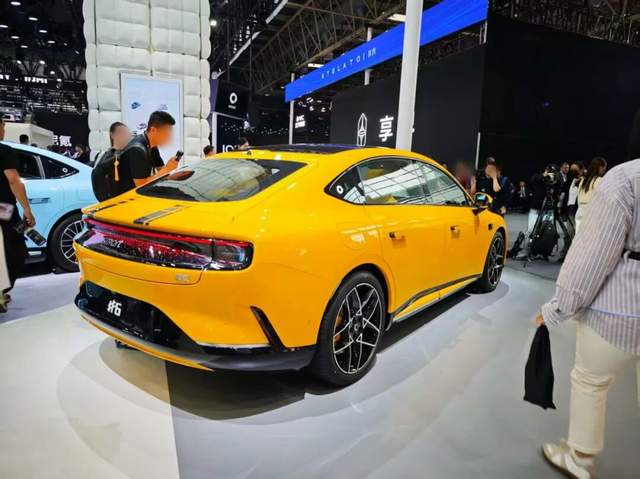
Clearly, the introduction of the #5 and #6 large models has not yet yielded a qualitative improvement in smart's business. Without market acceptance, profitability remains elusive. For instance, Yuan Auto previously reported significant price cuts for the #5 to clear inventory, with prices dropping below 170,000 yuan, comparable to the high-end guidance price of the new #1.
Thus, while Tong's assertion that 'larger cars are more conducive to sustaining smart' is not incorrect, it presupposes that these larger cars can sell without difficulty to genuinely benefit smart.
02
Mastering Small Car Sales First
Whether to persist with large cars or how to adjust models like the #5 and #6, the 'big smart' variants, are questions smart can set aside for now. The current top priority is to achieve success with the new #1 and the all-new #2.
Given the current landscape of the domestic small pure electric vehicle market, this is no small feat.
Since 2025, small pure electric vehicles have emerged as the most sought-after segment by automakers, following '9-series' large six-seater SUVs. This segment has witnessed the rise of models like the Geely Starry, which sold over 460,000 units in a year to become China's best-selling single model without any qualifiers, as well as new dark horses like the BAIC Arcfox T1 and SAIC MG MG4, both surpassing 10,000 monthly sales. Additionally, there are players like NIO Firefly, which excel in both volume and pricing.
When considering established bestsellers like the Wuling Bingguo and BYD Dolphin, along with new entrants like the Chery QQ3 in 2026, the current small pure electric vehicle segment is undoubtedly a fiercely competitive market. In this environment, while the new #1 and all-new #2 have garnered widespread acclaim, they cannot afford to become complacent.
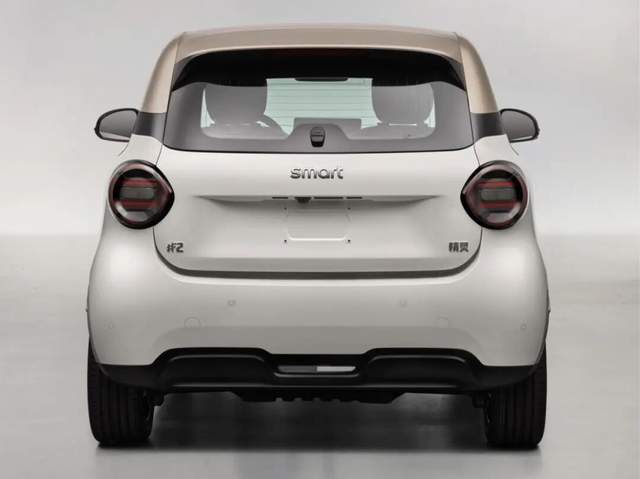
Especially for the #2, which has yet to officially launch but has higher market expectations, it will be crucial for smart to build upward momentum. Consumers are eager for innovative interior space design and features, as well as an attractive price point. However, it's worth noting that unlike most other small car competitors, smart does not necessarily have to engage in intense competition in the Chinese mainland market.
According to the automaker's official plans, the smart #2 will make its global debut at the Paris Motor Show in October this year, indicating that this pure electric small car produced in Jinan, Shandong, is designed for the global market from the outset. With its electric and intelligent capabilities on par with Chinese brand new energy vehicles, such as an electric drive system capable of achieving a WLTP range (same below) of 300 kilometers, it will possess a clear advantage over overseas competitors.
For reference, the Fiat 500e and Renault Twingo E-tech, two mainstream European small pure electric vehicles, offer entry-level ranges of less than 200 kilometers and 263 kilometers for their latest models, respectively.
For smart, the ideal scenario would be for the #2 to achieve success both domestically and internationally. However, even if it cannot or does not wish to engage in intense competition in the Chinese mainland market, smart can likely reclaim its leading position in the small car segment by leveraging its global brand appeal and sales capabilities accumulated over the years.
Some images are sourced from the internet. Please notify us for removal if there is any infringement.
-
![]()
BYD's Auto Overseas Expansion Review: 26 Months from 'Catching Up' to 'Advancing'
-
![]()
Are Commercial Rockets Progressing Due to Increased Girth?
-
![]()
From Imitation to Reinforcement: How Far Have End-to-End Large Models Come?
-
![]()
The Debate Between Autonomous Driving VLA and World Models: What Is It Really About?
-
![]()
Sealing the Deal: The Rationale Behind GAC Honda and SAIC-GM’s Early Joint Venture Renewals
-
Third-Party SIM Card Services Discontinued: Strategic Calculations of China Mobile, China Unicom’s Bold Move, and China Telecom’s Tactical Advancement
-
Investigation Launched 3 Days Prior to Listing Meeting! Urgent Withdrawal of RMB 3 Billion Financing Initiative
-
![]()
After Two Years of 'Big Smart,' Smart is Set to Launch Its 'Small Smart'