Tech Titans Clash in AI-Driven Office Solutions, Leaving AI Smartphones in a Tight Spot
 08/10 2026
 437
437

Author | Wuzi
The landscape of the AI race is shifting swiftly. One moment, tech giants are scrambling for super entry points; the next, AI-driven office solutions emerge as the new battleground.
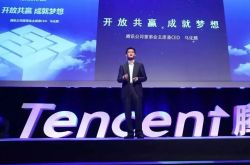
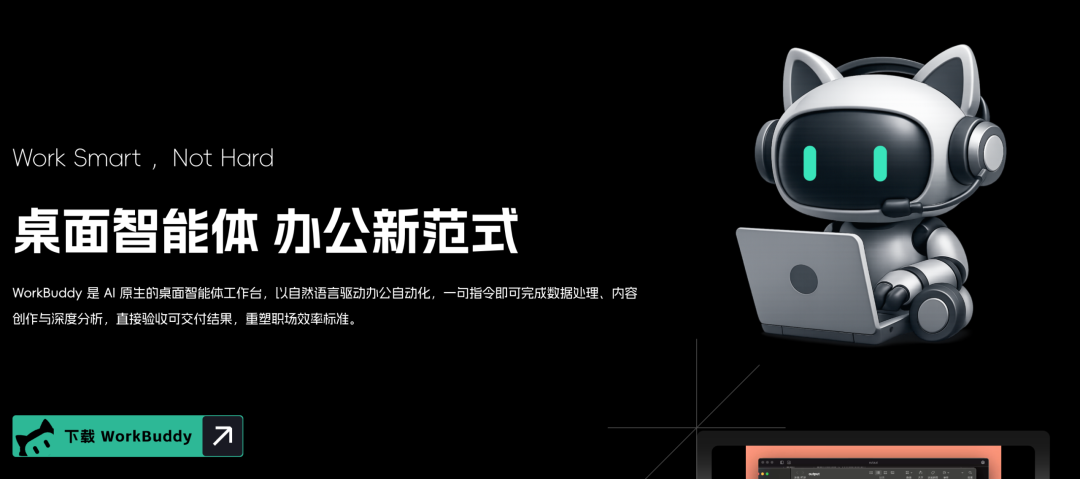
In March 2026, Tencent made a decisive move to fully embrace office AI agents, channeling resources into WorkBuddy. Propelled by a first-mover advantage, aggressive marketing, and rapid iteration, WorkBuddy amassed 20.97 million monthly visits in just five months, claiming the top spot in the Chinese market.
Seeing Tencent take the lead in AI-driven office solutions, internet behemoths like ByteDance and Alibaba swiftly recalibrated their AI strategies.
On July 30, ByteDance announced a merger between its Feishu product team and Doubao, while integrating its GTM (Go-To-Market) team with Volcano Engine. Similarly, Alibaba consolidated QoderWork, Wukong, and MuleRun into a unified AI Agent-based office product, Qianwen Office, which launched on August 3.
The tech giants' foray into AI-driven office solutions marks the end of the battle for super entry points. Consequently, AI smartphones—once seen as the primary carriers of these entry points—are no longer the focal point for tech giants. PCs, often overlooked in the mobile internet era but now positioned as productivity tools, have become a hotly contested market.
This raises pertinent questions: Why have smartphones, as mass computing platforms, struggled to be revolutionized by AI technology? Why are PCs better suited for Agent deployment? Can traditional smartphone designs continue to adapt to the AI era?
01 Three Years On, AI Smartphones Haven’t Had Their 'iPhone Moment'
As early as 2023, when ChatGPT ignited the AI revolution, smartphone manufacturers began aggressively investing in AI smartphones. Liu Zuohu, OPPO's Chief Product Officer, declared, 'The future is AI. Without deploying large models, we’re doomed.'
Following the evolution of AI technology—from large models to Chain of Thought (CoT) and then to Agents—AI smartphones have undergone three key development stages.
Initially, they integrated standalone AI features like AI-powered photo editing, AI writing, and real-time call translation. Subsequently, system-level multimodal AI emerged, transitioning AI from standalone apps to the system layer, integrating tools such as system settings, galleries, and notes. Currently, they have evolved into the Agent stage, where users issue commands, and smartphone AI assistants directly execute specific tasks.
Source: Counterpoint Research
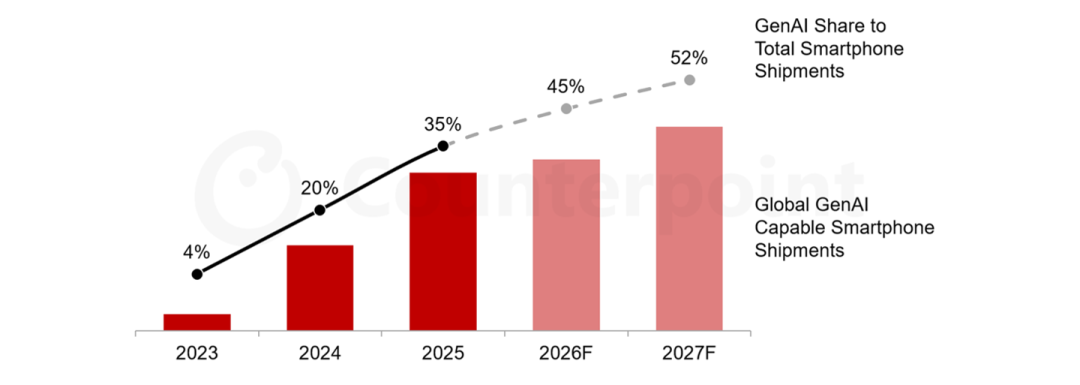
With gradually improving functionality, AI smartphones have successfully carved out a market share, becoming a mainstream choice for consumers. According to Counterpoint Research, AI smartphones are expected to account for 45% of shipments in 2026, up 9 percentage points year-over-year, and further climb to 52% in 2027, surpassing traditional smartphones.
However, AI smartphones have not sparked a massive upgrade wave akin to the early days of smartphones, which created a huge incremental market.
Data from Gartner reveals that three years after the iPhone's launch in 2010, global smartphone sales reached 1.6 billion units, surging 31.8% year-over-year. Smartphone sales jumped 72.1%, accounting for 19% of the total mobile market.
Source: Counterpoint Research
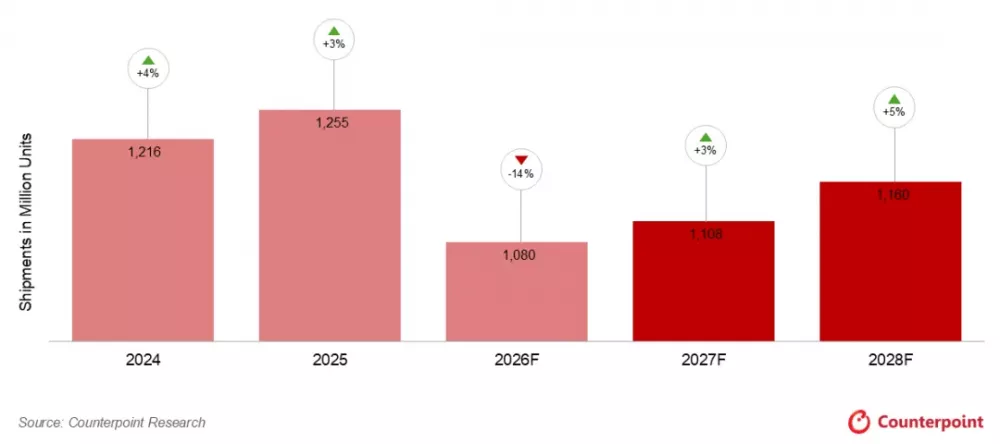
In contrast, despite being three years old, AI smartphones face significant downward pressure in the market. Counterpoint Research projects global smartphone shipments will reach 1.08 billion units in 2026, down 13.9% year-over-year, hitting a new low since 2013.
While the current smartphone market downturn is partly due to soaring memory prices suppressing consumer demand, the global smartphone market has been in a prolonged slump since 2022, showing no significant recovery despite widespread AI adoption.
Clearly, three years after their debut, AI smartphones have not had their 'iPhone moment.' Why is that?
02 AI Offers 'Efficiency Gains,' But Smartphone User Demand Remains Lukewarm
The core functions of AI smartphones across their three development stages, while varied, can all be summarized as 'efficiency gains.' Whether it’s AI writing, system-level multimodal AI, or Agents, they all reflect tech companies' underlying logic of seizing the AI opportunity by improving user operational efficiency.
Smartphone-based Agents, in particular, were once seen by tech companies as the key to unlocking the AI era. Since 2025, as model reasoning capabilities matured and tool-calling abilities became engineering-ready, AI has broken free from the Chatbot paradigm, gradually gaining the ability to autonomously complete complex tasks.
Against this backdrop, both tech giants like Tencent, ByteDance, and Alibaba, and smartphone manufacturers like Honor, Xiaomi, and OPPO, have actively invested in Agent technology, aiming to position their AI assistants as super entry points for the next era.
Source: Honor
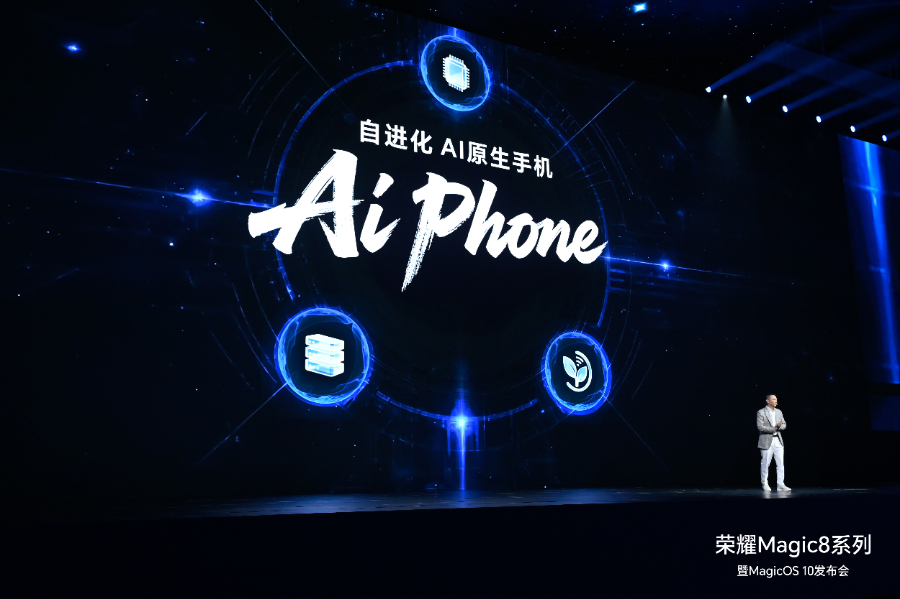
For example, in October 2025, Honor launched the Honor Magic8 series, positioned as the 'most powerful self-evolving AI-native smartphone.' Its YOYO Agent offers eight AI experiences, such as shopping, dining, and travel companions, supporting automatic execution in over 3,000 scenarios.
Similarly, in January 2026, Qianwen fully integrated with Alibaba’s ecosystem businesses like Taobao, Alipay, and Gaode, enabling AI-powered shopping functions like food delivery, flight bookings, and hotel reservations.
Drawing from mobile internet era experiences, super entry points hold immense potential. Since Agents can execute specific tasks, if an AI assistant captures a massive user base like WeChat, it could dominate the mobile internet ecosystem, becoming the key gateway for users to access various services.
By controlling the smartphone super entry point, tech companies would not only secure a stable foundation in the AI era but also gain the power to subtly promote their ecosystems and dictate the rollout of new businesses.
However, as mentioned earlier, AI smartphones have not swept the market, primarily due to two inherent flaws in the super entry point concept.
First, the fragmented mobile internet ecosystem limits AI assistants' task execution capabilities. To avoid becoming mere service conduits, national-level apps like WeChat, Alipay, and Meituan are reluctant to fully open their data interfaces to third-party AI assistants. While Doubao Smartphone broke through ecosystem barriers using GUI simulation click technology, it faced joint resistance from internet giants, halting further progress.
Second, for most users, the fundamental demand for smartphones is not 'efficiency gains' but 'emotional value.'
Alibaba founder Jack Ma once revealed, 'About 17 million people browse Taobao and Tmall every night without buying anything. I don’t know what they’re doing—just wandering aimlessly. So your website can’t just be for shopping; experience, fun, communication, and sharing matter more.'
Source: Syntun
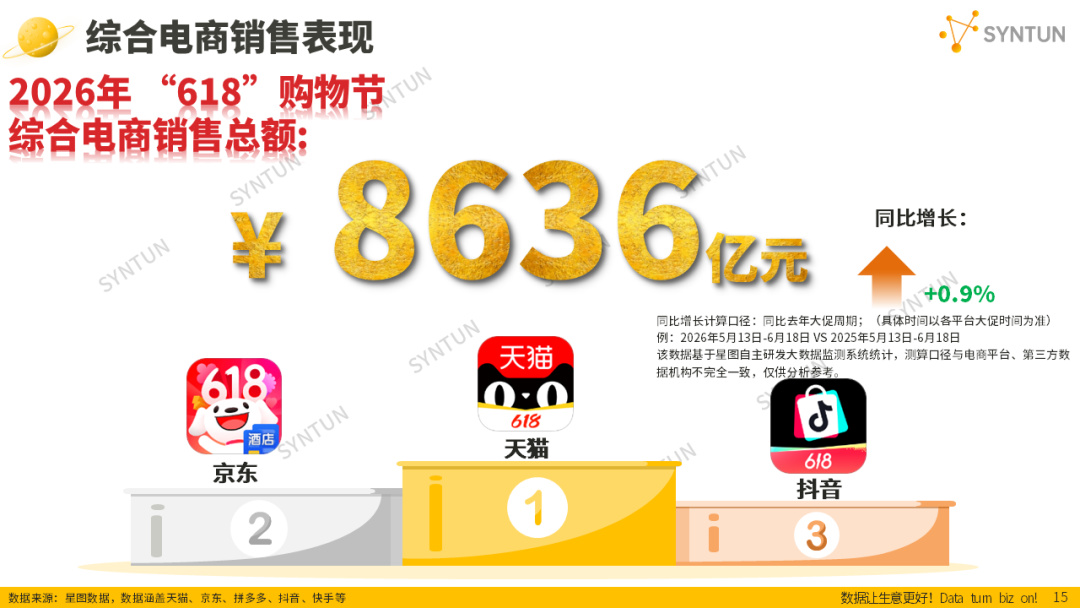
Against this backdrop, despite widespread AI adoption by e-commerce platforms during this year’s shopping festivals, consumer demand remained subdued. Syntun data shows that during the 2026 618 shopping festival, comprehensive e-commerce platform sales reached RMB 863.6 billion, growing just 0.9% year-over-year, far below the previous year’s 15.2% growth.
Realizing that AI’s 'efficiency gains' contradict smartphone users' fundamental needs, tech companies have pivoted.
During Tencent’s Q2 2025 earnings call, President Martin Lau emphasized the importance of Yuanbao, stating, 'We will integrate Yuanbao with Tencent’s existing platforms in the coming months to leverage our strengths.'
A year later, Lau calmly remarked, 'Finding high-value scenarios is just as important, if not more, than blindly acquiring massive DAUs and user time. This is a critical distinction.'
Source: Tencent
Currently, tech companies like Tencent are scrambling to deploy AI-driven office solutions like WorkBuddy. In productivity scenarios, users have clear cost-reduction and efficiency-enhancement needs, where AI can immediately unlock productivity gains, making it easier to convince users to pay.
According to Jiemian News, WorkBuddy has become one of Tencent’s highest-priority AI applications. This year, it is likely to enter the 'Hall of Fame,' Tencent’s internal honor for top products, joining heavyweights like WeChat Public Platform, Honor of Kings, and Tencent Meeting.
03 Must AI Terminals Be Smartphones?
In recent years, smartphone manufacturers have explored AI smartphones based on touchscreen devices, overlooking a critical question: Must AI smartphones adhere to traditional smartphone designs?
Looking back at the transition from feature phones to smartphones, while both are portable, their design philosophies differ fundamentally.
Externally, smartphones eliminated physical keyboards and adopted touchscreens to display complex content. Internally, they incorporated sensors like electronic compasses, gyroscopes, and accelerometers, enhancing perceptual capabilities. This fusion enabled complex functions like video playback, navigation, and photography, fostering a thriving mobile internet ecosystem.
The same logic applies to AI smartphones. As OpenAI CEO Sam Altman stated, 'The iPhone is the greatest consumer hardware product ever, but it wasn’t designed for AGI.' Users primarily interact with AI assistants through natural language dialogue, making smartphones' high-refresh-rate screens, high-performance CPUs, and ultra-high-pixel cameras largely irrelevant for enhancing AI experiences.
Given the struggles of traditional smartphones in AI transformation, many tech companies are exploring cutting-edge innovative hardware.
Source: iKKO
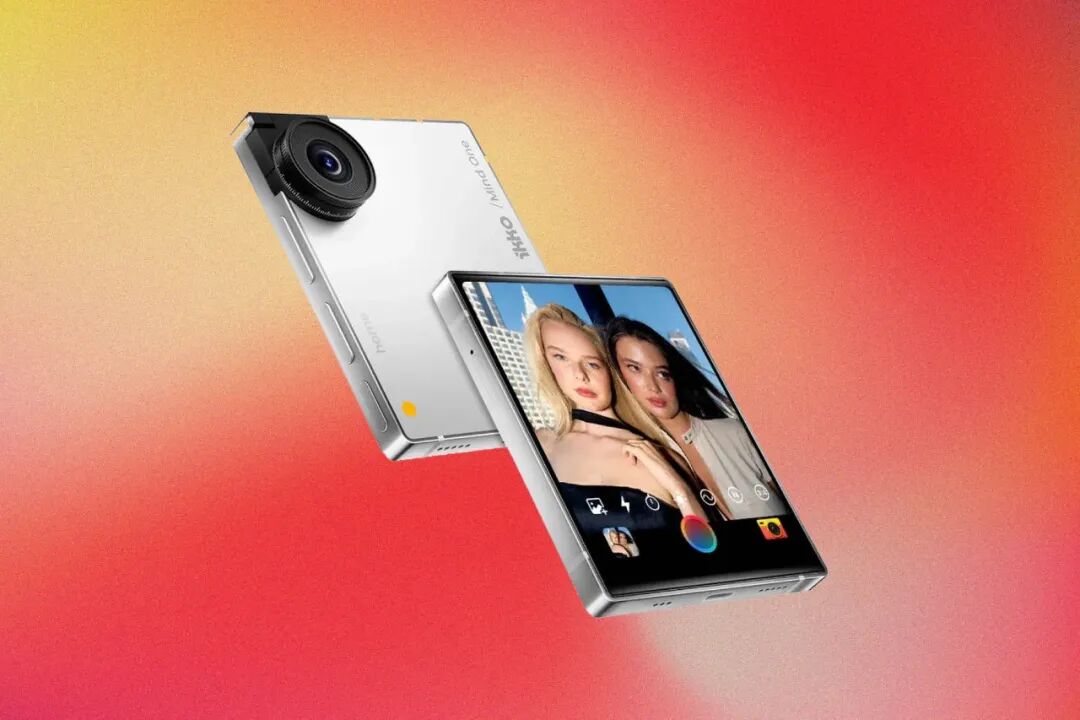
For example, in July 2025, iKKO launched the card-sized AI smartphone Mind One. While its underlying specs are ordinary, its appearance and system are deeply customized with AI technology.
Mind One features a square design with a 4.02-inch screen and a flippable camera for front-back adjustment, emphasizing portability.
Source: iKKO
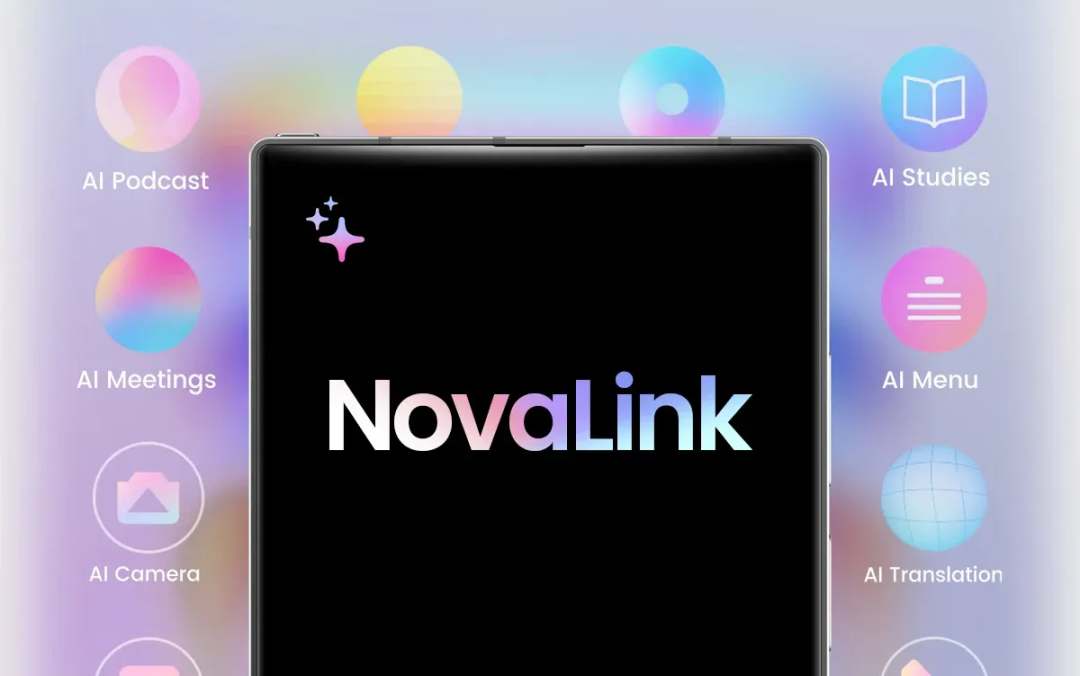
System-wise, besides a regular Android system, Mind One includes a lightweight iKKO AI OS, allowing users to switch systems via physical buttons. With NovaLink technology, its AI functions remain usable even without a SIM card or Wi-Fi.
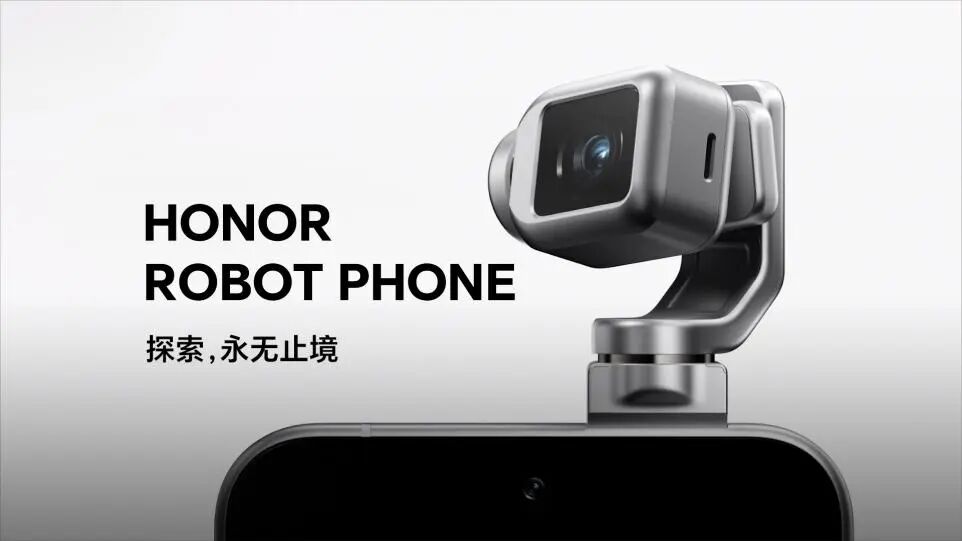
Source: Honor
Similarly, facing stagnant growth in traditional smartphones, Honor is actively developing innovative form factors. On August 12, 2026, Honor will host a product launch event for the world’s first robotic smartphone, the Honor Robot Phone. Its standout feature is a four-degree-of-freedom titanium alloy mechanical gimbal system at the top, supporting one-click pop-up and intelligent camera movement.
Regarding this, Honor CEO Li Jian stated, 'A smartphone shouldn’t just be a boring black block with a touchscreen. We decided to give it a brain—and limbs—resulting in bold, avant-garde, and exploratory product designs like the Honor Robot Phone.'
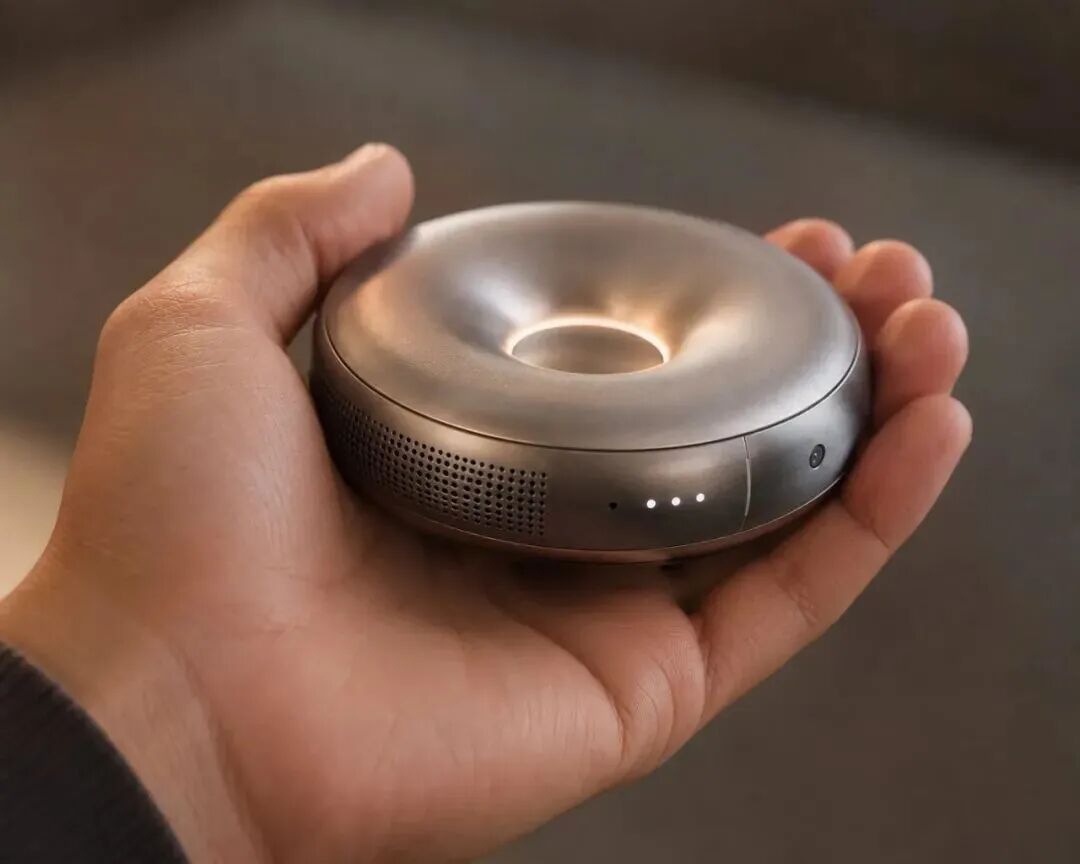
Source: Trung Phan
OpenAI initially planned to follow the traditional smartphone path for AI hardware but has since shifted its strategic focus to innovative hardware. On August 7, 2026, Bloomberg reported that OpenAI’s first consumer device resembles a 'donut,' lacks a display, supports voice interaction, and closely resembles a portable smart speaker.
Overall, the AI smartphone sector is still in its infancy with numerous players vying for dominance, and no benchmark product has yet emerged to redefine product form, interaction methods, or even industry standards, much like the original iPhone did.
However, for the AI hardware industry, the continuous emergence of innovative products is not necessarily bad news. In previous years, the industry mainly integrated large model capabilities into existing smartphone frameworks without reshaping hardware forms. Nowadays, more and more tech companies are realizing that if AI represents a new computing platform migration, the terminal that carries it is likely not just an 'AI-enhanced version' of traditional smartphones.
This means that the real competition in the next phase of AI smartphones will no longer be just about model parameters and computing power configurations, but rather which company can first forge a hardware paradigm that matches AI-native interactions.
AI hardware may ultimately still be 'a screen,' or it could transform into robots, glasses, speakers, or even some form that has not yet been named today.
From this perspective, the current chaos and trial-and-error in the AI hardware market are clearly not signs of industry stagnation, but rather an inevitable exploration period before the birth of a new terminal paradigm.
Interactive Topic
Have you used an AI smartphone? What do you think of it?
This article is original content from Shijiao Farsight and is prohibited from being reproduced without authorization.
-
![]()
The $5 Billion Unicorn Behind ByteDance's Seedance Viral Phenomenon
-
![]()
The $5 Billion Unicorn Driving ByteDance’s Seedance to Global Stardom
-
![]()
Starting at 219,900 Yuan, Equipped with Huawei ADS 5 as Standard, Avita 07L Exudes Sincerity
-
![]()
Tech Titans Clash in AI-Driven Office Solutions, Leaving AI Smartphones in a Tight Spot
-
JD.com, Leveraging Government Subsidies, Officially Raises iPhone Prices: Apple's Strategic Pricing Moves
-
![]()
Is Google Losing Its Vision?
-
![]()
Tech Giants Compete in AI Office, AI Smartphones Face Embarrassment
-
![]()
Starlink V3: Musk’s Ambitious Vision to Construct a ‘Sky Net’ of 100,000 Satellites, Traditional Operators on High Alert