Starlink V3: Musk’s Ambitious Vision to Construct a ‘Sky Net’ of 100,000 Satellites, Traditional Operators on High Alert
 08/10 2026
 478
478
On August 8, Musk unveiled another groundbreaking announcement on X: the third-generation Starlink satellite, V3, is poised for launch via Starship. Each V3 satellite is set to deliver tenfold the performance of its V2 predecessor, with total bandwidth surpassing 100 times that of the V2 system. Starlink’s annual revenue is projected to exceed $20 billion this year. Musk even boldly claimed that even if revenue per gigabyte were to plummet to one-tenth, Starlink’s annual revenue would still soar beyond $200 billion. This is no mere satellite upgrade; it’s a game-changer poised to redefine the global internet landscape. 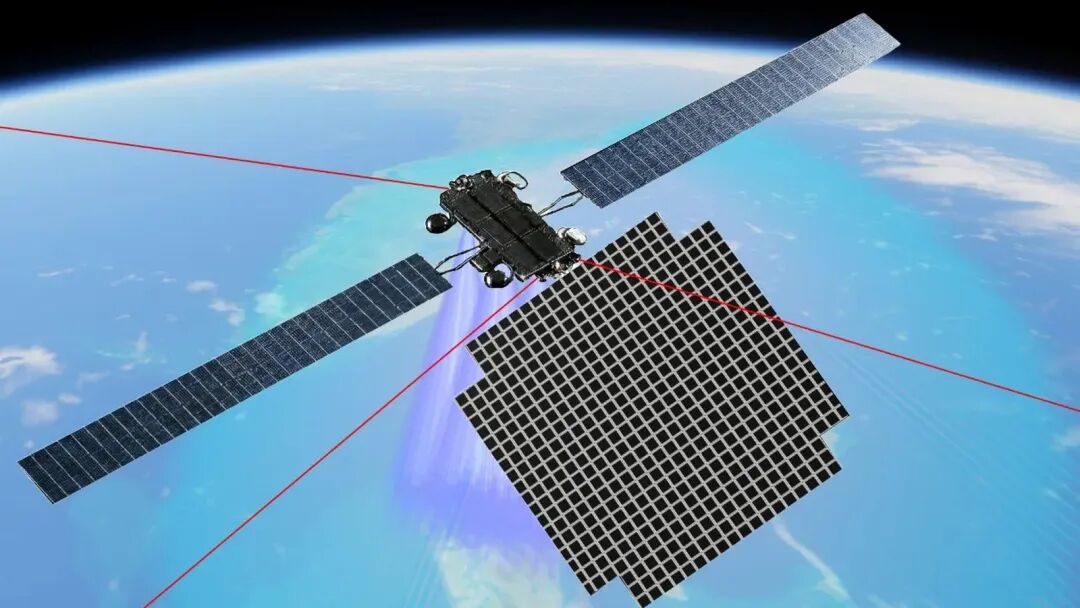
01 How Powerful is V3?
Let’s delve into the numbers. Each V3 satellite boasts a downlink bandwidth of 1Tbps, over ten times that of the V2 Mini. A single satellite can effortlessly support the simultaneous streaming of 1,000 4K ultra-high-definition movies or enable high-definition video calls for one million users concurrently. Starship is capable of launching 60 V3 satellites in one go, adding a staggering 60Tbps of bandwidth to the constellation with each launch—a capacity forty times that of Falcon 9. Musk also hinted at a significant increase in the number of subsequently launched V3 satellites. SpaceX has submitted an application to the FCC to deploy up to 100,000 V3 satellites. The V2 system is on track to achieve $20 billion in annual recurring revenue (ARR) this year, with 12 million users. Once V3 is fully deployed, Starlink will transition from a mere ‘satellite broadband’ service to a full-fledged ‘global internet infrastructure.’
02 What is Starlink’s Grand Plan?
On the surface, it appears to be a communication satellite upgrade, but in reality, it’s a strategic move to redefine the fundamental architecture of the global internet. 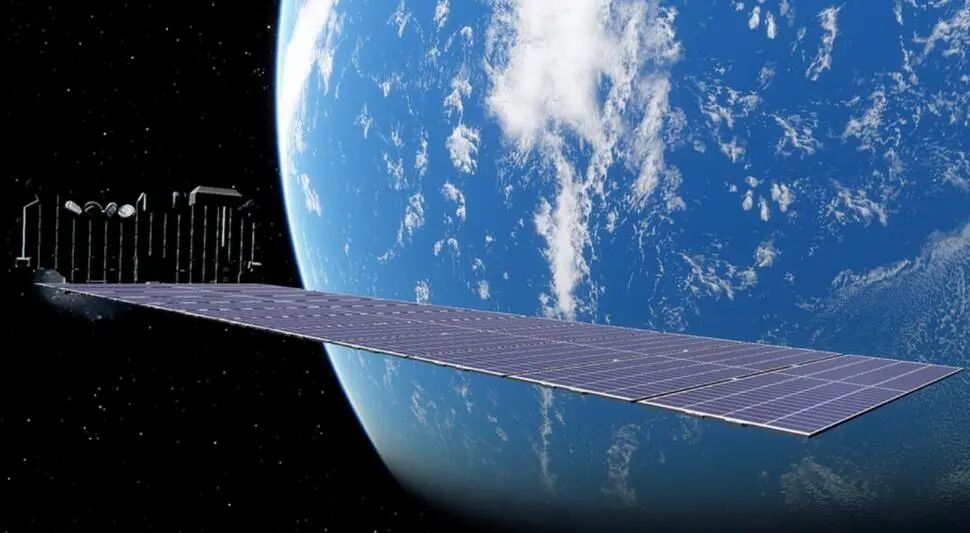
The cost structure is radically different. Traditional telecom operators invest heavily in laying fiber optics and constructing base stations, processes that are both costly and time-consuming. Starlink, on the other hand, descends from the sky, with marginal costs plummeting as the number of satellites increases. Musk remarked, ‘Even if revenue per gigabyte drops to one-tenth, revenue can still grow tenfold’—a calculation that holds water. The target market extends far beyond remote areas. Musk bluntly stated in an earnings call that it’s not far-fetched for Starlink to carry the majority of the world’s internet traffic in less than a decade. Starlink is assembling a large enterprise sales team to actively engage with businesses, governments, and commercial clients. This isn’t just about capturing the ‘unconnected’ market; it’s about challenging AT&T, Verizon, and T-Mobile. The ultimate vision is a space-based data center. In November 2025, Musk announced plans to build data centers in space. By the end of 2027, an in-orbit demonstration of space-based AI infrastructure will be launched. Starlink’s ambition isn’t just to provide internet access; it’s to enable AI operations in space.
03 Why Should Traditional Operators Be Worried?
The day the news broke, AT&T, Verizon, and T-Mobile’s stock prices felt the impact.
Analysts at Oppenheimer put it succinctly: Starlink is poised to capture the majority of the global fixed broadband market’s new users in the coming years and poses a long-term threat to traditional broadband, telecom, and mobile service markets. Starlink’s current pricing is already competitive with traditional broadband, and with the V3 satellite’s capacity increased tenfold, prices are expected to drop rapidly. Traditional operators’ competitive edge lies in their infrastructure. But when infrastructure shifts from ‘underground’ to ‘overhead,’ this advantage evaporates.
04 Some Questions
Drawing up grand plans is one thing; executing them is another. 
Starship isn’t fully mature yet. The 13th test flight successfully deployed 20 V3 satellites, but they burned up after 20 minutes in suborbital flight. The 14th test flight marked the first successful placement of V3 satellites into operational orbit. There’s still a long road ahead from testing to large-scale deployment. Approval and manufacturing of 100,000 satellites pose significant challenges. The FCC hasn’t granted approval yet, and production capacity isn’t fully ramped up. SpaceX expects to deploy at least 1,000 V3 satellites by the second quarter of 2027—deploying 100,000 will take considerable time. Starlink is still incurring losses. SpaceX reported a net loss of $541 million in Q2, with its AI business losing $1.26 billion. The construction cost of the V3 constellation is astronomical. The grander the plan, the greater the cash flow pressure.
05 My Assessment
Starlink V3 isn’t just a product upgrade; it’s Musk’s strategic ‘dimensional strike’ on the global communications industry. 
Traditional telecom operators rely on ‘building roads’—where fiber optics go, the internet follows. Starlink relies on ‘casting nets from the sky’—where satellites fly, the internet covers. The cost of building roads keeps escalating, while the cost of casting nets keeps declining. Musk’s claim of ‘carrying the majority of the world’s internet traffic in 10 years’ may sound audacious. But a look at Starlink’s growth tells a different story: a record-high 1.7 million net new users in Q2 2026; users surpassed 9 million by the end of 2025 and reached 12 million in 2026. Growth is accelerating, not slowing. The biggest challenge for traditional operators isn’t technological backwardness but outdated thinking—they’re still clinging to the old logic of ‘building base stations and laying fiber’ to confront the new battlefield of ‘satellites falling from the sky.’ While Musk is deploying 100,000 satellites in space, ground-based operators are still fretting over electricity bills for 5G base stations. The battle hasn’t even begun, and the outcome is already foregone.
Qiyingmen
Insightful, Knowledgeable, and Entertaining
With Readers | With Stories | With Reverence
-
![]()
The $5 Billion Unicorn Behind ByteDance's Seedance Viral Phenomenon
-
![]()
The $5 Billion Unicorn Driving ByteDance’s Seedance to Global Stardom
-
![]()
Starting at 219,900 Yuan, Equipped with Huawei ADS 5 as Standard, Avita 07L Exudes Sincerity
-
![]()
Tech Titans Clash in AI-Driven Office Solutions, Leaving AI Smartphones in a Tight Spot
-
JD.com, Leveraging Government Subsidies, Officially Raises iPhone Prices: Apple's Strategic Pricing Moves
-
![]()
Is Google Losing Its Vision?
-
![]()
Tech Giants Compete in AI Office, AI Smartphones Face Embarrassment
-
![]()
Starlink V3: Musk’s Ambitious Vision to Construct a ‘Sky Net’ of 100,000 Satellites, Traditional Operators on High Alert