The Closing of the $50 Billion Pre-IPO Round Looms: Yuezhi Anmian is Revolutionizing Valuation Logic for China’s Large Language Models
 08/10 2026
 557
557
Commercialization Gains Momentum: ARR Surges from $100 Million to $300 Million in Just Three Months
Produced by | Meigang Investigation
According to IPO Early Look, Yuezhi Anmian has informed confirmed investors in the Pre-IPO round that the final closing of this funding phase will take place on August 27, with a pre-investment valuation of approximately $50 billion.
Just weeks prior, the company successfully closed a Series F financing round exceeding $3.5 billion, achieving a post-investment valuation of $35 billion. From a $10 billion valuation at the start of the year to $50 billion today, the company’s worth has quintupled in a little over six months.
This achievement is not merely a tale of financial success. It is the culmination of a powerful alignment between technological innovation, commercialization strategies, and optimal capital timing.

K3: Setting a New Benchmark and Asserting Pricing Authority
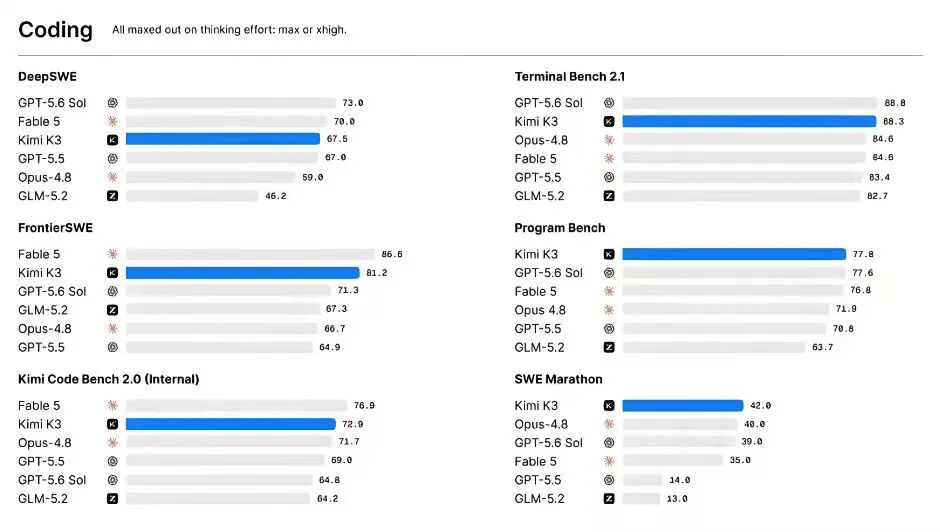
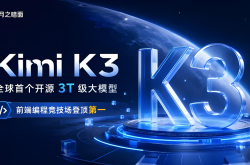
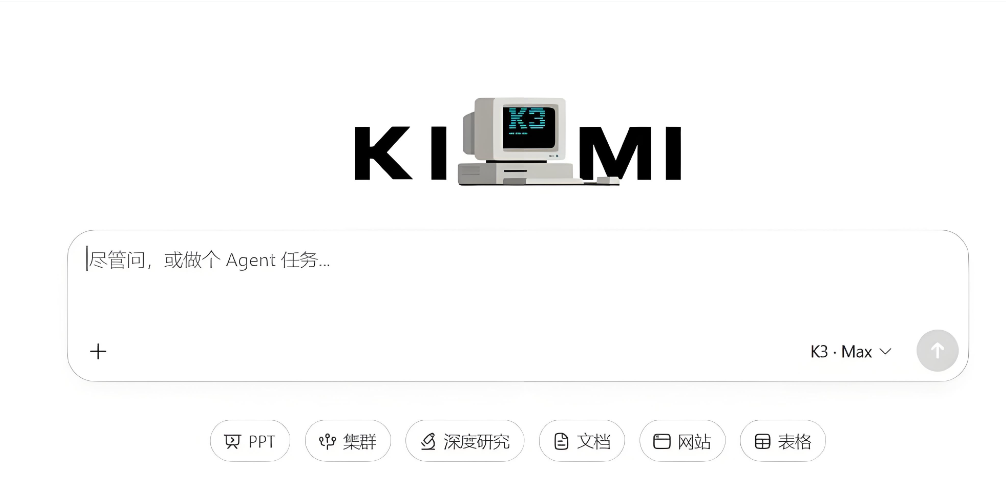
On the evening of July 16, Yuezhi Anmian officially launched Kimi K3. With 2.8 trillion parameters, it stands as the world's largest open-source large language model in terms of parameter scale. On the Frontend Code Arena leaderboard, K3 secured the top spot with a score of 1679, outperforming Claude Fable 5's 1631 and GPT-5.6 Sol's 1618, leading in six out of seven categories.
Setting benchmarks is one aspect; determining pricing is another. The API pricing for K3 is set at $0.3 per million tokens for cached input, $3 for non-cached input, and $15 for output. The output price has nearly quadrupled from K2.6's $4. This is not merely a price increase; it marks the first instance of a Chinese large language model competing on the global pricing stage alongside Claude and GPT. K3's pricing stands at 60% and 30% of GPT-5.6 Sol/Fable 5, respectively, with the gap narrowing rather than widening.
More significantly, the market's reaction has been overwhelming. Following K3's launch, user requests surged beyond expectations, nearing the limits of the computing cluster's capacity. On July 19, Yuezhi Anmian announced a temporary halt to new user subscriptions for C-end users, with the official website's membership page indicating that all packages were "sold out." An AI company halting new user registrations not due to a lack of demand, but because of overwhelming demand and insufficient computing power—this scenario, often described as a "happy trouble," is a significant indicator in the large language model industry.

Commercialization Gains Momentum: ARR Surges from $100 Million to $300 Million in Just Three Months
A $50 billion valuation is not built on mere projections or presentations.
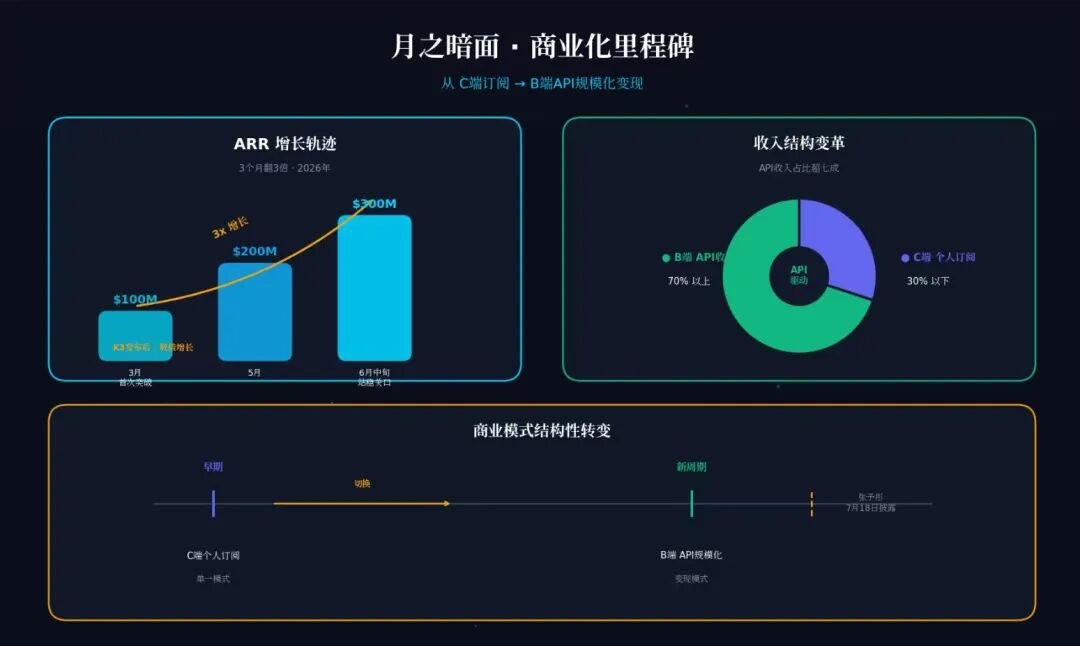
According to public data, Yuezhi Anmian's ARR first exceeded $100 million in March 2026, reached $200 million in May, and stabilized at the $300 million mark by mid-June. This represents a threefold increase in just three months.
On July 18, Yuezhi Anmian's president, Zhang Yutong, revealed on social media that enterprise ARR had "multiplied" following K3's release. More critically, a structural shift occurred: API revenue now accounts for over 70% of Kimi's total revenue. This indicates the company's transition from early reliance on C-end individual subscriptions to a new phase of B-end API-driven revenue growth.
When 70% of an AI company's revenue stems from API calls, it transcends being merely a "product company" and evolves into infrastructure for the AI era. The valuation logic for this business model diverges significantly from that of pure C-end applications.

Capital Timing: From Oversubscribed Series F to Pre-IPO Close in Less Than a Month
On July 29, Yuezhi Anmian closed a Series F financing round exceeding $3.5 billion. Due to subscription amounts surpassing the original target by more than threefold, the round concluded ahead of schedule.
On the same day, business registry data indicated that Yuezhi Anmian completed its share reform, transitioning from a "limited liability company" to a "joint-stock company." Founder Yang Zhilin shifted from director to chairman and manager, while Zhang Yutong was appointed as a director. In capital markets, a share reform is a clear precursor to initiating the IPO process.
Subsequently, the originally scheduled August launch of the Pre-IPO round (Series G) was expedited, with the pre-investment valuation directly set at $50 billion. The Series F round had scarcely cooled before Series G commenced—a financing pace that would be considered frenetic in any industry.
Behind this lies the structural transformation brought about by K3's release. According to reports from the Science and Technology Innovation Board Daily, investment quotas for this round became "suddenly scarce" post-K3's launch. The project established clear investor thresholds: to be directly added to the shareholder register, investors must manage assets exceeding $500 million. Not just anyone can invest—the project is highly selective.

On Going Public: Between Speculation and Reality, the Signals Are Unmistakable
In early August, rumors circulated that Yuezhi Anmian would "submit its Hong Kong IPO application as early as this month." The company promptly denied the claim, stating the "news is untrue." However, "not filing this month" and "not going public" are distinct scenarios.
With the share reform completed, Series F closed, and the Pre-IPO round underway, the trajectory toward going public is unmistakable. From a timing perspective, the Pre-IPO round will conclude on August 27, with subsequent filing imminent. Market expectations suggest the listing could occur between late 2026 and the first quarter of 2027.
Another noteworthy factor: Zhipu (02513.HK) went public in January 2026 and will enter its lock-up expiration period in January 2027. The lock-up pressure and secondary market performance at that time may influence the issuance valuations of subsequent similar companies. From this vantage point, Yuezhi Anmian's decision to advance its listing within the late 2026 to early 2027 window reflects a strategic timing choice rather than a passive wait.

Final Thoughts
Is a $50 billion pre-investment valuation excessive? If one considers only the current ARR, the answer is yes. With ARR just over $300 million, the corresponding PS ratio exceeds 160x—a figure that would prompt skepticism from any traditional industry analyst.
However, AI company valuations are not calculated using traditional PE and PS metrics, especially in the large language model sector. The market is not betting on Yuezhi Anmian's current quarterly revenue but on its potential to become one of China's few platform-level AI companies capable of sustainable operations and maintaining international competitiveness.
From K3's technological advancements to the establishment of API pricing power and the exponential growth of ARR, Yuezhi Anmian is redefining how the market measures the value of Chinese large language models using a logic distinct from its overseas counterparts.
On August 27, the Pre-IPO round will conclude. The next six to eight months will be a critical period to observe the company's transition from the private to the public market. For investors focused on the AI sector, this case warrants close attention—not to chase speculative highs but to understand the valuation restructuring underway in China's large language model industry.
-
![]()
Dissecting the Underlying Logic of the 'AI Office Entry Battle': How to Become the Ultimate Winner?
-
![]()
OFILM Issues Urgent Clarification on 'Asset Stripping' Rumors, Denies Channeling Benefits to Related Parties of Actual Controller
-
![]()
Securing 80% of Apple’s Shell Quality Inspection Orders: What Gives Huiyan Technology Its Competitive Edge?
-
![]()
Monthly Sales of 1 Unit: Chevrolet's Failure in China and an Excellent Example of Loss Mitigation for Joint Venture Automakers
-
![]()
The Closing of the $50 Billion Pre-IPO Round Looms: Yuezhi Anmian is Revolutionizing Valuation Logic for China’s Large Language Models
-
![]()
Pork Prices Plummet by 13%, Yet Smartphones and Healthcare Costs Soar: Here's Why Your Wallet Feels the Pinch
-
![]()
Storage Costs Skyrocket! Apple iPhone 18 Pro Sees Nearly 40% Cost Hike: Price Increases Loom
-
Musk's SpaceX to Compete with Top Three U.S. Operators: Wild Dream or Future Disruptor?