Securing 80% of Apple’s Shell Quality Inspection Orders: What Gives Huiyan Technology Its Competitive Edge?
 08/10 2026
 549
549
Recently, Huiyan Automation Technology (Guangzhou) Co., Ltd. (hereinafter referred to as “Huiyan Technology”) has secured 80% of the quality inspection orders for the shells of all products within Apple’s 3C product global supply chain. Having transitioned from a non-standard integrator, the company has established a formidable barrier in the consumer electronics quality inspection field by deeply integrating optics and AI technologies.
What truly distinguishes Huiyan Technology from other AOI (Automated Optical Inspection) companies is an optical challenge that has left traditional equipment manufacturers perplexed. With the widespread adoption of new materials such as titanium in consumer electronics, traditional 2D visual inspection has become largely ineffective. High reflectivity and complex curved surfaces instantly render machines “blind.”
Huiyan Technology has successfully tackled this industry pain point by combining deep learning algorithms with advanced optical technologies like “phase deflection.” The phase deflection technique involves projecting structured light fringes onto the surface of the object under inspection and using a camera to record the deformed fringes modulated by the surface curvature, thereby reconstructing the microscopic topography.
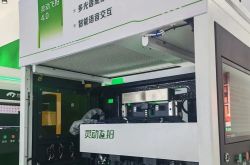
Huiyan Technology has jointly filed an invention patent with Guangdong University of Technology for this technology, titled “Machine Vision Inspection Method and System Based on Phase Deflection Technology.” This “Agile” series AI quality inspection platform (its high-speed inspection version is also known as “Agile High-Speed Capture”) has ultimately achieved industry-leading performance metrics, including a minimum detectable defect size of 0.01mm × 0.01mm and a false negative rate below 0.5%. This directly addresses the systemic risks that new materials pose to appearance inspection.
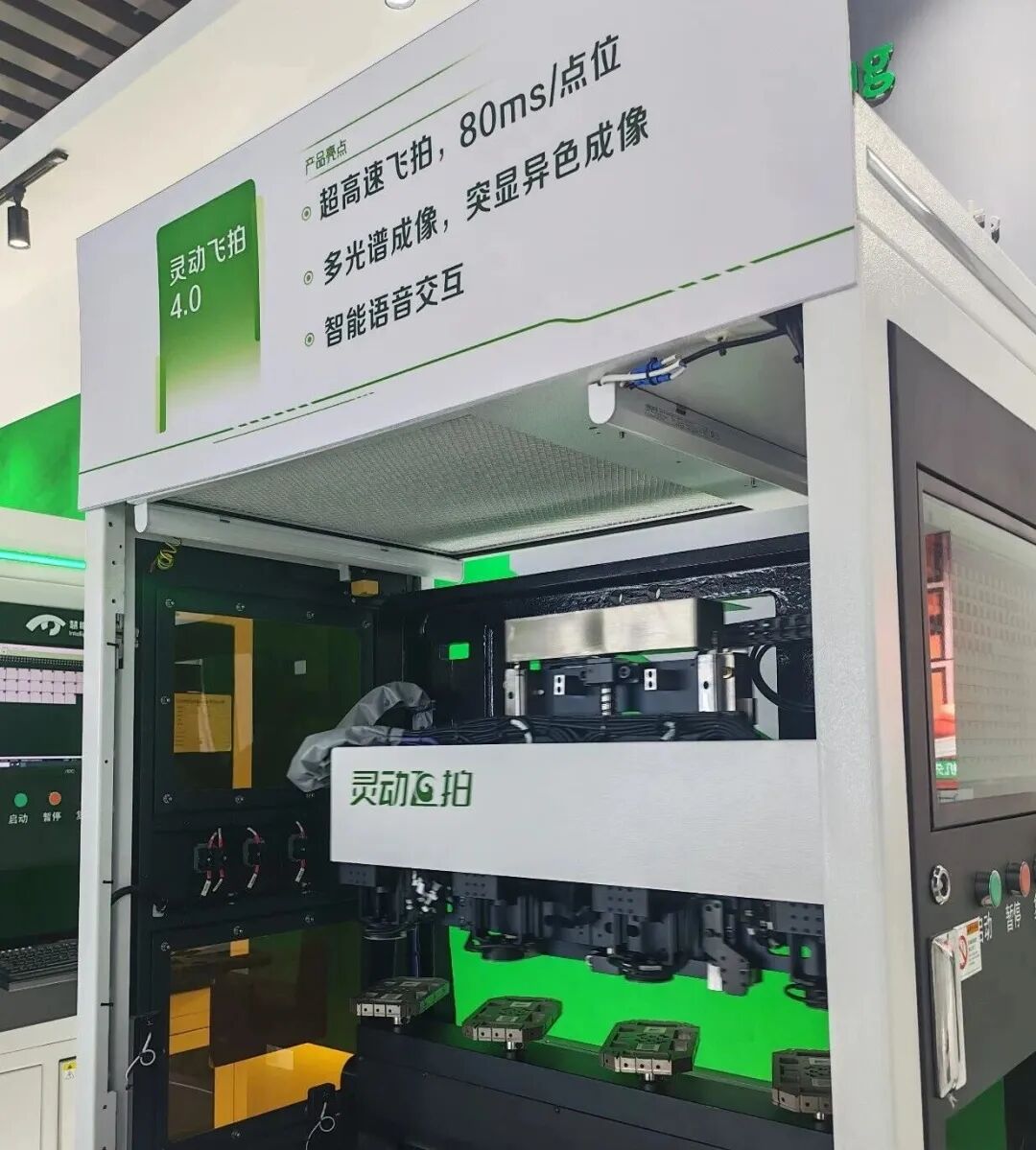
Technological breakthroughs have directly translated into market influence. In the procurement of similar equipment at Foxconn’s Zhengzhou campus, Huiyan Technology’s market share soared from approximately 40% in 2023 to about 85% in 2025. The company not only firmly occupies a core supplier position with Apple supply chain giants like Foxconn, Luxshare Precision, and BYD Electronics but also officially became a direct equipment supplier to Apple and Huawei in 2025.
This success was no accident. In 2018, Huiyan Technology had been active in the machine vision field for over a decade but, like most of its peers, was stuck in the rut of “non-standard customization.” CEO Wu Kai recalled that every project at the time required development from scratch, creating a bustling yet arduous situation.
That year, the company made a pivotal decision: to abandon all non-standard businesses and focus on AI appearance inspection. With this strategic shift, Huiyan Technology transformed from a project-based integrator into a product-centric platform company. They brought in Professor Lai Jianhuang’s team from Sun Yat-sen University, recruited AI talents like Dr. Zhu Junyong, and established a comprehensive six-in-one R&D system integrating “optics, mechanics, electronics, computing, software, and operations,” infusing standardization capabilities into every inspection link.
The contrast in results is remarkable: Huiyan Technology’s per capita output value reached 1.125 million yuan, 2.5 times that of traditional AOI companies.
Huiyan Technology’s ascent is not an isolated case but rather a microcosm of the explosive growth in the AI optical inspection sector. According to QYResearch’s “Global Artificial Intelligence Visual Inspection System Market Research Report,” the global market size for AI visual inspection systems reached 164 billion yuan in 2025. Within this rapidly expanding market, the 3C industry accounts for half of the industrial AI quality inspection solutions, and Huiyan Technology has precisely tapped into the core of this booming sector.
However, beneath the halo of success, concerns also exist. Huiyan Technology still heavily relies on Apple’s supply chain. The company plans to achieve a 40% share of revenue from non-Apple supply chains by 2027. Based on this target, Apple-related businesses will still account for over 60% of its revenue in 2026. The common risk for “Apple supply chain” companies is that any fluctuation in orders or technical adjustments from major clients will directly impact their performance.
Looking ahead, Huiyan Technology has set 2027 as a critical milestone for diversification, planning to expand into higher-value-added fields such as automotive components and semiconductors. This represents not only a new starting point for growth but also a new test of the reusability of its six-in-one technological system integrating “optics, mechanics, electronics, computing, software, and operations.”
From its bold restructuring in 2018 to becoming the quality inspection “gatekeeper” in Apple’s supply chain today, Huiyan Technology has achieved a dual breakthrough in optical technology and commercial logic over seven years. In the hundred-billion-yuan AI visual inspection sector, the true barrier has never been just algorithms and optical components themselves but rather a profound understanding of industrial scenarios at a granular level. We look forward to its subsequent market progress.
-
![]()
Dissecting the Underlying Logic of the 'AI Office Entry Battle': How to Become the Ultimate Winner?
-
![]()
OFILM Issues Urgent Clarification on 'Asset Stripping' Rumors, Denies Channeling Benefits to Related Parties of Actual Controller
-
![]()
Securing 80% of Apple’s Shell Quality Inspection Orders: What Gives Huiyan Technology Its Competitive Edge?
-
![]()
Monthly Sales of 1 Unit: Chevrolet's Failure in China and an Excellent Example of Loss Mitigation for Joint Venture Automakers
-
![]()
The Closing of the $50 Billion Pre-IPO Round Looms: Yuezhi Anmian is Revolutionizing Valuation Logic for China’s Large Language Models
-
![]()
Pork Prices Plummet by 13%, Yet Smartphones and Healthcare Costs Soar: Here's Why Your Wallet Feels the Pinch
-
![]()
Storage Costs Skyrocket! Apple iPhone 18 Pro Sees Nearly 40% Cost Hike: Price Increases Loom
-
Musk's SpaceX to Compete with Top Three U.S. Operators: Wild Dream or Future Disruptor?