Yuewen’s Unending Innovation: Navigating Content Industry Shifts
 08/12 2026
 507
507
The cultural and entertainment sector has been relatively subdued in the first half of this year.
The film market has seen sluggish growth, long-form dramas have grappled with sponsor acquisition challenges, and “bare-bone broadcasts” (shows without sponsors) have emerged as a prominent industry term, reflecting cutbacks from platforms and production companies. Drivers of the content business, such as traffic, promotion, and significant investments, have nearly all experienced a simultaneous slowdown.
Yet, amid this general downturn, a few exceptional performers have defied the trend. The film A Love Letter to Grandma, a low-budget drama featuring primarily non-professional actors, launched with just 1.6% of screenings. However, its touching narrative carried it from spring into summer, amassing over 2 billion yuan at the box office. Similarly, the TV drama Chasing Jade gained viral popularity through word-of-mouth, emerging as a top contender in the long-form drama market for the first half of the year.
This dynamic suggests that in a weaker overall market, consumer spending becomes more concentrated on a select few high-quality offerings, thus amplifying the scarcity value of premium content.
Yuewen’s performance in the first half appears to confirm this logic.
On August 11, Yuewen Group released its financial report for the first half of 2026.
The report revealed that Yuewen’s revenue reached 3.53 billion yuan in the first half of 2026, marking a 10.7% year-on-year increase and reflecting an overall positive outlook.
However, the source of this growth warrants closer examination than the growth figure itself.
Over the past year, the short drama sector has witnessed rapid expansion, AI-driven visual content production has surged, and content exports have continued to gain momentum, ushering the entire content industry into a new cycle. Within Yuewen’s report, it is pertinent to ask how much of its success can be attributed to these broader trends and how much it has achieved independently.
The answer unfolds along two interconnected paths: one is rooted in Yuewen’s longstanding repository of IPs, and the other leads to AI and emerging business formats such as short dramas, anime-style dramas, and derivative products. These old and new avenues ultimately converge at the same strategic starting point—“IP + AI.”
Where does this resilience stem from?
Let’s begin with the fundamentals.
The financial report indicated that Yuewen’s online business revenue reached 1.84 billion yuan in the first half of 2026, maintaining overall stability. Despite free reading and short videos continuing to divert user attention, paid reading retained its core position, underscoring the enduring value of high-quality content.
During the same period, revenue from copyright operations reached 1.61 billion yuan, a 41.9% year-on-year increase, becoming the primary driver of Yuewen’s growth in the first half.
It is noteworthy that although Yuewen’s profits declined in the first half of this year, this was primarily due to a one-time historical tax adjustment from a subsidiary, unrelated to current business performance. Excluding this impact, Yuewen’s adjusted net profit attributable to shareholders increased by over 10% year-on-year, indicating a genuine improvement in profitability.
Beyond the financial results, more profound shifts are evident in Yuewen’s business model.
For an extended period, Yuewen’s IP value realization has followed a “pulsed” pattern. The launch of a major long-form drama like Joy of Life often triggers a concentrated revenue surge within a single quarter. However, a lull inevitably follows when such a blockbuster concludes or when major projects are in production or awaiting scheduling.
With the industry’s most extensive IP reserves, Yuewen’s value realization has traditionally been tied to the slow production cycles of traditional film and television—marked by peaks and valleys with significant gaps in between.
Now, this dynamic is evolving. With new business formats such as short dramas, anime-style dramas, and derivatives entering Yuewen’s IP development pipeline, its revenue structure is broadening, and business anchors are becoming more densely packed.
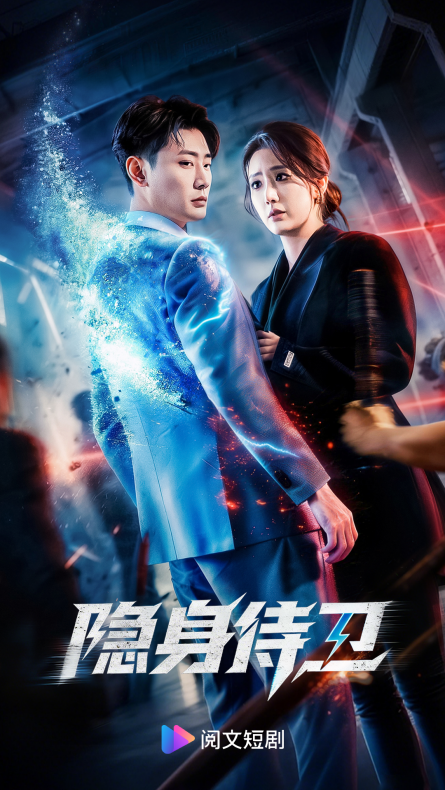
In the short drama arena, Invisible Bodyguard, the “king” of male-oriented content, surpassed 5 billion views, leading its vertical market. The female-oriented original IP “Sweet Wife” series accumulated profits exceeding 50 million yuan, demonstrating a viable path for commercializing original short drama IPs. With offerings catering to both male and female audiences, as well as adapted and original works, Yuewen has established a mature content production system in the short drama space.
Now, consider anime-style dramas, which entered the scene later. In the first half of the year, Yuewen adapted over a thousand online novels into AI-driven anime-style dramas, with 367 surpassing 10 million views and nearly 50 exceeding 100 million views.
The financial report revealed that revenue from short dramas and anime-style dramas reached 430 million yuan in the first half of the year, roughly triple that of the same period last year, setting a new record.
If short dramas and anime-style dramas have shortened the monetization cycle for Yuewen’s IPs, then derivative products have extended the timeline for IP value realization.
Content consumption has a “shelf life.” The popularity of films and dramas typically peaks in the weeks following release or premiere, then gradually declines, along with content-related revenue. Derivative products, however, sustain longer-term emotional connections between users and IPs, unlocking the long-tail value of content.
This business model has already been validated by industry leaders like Disney and Nintendo. The Pokémon IP, for instance, has generated over 100 billion USD in revenue, primarily from animations, cards, toys, and licensing, with the games themselves serving merely as entry points.
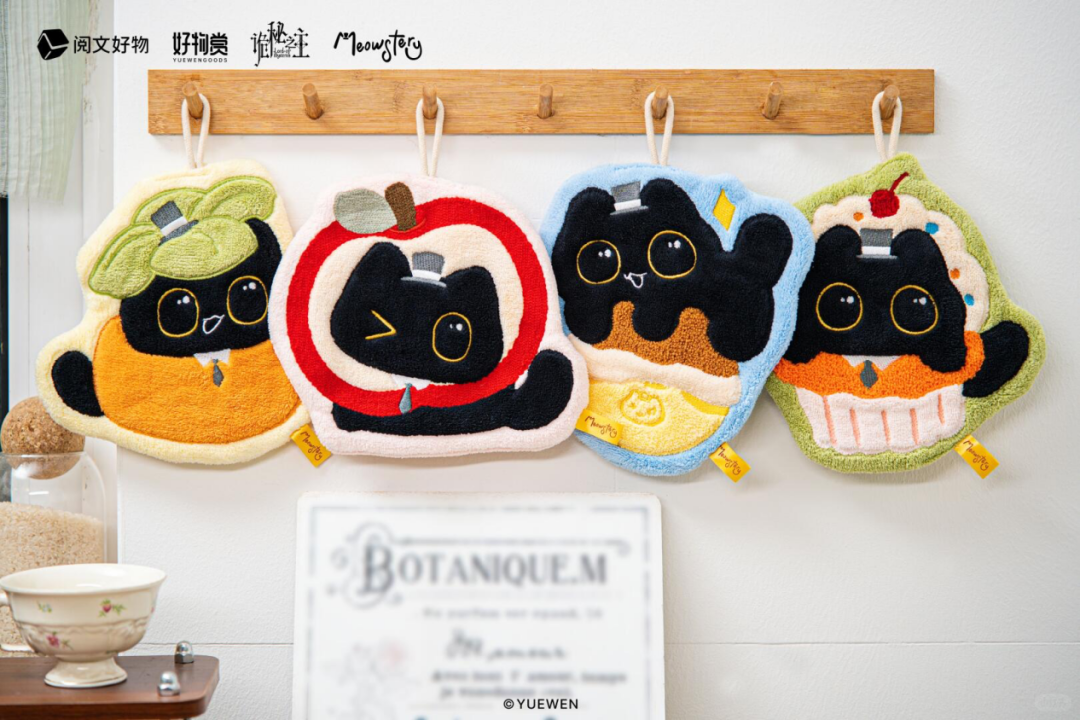
Yuewen is moving in a similar direction. Previously, its derivatives focused on the “goods economy,” offering pure collectible and emotional value. Now, the range has expanded from bedsheets to towels, placing IPs in more frequent everyday contexts.
Data shows that in the first half of this year, Yuewen’s IP derivative products achieved a GMV of 780 million yuan, a 60% year-on-year increase. During the June 18 shopping festival, the GMV of Yuewen’s official merchandise store exceeded 12 million yuan, a 359% year-on-year increase, ranking it among the top 5 handmade goods stores. This segment, once considered a minor addition to IP commercialization, is proving through sustained high growth that it can become a more independent and stable value outlet.
However, content companies will always require premium offerings. Super projects like Joy of Life, which demand heavy investment and are low-frequency, still set the upper limit for performance. The difference is that new business formats such as short dramas, anime-style dramas, and derivatives are filling the gaps between peaks and valleys, raising the overall operational baseline and creating a more layered and resilient revenue structure.
Yuewen: More Than Just Riding the Wave
In an industry undergoing transformation, the ability to navigate cycles matters more than the cycles themselves.
The rapid growth of short dramas and anime-style dramas over the past six months stems partly from industry-wide shifts—namely, AI’s reshaping of content production.
Traditionally, a significant portion of short drama costs went to actors, sets, costumes, and makeup, while anime required lengthy artistic processes. With the rise of AI-generated video, short dramas and anime-style dramas now operate within lighter workflows. Small teams of 3 to 5 people can produce an anime-style drama in a week, with costs and production cycles plummeting.
Similar changes are evident in overseas markets.
In July 2026, Haruki Murakami’s first novel in three years, Kahoko, was published in Japan. Just three days later, an AI-generated Chinese translation appeared online, smooth and coherent. For his previous work, The City and Its Uncertain Walls, readers waited a full year for an official Chinese translation.

Yuewen has also benefited from AI translation. As of the first half of the year, its overseas reading platform, WebNovel, featured over 30,000 AI-translated works, contributing 40% of the platform’s total revenue.
Yet, AI is a double-edged sword.
The AI video boom has flooded the market with poorly made, formulaic short dramas and anime-style dramas featuring flat characters, forcing platforms to continually cull low-quality AI-generated content and raise approval thresholds.
DataEye shows that in December 2025, about 50,000 anime-style dramas were airing online, with a hit rate of 0.18%. By February 2026, the number had doubled to 120,000, but the hit rate dropped to 0.12%—production soared, but hit rates slid.
In other words, while AI can lower content production barriers, it cannot flatten the importance of storytelling and IP depth.
The latter is Yuewen’s forte and its deepest competitive moat.
Data shows that Yuewen’s anime-style dramas achieve a million-view rate five times the industry average, while its hit rate for short dramas is four times the market average. While industry-wide shifts benefit everyone, Yuewen’s edge lies in its unique ability to consistently deliver hits.
This advantage did not emerge overnight in the AI era. It largely stems from Yuewen’s paid reading business, often seen by outsiders as a “slow” venture.
Richard Caves once proposed the “no one knows” principle: in creative industries, no stable function links input and output. Even seasoned professionals cannot predict a work’s success beforehand.
Today, AI reduces trial-and-error costs but does not eliminate this uncertainty. As supply surges, demand-side uncertainty only intensifies.
Paid reading offers a blunt but effective way to manage this uncertainty. From a novel’s launch to its conclusion, it undergoes multiple layers of filtering through metrics like collections, daily reads, monthly tickets, and tips. Every click and subscription is a vote cast with real money.
This system cannot eliminate “no one knows,” nor can it guarantee every work’s success. But letting bettors see the cards before wagering is very different from blind betting.
So, while most short drama and anime-style drama players are still “gambling” on raw content—cutting it open to see if it pays off—Yuewen is “panning for gold.” Its premium IPs, vetted by millions of readers and selected from thousands of novels, are already golden.
Take I Really Didn’t Want to Be Reborn as an example. The original novel on Qidian had over 100,000 paid subscriptions and was named one of the best web novels of 2024. Adapted into a short drama, it surpassed 70 million in popularity within three days, topping the male-oriented charts on leading short drama platforms. Similarly, Invisible Bodyguard, which broke the male-oriented short drama ceiling, and Three Thousand Blessings, an anime-style drama with 3 billion views, were both adapted from mid-tier Yuewen IPs.

From this perspective, paid reading may need revaluation. While its growth curve seems less “exciting” compared to new businesses, its value as a source of premium IP has become rarer and more valuable.
Guarding such a gold mine, earning licensing and adaptation fees is certainly lucrative. But judging by Yuewen’s moves over the past year, its ambitions seem to stretch further.
The Infinite Game of IP and AI
In any gold rush, three roles emerge: those who sell the mines, those who sell the shovels, and those who open the stores. Mine owners control resources, shovel sellers boost efficiency, and store operators hold the entry points. Most companies choose one role; Yuewen refuses to pick—it wants all three.
The mines are already there. Yuewen holds the industry’s largest IP reserves, coupled with a writer ecosystem that continuously produces new IPs. This is a unique asset that competitors cannot replicate quickly.
The shovels come in three main forms: Writer Assistant (NovelBuddy), Drama Assistant (DramaBuddy), and IP Assistant (IPBuddy). All three are part of Yuewen’s recently launched Buddy series of vertical AI agents for cultural creativity, covering creation, adaptation, and copyright development from start to finish.
Take DramaBuddy as an example. It can “read” a million-word novel in just five minutes, while “AI Book Query” can instantly retrieve character relationships and highlight plots, making adaptation deviations unlikely.
However, simply selling shovels offers little competitive moat.
Consider the current rise of “card drawers” in the AI video industry—a role created because AI models are still immature, requiring humans to sift through flawed outputs and “clean up” for AI. As models improve, such tasks will soon be automated. Similarly, as short drama and anime-style drama agents iterate, more creative steps may be pipelined, eliminating even the need for card drawing.
Yuewen seems aware of this, which is why it develops its own tools—not for the shovel sales alone, but to accelerate “mining” efficiency through workflows tailored to its platform, enabling stable output and long-term production relationships.
Platforms like Qidian Theatre and ToonScroll represent the “stores” Yuewen is building.
Qidian Theatre is not a new entry point; its name reveals its heritage. Its strong integration with Qidian Chinese Network gives Yuewen control over distribution while significantly improving IP development efficiency.
Traditional IP development is a long road: after a novel is finished, copyright deals must be struck, adaptation and production begin, and finally, the content reaches users. Each step takes time. Joy of Life, for example, took over a decade from serialization to film and TV adaptation. Many mid- and lower-tier IPs never even reach the screen.

Qidian Theatre, functioning as an internal platform, has the potential to establish an internal loop for IP development. For example, while a novel is still being serialized, AI can concurrently produce an anime-style drama, accurately restoring the original scenes. This enables IPs to be visualized right from the source stage, eliminating the need to wait for the novel's completion or copyright agreements to be finalized.
At present, Yuewen has already set up this framework, but whether it will ultimately succeed remains to be determined.
After all, apart from its invaluable IP treasure trove, which cannot be hastily exploited, AI tools and short-form drama platforms are also confronted with fierce competition. For Yuewen, merely being quick in individual areas may not be enough in the long term.
Fortunately, as Michael Porter pointed out, a company's competitive advantage, or “moat”, stems from a coordinated set of activities rather than isolated actions. Competitors may be able to imitate individual strategies or technologies, but replicating the entire system is a formidable challenge.
Therefore, the “mines” (IP resources), “shovels” (AI tools), and “stores” (platforms for distribution) are not separate entities. Only when these elements, along with others, interlock and create synergy can Yuewen emerge victorious in the never-ending game of IP and AI.
-
The RTX 3060 Makes a Comeback Amid a Mix of Old and New Hardware, Making 2026 the Worst Year for the PC Industry
-
![]()
Zhang Yiming Achieves Jack Ma's 'Dream': Douyin Surpasses 1 Billion Monthly Active Users First!
-
The Complete Decline of Fuel-Powered Vehicles! Only One Model in July's Top 10 Sales
-
![]()
What Are the Three World Models in BYD's HyWorldVLA: Pixel-Level, Latent Space, and Hybrid?
-
Raking in 23.7 Billion Yuan in Just Half a Year! Has Foxconn Industrial Internet Turned a New Leaf?
-
Offline Competition Among Big Companies for Customers: The Battle for Desktop Access with Office Agents
-
![]()
Starting at 3199 yuan, the REDMI K100 series has been launched, making me start to worry for the Xiaomi 18
-
![]()
Xiaomi's MiMo Stages a Two-Year Comeback to Top Global Inference Volume Rankings