Starting at 3199 yuan, the REDMI K100 series has been launched, making me start to worry for the Xiaomi 18
 08/12 2026
 343
343
On August 11, 2026, REDMI held the launch event for the new REDMI K100 series, and Leitech was invited to cover the event.
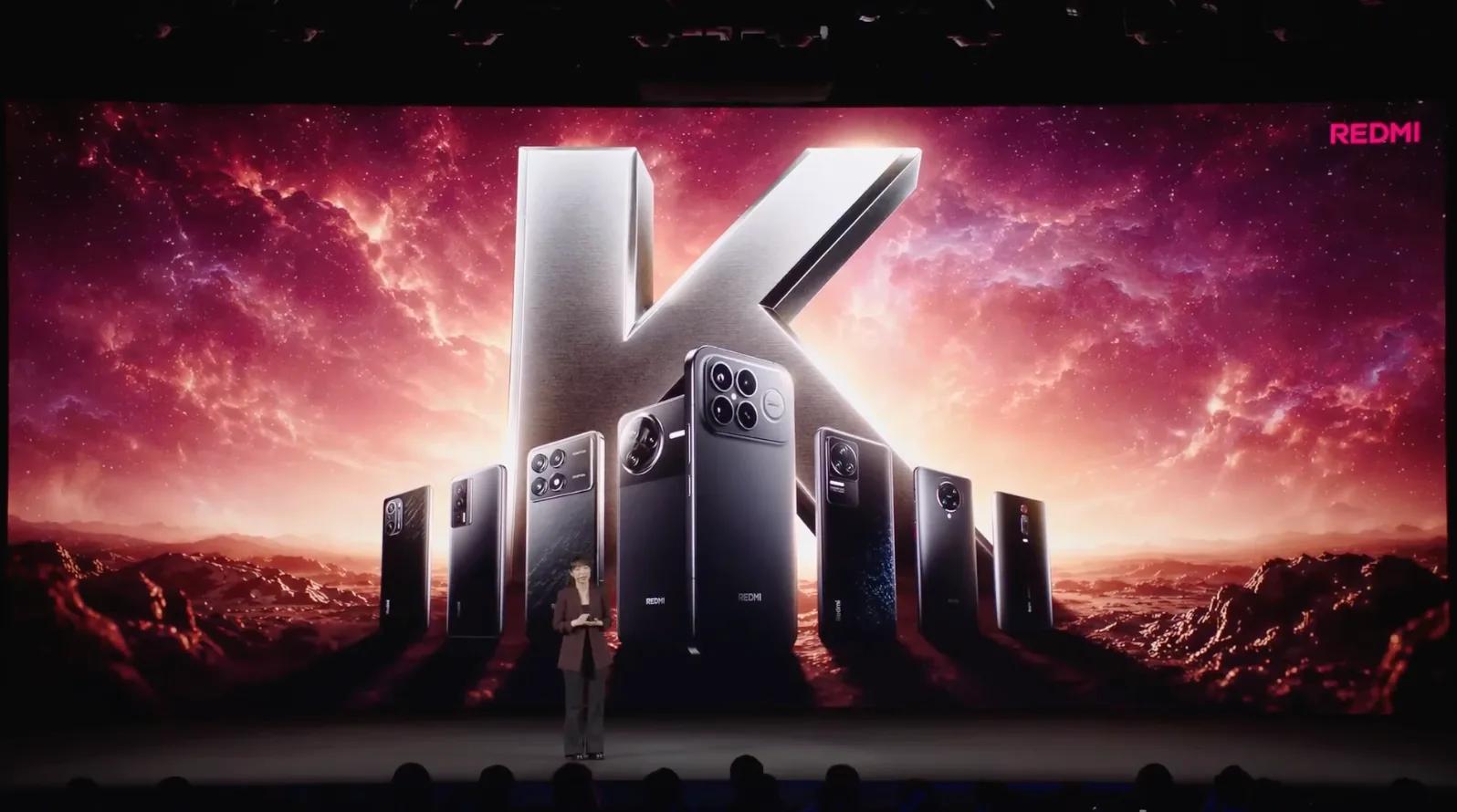
(Image source: Xiaomi official)
As the annual iteration of the K series, the K100 series has garnered significant attention from Xiaomi fans and the market before its release. Everyone is concerned about whether this contender, once hailed as the "price butcher," can still stay true to its "original intention" amidst the overall price hikes in memory and storage. Now, let's dive into the product introduction.
Surprisingly, the first configuration REDMI introduced was not performance but the screen. According to the official introduction, the REDMI K100 Pro features the latest M11 luminescent material screen, with a luminescent efficiency improvement of about 20% compared to the previous generation.
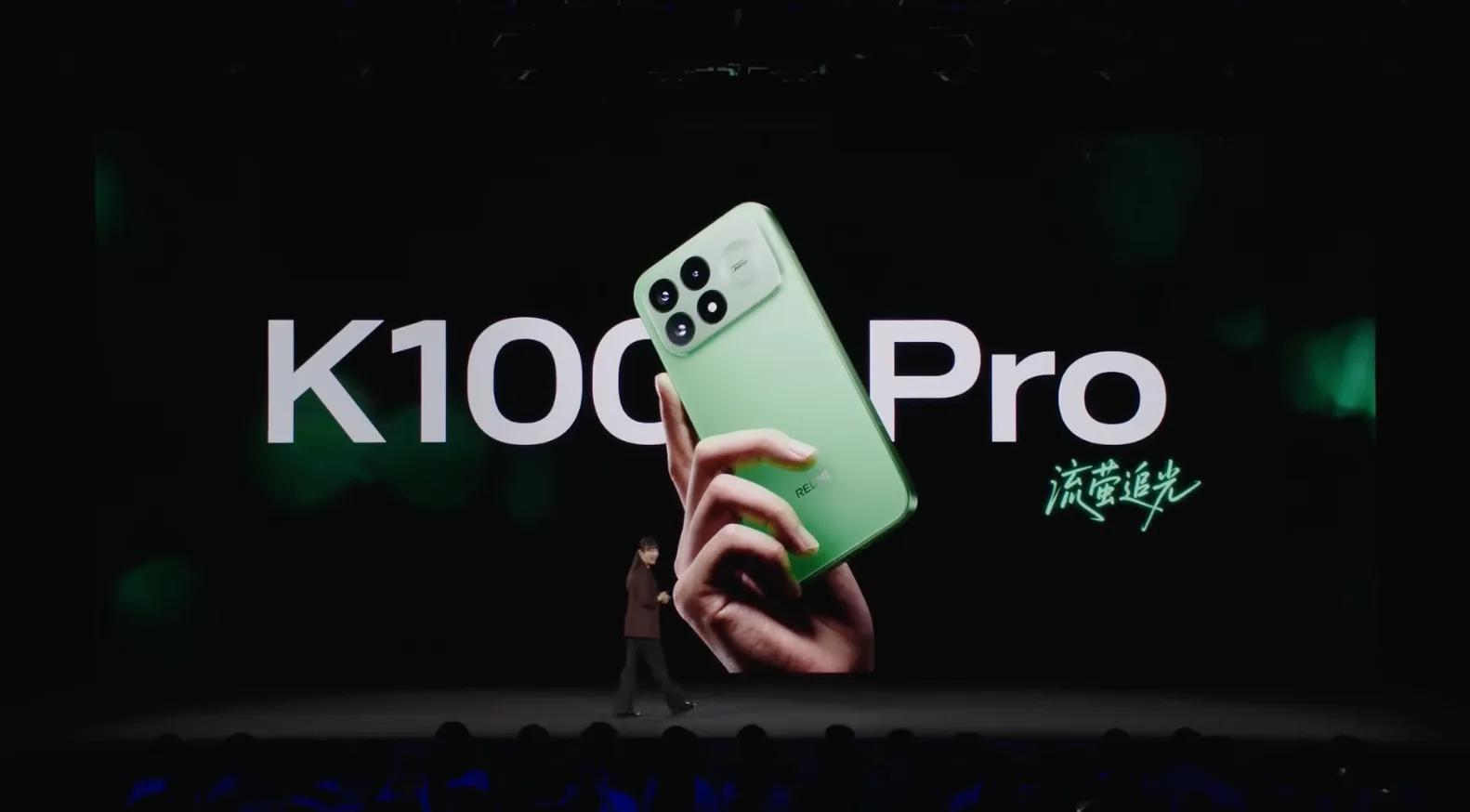
(Image source: Xiaomi official)
Additionally, it incorporates the same flagship super pixel array as Xiaomi's digital series, enabling full RGB lossless arrangement. This allows the 1.5K resolution to match the clarity of a 2K screen while consuming less power and providing longer battery life. Other parameters are briefly mentioned here: 6.53-inch, 1.5K resolution, 185Hz refresh rate, 4500nits peak brightness, support for circular vibrating polarizer 2.0, full-brightness DC dimming, and 1nit ultra-low screen brightness, among other features.
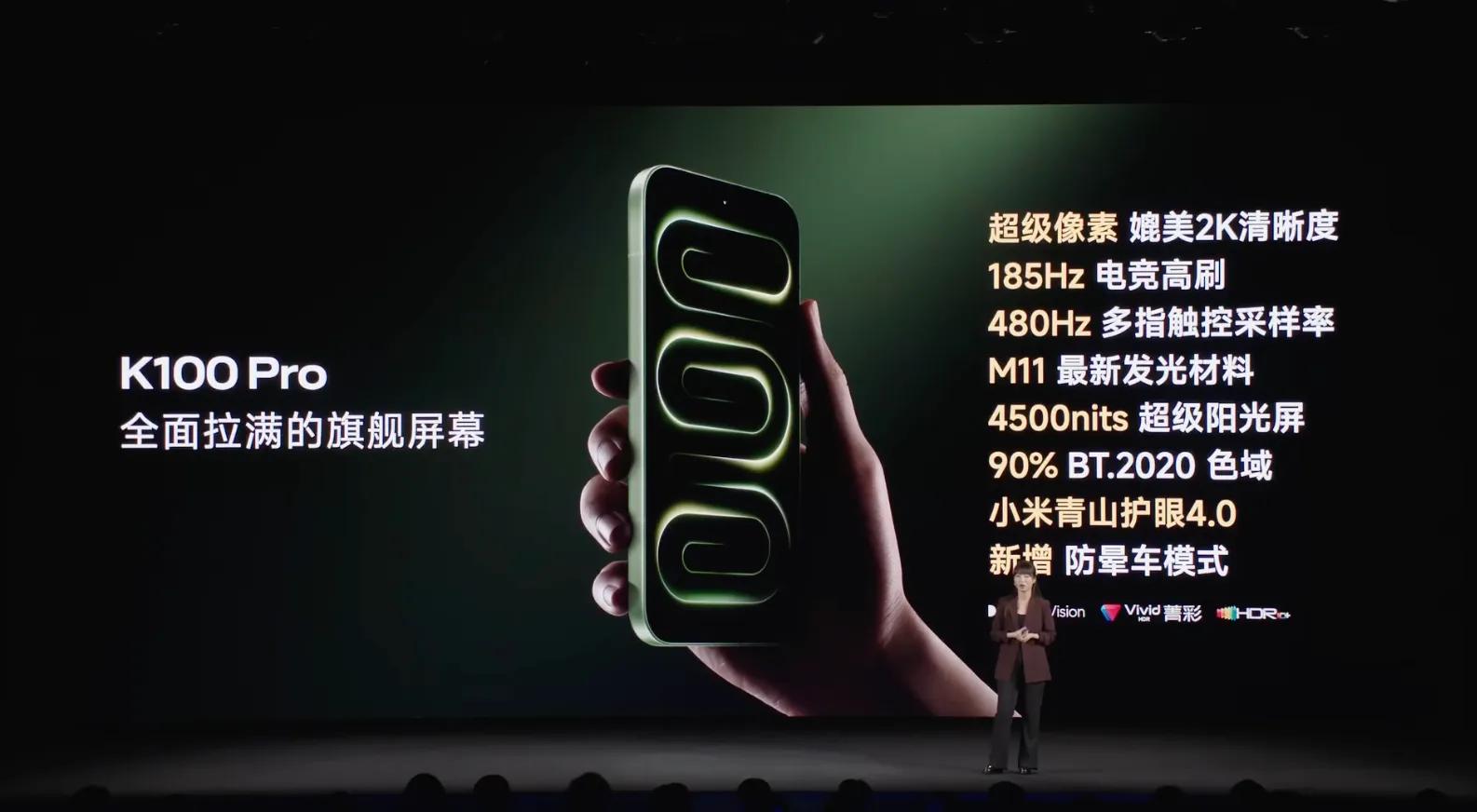
(Image source: Xiaomi official)
While these parameters may seem commonplace on flagship phones, for the mid-range K100 Pro to feature such a high-quality screen is a significant advantage.
In terms of performance, the REDMI K100 Pro is equipped with the fifth-generation Snapdragon 8 Supreme processor and an AI dedicated display chip, achieving an official benchmark score of 4.09 million. Benchmark scores are no longer the primary concern for most users; instead, the focus is on stability during prolonged high-load usage.
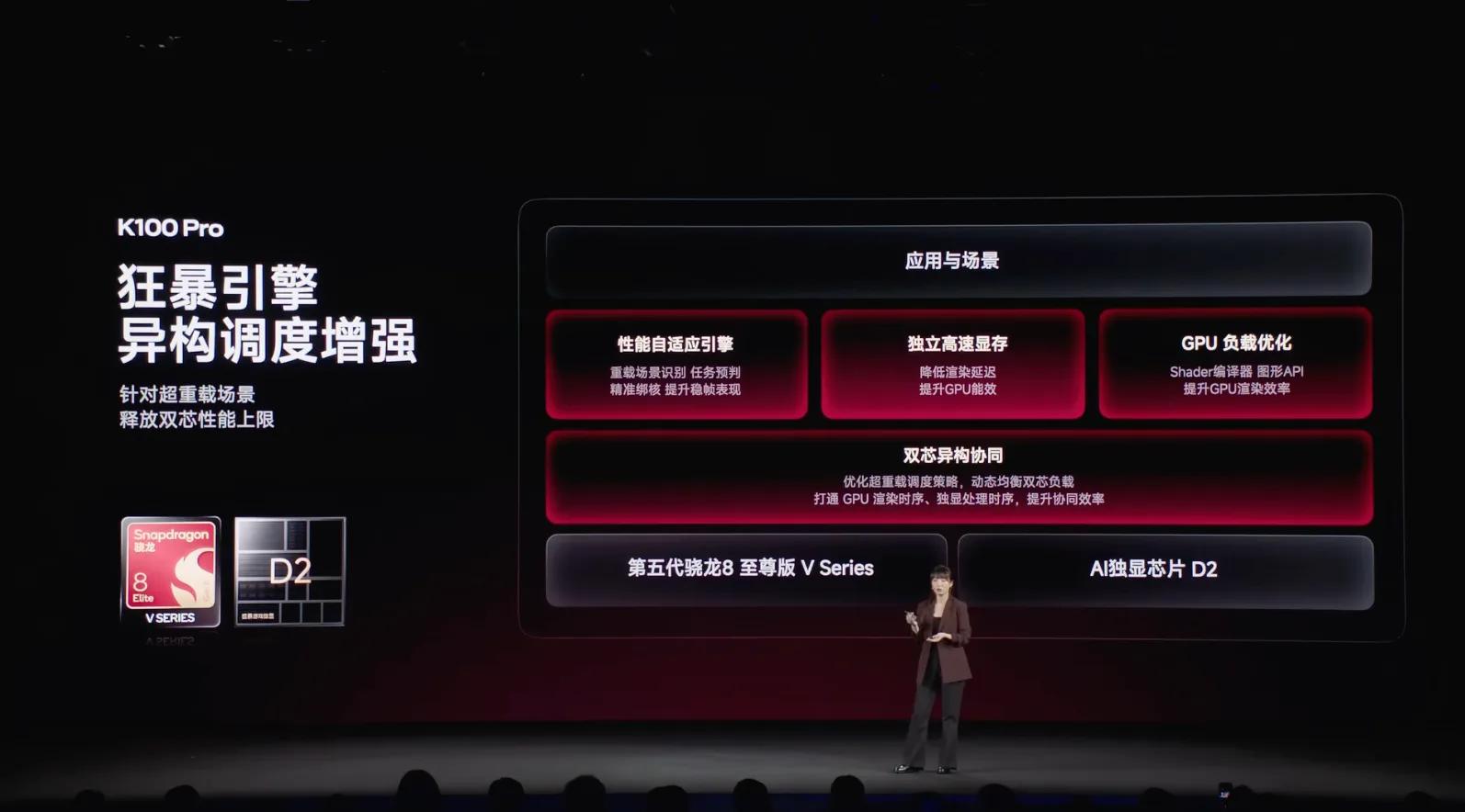
(Image source: Xiaomi official)
According to the official introduction, when the K100 Pro runs a large-scale multiplayer competitive game with both graphics and frame rate set to the highest, it can maintain an average frame rate of 143.8 frames over 60 minutes, and 59.9 frames in another open-world mobile game. This performance is not surprising to me, as performance has always been a strength of the K series. However, considering that the K100 Pro is a 6.53-inch "mid-sized phone," achieving flagship-level performance demonstrates REDMI's deep expertise in performance tuning.
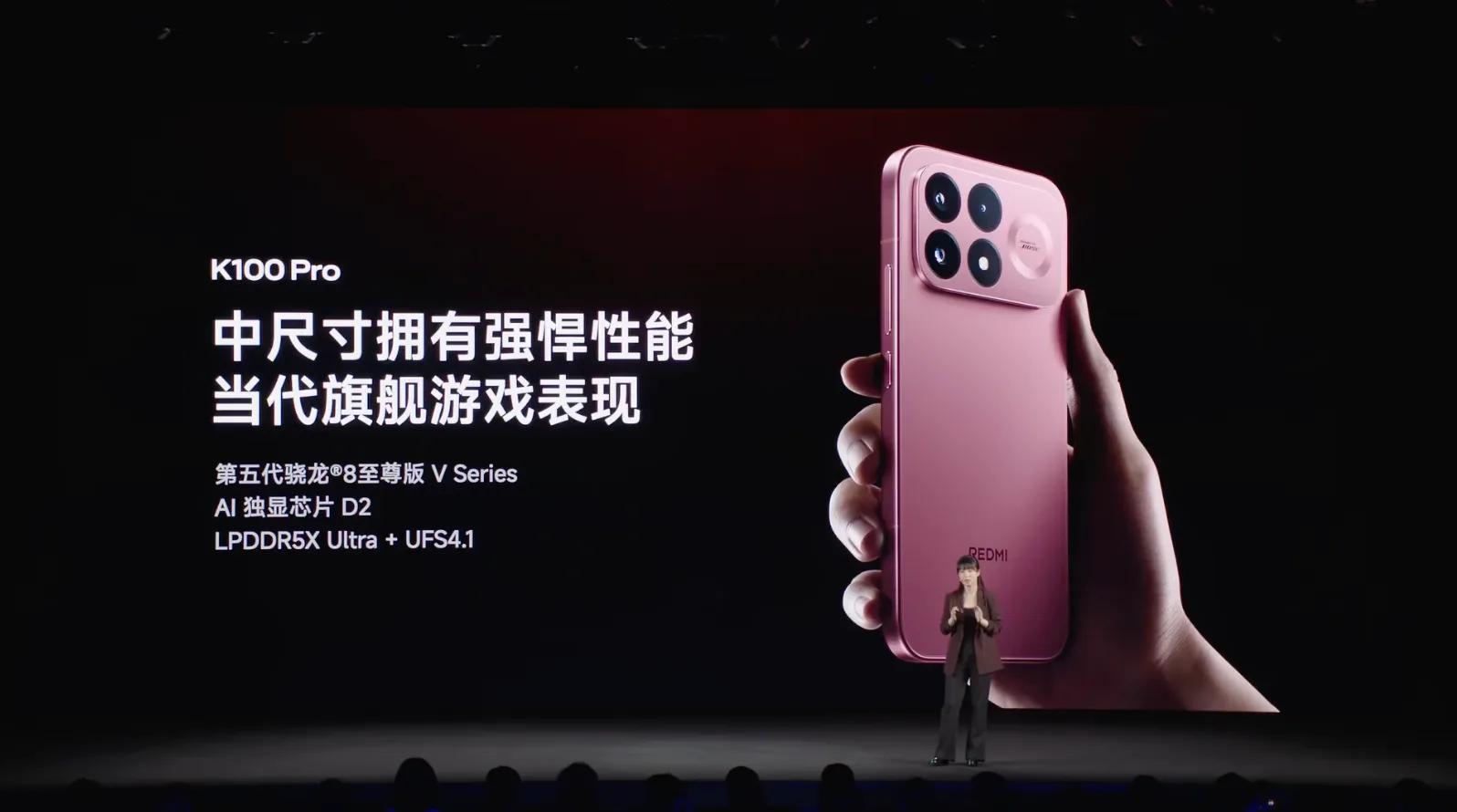
(Image source: Xiaomi official)
In terms of imaging, the REDMI K100 Pro features a 200-megapixel main camera, a 50-megapixel 2.5x floating telephoto lens, and an 8-megapixel ultra-wide-angle lens. While the configuration is not particularly eye-catching, it is more than sufficient.
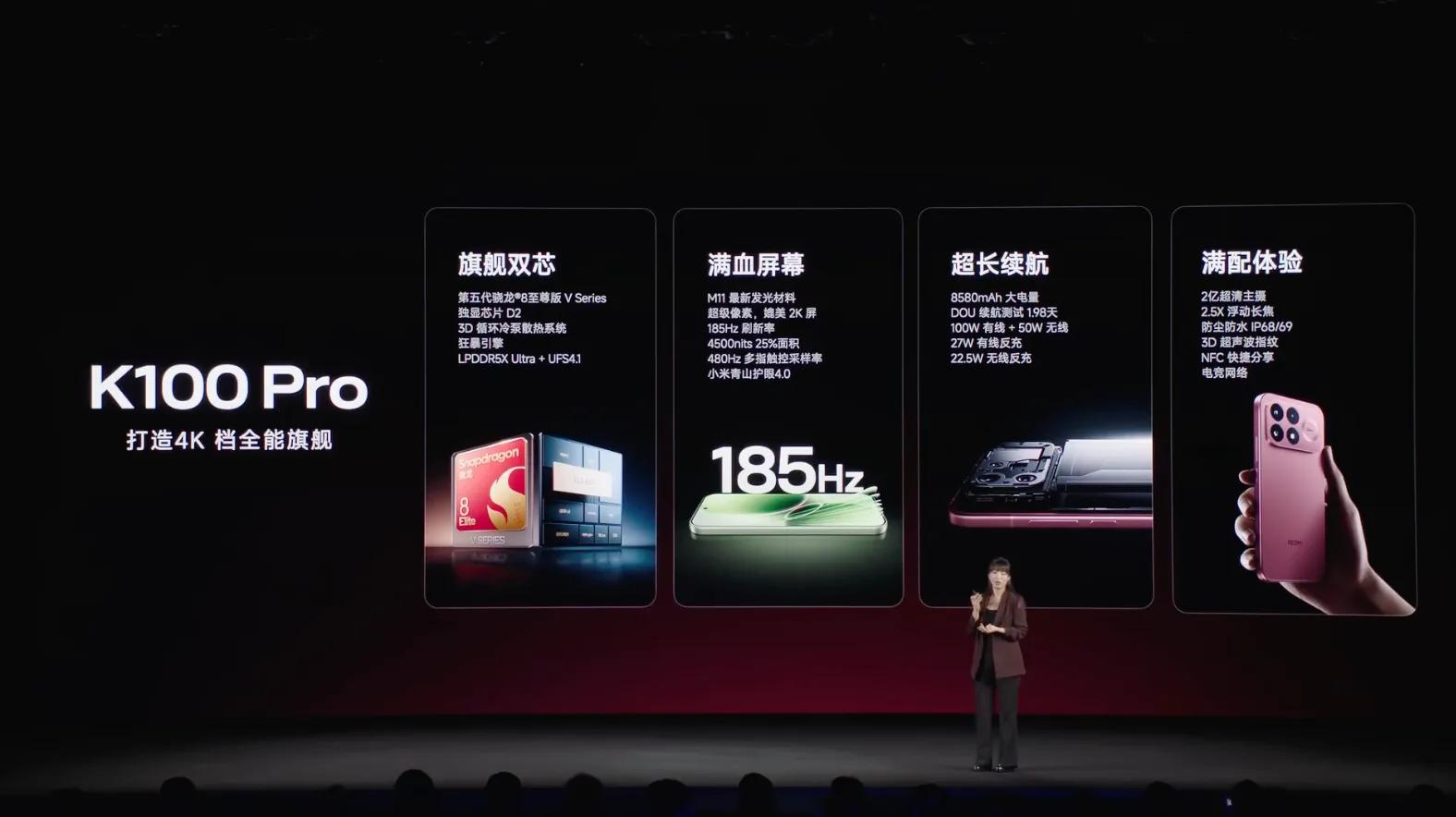
(Image source: Xiaomi official)
For battery life, it is equipped with an 8580mAh super silicon battery, supporting 100W wired fast charging, 50W wireless fast charging, 27W wired reverse charging, and 22.5W wireless reverse charging.
Finally, the pricing:
12+256GB version: 3999 yuan (initial sales price with national subsidies: 3199 yuan)
16+256GB version: 4399 yuan (initial sales price with national subsidies: 3599 yuan)
12+512GB version: 4599 yuan (initial sales price with national subsidies: 3799 yuan)
16+512GB version: 4999 yuan (initial sales price with national subsidies: 4199 yuan)
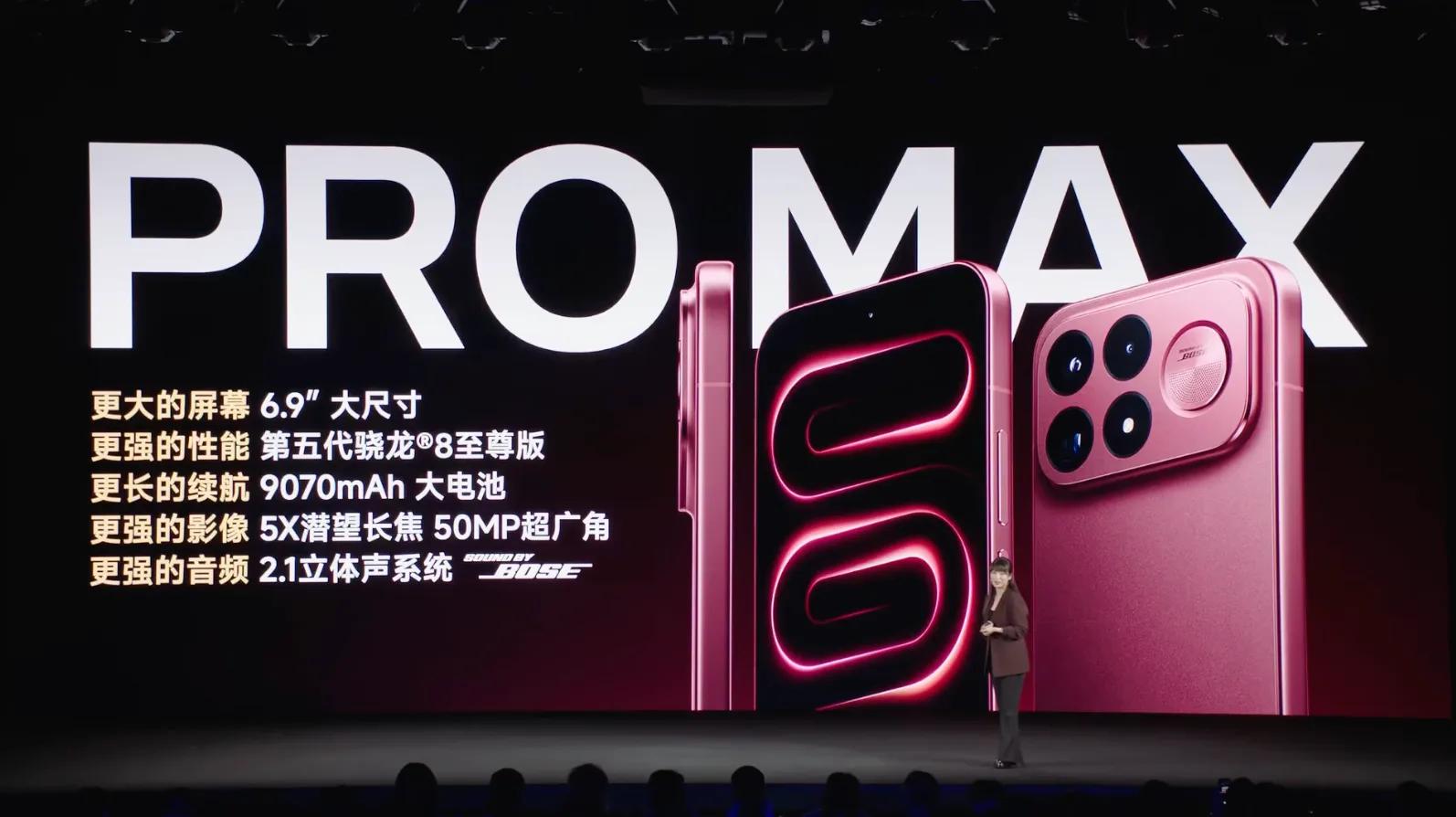
If you feel that the REDMI K100 Pro falls short in certain aspects, then the K100 Pro Max might be another excellent choice for you. Its main differences from the Pro lie in sound, imaging, body size, and performance. However, in my opinion, the Pro Max's configurations have already reached the standard of Xiaomi's digital flagship series and may even attract some potential users away from the future Xiaomi 18 series.

(Image source: Xiaomi official)
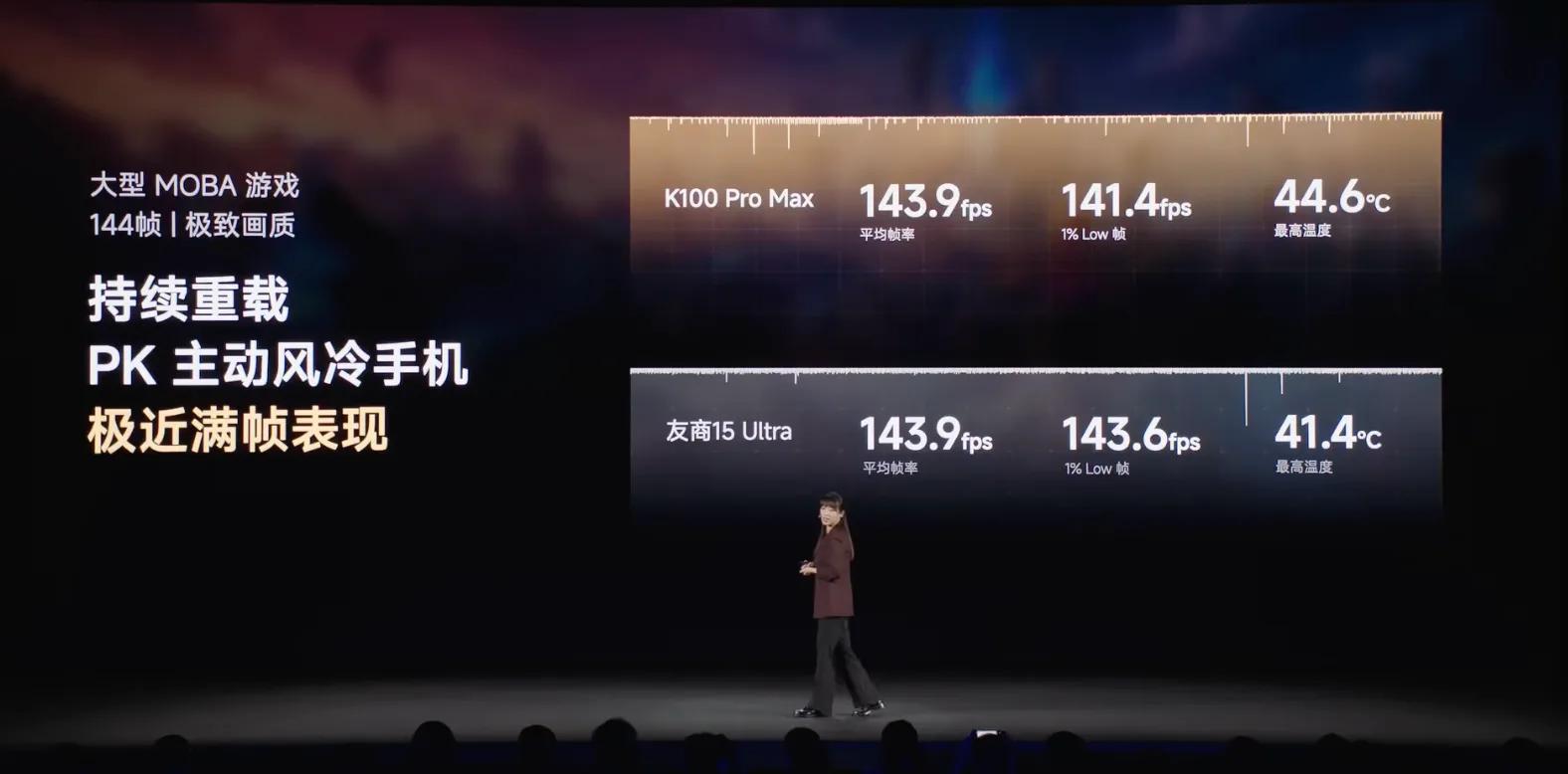
Let's start with performance. The REDMI K100 Pro Max also features the fifth-generation Snapdragon 8 Supreme processor, but the second chip has been replaced with a D2 dedicated display chip, making it significantly stronger than the K100 Pro in high-load scenarios. The official claims that in a large-scale competitive FPS game with 185FPS+ ultra-clear mode enabled, it can maintain a stable frame rate for one hour, with an average frame rate of 184.4 frames—truly impressive.
(Image source: Xiaomi official)
Moreover, to unleash the potential of this 185Hz gaming screen, REDMI has adapted over 30 mainstream games to support native high frame rates. Coupled with a 4800Hz instant touch sampling rate and a 480Hz multi-finger touch sampling rate, the K100 Pro Max truly becomes a flagship gaming phone.
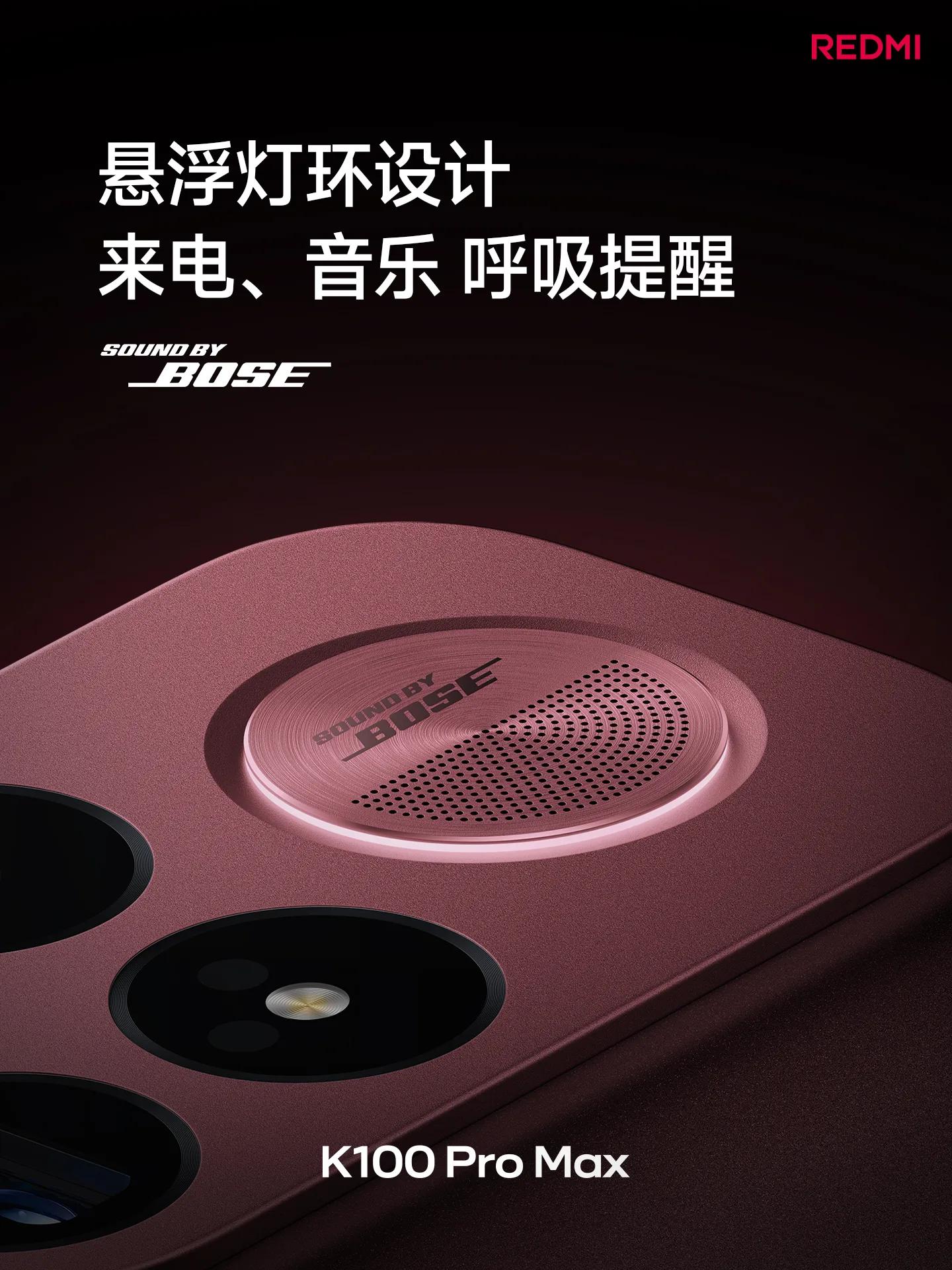
The second point is sound. We know that REDMI has partnered with Bose, and last year's K90 series achieved top-tier sound quality in the industry. This year, REDMI has gone a step further, introducing a new-generation 2.1 stereo system on the K100 Pro Max. The phone features two 1115D master-grade full-range units and one 1620 ultra-large low-frequency unit inside, combined with Bose's sound tuning, providing different sound effects for listening to music, gaming, and watching movies. This performance is truly unique in the smartphone market.
(Image source: Xiaomi official)
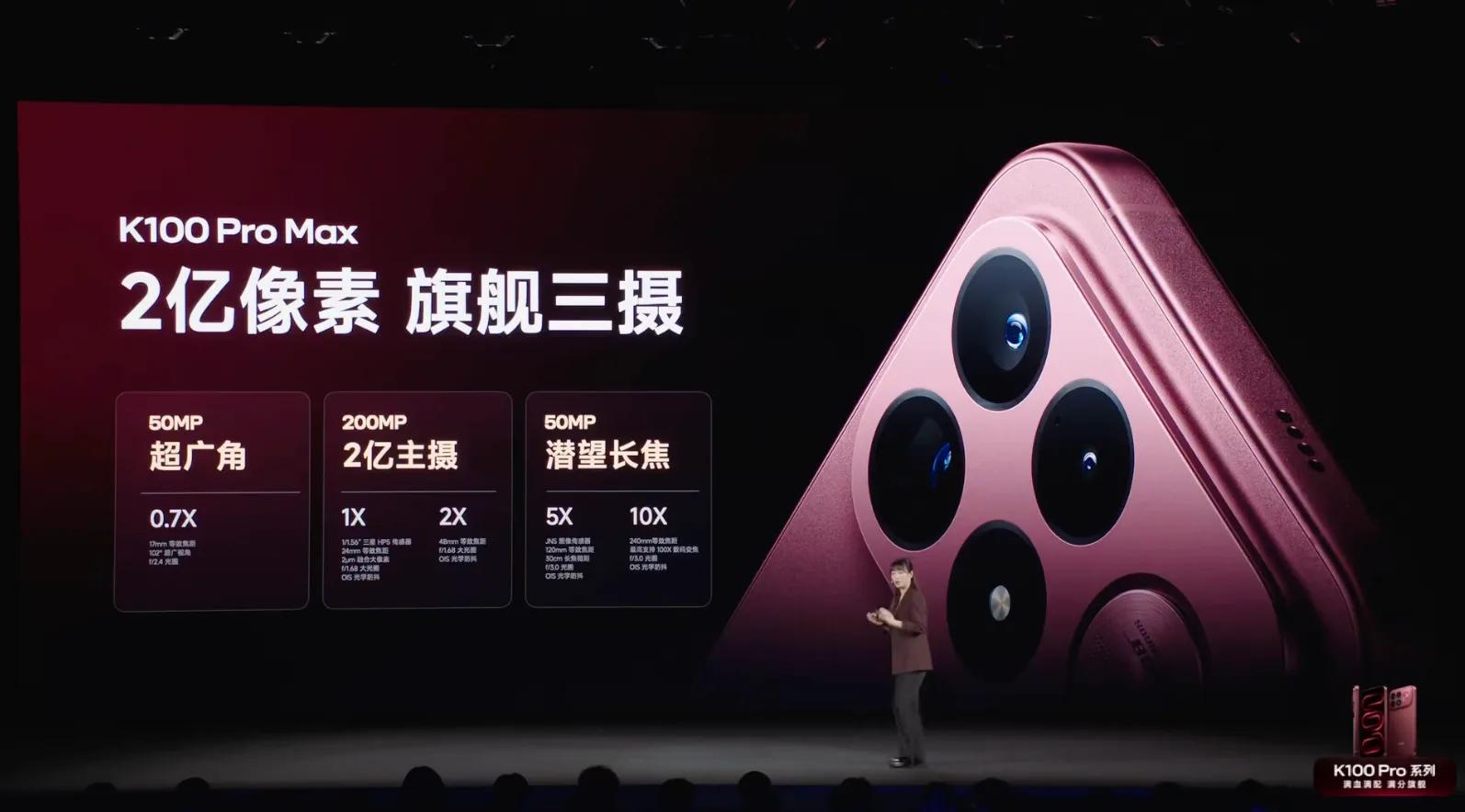
Next is imaging. The K100 Pro Max also features a 200-megapixel main camera, but the telephoto lens has been upgraded from 2.5x to a 5x large-bottom periscope telephoto lens, along with a 50-megapixel ultra-wide-angle lens, reaching flagship-level specifications. However, REDMI's imaging algorithm capabilities remain to be seen. Let's look forward to Leitech's first review.
(Image source: Xiaomi official)
For battery life, it is equipped with a 9070mAh large battery, also supporting 100W wired fast charging, 50W wireless fast charging, 27W wired reverse charging, and 22.5W wireless reverse charging.
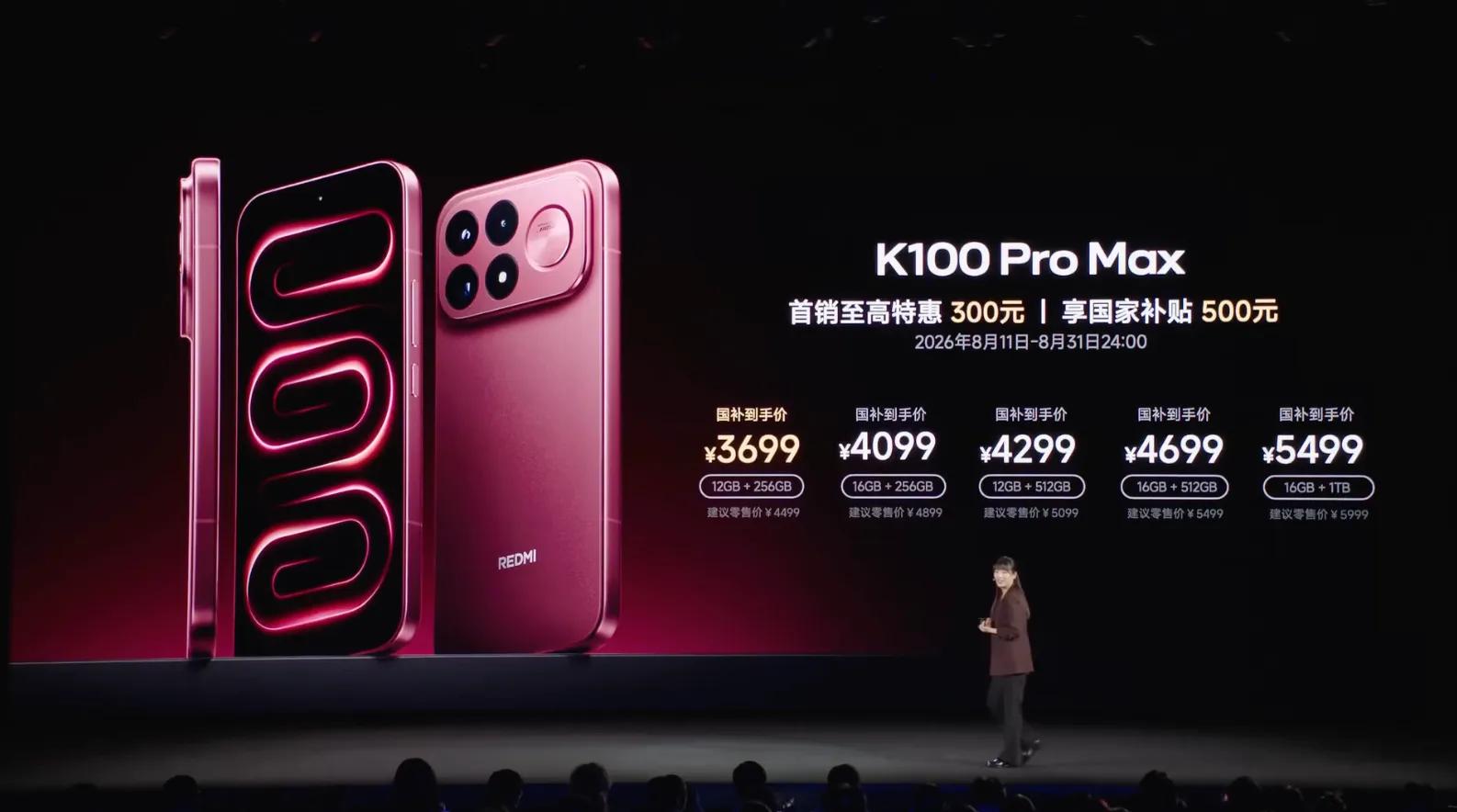
Finally, the pricing:
(Image source: Xiaomi official)
12+256GB version: 4499 yuan (initial sales price with national subsidies: 3699 yuan)
16+256GB version: 4899 yuan (initial sales price with national subsidies: 4099 yuan)
12+512GB version: 5099 yuan (initial sales price with national subsidies: 4299 yuan)
16+512GB version: 5499 yuan (initial sales price with national subsidies: 4699 yuan)
16+1TB version: 5999 yuan (price with national subsidies: 5499 yuan)
It's clear that even REDMI, known as the "price butcher," is struggling to keep prices down amidst rapidly rising costs. I didn't expect the REDMI series to reach the 5000 yuan price range, but after a quick look at competitors' pricing, the K100 series still seems to offer some cost-effectiveness.
(Image source: Xiaomi official)
Overall, the REDMI K100 series boasts distinct selling points: high performance, excellent screen quality, long battery life, and unparalleled sound performance. Amidst the ongoing price hikes in storage, REDMI has managed to keep the pricing of the K100 series within a reasonable range. However, given its product strength, I am genuinely concerned that the Xiaomi 18 series, set to launch in September, may struggle to compete against the K100 series.
-
![]()
Rocket Lab: Neutron Launch May Be Postponed. How Can RKLB Compete with SpaceX?
-
![]()
The Wealthiest Individual Critiques E-commerce: 'Championing the People' or 'Falling Prey to Business Theft?'
-
![]()
The 10-Trillion-Parameter Behemoth is Still Elusive, but ByteDance is Leading the Charge with a New Top-Tier Department
-
Who Will Be the Talent for the Commercial Space Industry?
-
![]()
800V High-Voltage Platform Sees Rapid Growth, with Eight of Top 10 SiC Manufacturers Being Domestic
-
![]()
Zhong Shanshan and Wu Xiaobo Don’t Truly ‘Dislike’ E-commerce
-
The RTX 3060 Makes a Comeback Amid a Mix of Old and New Hardware, Making 2026 the Worst Year for the PC Industry
-
![]()
Zhang Yiming Achieves Jack Ma's 'Dream': Douyin Surpasses 1 Billion Monthly Active Users First!