Kingdee International's AI Aspirations Stumble at Market Cap Barrier: Can Xu Shaochun's Ambitious Vision Sustain Investor Confidence?
 08/17 2026
 420
420
Writer | Xingxing
Source | Beiduo Business & Beiduo Finance
After years of painstaking transformation, Kingdee International Software Group Co., Ltd. (HK:00268, hereinafter referred to as "Kingdee International" or "Kingdee") has finally shed the persistent losses that plagued its financials, as revealed in its recently announced 2026 interim results. The company achieved profitability at the mid-year mark for the first time.
However, this newfound profitability has not entirely dispelled market skepticism. Non-operating factors played a pivotal role in Kingdee International's financial turnaround this time. While the AI business, which both the market and the company itself have high hopes for, has shown remarkable growth, its scale remains insufficient to underpin the company's narrative of a high-margin transformation.

Amid the nascent profitability inflection point in cloud transformation and the still-developing scale of AI, the blueprint of "recreating another Kingdee" outlined by founder Xu Shaochun raises a critical question: Is this a strategy demanding long-term commitment, or is it evolving into a capital narrative racing against time?
In the entrepreneurial philosophy of Kingdee International's founder, Xu Shaochun, "breakthrough" always precedes "construction." In 1990, he voluntarily left his secure job and ventured south to Shenzhen, joining the Shekou China Accounting Firm as a computer department manager. The following year, he plunged into the entrepreneurial wave, founding Shenzhen Aipu Computer Technology Co., Ltd.
In 1993, Xu Shaochun independently developed Aipu Financial Software V1.0 to V3.0, which passed the evaluation of the Shenzhen Municipal Finance Bureau, breaking the foreign monopoly on financial management software for foreign-funded enterprises. Leveraging this technological breakthrough, he co-founded Kingdee Software Technology (Shenzhen) Co., Ltd., unifying the product and company name as "Kingdee."
Around the millennium, Kingdee keenly captured the burgeoning demand for enterprise informatization, transitioning from financial software to enterprise resource planning (ERP) and launching China's first ERP product based on an internet three-tier architecture. According to Tianyancha information, it was also during this period that the company completed its listing on the Hong Kong Stock Exchange.
In 2012, faced with the disruptive impact of the cloud computing wave, Xu Shaochun chose to abandon reliance on traditional software models. He led Kingdee to shift its R&D focus from on-premises deployment to cloud-based management and services, reconstructing its product system around cloud-native technologies and embarking on another arduous cloud transformation journey.
From a market positioning perspective, Kingdee International's cloud transformation has yielded significant results. According to an IDC report, Kingdee ranks first in China across multiple segments, including enterprise application clouds, SaaS ERP, financial clouds, treasury management clouds, EPM, tax clouds, and PLM clouds. It has maintained its leadership in the growth enterprise application software market for 22 consecutive years.
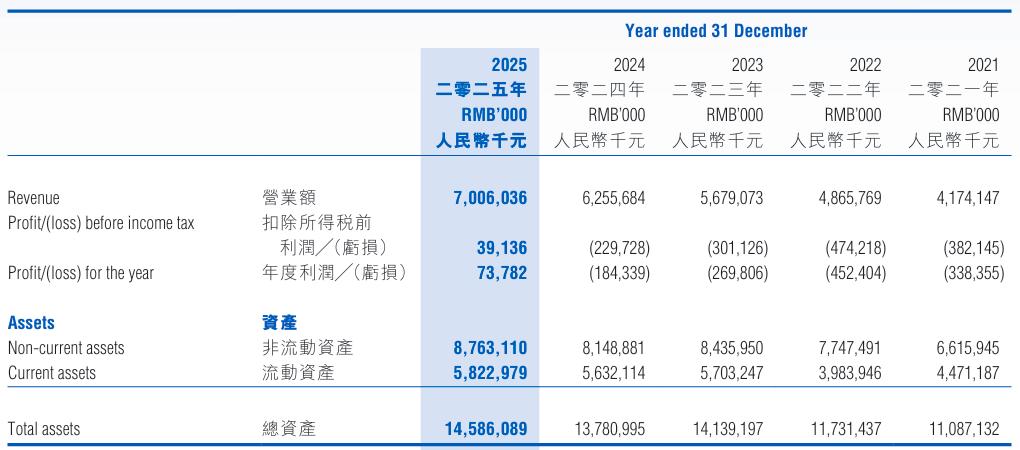
From 2020 to 2024, Kingdee International's revenue followed an upward trajectory, achieving 3.356 billion yuan, 4.174 billion yuan, 4.866 billion yuan, 5.679 billion yuan, and 6.256 billion yuan, respectively. It crossed the 6 billion yuan threshold from the 3 billion yuan level in five years, nearly doubling its revenue scale.
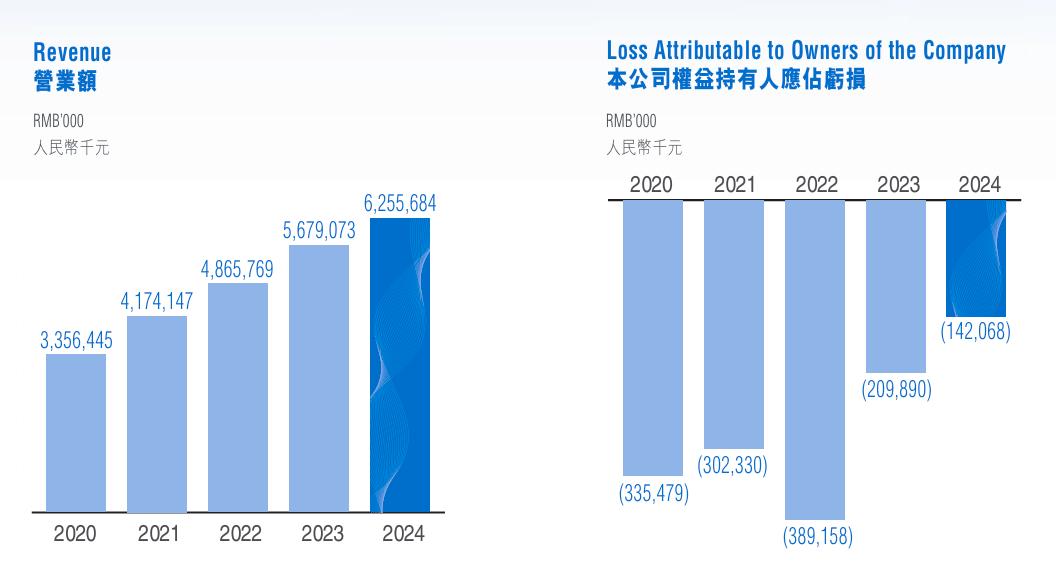
However, sustained revenue growth did not translate into substantial profit returns. Under continuous transformation investments, Kingdee International's net profit attributable to shareholders from 2020 to 2024 was -335 million yuan, -302 million yuan, -389 million yuan, -210 million yuan, and -142 million yuan, respectively. It accumulated over 1.4 billion yuan in losses and failed to deliver on profitability promises.
Not until 2025 did Kingdee International see a turnaround, with revenue growing 11.2% to 7.006 billion yuan and net profit attributable to shareholders reaching 92.914 million yuan, ending five consecutive years of losses. Cloud service revenue was 5.782 billion yuan, accounting for 82.5% of total revenue, while subscription ARR grew 19.2% year-on-year to 4.09 billion yuan.
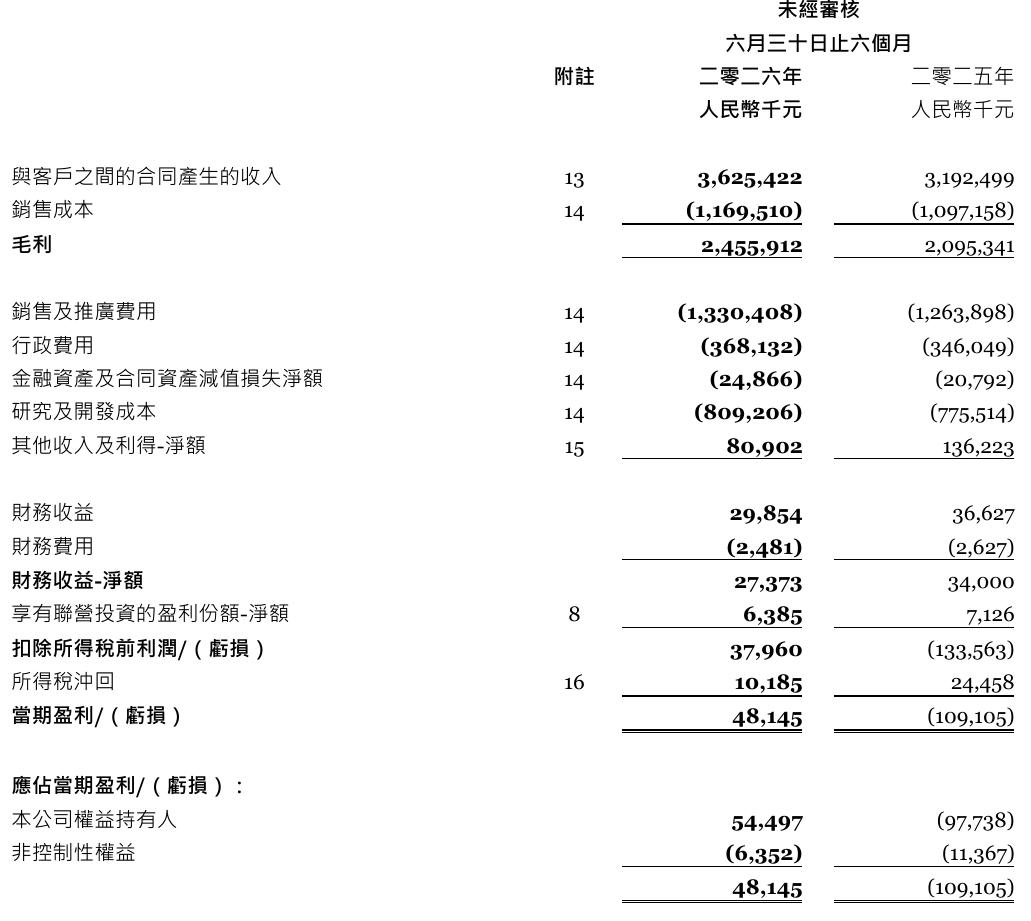
In the first half of 2026, Kingdee International sustained its profitability trend, with revenue growing 13.6% year-on-year to 3.625 billion yuan. Net profit attributable to shareholders was 54.497 million yuan, delivering its first mid-year profit in five years. Net cash flow from operating activities was approximately 142 million yuan, with both profit and operating cash flow turning positive, underscoring their quality.
However, Kingdee International's seemingly impressive "turnaround" results failed to garner enthusiastic applause from investors in the secondary market.
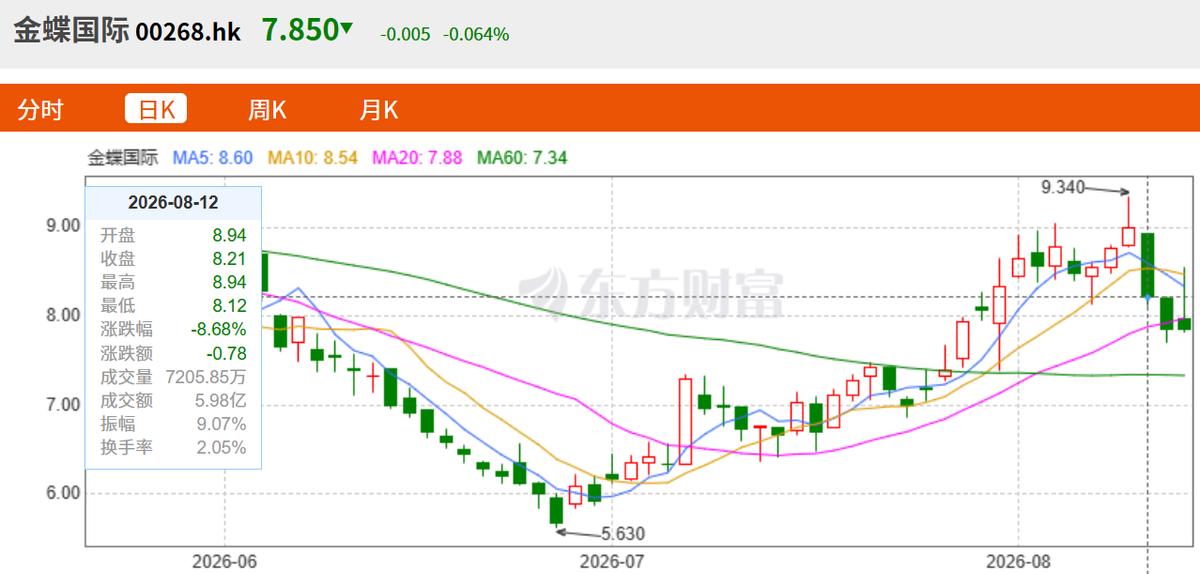
On the day of the 2026 interim results announcement, Kingdee International's Hong Kong-listed shares fell over 9% intraday, eventually closing at HK$8.21 per share, down 8.68%. Share prices continued to decline over the next two trading days, dropping to HK$7.85 per share as of August 14, with a market cap of just HK$27.59 billion (approximately RMB 23.704 billion).
Behind this lies the market's multiple concerns about the quality of Kingdee International's profitability. Starting with the composition of book profits, Kingdee International's CFO Lin Bo revealed at the interim results briefing that the company's investments in multiple large model companies this year and subsequent stock price fluctuations or value changes from their listings would significantly impact its book profits.
In other words, a substantial portion of Kingdee International's book profits came from one-time investment gains. To address this, the company emphasized focusing on its adjusted net profit, which turned positive to 116 million yuan in the first half of 2026, driven by subscription business growth, product and customer structure optimization, operational efficiency improvements, and cost control.
Indeed, Kingdee International's cost reduction efforts have shown initial results, with sales and promotion expenses as a percentage of revenue decreasing by 2.9% year-on-year to 36.7% in the first half of 2026. R&D expenses as a percentage of revenue fell by 2 percentage points to 22.3%. However, compared to revenue exceeding 3.6 billion yuan, the adjusted net profit, just surpassing 100 million yuan, still has significant room for improvement.
Focusing on Kingdee International's business structure, cloud service revenue in the first half grew 16.6% year-on-year to 3.116 billion yuan, accounting for 86.0% of the company's revenue and forming its core business. Subscription revenue was 2.028 billion yuan, up 20.4% year-on-year. ARR reached 4.413 billion yuan, up 18.3% year-on-year, with the cloud transformation's stabilizing effect continuing to manifest.
However, the market's true focus is on Kingdee International's next growth engine. In 2025, the company quietly shifted its strategic focus, announcing a full transition to an "enterprise management AI company," upgrading its core brand "Kingdee Cloud" to "Kingdee AI," targeting financial, supply chain, manufacturing, and other scenarios.
Xu Shaochun is resolute about the AI transformation. He believes Kingdee is well-versed in transformation and that the company is united in a belief of victory in this "do-or-die battle," expecting a metamorphosis eventually. He has set a clear vision: by 2030, AI will "recreate another Kingdee," with AI+SaaS and AI-native business revenue accounting for 50% each.
It is reported that Kingdee International launched its enterprise agent operating system "Lingji" on May 20, 2026. Xu Shaochun revealed that in the first half of the year, Lingji had launched over 40 agents, signed with over 60 enterprises, totaling over 100, and stated that the company's goal for the second half is to onboard 10,000 clients.
Judging by the data, the true value of Kingdee International's AI capabilities still requires time to validate. In the first half of 2026, its AI-native products generated 296 million yuan in revenue, up 189.0% year-on-year. Subscription revenue was 146 million yuan, up 282.9% year-on-year. While the growth rates are impressive, the scale remains small, with revenue accounting for less than 10%, insufficient to drive overall performance growth.
Additionally, due to its market cap ranking falling below the exclusion threshold for two consecutive quarters and a significant year-on-year decline in average daily trading volume, Kingdee International was removed from the Hang Seng Tech Index in June 2026. When the index draws a clear red line in the most direct manner, no matter how compelling Kingdee's AI narrative may be, it cannot bypass the fundamental thresholds of business performance and market cap.
From a "favored player" to an "outlier," Kingdee's market position is undergoing a ruthless reassessment. Xu Shaochun has issued the military order to "recreate another Kingdee with AI," but whether capital markets are willing to extend the same trust and patience this time remains uncertain.
-
![]()
AI Office Enters the Paid Era: Alibaba, Tencent, and ByteDance Engage in a 'Three-Way Showdown'
-
![]()
Can Pallas-1 Propel Galactic Energy to Secure the Third IPO Slot?
-
![]()
Lei Jun’s Xiaomi SU7 Shatters Records, Netizens Applaud Its Remarkable Achievement!
-
![]()
Porsche Won't Give Up on Manual Transmissions! Will Persist as Long as Regulations Allow and Market Demand Exists
-
![]()
This Summer, Car Rentals Are Surprisingly Affordable
-
![]()
MiniMax H3 Closes In, Leaving Seedance with Limited Safe Space
-
![]()
Blockbuster! Li Shufu Steps Down as Chairman, An Conghui Takes Over, Geely Ushers in 'Coming-of-Age' Moment
-
![]()
AI Smartphones: Don't Expect Price Drops Anytime Soon