Blockbuster! Li Shufu Steps Down as Chairman, An Conghui Takes Over, Geely Ushers in 'Coming-of-Age' Moment
 08/18 2026
 497
497
'One Geely' Strategy Scores Initial Success
On August 17, Geely Automobile (0175.HK) released its 2026 interim results. It also announced a personnel change: Li Shufu resigned as chairman of the board and executive director of Geely Automobile Holdings Limited, was appointed as the company's Lifetime Honorary Chairman. Meanwhile, An Conghui took over as chairman of the board, and Gan Jiayue was appointed as the Chief Executive Officer.
From the financial report data, in the first half of 2026, Geely Automobile's total sales volume reached 1.42 million units, with a total revenue of RMB 173.6 billion, a year-on-year increase of 15%, marking six consecutive years of positive growth. Core net profit attributable to the parent company was RMB 9.68 billion, a year-on-year increase of 46%, outpacing revenue growth. The gross profit margin increased to 17.9%, and the core net profit per unit was RMB 6,806, nearly 30% more than the same period last year.
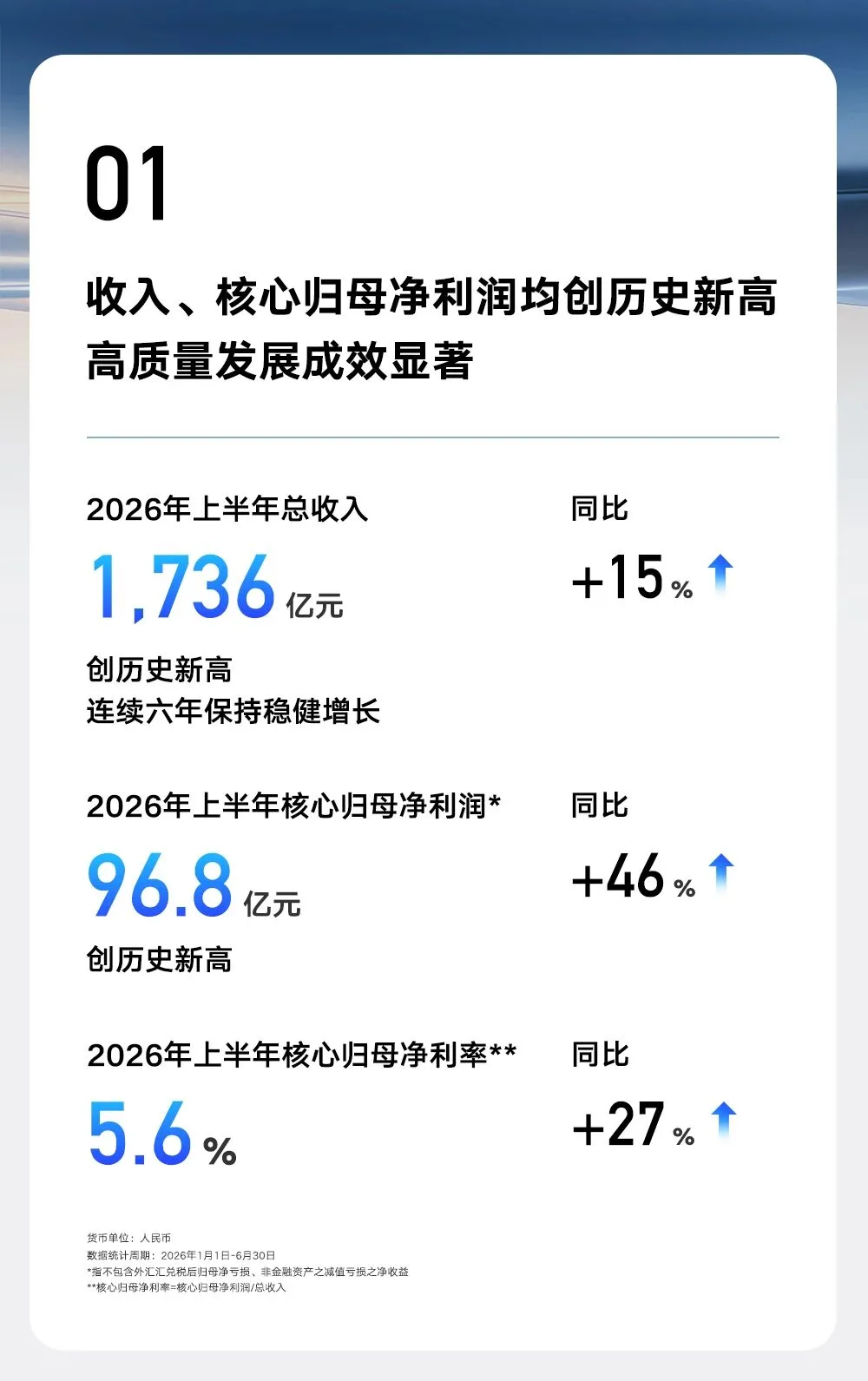
Notably, administrative expenses as a percentage of revenue decreased to 1.7% in the first half, while R&D investment as a percentage of revenue decreased to 5.2%. However, the absolute value of R&D investment increased by 8%, reaching RMB 9.06 billion. In other words, Geely achieved more with the same amount of money, indicating improved efficiency.
Cash reserves also reached a record high of RMB 69.56 billion. With ample cash on hand, Geely repurchased HKD 1.885 billion worth of shares in the first half. By the end of July, it paid a dividend of HKD 0.5 per share, totaling HKD 5.39 billion in dividends, marking five consecutive years with a core profit payout ratio exceeding 30%.
Among Chinese passenger vehicle stocks listed on the A-share and H-share markets, Geely was the only one to achieve positive stock price growth in the first half of the year. Forty-six institutions increased their holdings or established new positions, with Citigroup, Morgan Stanley, and JPMorgan Chase all giving positive ratings.
The capital market has spoken with its feet. This is likely the confidence behind Li Shufu's decision to hand over the reins at this time. The company is on the right track, financially healthy, with upward brand momentum, and the new management team is taking over a well-functioning company.
The 'One Geely' strategy, which has been repeatedly mentioned in the past two years, essentially means concentrating resources on the listed company platform, integrating ecology, organization, marketing, and supply chain, so that the four brands no longer operate independently.
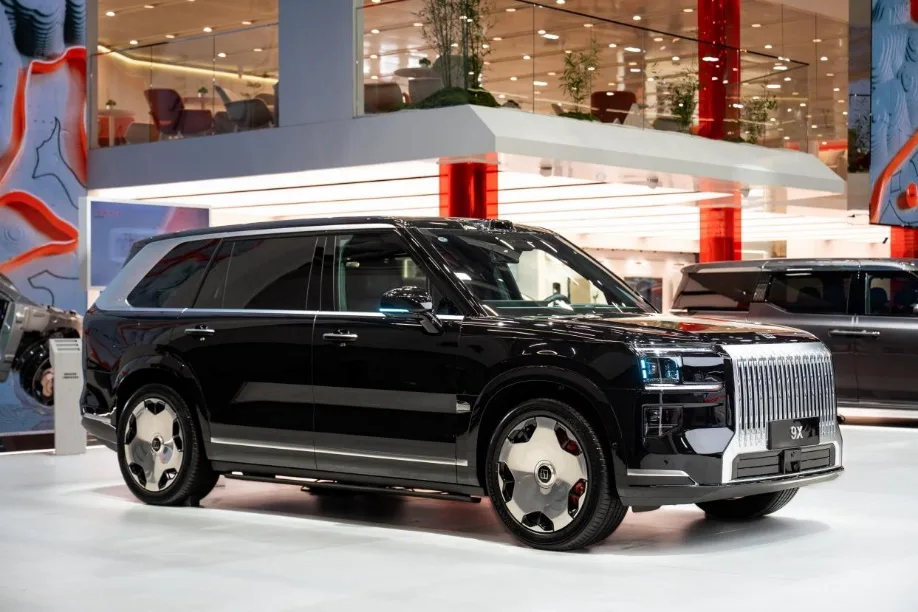
Zeekr sold 178,000 units in the first half, accounting for only 12.5% of total sales but contributing 31.7% of revenue. The average selling price was around RMB 350,000, surpassing the transaction prices of BBA models in the same class. In the second half, the Zeekr 9X Glorious will be launched, forming a four-seat ultra-luxury dual-flagship lineup with the 009 Glorious. Moreover, the 9X will directly enter overseas markets, marking the beginning of Geely's high-end overseas expansion with Zeekr.
Lynk & Co sold 144,000 units in the first half, focusing on trends, sports, and individuality. In the second half, the Lynk & Co 07GT and the all-new Lynk & Co Z20 will be launched, targeting the high-end niche market. Lynk & Co has always had a clear positioning, not competing with Zeekr for luxury or with Geely Galaxy for cost-effectiveness, but positioning itself as the choice for young people.
Geely Galaxy is the main driver of sales volume. With nearly 520,000 units sold in the first half, it ranked among the top three global new energy vehicles, with particularly rapid growth overseas. In the second half, product launches will be even more frequent. The Galaxy TT will be a C-class AI pure electric sports sedan, the Galaxy Warship 700 will explore the off-road segment, and the Galaxy E5, M9, Xingyao 6, and Xingjian 7 will all be refreshed. This brand plays the role of the 'foundation,' stabilizing sales and market share.
Geely China Star sold over 580,000 units in the first half, securing its tenth consecutive year as the best-selling Chinese brand in the fuel passenger vehicle segment. However, Geely has not abandoned fuel vehicles but is promoting HEV technology. The Star Rui , Star more L, and Emperor models already cover this segment, with expansion to the Boyue L planned within the year. The i-HEV models aim to achieve monthly sales of 30,000 units by the end of the year, with a target of one million annual sales for China Star and overseas expansion by 2027.
The four brands—high-end, individuality, new energy volume, and fuel hybrid—cover almost all mainstream price ranges. This combination is rare in today's auto market, where most automakers are either all-in on new energy or clinging to fuel vehicles. Geely is pursuing both paths.
While domestic market growth was within expectations, the surge in overseas business exceeded them.
In the first half, Geely's overseas sales reached 474,000 units, surpassing the total exports for the entire year of 2025, with a year-on-year increase of 158%, ranking first among mainstream automakers. In June and July, overseas sales exceeded 100,000 units for two consecutive months, rising to third place among Chinese automakers expanding overseas.
Geely directly raised its 2026 overseas sales target from 640,000 units to 920,000 units, aiming to reach one million.
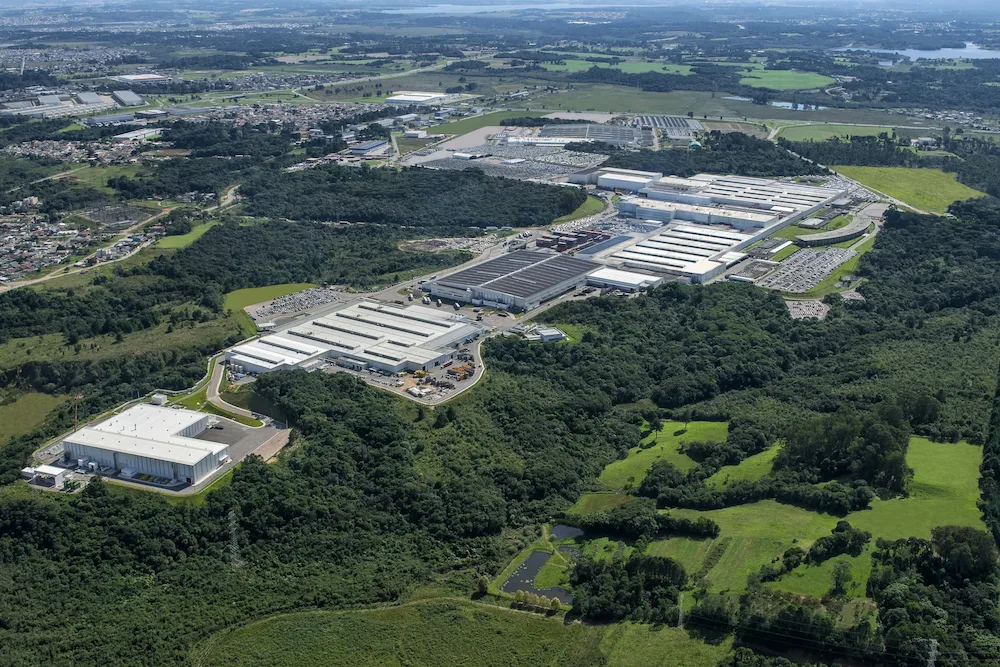
In terms of overseas expansion model, Geely follows an 'industrial symbiotic' asset-light approach, collaborating with overseas partners such as Volvo, Proton, Renault, and Ford, exchanging market access for cooperation, and avoiding the costs and risks of building factories from scratch. In the first half, 12 overseas manufacturing plants were operational, with overseas production capacity exceeding 650,000 units, set to reach 840,000 units by the end of the year. In R&D, Swedish and German R&D teams were merged into a unified entity, shortening the time difference for new car launches in different markets.
In terms of channels, Geely covers 114 core overseas markets, penetrates 17 emerging markets, and has over 2,000 offline stores.
Specifically, in 2026, Geely aims to create one 300,000-unit market (ASEAN), three 200,000-unit markets (Europe/Eastern Europe/Latin America and Africa), and one 100,000-unit market (Middle East Asia). From 'product export' to 'system export,' Geely aims to replicate its entire manufacturing, R&D, and channel capabilities overseas.
When most automakers talk about AI, they refer to intelligent cockpits and intelligent driving, which fall under 'product intelligence.' Geely talks about 'omni-domain AI,' applying AI across the entire value chain from design, R&D, manufacturing, to after-sales.
Geely is the only automaker globally with intelligent vehicles, chips, embodied intelligent robots, AI large models, and low-orbit satellites. These businesses are spread across different subsidiaries but share underlying technologies. For example, Geely's WAM World Behavior Model is the core of intelligent driving; 'Super Eva' is the vehicle intelligence agent, and 'Qianli Haohan G-ASD' is the intelligent driving solution, forming a '1+2+N' multi-agent framework—one core model, two pillar capabilities, and N intelligent agents for vertical scenarios.
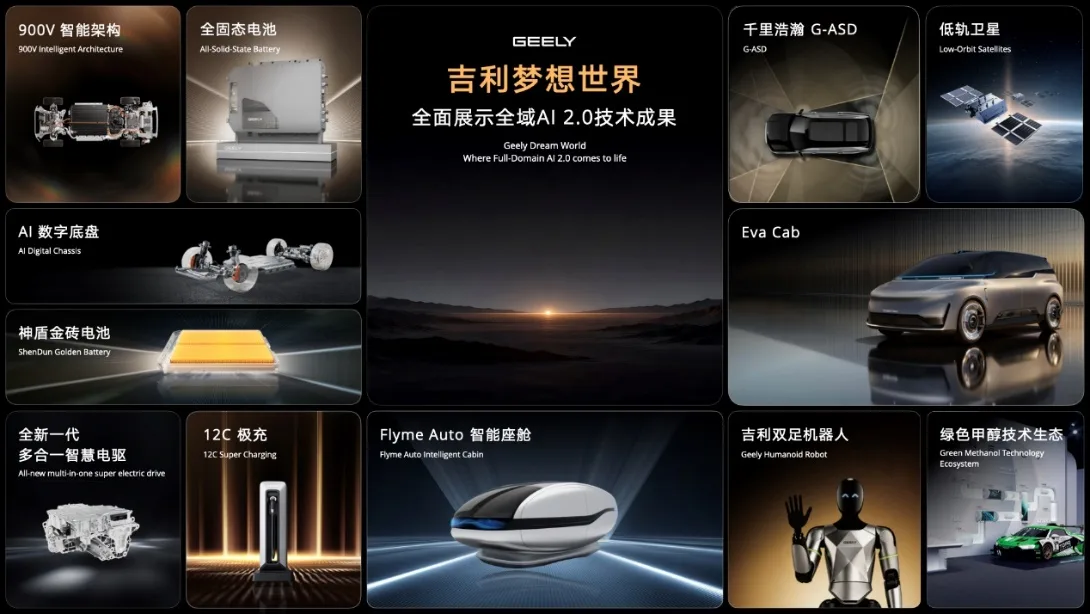
Geely also has layout (layout) in the three-electric field. Haosi Power specializes in motors, Jiyao Tongxing in electric drives, and Xingqu Technology in electric control. These three 'hidden champions' cover the entire value chain from underlying materials to system integration. Technologies such as i-HEV Zhiqing hybrid, Thunder AI electric hybrid 2.0, Shendun Golden Brick battery, and Galaxy Thunder 16-in-1 intelligent electric drive have all been implemented in mass-produced models.
In the second half of the year, an advanced version of the WAM model, an upgrade to Qianli Haohan G-ASD, as well as an AI off-road architecture and an all-terrain AI digital chassis will be released. Additionally, a '2030 Laboratory' has been established to focus on cutting-edge directions such as acoustics, optics, omni-domain safety, power semiconductors, digital chassis, and embodied intelligence.
While the adequacy of technological reserves may not be immediately apparent, it at least shows Geely's genuine and substantial investment in AI.
Returning to Li Shufu's resignation itself.
In the context of the Chinese automotive industry, Li Shufu is a symbolic figure. Starting from manufacturing refrigerator components, obtaining passenger vehicle production qualifications, shocking the industry with the acquisition of Volvo, and building Geely into an automotive group selling millions of vehicles annually, his personal style is deeply intertwined with Geely's development trajectory.
However, precisely because of this, when a company reaches a certain scale, the founder's personal influence may become a constraint to further progress. The core of modern corporate governance is to make the company independent of any single individual. Li Shufu's decision to step back from the listed company's board and hand over operational control to a team of professional managers is essentially giving Geely a 'coming-of-age' moment. The company has grown large and stable enough to operate without relying on its founder.
Of course, being the 'Lifetime Honorary Chairman' does not mean a complete exit. Li Shufu remains the chairman of Geely Holding Group and still has a say in major strategic decisions. However, the burden of daily operations has indeed been passed on to the generation of An Conghui and Gan Jiayue.
The 2026 first-half results serve as the best farewell gift before Li Shufu hands over the reins. The question the new team must now answer is: Can Geely maintain this momentum without its founder at the forefront?
The answer to this question will be revealed in the second half's sales, next year's performance, and the more distant future. But at least from the current hand, Li Shufu has left behind a Geely that is financially healthy, with clear brand positioning, rapid overseas expansion, and technological reserves.
Geely, Li Shufu, Zeekr
Source: Leikeji
The images in this article are from the 123RF royalty-free image library. Source: Leikeji
-
![]()
AI Office Enters the Paid Era: Alibaba, Tencent, and ByteDance Engage in a 'Three-Way Showdown'
-
![]()
Can Pallas-1 Propel Galactic Energy to Secure the Third IPO Slot?
-
![]()
Lei Jun’s Xiaomi SU7 Shatters Records, Netizens Applaud Its Remarkable Achievement!
-
![]()
Porsche Won't Give Up on Manual Transmissions! Will Persist as Long as Regulations Allow and Market Demand Exists
-
![]()
This Summer, Car Rentals Are Surprisingly Affordable
-
![]()
MiniMax H3 Closes In, Leaving Seedance with Limited Safe Space
-
![]()
Blockbuster! Li Shufu Steps Down as Chairman, An Conghui Takes Over, Geely Ushers in 'Coming-of-Age' Moment
-
![]()
AI Smartphones: Don't Expect Price Drops Anytime Soon