SpaceX Releases First Financial Report: Revenue Doubles to $7.8 Billion, Musk Aims to Build a Computing Power Empire Rather Than Just a 'Rocket Company'
 08/18 2026
 455
455
SpaceX's First Financial Disclosure: Q2 Revenue Doubles to $7.8 Billion (+92%), Starlink Adds $1.7 Billion, Leases Computing Power to Anthropic and Google; Valuation Reaches $1.75 Trillion
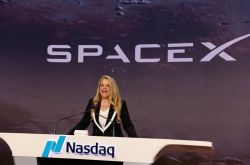
According to TechCrunch, SpaceX has rarely disclosed its financial data: Revenue in the second quarter of 2026 surged to $7.8 billion from approximately $4 billion in the same period last year, marking a 92% year-over-year increase. This marks the first time the notoriously 'secretive' company has opened its books for public scrutiny. More surprisingly, the growth structure reveals that the doubling of revenue is not solely driven by rocket launches but also by an unexpected contributor—computing power leasing.
Breakdown: The revenue surge primarily comes from three sources. First, Starlink's user and terminal revenue continues to grow, contributing an incremental $1.7 billion in a single quarter. Second, revenue from rocket launches and Starship test flights, including commercial payloads and government contracts. Third—and most intriguing—SpaceX has begun leasing its high-end computing power to AI giants like Anthropic and Google. In other words, Musk now holds not just rockets but also the most scarce resource in the AI era: 'GPU and data center capacity.'
Why is a rocket company selling computing power?
The answer lies in Musk's 'grand strategy.' Training large AI models requires massive computing power, and building and operating hyperscale data centers demands capital, electricity, and engineering capabilities—all of which are SpaceX's strengths (the company excels at factory construction, supply chain management, and heavy infrastructure). As AI companies scramble to secure sufficient GPUs, SpaceX leverages its procurement scale and infrastructure capabilities to become a 'computing power landlord.' Leasing computing power to Anthropic and Google not only absorbs idle capacity but also taps into the hottest cash flow in AI, creating a 'rocket + AI' arbitrage opportunity.
Behind this lies a deeper strategic implication: Computing power is becoming a strategic asset as important as 'launch capability.' Whoever controls cheap and abundant computing power holds the key to winning the AI race. SpaceX has shifted from the lofty narrative of 'sending humans to Mars' to the pragmatic business of 'fueling AI'—a transformation more noteworthy than the revenue doubling itself.
$1.75 Trillion Valuation, $100 Billion ARR Target: Musk's 'Imperial Arithmetic'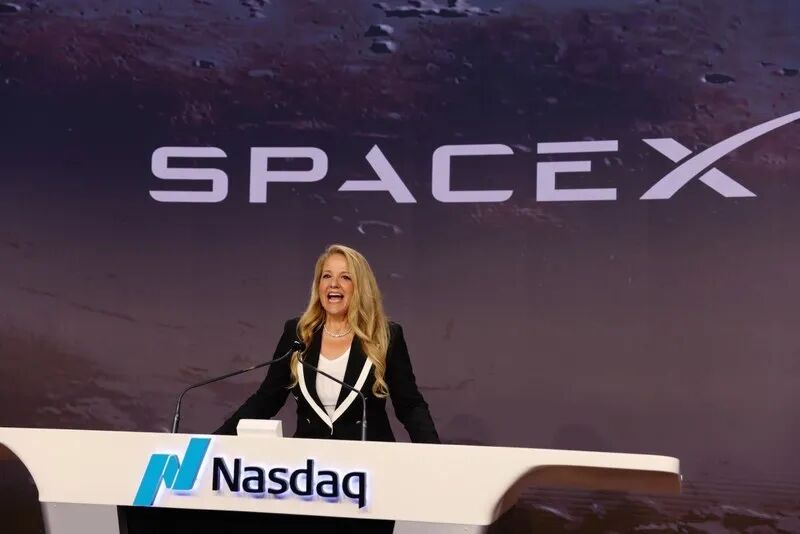
Image Source: TechCrunch
The report also reveals even more ambitious goals: SpaceX is currently valued at approximately $1.75 trillion (in some transaction terms) and is considering an IPO worth $85 billion. Musk has set an ARR target of $100 billion for the company. By combining rockets, Starlink, and computing power, SpaceX is no longer telling the story of an 'aerospace company' but rather that of a trinity infrastructure empire encompassing 'space + connectivity + computing power.' If ARR truly reaches $100 billion, its scale will surpass most traditional defense and telecom giants.
For China, this serves as a clear point of comparison: While Chinese commercial aerospace companies (such as StarNet, Galaxy Space, and LandSpace) are rapidly catching up in launches and low-Earth orbit constellations, the hybrid business of 'aerospace + computing power' remains largely unexplored. SpaceX's financial report signals a new frontier for the sector—the future moat for aerospace may lie not in launch frequency but in 'who can transform space assets into leasable digital infrastructure.'
Three Reminders for Investors and Observers
First, the first financial disclosure does not equal an imminent IPO. The $85 billion listing plan remains subject to market and regulatory rhythms—don't mistake 'consideration' for 'certainty.' Second, exercise caution against overvaluing the 'computing power narrative'—whether computing power leasing can sustain and whether AI clients will remain dependent long-term remains unproven; Musk's targets are always aggressive. Third, monitor the Sino-U.S. 'space + computing power' competition: While the U.S. has SpaceX leading the charge, China holds policy and manufacturing advantages, but commercial viability will be the true differentiator.
In the short term, this financial report is SpaceX's 'love letter' to capital markets; in the long term, it marks a shift in the value anchor for commercial aerospace—from 'who can fly higher' to 'who can turn space into a computing power foundation.' When a rocket company starts collecting rent from AI, the rules of the space economy have been rewritten.
Today's Golden Quote
'When a rocket company starts collecting rent from AI, the rules of the space economy have been rewritten—the value anchor shifts from 'flying higher' to 'computing stronger.''
Follow 【Degaoxing Zhiqinglang】 for three daily hardcore tech analyses, decoding the industry and national fortune behind the technology.
-
![]()
Can the Robot Phone Propel Honor to New Valuation Heights?
-
![]()
Dealer Service Operation Capability | Constructing Four "Consciousness Firewalls" for Proactive Negative Public Opinion Management
-
![]()
Lenovo is Back in the Spotlight, This Time with Its 'AI for All' Story
-
![]()
Two Rising Cloud Service Providers Abruptly Adjust Strategies in Computing Power Market
-
【Insight】High-Pressure Plastic Fuel Tanks Fit for Plug-in Hybrid Electric Vehicles See Expanding Market Space
-
![]()
Satellite Earth Observation Radar: From SAR to Intelligent Sensing with FPGA
-
![]()
SpaceX Releases First Financial Report: Revenue Doubles to $7.8 Billion, Musk Aims to Build a Computing Power Empire Rather Than Just a 'Rocket Company'
-
![]()
Token Economy in Global Expansion: Data Governance Must Be Robust