Can the Robot Phone Propel Honor to New Valuation Heights?
 08/18 2026
 555
555
Text/Wang Huiying
Edited by/Ziye
As the smartphone industry navigates through the choppy waters of market saturation and intense competition, with hardware parameter upgrades nearing their physical limits and AI emerging as the universal solution championed by all manufacturers, one fundamental question lingers: What will the next-generation terminal in the AI era look like?
On the evening of August 12, Honor unveiled its response. As a four-degree-of-freedom titanium alloy gimbal gracefully ascended, rotated, and locked into position from the phone's body, the world's inaugural robotic smartphone, the Robot Phone, made its grand entrance.
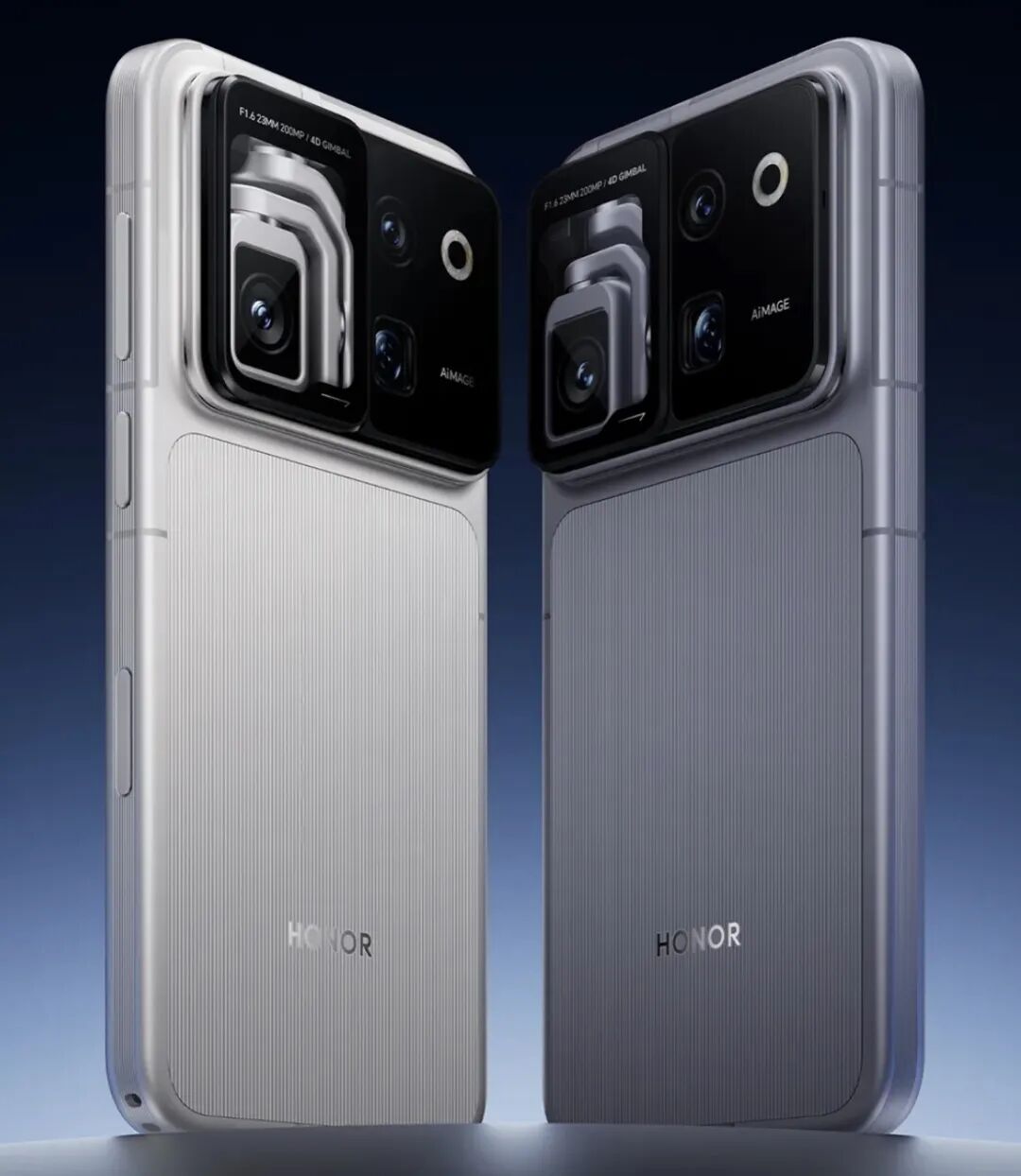
Image source: Honor Mobile's Weibo
In March 2025, Honor's newly appointed CEO, Li Jian, formally announced the Alpha Strategy on the MWC stage, declaring Honor's comprehensive shift from a smartphone manufacturer to a globally leading AI terminal ecosystem company, with a proposed five-year investment of $10 billion.
Now, the Robot Phone has arrived, marking the pivotal point where Honor's AI strategy transitions from a mere slogan to a tangible reality. At present, Honor needs a distinctive new identity to redefine its industry standing.
The Robot Phone serves as a strategic beacon, illuminating the path Honor aims to tread.
Perhaps its significance lies not in sales volume but in its ability to carve out a unique market niche for Honor and demonstrate possibilities beyond those of a traditional smartphone manufacturer.
Ten months later, Honor's AI vision has finally taken shape.
Rather than being a mass-market consumer electronics product, the Robot Phone acts as a concrete embodiment of Honor's AI strategy.
This new product, distinct from the Magic flagship series, deliberately positions itself away from the mainstream smartphone market in terms of pricing and design. It has no aspirations to top sales charts; its primary goal is to complement Honor's Alpha Strategy, which has been under discussion for over a year, with a tangible and perceivable hardware component.
From a hardware standpoint, the Robot Phone pushes Android camp specifications to their limits: the fifth-generation Snapdragon 8 Supreme platform, coupled with Honor's proprietary C1 communication, E2 display, and H1 audio auxiliary chips, a 7060mAh Qinghai Lake battery with 120W fast charging, and a 6.31-inch 6800nits high-brightness screen.
As a smartphone, these flagship-level configurations are not particularly groundbreaking. What truly sets the Robot Phone apart as a "robotic smartphone" is the internally integrated four-degree-of-freedom titanium gimbal capable of lifting and rotating.
A micro-mechanical system comprising over 100 precision parts operates within a phone body thickness of less than 10 millimeters, working in conjunction with a 200-megapixel gimbal main camera and supporting the LogC3 professional film color format, jointly tuned with ARRI. Honor has indeed ventured into uncharted territory within the traditional imaging field.
Moreover, what truly drives the Robot Phone is the software-level Agentic OS. This system-level Agent intelligent architecture, in collaboration with Alibaba's QianWen large model, claims to enable multi-APP interactions and complete over 100 consecutive tasks through a single natural language instruction.
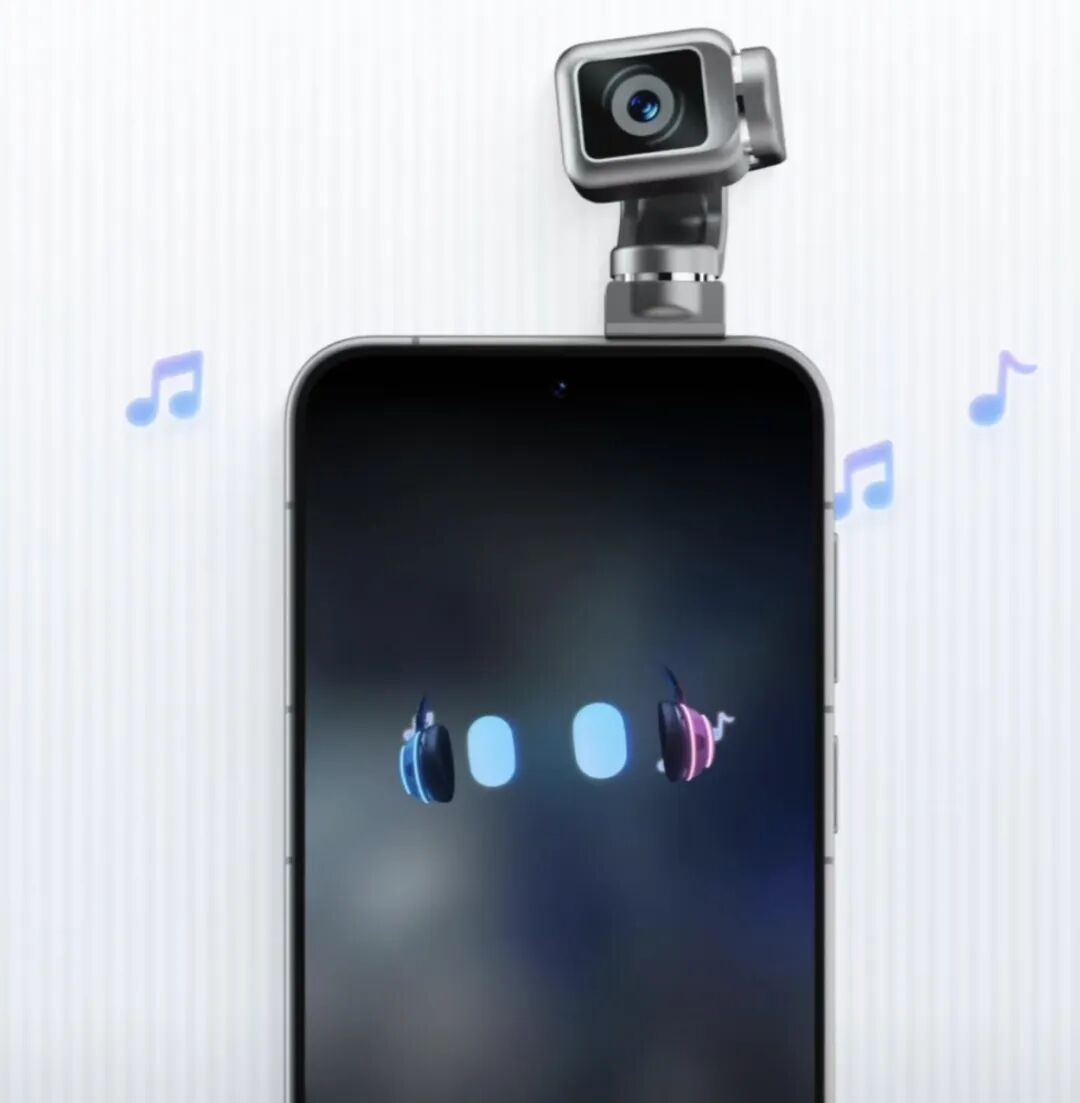
Image source: Honor Mobile's Weibo
Priced starting at 9,999 yuan, the Robot Phone further emphasizes its non-volume-centric nature. This pricing strategy bypasses the 5,000-8,000 yuan range of domestic high-end models, leaping directly into the 10,000 yuan ultra-premium segment. It neither competes with its own Magic series nor faces direct competition from Huawei and Apple in the mainstream high-end market.
On the surface, this may seem counterintuitive, but the underlying rationale is not hard to grasp.
Since unveiling the Alpha Strategy last year, Honor has successively launched MagicOS 10, released Agentic OS, and introduced humanoid robots.

Image source: Honor Mobile's Weibo
The emergence of the Robot Phone provides, for the first time, a physically distinct manifestation of Honor's AI narrative.
The perception of this new device is shaped by its movable mechanical gimbal. In essence, Honor has leveraged hardware structural innovation to bolster the entire narrative of its AI strategy's implementation.
The Robot Phone represents both a technological declaration and a strategic gamble. Continuing down the traditional path would only lead to a red ocean of market saturation competition, making it increasingly challenging to craft a compelling growth story. The Robot Phone is Honor's newest and most imaginative card in this regard.
The timing of the Robot Phone's release coincides with a critical juncture in Honor's preparations for going public.
The fourth-phase counseling progress report disclosed on July 30 indicates that counseling work is ongoing, with core content including "continuous due diligence, improving corporate governance, and deliberating on fundraising investment projects."

Image source: Honor's official website
The direction of fundraising investment remains undetermined, a point widely regarded as pivotal in the industry.
The direction of fundraising investment is not merely about where the funds will be allocated; it directly shapes a company's capital market positioning and valuation logic. If Honor goes public as a pure smartphone company, the capital market will evaluate it based on the consumer electronics valuation system, with clear expectations for price-earnings ratios and valuation ceilings.
However, Honor now requires a new narrative capable of breaking through the valuation ceiling of "smartphone manufacturers."
AI lies at the heart of this new narrative. If Honor can demonstrate that it is not a traditional smartphone company but an AI terminal ecosystem company, the valuation logic will undergo a complete transformation, and the market will re-evaluate it using the AI company valuation system.
In addition to the Robot Phone's launch, at MWC in March 2026, Honor became the world's first smartphone manufacturer to unveil a consumer-grade humanoid robot. Equipped with 55 highly articulated bionic joints and dynamic balancing capabilities, the robot performed intricate maneuvers such as handshakes, dancing, the moonwalk, and even backflips at the exhibition.

Image source: Honor Mobile's Weibo
This sends a strong signal to the market that Honor's AI is not confined to software but is also venturing into the realm of embodied intelligence and the physical AI world.
However, whether the capital market will assign a premium to this narrative remains uncertain. Humanoid robots remain largely conceptual, the Robot Phone has not yet been officially delivered, and questions persist about whether the 400,000 pre-orders can translate into actual sales and whether the 9,999 yuan pricing can be sustained in the market over the long term.
The significance of the Robot Phone's release lies in its ability to prove Honor's capacity to pioneer new market segments and craft a growth story distinct from traditional smartphone manufacturers in the AI era.
No one can predict whether the next decade of the smartphone industry will indeed be the stage for intelligent agents. But Honor has already taken center stage, using a bold product to declare its choice to the entire industry.
As for whether the market will embrace this vision and whether the capital market will recognize it, time will provide the ultimate verdict.
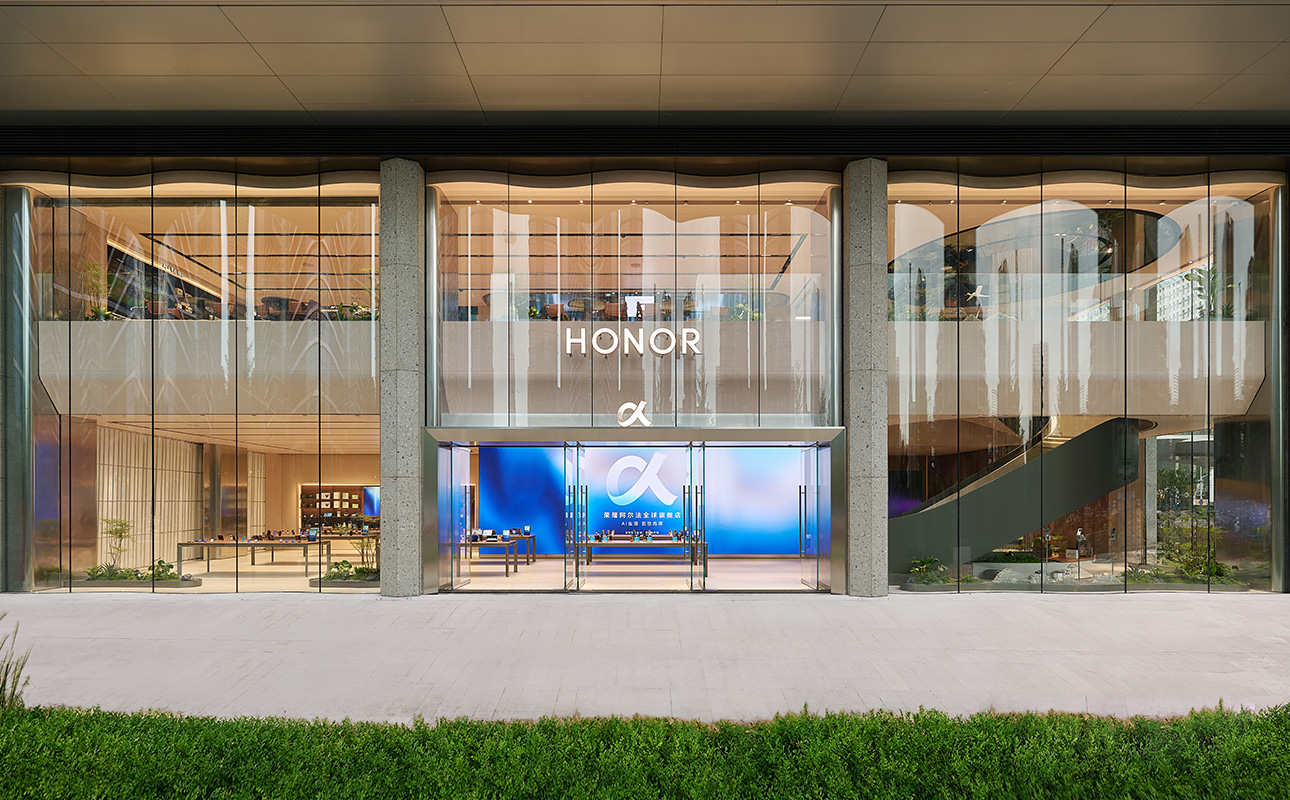
(The header image for this article is sourced from Honor's official website.)
-
![]()
FAW, in Its Third Year with a New Chairman, Anticipates Returns on Multi-Billion Yuan Investments
-
![]()
Zhuque-3 Rocket Successfully Recovered: Why This Achievement Bears More Resemblance to SpaceX Than the Long March 10B Mission
-
![]()
Li Shufu Resigns as Chairman of the Board, 'One Geely' Is No Longer Just a Slogan
-
![]()
Challenges in the IPO Journey: What's Holding Honor Back?
-
![]()
XR Business Rockets with 15-Fold Growth! Conant Optics Unveils 2026 Interim Report
-
![]()
Net profit surged by 186%! Accelink Technologies is cashing in on the AI computing power dividend
-
![]()
Trillion-Yuan Chip Project of Domestic Computing Power Behemoth Collapses!
-
![]()
Surging Over 536% Upon Listing! A New Laser Stock Yields Over 500,000 Yuan Per Lot