Baidu: Legacy Businesses Continue to Struggle, AI Relies Solely on Computing Power Dividends
 08/19 2026
 422
422
Baidu's Q2 performance remained a mixed bag, with overall results falling short of expectations. As Dolphin Research has consistently mentioned, Baidu presents only range-bound trading opportunities this year, with catalysts being its inclusion in the Stock Connect and the listing of Kunlunxin (both expected within the year). For detailed insights, refer to the end of the article.
Since the beginning of this year, Baidu has formally adopted a new structure for disclosing its performance, dividing it into two parts: "AI Business" and "Traditional Business." The AI business includes AI infrastructure (AI Infra), AI applications (AI Application), and AI-native marketing services (AI-native Marketing Services).
However, as most institutions still set expectations based on the old structure, Dolphin Research has integrated the new and old frameworks. This approach facilitates the comparison of expected differences while also showcasing the growth performance of Baidu's new AI business lines.
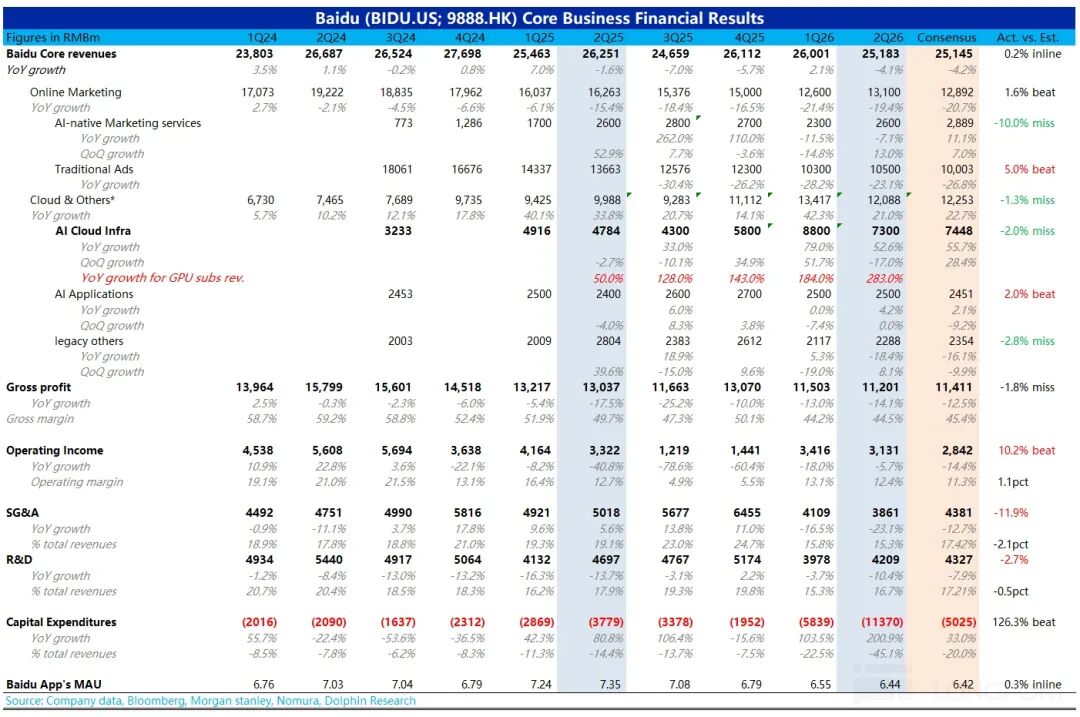
A detailed analysis follows (focusing on Baidu's core operations, excluding iQIYI):
1. Slowing Growth in AI: High Demand for Computing Power, but Insufficient Product Competitiveness
In the second quarter, AI-related revenue reached 12.4 billion, with growth slowing from 49% in Q1 to 27% in Q2. This segment now accounts for half of total revenue, remaining flat quarter-over-quarter.

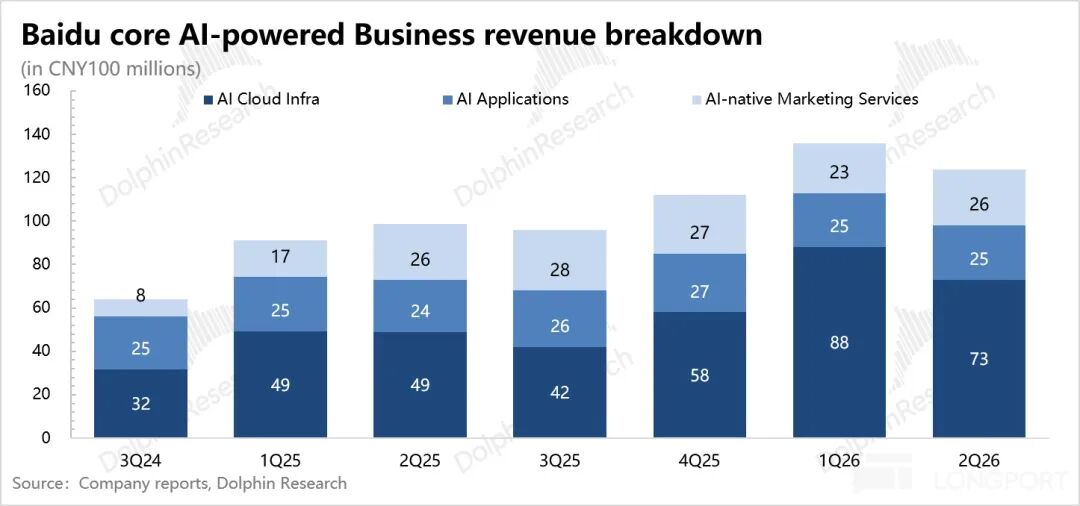
Details include:
(1) AI Cloud Infrastructure (including cloud services, large model APIs, and computing power leasing): Computing power remains in high demand
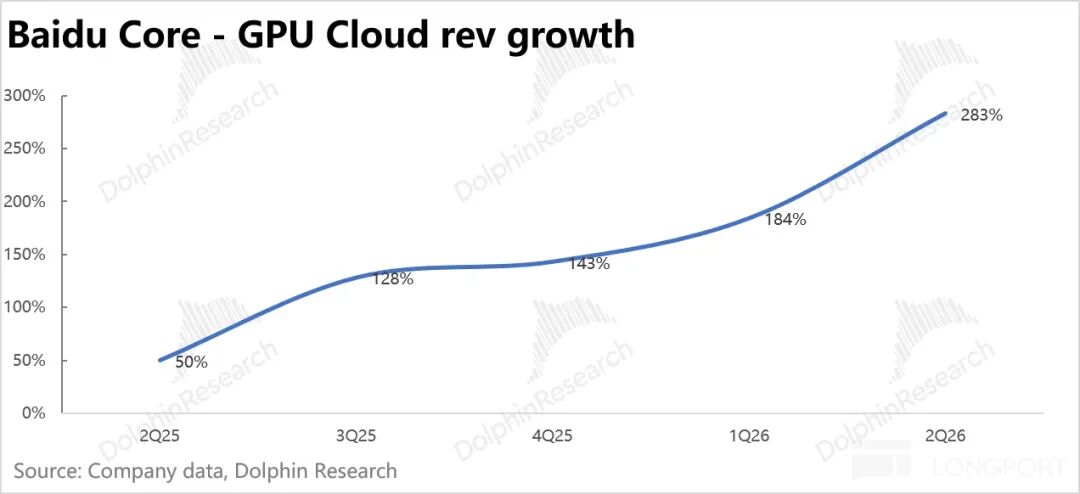
Revenue reached 7.3 billion, accounting for 60% of the AI business and growing 53% year-over-year, though this fell short of BBG consensus expectations. Notably, GPU cloud services, which solely sell computing power, continued to perform well, with a year-over-year growth rate of 283%, accelerating from Q1. The remaining segments likely remained flat or declined, possibly due to issues with private cloud delivery timelines. Institutions have since lowered their expectations below the aforementioned BBG statistics.
Overall, the performance of Baidu's AI business primarily reflects the market's shortage of computing power. However, Baidu's own large models and Agents face significant competition and lack clear advantages.
(2) AI Applications (including Baidu Wenku, Baidu Netdisk, Digital Employees, and general-purpose AI Agents): No signs of improvement yet
The performance of AI product services, excluding computing power sales, has been mediocre for 2-3 consecutive quarters. This remains a core reason for Dolphin Research's cautious outlook on Baidu's AI prospects. However, this is partly due to the declining competitiveness of Baidu Netdisk and the resource consolidation following the integration of Wenku and Netdisk businesses.
Mid-year marked the peak of intense competition in the AI-powered office productivity sector. Baidu also integrated and updated its AI office product suite, represented by Baidu Dazi, Kuku AI, and MiaoDa. Currently, the promotion of these products is yielding positive results, with download volumes ranking high in July (second only to Tencent's Workbuddy).
However, compared to tech giants like Tencent, ByteDance, and Alibaba, Baidu lacks a traditional office social platform for direct user acquisition, resulting in higher customer acquisition costs and greater challenges in user retention.
(3) AI-Native Marketing (Agents and Digital Humans): Slight seasonal rebound
The second quarter saw a slight rebound due to the e-commerce peak season, though year-over-year growth trends have largely stalled. Competition in AI marketing remains fierce, and without a significant advantage in large models, Baidu's AI-native marketing efforts are largely seen as compensatory revenue for the decline of traditional search.
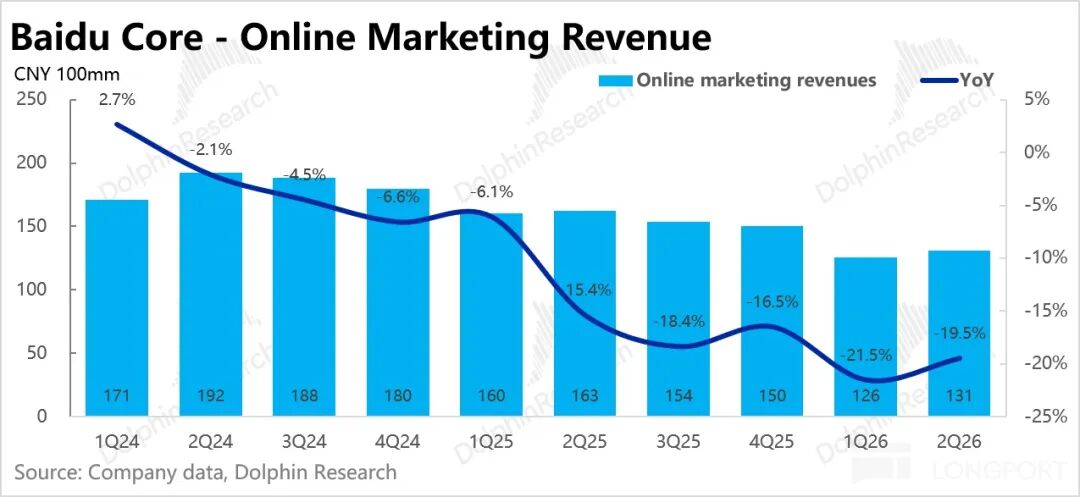
2. Traditional Advertising Outlook: Turning Point Still Unclear
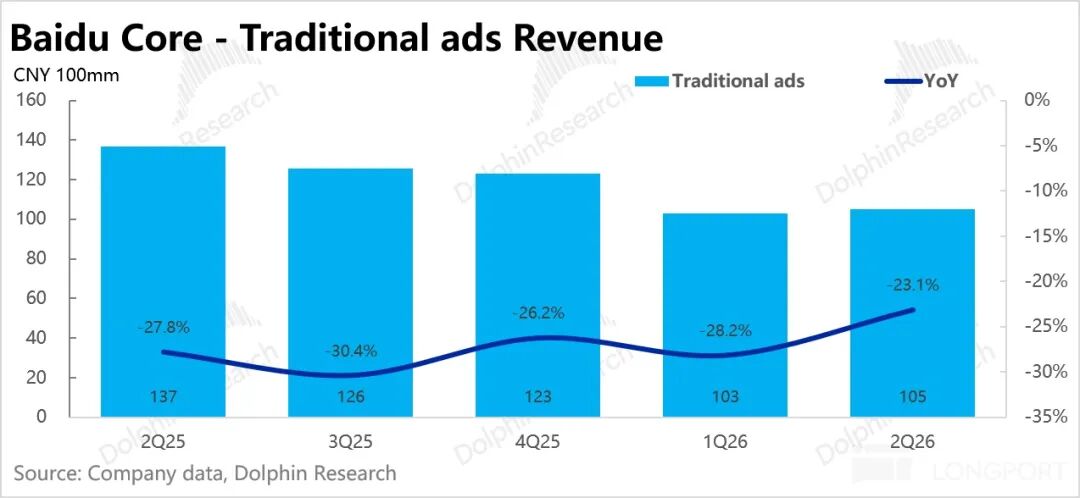
Traditional advertising revenue (search and information feed ads) declined 23% year-over-year. While slightly better than expected, the downward trend persisted quarter-over-quarter. Baidu Mobile had 644 million MAUs, continuing to lose 11 million users net.
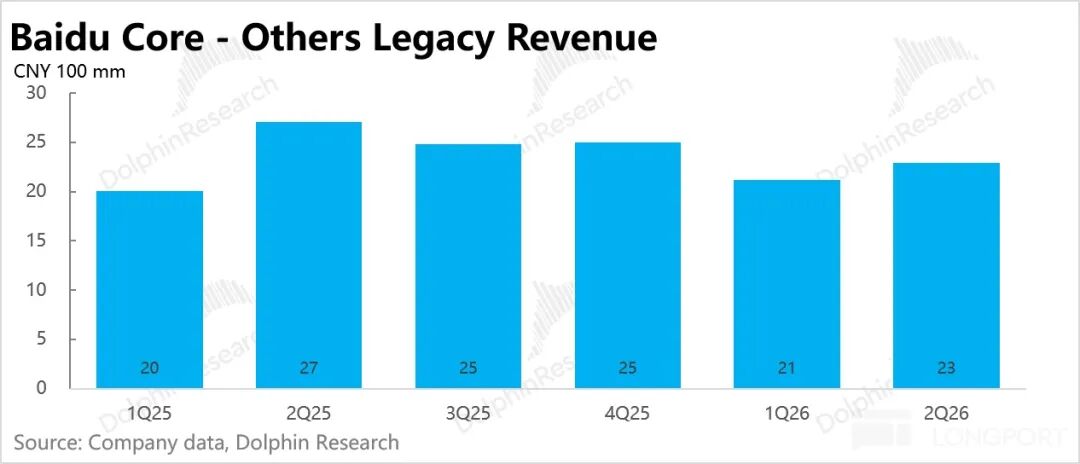
3. Autonomous Driving, Smart Hardware, and Others: Revenue from this segment reached 2.3 billion in Q2, showing a slight quarter-over-quarter increase but still declining year-over-year. In Q2, Baidu continued to advance the globalization of its autonomous driving technology (despite regulatory impacts on autonomous driving in mainland China), conducting ongoing tests in London, Dubai, Hong Kong, and Switzerland.
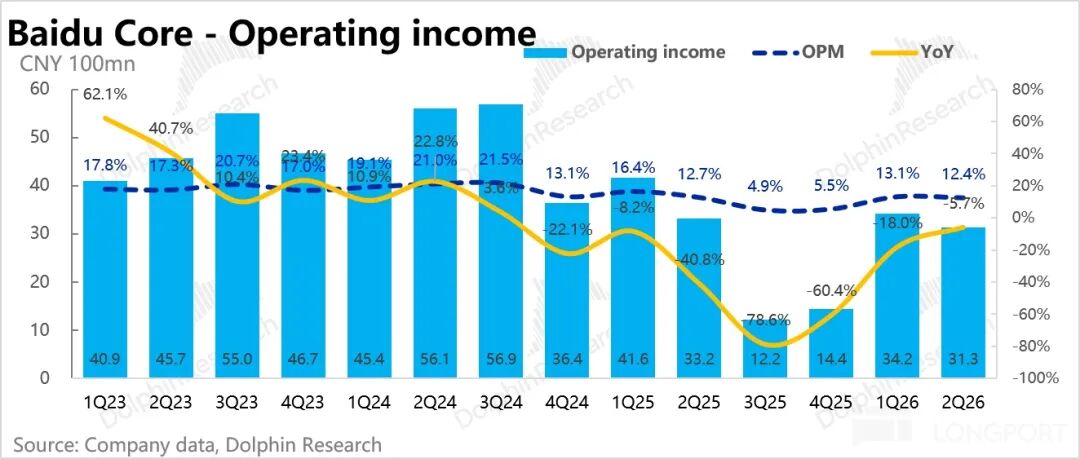
4. Profitability Continues to Improve, but New Investments Are Imminent
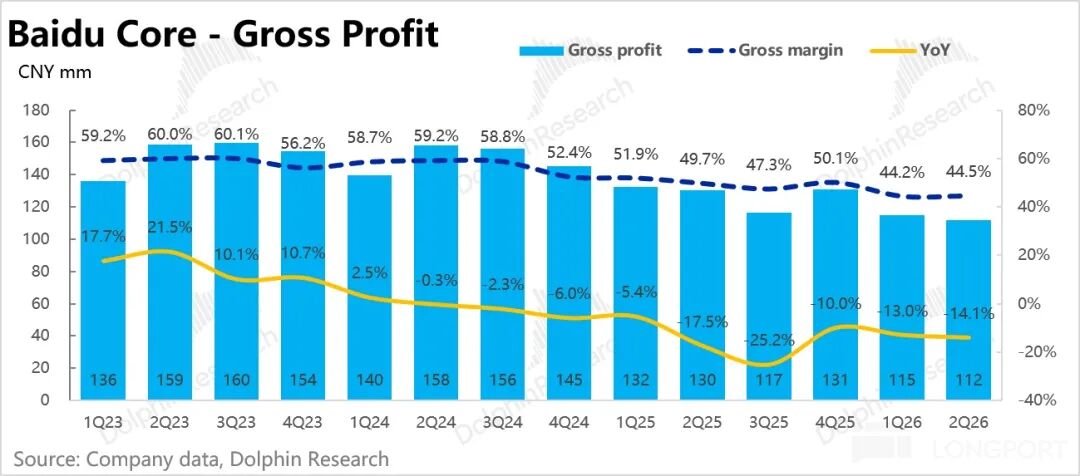
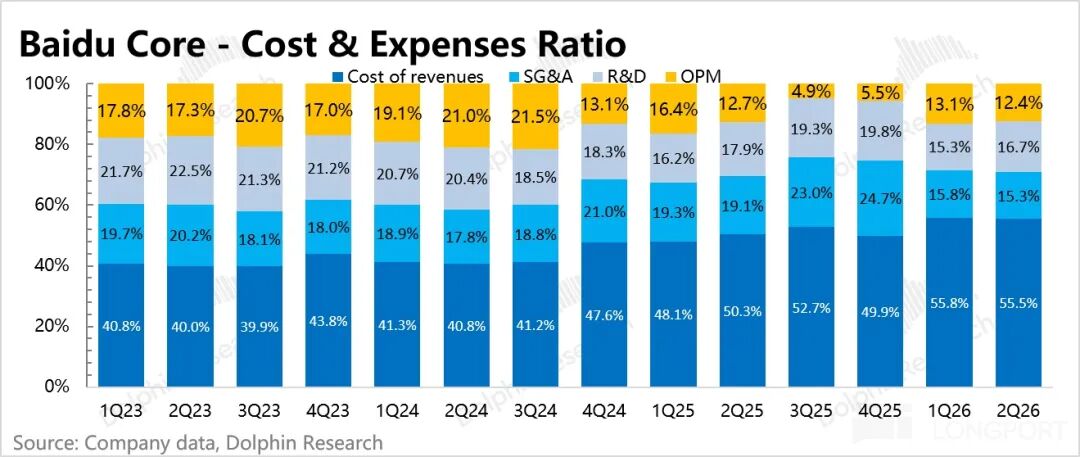
Q2 exceeded expectations primarily in terms of profitability. Leveraging high computing power premiums and cost control (mainly in sales and administrative expenses), profits outperformed expectations, with a significant narrowing of the year-over-year decline.
However, Baidu has been actively adjusting its AI business organizational structure and recruiting talent. In addition to business consolidations for efficiency gains (including the integration of MEG's search and recommendation teams, Baidu Wenku + Netdisk, and MEG's e-commerce and commercial divisions), AI R&D has also undergone generational transitions, similar to other major firms. The former CTO's responsibilities have been reduced, and the Base Model Research Unit (BMU) welcomed a post-95 leader in July this year.
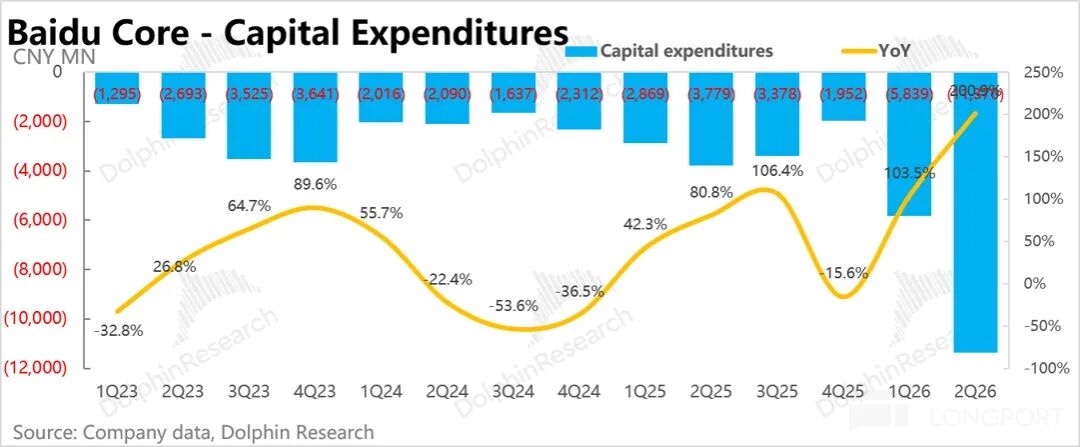
Coupled with the unexpectedly doubled Capex (11.4 billion in a single quarter, accounting for 45% of revenue—attention should be paid to potential purchasing clusters and future investment plans), this demonstrates Baidu's commitment to base model development. Talent and R&D costs are expected to rise in the second half of the year, so expectations for a return to profit growth may need to be tempered.
In the short term, this will lead to a gradual increase in operating expenses for a company that has been tightening its belt, including higher talent costs and increased investment in computing power and R&D.
5. Sluggish Pace of Share Buybacks
The 5 billion buyback plan announced in February for three years saw only 260 million spent in the first half, indicating a relatively slow pace. Management typically adjusts the buyback rhythm based on market capitalization fluctuations, and the recent significant stock price adjustment presents a good opportunity for repurchases after the quiet period ends.
From a net cash reserve perspective, Baidu has sufficient funds to proceed with the original buyback plan. However, given the steep increase in Q2 Capex, Baidu may face a balancing act between investments and buybacks.
Dolphin Research's Viewpoint
The Q2 results were underwhelming. Despite Baidu's cloud business performing well this quarter—a trend seen across other cloud platform companies—the lack of a clear safety net from traditional businesses, combined with slowing overall AI revenue and surging investments, is discouraging to investors.
The explosive 283% growth in GPU revenue was a rare bright spot, though it merely confirms the industry-wide shortage of computing power. Given its limited scale, this growth provides only marginal support to Baidu's overall revenue. Meanwhile, the performance of AI applications and Agents—key indicators of Baidu's AI competitiveness—has spoken volumes over the past three quarters.
In the first half of the year, Baidu continued to adjust its organizational structure, promoting generational transitions and stimulating internal innovation. However, this process takes time to deliver results. Without a high-barrier traditional business to fall back on, there is no urgency to factor this into current expectations.
Thus, Baidu's appeal remains short-term. Q2 saw no major changes: Baidu Core (excluding equity investments like iQIYI) is simultaneously grappling with the shrinkage of the traditional search ecosystem and reaping the rewards of computing power through its AI cloud. The former erodes cash, while the latter fuels narratives. This tug-of-war between bullish and bearish sentiments will ultimately confine the company's value to a fluctuating range.
Upward catalysts within this range depend on the opening of capital channels, specifically the two key events: inclusion in the Stock Connect and the listing of Kunlunxin. Based on the company's planned timeline, both events are expected to materialize within the year, with an optimistic scenario suggesting Stock Connect inclusion could happen as early as September (mirroring Alibaba's timeline: dual primary listing announcement in July, approval in August, and Stock Connect inclusion in September).
Under neutral to slightly cautious expectations for other businesses and using a less aggressive valuation approach, the total could reach $44 billion, implying a 25% upside from current levels. Institutions often assign separate valuations to Apollo Go and include net cash and iQIYI's equity.
However, Dolphin Research believes this introduces excessive premiums: Apollo Go should only be factored in upon actual spin-off plans; iQIYI's fundamentals are impaired, and its equity value is highly unstable, making it suitable only under optimistic scenarios; and including all net cash is unreasonable—at most, 5 billion from the buyback plan plus a 5% shareholder return rate (1.6 billion in repurchases per year at the planned pace) should be considered.
Thus, expectations for Stock Connect inclusion and buybacks are likely to provide short-term support. After the release of earnings sentiment, further downside is limited. Substantial catalysts like Stock Connect inclusion and the Kunlunxin listing could drive a recovery, but once this upside is exhausted, further momentum will be limited. Naturally, in the initial phase of Kunlunxin's listing, a short-term spike akin to the "Four Little Dragons" era cannot be ruled out, but this demands precise timing and should be evaluated based on individual risk appetite.
- END -
// Reprint Authorization
This article is an original work by Dolphin Research. Reproduction requires authorization.
// Disclaimer and General Disclosure
This report is intended for general comprehensive data purposes, providing users of Dolphin Research and its affiliated institutions with general reading material and data references. It does not consider the specific investment objectives, product preferences, risk tolerance, financial status, or unique needs of any individual receiving this report. Investors must consult independent professional advisors before making investment decisions based on this report. Any person using or referring to the content or information in this report for investment decisions assumes full risk. Dolphin Research shall not be liable for any direct or indirect responsibilities or losses arising from the use of the data contained herein. The information and data in this report are based on publicly available sources and are provided for reference purposes only. Dolphin Research strives to ensure but does not guarantee the reliability, accuracy, or completeness of this information and data.
The information or viewpoints mentioned in this report shall not, under any jurisdiction, be construed as or deemed to be an offer to sell securities, an invitation to buy or sell securities, nor constitute recommendations, inquiries, or endorsements of relevant securities or related financial instruments. The information, tools, and materials in this report are not intended for distribution to or use by individuals in jurisdictions where such distribution, publication, provision, or use contradicts applicable laws or regulations or subjects Dolphin Research and/or its subsidiaries or affiliates to registration or licensing requirements in those jurisdictions.
This report solely reflects the personal viewpoints, insights, and analytical methods of the relevant contributors and does not represent the stance of Dolphin Research and/or its affiliated institutions.
This report is produced by Dolphin Research, with copyright reserved solely by Dolphin Research. No institution or individual may, without prior written consent from Dolphin Research, (i) produce, copy, duplicate, reproduce, forward, or distribute copies or reproductions in any form, and/or (ii) directly or indirectly redistribute or transfer them to other unauthorized parties. Dolphin Research reserves all related rights.
-
![]()
Is the FREELANDER 8, Minus the Land Rover Emblem, a ‘Quick Band-Aid’ or a ‘Sustainable Strategy’?
-
![]()
Can General AI Assistants Avoid Repeating the Internet's Mistakes?
-
Organizational Structure in the AI Era: Insights from Google
-
![]()
Key Player Departs MiniMax Following M3 Launch
-
![]()
Raking in 4.7 Billion Yuan in Annual Revenue, a '92-Born Ex-ByteDance Employee Builds a $20 Billion AI Unicorn, Eyeing Hong Kong IPO
-
![]()
Li Shufu Takes a Strategic Step Back: What Lies Ahead for Geely?
-
![]()
Xiaomi's Midlife Challenge: Balancing Soaring Smartphone Storage Costs Against Losses in Its Automotive Ventures
-
![]()
Li Shufu Passes the Torch: Is Geely Stepping into the 'An Conghui Era'?