Seedance 2.5 is Here, But Is the Industry Really Ready?
 08/20 2026
 460
460

Recently, ByteDance has been advancing the internal testing of an AI video creation platform named 'Seedance Studio'. It is reported that, unlike the video generation functions previously integrated into products like Doubao and Jimeng AI, Seedance Studio does not merely assist users in generating short video clips lasting a few seconds. Instead, it covers the entire process from creative planning, material generation, modification and iteration, to final film production.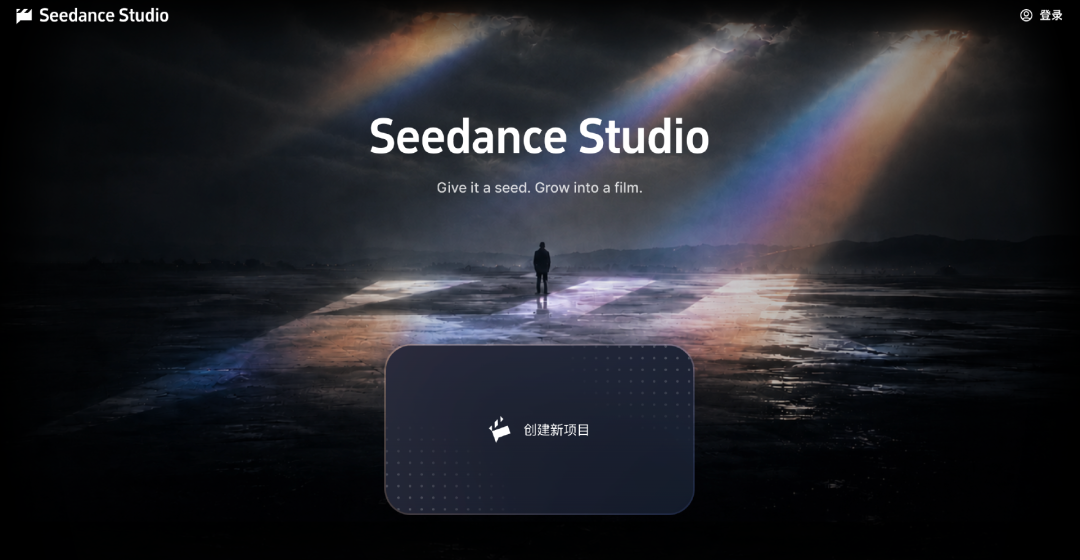
The competition in AI video is entering a new phase, with large model companies extending their competition from model capabilities to the entire film and television production chain, vying to see who can truly assist creators in completing a work.
This is why the launch of Seedance 2.5 has quickly drawn industry attention. Compared to the previous model, version 2.5 not only improves image quality but also enhances camera control, long-duration generation, and command comprehension abilities. It is moving closer to becoming a more professional and controllable tool for film and television creation.
As models become increasingly powerful, does this mean AI films are truly one step closer to industry reality?
For hit AI short dramas, the factors contributing to a work's popularity weigh heavily on aspects other than the tools used. Recent hits like 'The Laid-Off Girl' and 'Gui Xu' were created by veterans with expertise in scripting, aesthetics, and visuals—AI simply amplified their existing capabilities.
It seems that the teams most impacted by model upgrades are those aiming for theatrical release standards, yet they face their own frustrations. As model capabilities improve, production requirements rise accordingly, with high computational costs and new operational barriers leaving teams trapped in a dilemma where 'the tools are stronger but harder to master.'
For outsourced animation teams at the 'bottom' of the industrial chain, the most direct impact of model upgrades is that client demands have increased. To secure contracts, they must use more expensive models, yet production prices continue to decline, leaving them in a difficult position.
The changes brought by technological upgrades are not simply about 'AI getting better at making films'; they also introduce new barriers, costs, and competition. What truly determines productivity remains people, costs, and a still-immature industrial process.
While AI is getting closer to 'being able to generate' content, it may still have a long way to go before it can truly 'make films'.
Behind the Hits: It's Not Just About Stronger Tools
The current industry evaluation of Seedance 2.5 is divided. On one hand, short drama and animation professionals argue that it is too expensive and slow for assembly-line production. On the other hand, some traditional film and television creators feel it can elevate the entire industry, citing significant improvements in lighting and spatial control.
This divide actually reflects the gap between tools and industry realities. 'The Laid-Off Girl' and 'Gui Xu', as recent phenomenal works in the industry, aptly illustrate this gap.
As an AI-simulated human short drama, the first season of 'The Laid-Off Girl' became a sensation, offering the industry its first glimpse of the commercial potential of AI characters.
The show quickly went viral after its release, amassing over 300 million views on Douyin. However, audience feedback plummeted after the second season's launch.
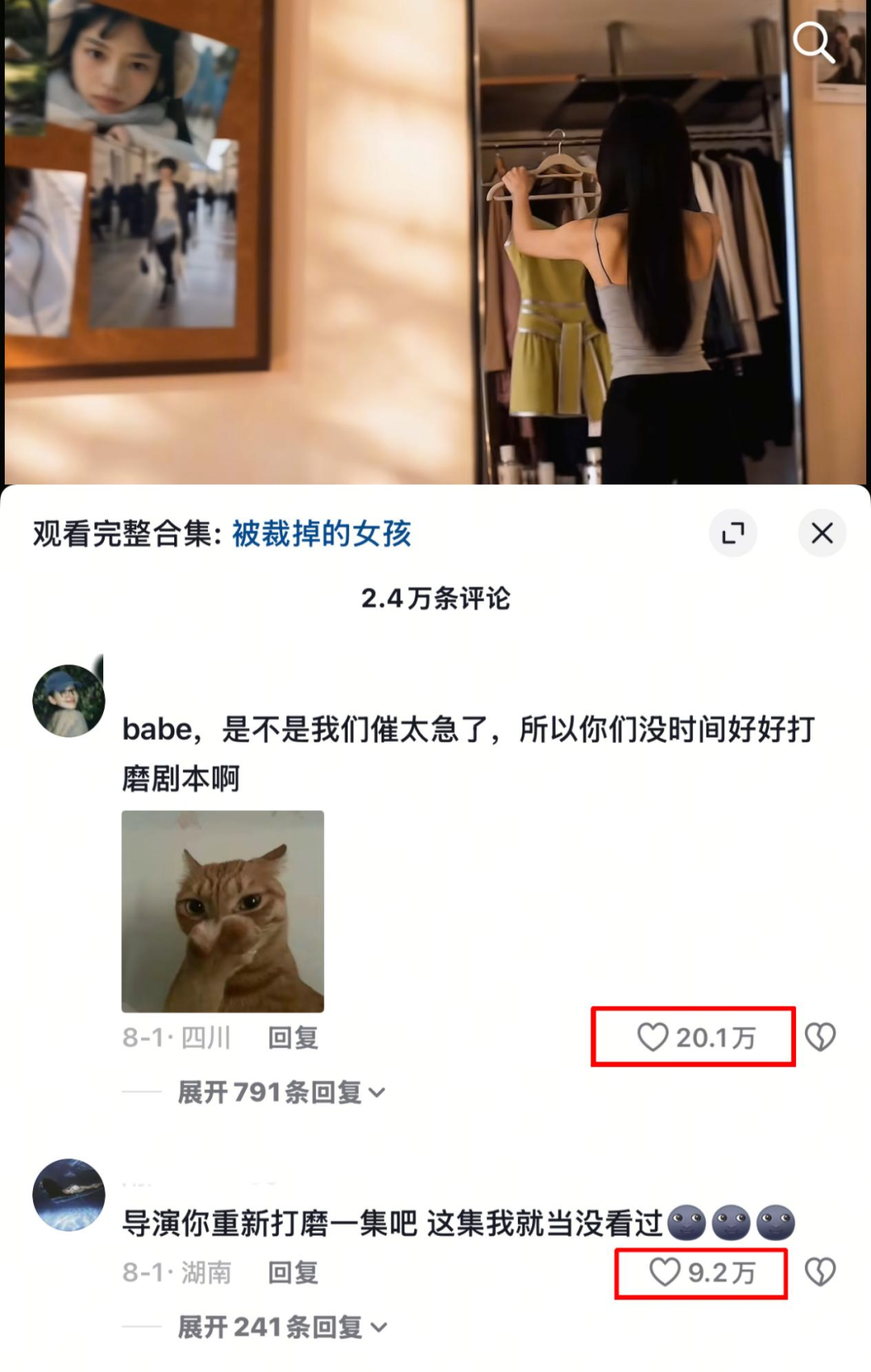
Many viewers felt that the character Fang Taozi in the second season lost the sharpness of the first, while the plot was criticized as 'dumbing down.' At the same time, details such as character expressions and movements were questioned for appearing more obviously AI-generated.
Did the team use a less effective AI tool? Quite the opposite.
The first season of 'The Laid-Off Girl' was produced using LibTV, a relatively basic AI video tool at the time. For the second season, to adapt to model upgrades and platform ecosystem changes, the team switched to Seedance 2.5, a more powerful tool with film-like visual performance.
Despite using a better tool, the show's reputation declined—a counterintuitive outcome. However, looking back at the first season's production process, the show was never an industrial product relying on advanced technology.
According to interviews with the director, the first six episodes were primarily completed by a team of three using LibTV. A new member who joined later worked late into the night with the team on the very first day of learning AI production to finish the seventh episode.
Director Feifeifei had long been involved in real-person IP content creation before entering the AI short drama field, accumulating years of experience in scriptwriting. The first season's success relied on her judgment of characters, emotions, and social issues.
After the second season's release, although the production tool was upgraded to the more powerful Seedance 2.5, the team faced increased pressure to deliver frequent outputs to maintain Heat (popularity), leaving less time for script polishing and character development. The break-in period (adjustment period) for the new tool also shortened.
A similar story unfolded with another hit, 'Gui Xu.'
With its strong visual style and special effects, the first season of 'Gui Xu' garnered over 45 million views and nearly 3 million saves on Hongguo, becoming a representative work among recent AI short dramas.
The success of 'Gui Xu' also relied on its creator. The core creator, Xuan Jiu, worked alone on this, his first foray into AI short dramas. However, Xuan Jiu had already accumulated over a decade of experience in visual creation, starting in game art and later engaging in e-commerce design and product advertising.
In other words, 'Gui Xu' was not a case of an inexperienced creator achieving success through AI but rather a mature visual creator leveraging AI to amplify their existing skills.
Xuan Jiu remains calm about the recent attention surrounding Seedance 2.5. He believes that while models address the question of 'whether something can be made,' creators determine 'whether what is made is worth watching.' As tools continue to improve, generating visuals will become easier, but storytelling, aesthetics, camera judgment, and content selection will still depend on the creators themselves.
Both 'The Laid-Off Girl' and 'Gui Xu' demonstrate that the model itself is not the content production capability. For teams lacking relevant experience, tool upgrades may bring new adaptation challenges; for creators with long-term accumulation, AI serves more as a tool to further amplify their existing abilities. So, what does this mean for teams genuinely aiming to push AI toward industrialized production?
How to Truly Move from 'Cinematic Feel' to Cinema?
It is said that Seedance 2.5 generates truly 'cinematic' visuals, and Cao Yun's company is attempting to turn this 'cinematic feel' into actual films. 'The boss wants to make an AI film that can hit theaters,' Cao Yun revealed.
Her Hangzhou-based animation company has invested heavily in trying to produce an original script, 4K-standard, semi-realistic 3D CG animated film. The initial plan was to use AI to replace some traditional animation processes like modeling, rigging, and rendering, reducing production costs and shortening timelines.
Over the past six months, the company has poured resources into this project, but progress has been slow. While large volumes of material are generated daily, the finished product remains stuck at around twenty minutes, unable to advance further.
In Cao Yun's view, the issue is not about how advanced the visual quality needs to be but rather that AI currently cannot meet the core requirement of feature film production: stability.
'AI can now generate a visually decent shot, but it's hard to ensure consistency across dozens of shots before and after it.'
Short dramas can tolerate such issues to some extent. Through rapid cuts and compressed pacing, some visual flaws can be hidden. However, theatrical films are different—audiences observe a complete visual world on the big screen, requiring consistency in character appearance, costume details, movements, and spatial relationships across numerous shots.
Current video models essentially generate visuals based on probability and do not truly understand complete three-dimensional space. Thus, just because one shot works does not mean the next will as well. Teams often have to manually model or post-process to fix issues left by AI.
Moreover, higher resolution does not equate to greater stability. Cao Yun mentioned that both Seedance 2.0 and 2.5 face similar issues: under the same set of prompts, upgrading from 480P and 720P to 1080P or even 4K can result in significant differences in output, with higher resolutions becoming harder to control.
Teams typically test repeatedly at low resolutions first, confirming a shot's viability before generating high-definition versions. However, high-definition versions may still introduce new problems, making previous testing costs difficult to translate into final output.
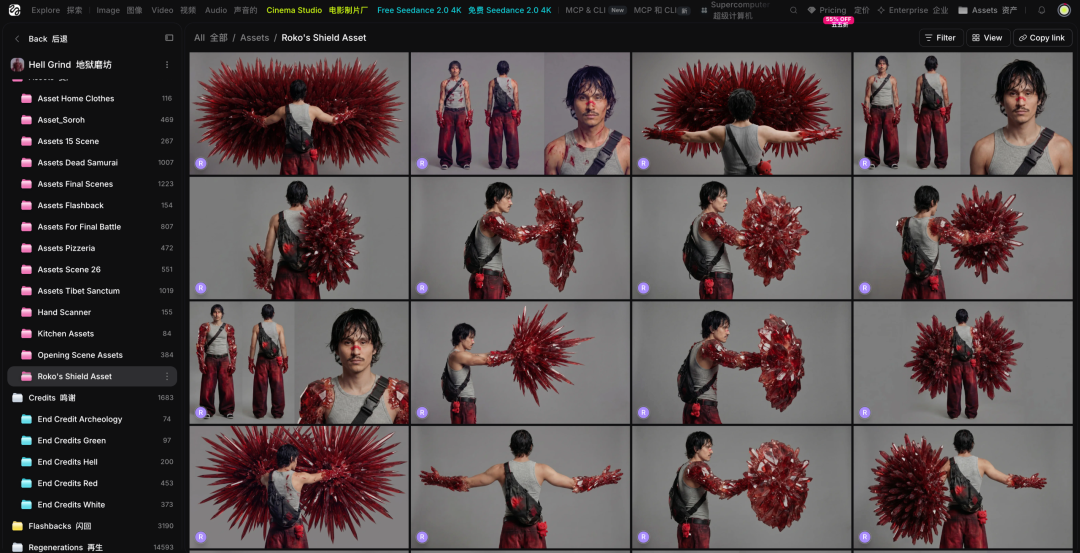
Earlier, the AI feature film 'Hell Grind' released similar data: for the first 22 minutes of content, over 16,000 video segments and 10,000 images were generated, with only 253 shots making it into the final film. A vast amount of output had to be discarded, corresponding to continuously rising computational costs.
Cao Yun's team faced a similar situation. Initially, the company pursued quality without limiting computational consumption, but as costs mounted, management changed: employees now need to produce effective shots within fixed computational quotas, with performance affected by exceeding quotas or failing to deliver usable material; the project's original 4K standard was also downgraded to 1080P.
After Seedance 2.5's launch, new issues arose.
Compared to 2.0, version 2.5 indeed offers higher image quality and stronger command comprehension, but it also demands greater camera design and professional communication skills from operators. While 2.0 would actively supplement visuals based on vague descriptions, 2.5 strictly follows instructions—if operators cannot accurately describe camera positions, lighting, and character states, results may fall short of expectations.
For ordinary employees who are not professional directors, this means bearing not only higher computational costs but also the trial-and-error costs of learning new tools.
'Besides performance pressure, another reason we switched back to 2.0 is 'familiarity'—2.0 is more predictable and familiar to us,' Cao Yun said.
This sense of familiarity is also evident in the development of large language models. When GPT-4.0 upgraded to 5.0, many long-time users protested on social media, preferring the older model's thinking style and linguistic tone despite the new version's enhanced capabilities.
While 2.5 undoubtedly raises the model's ceiling, it also raises usage barriers. Under the company's 'pay-per-wasted-shot' system, employees struggle to afford the costs of relearning the model, experimenting with prompts, and continuous trial-and-error. To ensure stable output, they ultimately chose to revert to the more familiar and error-tolerant Seedance 2.0.
Beyond production challenges, the business model for AI films remains unproven.
Currently, feature-length films entirely generated by AI and commercially successful in theaters or on long-form video platforms are still rare. Compared to traditional film and television, AI films lack the Traffic guarantee (audience draw) provided by stars and established IPs, while audience novelty toward 'AI-made' content is also fading.
Even if Cao Yun's team resolves production issues, they remain uncertain whether AI films made with massive computational and labor costs can achieve corresponding market returns.
Through Cao Yun's experience, it is clear that AI still has a long way to go before truly entering theatrical film production. However, even at the more market-oriented outsourcing level, problems do not disappear simply because goals are lowered.
Do Stronger Models Intensify Industry Competition?
At a small AI animation outsourcing company in Zhengzhou, Xiao Yu secretly feels that balancing the books is becoming increasingly difficult.
The AI animation outsourcing industry has entered a highly competitive phase. Xiao Yu's company does not even directly serve clients but operates as a 'fourth-tier' subcontractor after multiple layers of outsourcing. As a 'fourth-tier' provider, their outsourcing price has been compressed to 500 RMB per minute, yet client quality demands approach levels previously achievable only with budgets of 1,000 RMB per minute or higher. 'Projects below Grade A have basically been eliminated by the market.'
While contract prices are falling, model costs are rising. Xiao Yu's team can no longer rely on low-cost models to cut budgets, yet client quotes keep decreasing.
'If we don't use better models, it's hard to secure contracts, but using better models leaves no profit.'
Xiao Yu has noticed that as AI video models' overall capabilities improve, client expectations for visual quality keep rising. While clients might have tolerated certain AI-generated flaws before, their standards now increase once higher-quality examples appear in the market.
In the AI short drama outsourcing market, teams often need to present sample reels or case studies before securing contracts, with clients deciding whether to collaborate based on visual quality, stylistic fit, and production capabilities. Some platforms also rate finished works, with different ratings corresponding to varying revenue-sharing and resource opportunities.
So they chose to use Seedance 2.5 in the scenes where it was most needed to "impress." For example, close-ups of characters' first appearances, large-scale shots, and key frames that determined the texture of the sample reel were all prioritized for 2.5 generation.
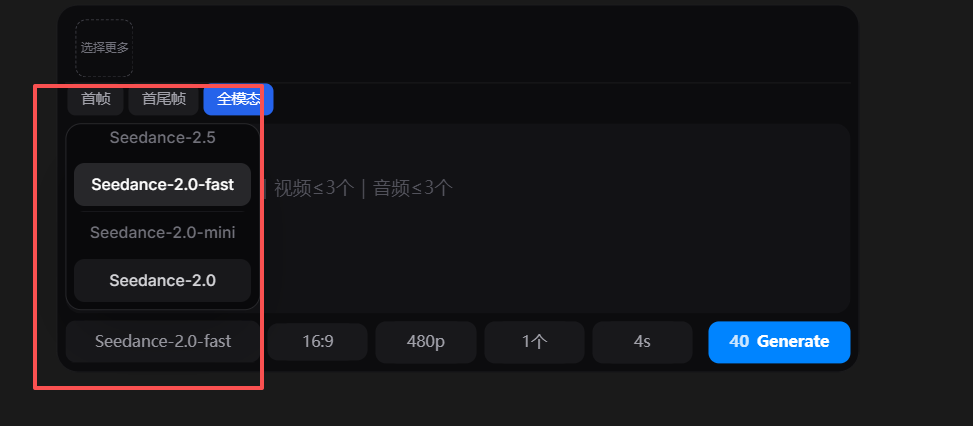
After all, under the production contract mode, the initial sample reel submitted to clients often directly influences subsequent ratings and pricing. A few truly stunning shots can help the team secure higher evaluations and reduce the client's demands for repeated revisions later on.
However, it was impossible to use 2.5 for the entire film. For the narrative scenes following the sample reel, Xiao Yu's team would switch back to the lower-cost Seedance 2.0 or even cheaper models. This approach not only ensured the overall texture of the delivered sample reel to secure contracts and higher ratings but also controlled computational costs.
This cost pressure ultimately filtered down to the production staff. To reduce ineffective generation and computational waste, the company began to more strictly assess everyone's output efficiency. In Xiao Yu's team, nearly ten people were laid off within a week, while new recruits were continuously hired.
AI has lowered the operational barriers to video production, but it doesn't mean everyone can consistently produce content that meets client requirements. Increasingly competitive production companies must use limited computational power to generate footage that clients are willing to approve in the shortest time possible. Employees must understand the characteristics of different models as much as possible, reduce ineffective generation, and achieve effective results with less computational power.
The changes brought by Seedance 2.5 are not just about model capabilities but also about industry competition standards. Models are evolving rapidly, and the competitive focus has shifted from image quality to how to complete deliveries with lower costs, higher efficiency, and better quality.
Different teams face different dilemmas, but one thing is clear: the upper limits of models are constantly improving, yet the true barriers in the industry have not disappeared—they have even become higher.
-
![]()
NIO, Huawei, and Li Auto are All Talking About the 'World Model'. Where Are the Differences?
-
![]()
50,000-Yuan Cars Face Sluggish Sales, While Those Priced Over 400,000 Yuan Sell Like Hotcakes—Is Wealth Really on the Rise?
-
![]()
Sora Exits, Domestic Models Rise: The 'Turning Point' in AI Video Generation
-
In-depth: Kimi K3 Unveils the Chaoshan Tech Innovation Cluster, as Traditional Business Group Adopts a New Approach
-
![]()
Anthropic Sprints Towards Largest IPO in History, 'Silicon Valley's First Lady' Emerges
-
![]()
Seedance 2.5 is Here, But Is the Industry Really Ready?
-
![]()
July Sees Penetration Rate Rebound to 34%, Boosting New Energy Sanitation Vehicle Replacement
-
![]()
Certain Automakers Opt Out of This Year’s Chengdu Motor Show Once Again